
Space Solar: 24/7 Clean Power with Overview Energy
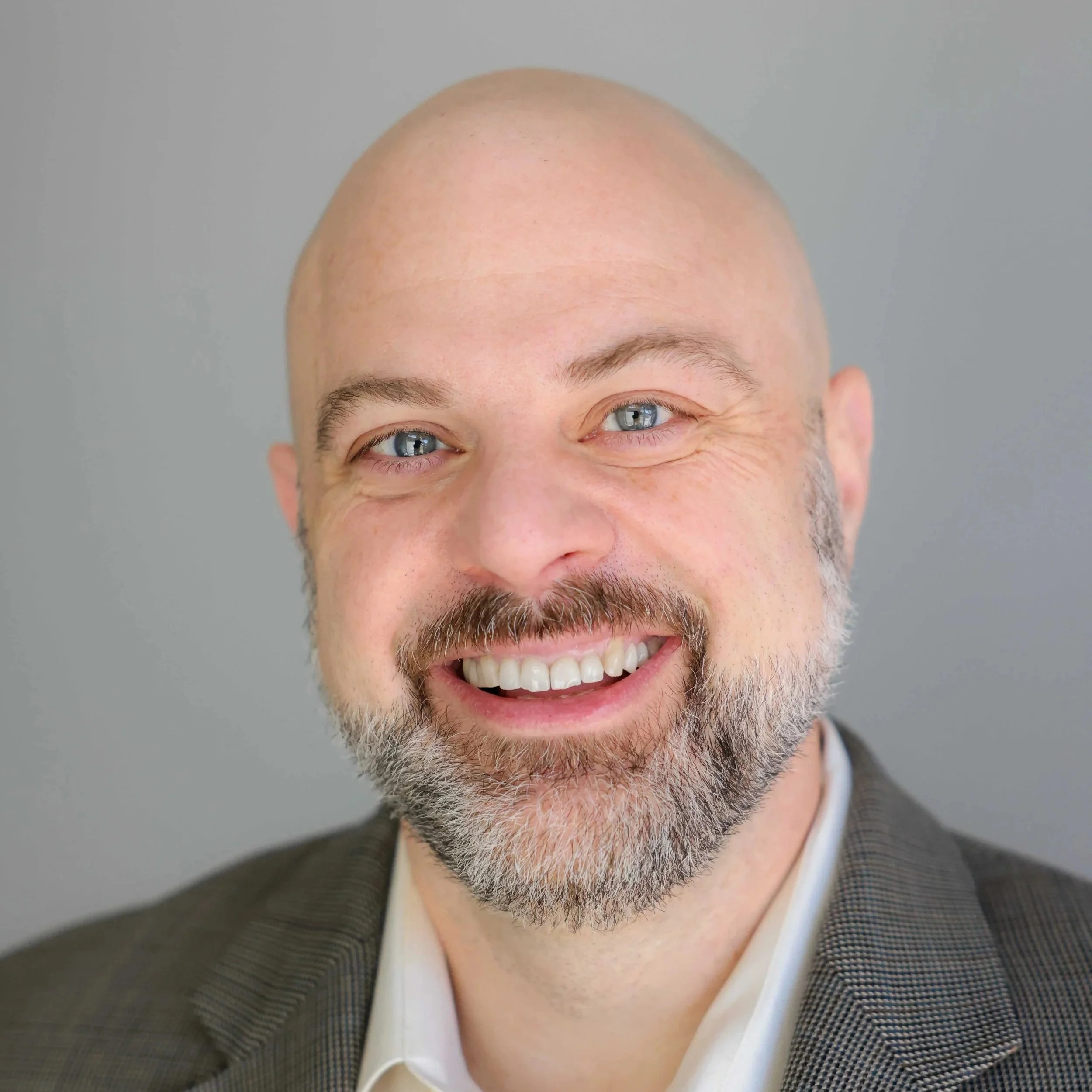
Marc Berte is the Co-founder and CEO of Overview Energy, a startup developing space-based solar power systems designed to turn existing solar farms into around-the-clock power generators. By placing satellites in geosynchronous orbit, collecting near-continuous sunlight, and beaming energy back to Earth as safe near-infrared light, Overview aims to dramatically increase the utilization of solar infrastructure already deployed around the world.
In this episode of Inevitable, Marc explains how space solar works and how Overview’s approach differs from decades of prior space solar concepts. He talks about the economics of “photon fuel,” the company’s gigawatt-scale agreement with Meta, and the concept of “supply response”—delivering power exactly where and when grids need it most.
The conversation explores the manufacturing challenges of deploying thousands of satellites, the role of defense and energy security applications, and why the long-term value of solar assets could change dramatically if space-based power delivery becomes commercially viable.
Finally, he shares one of the more unconventional engineering stories you'll hear this year: how 75 pounds of Otter Pops helped cool Overview’s airborne power-beaming demonstration system.
Episode recorded on June 1, 2026 (Published June 16, 2026)
In this episode, we cover:
(2:34) Why space solar belongs alongside fusion, fission, geothermal, and storage
(4:30) How geosynchronous satellites shift power between global demand peaks
(5:59) The concept of “supply response”
(8:57) How Overview’s power-beaming technology works
(12:51) Cloud cover and line-of-sight requirements
(15:32) Creating a new energy market with “megawatt photons”
(17:00) Overview’s gigawatt-scale agreement with Meta
(22:32) The economics of adding photon fuel to existing solar assets
(26:22) Competing with gas peakers and complementing storage
(36:38) US manufacturing advantages and competition with China
(39:26) Defense, energy security, and powering remote military installations
(42:48) Financing space-based energy infrastructure
(48:10) The Otter Pop engineering story behind the airborne demonstration system
-
[Cody Simms] (0:00 - 2:07)
Today on Inevitable, our guest is Marc Berte, Co-founder and CEO of Overview Energy. Overview Energy is building satellites that relay energy from space onto solar farms back here on Earth, allowing them to operate at a much higher capacity. We're talking about the possibility of 24 by 7 solar.
They do this by parking their satellites in geosynchronous orbit, where they collect sunlight that never sets and beam it back down as a wide, eye-safe band of near-infrared light. That light lands on solar farms that already exist, and the panels treat it like sunshine, generating power at night, before dawn, in the evening, or wherever demand happens to spike. So a solar farm that used to earn for a few hours a day becomes something much closer to around-the-clock power plant.
The company has raised close to $20 million in seed funding, with investors including Lowercarbon Capital, Prime Movers Lab, and Engine Ventures. Last fall, they performed initial tests of their power beaming system, mounting it on a moving aircraft and sending real power down to solar panels on the ground. This spring, they signed a gigawatt-scale capacity deal with Meta.
This is an audacious plan, but if it works and you extrapolate, you could pencil out a scenario where every solar asset on the planet needs to be repriced.
From MCJ, I'm Cody Simms, and this is Inevitable. Climate change is inevitable. It's already here, but so are the solutions shaping our future. Join us every week to learn from experts and entrepreneurs about the transition of energy and industry.
Marc, welcome to the show.
[Marc Berte] (2:08 - 2:09)
Hey, great to be here, Cody.
[Cody Simms] (2:09 - 2:33)
So you and I had to catch up last week, and one of the things that you said that's really stuck with me is that there are a handful of ways to meaningfully grow the planet's power over the next 25 years or so. And you know, we've covered a lot of those on this show.
Fusion, fission, deep geothermal, but there was one category we hadn't really talked about that is core to what you're doing, so maybe take us there.
[Marc Berte] (2:34 - 3:07)
I mean, you left off an important one, and I got to give those folks credit, which is terrestrial PV plus storage, especially since what we do is make that better. The one that is of those five is space solar energy. So this is collected in space, converted into something else, beam it down to the ground, and then utilize it on the ground.
And that's what Overview Energy does. We use wide beam near-infrared from geosynchronous orbit, and critical to our application way of doing it is the receiver on the ground is utility-scale solar project. So as long as you're a few hundred megawatts or bigger, you're a potential customer for us to give you power at night.
[Cody Simms] (3:08 - 3:25)
So in plain terms, I think what you're doing is you're taking a solar farm that's already there, it's already producing, it's rated out power that it was supposed to be producing, and you essentially are able to turn it into, in theory, a baseload unit that can run around-the-clock. Is that the right way to think about it?
[Marc Berte] (3:26 - 4:21)
I think that's the beginning. I think it could even be better. So one of the things that you have to think about with conventional solar project is the amount of energy you put out is dictated mainly by the fact that the Earth turns and is tilted.
A little bit less so because of the weather, but most of places you put in a utility-scale solar project, you're going to have reasonably high cloud-free. So call it 70-80%. What Overview does is now you can choose when you want to add additional power, whether that be some power at all at night by shining the Overview beam onto it, or even augmenting during the day.
Let's say you wanted to upgrade all your inverters and your grid connect. We could conceivably at safe levels of intensity, double or even triple the peak output of a solar project. So it isn't just turn your peak into your average.
It could also be augment to an even greater degree on demand whenever you want.
[Cody Simms] (4:21 - 4:30)
So walk me through maybe a single satellite over the day, when it might hit Europe, when it might hit California, what that might look like in a 24-hour period.
[Marc Berte] (4:30 - 5:59)
Well, you hit the nail on the head right there. One big advantage of this is by being in geosynchronous orbit. That means that we can see a third of the planet at a time from any one satellite.
Okay. So to your point of view, each satellite is about a megawatt. So you'd actually be redirecting clusters of satellites at a given point, but quick day in the life.
So 5 a.m. in California, people wake up, turn on their coffee makers, whatever, demand sky rockets, but sun's not up yet. So all those PV installations in California aren't doing anything. Batteries are likely heavily depleted from the day and evening or the night and evening before.
So we shine the overview beam onto one or more solar projects in Southern California and sell into that energy market. But 9 a.m., 10 a.m. rolls around, sun comes up, we would be competing with free photons from the sky. So not necessarily economically the best choice.
However, 10 a.m. in California is 6 p.m. in Western Europe. Switch the beam over to Western Europe, sell into that evening peak. Then 11 p.m. rolls around in Western Europe. Everyone's starting to go to bed. Demand is going down even though there is less supply. But now it's advantageous to switch that beam back to Southern California where it's 4 o'clock and going into the evening peak.
What this means is whenever you have those kinds of pairs of areas that are seven to eight time zones apart, you get interleaving between morning and evening peak of one is split from the morning, evening peak of the other. So the same group of overview satellites can sell into that kind of peak market, something like 16 to 20 hours a day.
[Cody Simms] (5:59 - 6:26)
The thing that jumps to me for this is we spend so much time in the energy and climate space thinking about demand response and how do we live in a scarcity mindset? And when we're at a period of peak demand, have all this intelligence that starts to turn things off, you're almost pitching the opposite, which is like a supply response. You know, at the moment when we are in peak power need, you can amplify supply.
[Marc Berte] (6:26 - 6:30)
I think you're the first person that ever referred to this as supply response.
[Cody Simms] (6:30 - 6:32)
Yes, I'll take it.
[Marc Berte] (6:32 - 8:02)
I'm definitely going to take that, especially since previous companies I've worked at were actually doing storage and demand response kind of activities.
And I used to joke that, like, everyone thinks demand response is cool and is willing to take the credit for it until it happens. It's like, ‘oh, yeah, we'll turn off your air conditioner, you know, and we'll pay you an extra ten bucks a month or whatever.’ And the first time it happens, they're like, ‘yeah, I'm canceling that.’
But yeah, supply response is a really good way to look at it. And a lot of times we'll talk about augmenting storage. People will ask, well, how do you know, does storage and extra storage or low cost storage disrupt Overview?
And we're like, no, it actually makes it a lot better. I mean, one big thing with storage is when you charge it. Ideally, if you're using storage for peaking, you would actually want to have two cycles a day.
Charge it during the day, use it in an evening peak, charge it at night, use it in a morning peak. And a lot of grid connected storage, if not directly coupled with PV, will actually tend to do that kind of behavior. They'll charge it with low cost base load at night.
Well, Overview is another perfect example of that, where you can start getting even more granular than that. There would be rarely a case where you would want to charge your battery with extra solar in the evening time unless you anticipated a high nighttime demand. But with Overview, you could be like, ‘oh, yeah, we can always charge it at night.
We don't have to worry about fully depleting it right now to take advantage of certain market conditions.’ So you're right. The kind of supply response on demand just about anywhere, especially geographically, I think would make a huge difference.
[Cody Simms] (8:03 - 8:10)
And, you know, I charge my EV at night here in California, but I always feel guilty because I know at night the grid in Los Angeles is mostly natural gas.
[Marc Berte] (8:11 - 8:38)
There's that big connector to Utah that's got a coal power plant on the other end, isn't there? But yeah, it's definitely a lot less green energy than during the day when it would be in solar. I was actually just having a conversation with some folks about vehicle-to-grid that it's awesome until you start looking at the infrastructure we don't have to charge during the day and the infrastructure we do have to charge at night, but not the energy sources that allow us to do that in a green way.
[Cody Simms] (8:39 - 8:56)
So I have a ton of wonk questions around how you structure all of this. But before we do that, maybe take us back up a level, really describe the product for folks, describe what it means when you say beaming power, just so everyone listening can have a bit of a baseline understanding here.
[Marc Berte] (8:57 - 9:54)
Sure. So I always end up saying, you know, it's simple in concept, but difficult or complex in execution. So the concept behind spatial energy is relatively simple.
You put solar panels in space. In geosynchronous orbit, the sun is shining 99.2 percent of the time. So you use the electricity from those panels.
In our case, you use it to run very wide-beam, passively safe, invisible, near-infrared lasers, and you direct that near-infrared light. So this is similar in wavelength to what's used for the illumination on security cameras so they can see at night. You beam that energy down to the ground.
So this is just directing it like a flashlight down from the sky onto a solar project where it's then converted using all the normal stuff, my normal solar panels, normal inverters, everything else back into electricity. What's great about near-infrared is one, we're passively safe. What that means is you can stand in it, stare at it with binoculars, it can never harm you in any way, and it's within all existing regulation. It's invisible.
[Cody Simms] (9:54 - 9:55)
It's not going to drive cats crazy.
[Marc Berte] (9:56 - 10:55)
No, nothing sees this. Well, so we actually did a whole bunch of work on this. We did identify that there is a species of fish, in this case, the Nile tilapia, that we found some papers that suggest that it might perceive near-infrared in some way, but nothing else.
So, I mean, this is the light they use for, like, game cameras or wildlife photography to avoid animals seeing it. So anyway, completely invisible. And what's great is it actually converts to electricity at two to three X the efficiency that sunlight does on a solar panel.
So if you're on the ground, all you get is way more energy. You get it at night and you don't have to change anything. You don't have to change your solar panels or inverters or anything like that.
All you have to do is we use a beacon, which is another near-infrared laser. Put that in the middle of your solar project. That shines upward and we use that to track in on the solar project to deliver the beam.
But that's it. It's electricity to light. And then once it hits the ground, light back into electricity.
[Cody Simms] (10:55 - 11:03)
This is a super naive question on my end, but do panels have any maximum amount of power they can absorb?
[Marc Berte] (11:04 - 12:03)
Yes and no. Okay. The limits are actually thermal. So solar panels aren't that efficient.
And even under Overview illumination, they're still only 40 to 50 percent efficient, but it's better than 20. So as they heat up, their efficiency goes down. This is why you want solar panels to run as cool as possible.
Our beam, there's a lot less waste heat. So for a given amount of power, the panels will run cooler. That said, panels other than the thermal part get more efficient as you hit them with more and more light.
So if you could keep it the same temperature but give more light, you get increase in efficiency. So you could, for reasonable temperature limits, probably get sunlight plus two to three X of an Overview beam before you would heat them up above like any sort of warranty level type conditions. Now, that said, daytime power, a lot less valuable.
So we would prefer to sell that light into more advantageous economic conditions. But you could still do it during the day if you wanted to.
[Cody Simms] (12:03 - 12:13)
And then as I understand it, you're not pinpointing a specific panel to hit. You are casting a quite diffuse footprint from your satellites.
[Marc Berte] (12:13 - 12:51)
Yeah. So again, this is why we say utility-scale solar project. At the minimum, the beam is on the order of one to two kilometers across.
Think of that as somewhere between a 200 megawatt and 400 megawatt utility scale solar project peak output. The bigger the spot we're allowed to deliver, the lower the cost. So there are some ultra large solar projects being built in the Middle East, Australia, and a few other different places that are five or more kilometers across.
They're multi-gigawatt solar projects. Those are even lower cost for us. But basically, the beam comes down.
It's roughly elliptical by the time it hits the ground. Fill that area with solar panels. That's the power you get out.
[Cody Simms] (12:51 - 13:00)
And I do believe there's a line of sight requirement here, meaning you do have issues on a cloudy day or what not. Just making sure we paint the picture of what it is we're dealing with here.
[Marc Berte] (13:01 - 13:55)
Yeah, you're absolutely correct. We get that question a lot as, you know, what about clouds? Well, if you don't mind a little bit of history, people, when they were looking at space solar energy for decades and decades and decades, always looked at, instead of using near-infrared light, they would look at microwaves, like radar, basically, or communications.
That goes through clouds, reasonably so, at lower frequencies. And the whole idea was, well, you don't want it to be blocked by clouds. Sunlight's blocked by clouds.
Well, that was almost like not seeing the forest through the trees aspect to it, where the clouds, if you take a typical solar project, are only the 20 to 30 percent of the fact that they're not making power all the time. Most of it is the Earth turns and is tilted, like night and evening. So you have a typical solar project, it might be 25 percent capacity factor.
Even if you could get light, the clouds are only 70-80 percent of that. So we can take a solar project, bring it up to 70 to 80 percent capacity factor without worrying about clouds.
[Cody Simms] (13:55 - 14:00)
Depends on where you are. My friends in Seattle would say we get a little more cloud cover than that, probably.
[Marc Berte] (14:00 - 14:01)
That's very true.
[Cody Simms] (14:02 - 14:05)
But for certain parts of the world, it is almost a non-issue.
[Marc Berte] (14:05 - 14:07)
Most places where you build solar projects.
[Cody Simms] (14:07 - 14:07)
Yeah.
[Marc Berte] (14:07 - 15:18)
So and the other piece of that, that I think is really important is you kind of hit it is location matters. But generally speaking, grids are bigger than weather. So if you imagine, you know, weather systems moving across the country, you end up with these cloud bands that are 100-200 kilometers wide, and then you'll have a 1,000 kilometers - 1,500 kilometers, a thousand miles or whatever to the next weather system.
And you have this high pressure in between with a lot less clouds. So what really matters is what is your utilization of the expensive asset? In this case, it's the satellites.
The solar project on the ground is extremely low capital intensity for what it produces. That's why we use them a lot. Satellites much higher, but you get 24/7.
So what you really want to do is make sure the satellite is utilized 100 percent of the time by being able to move the power from one place to another. So this is why, for instance, when we work with a lot of customers, they tend to be customers with lots of solar projects. So we did a deal with Meta.
They are affiliated with many tens of solar projects. And they're basically saying, ‘give us a gigawatt, we'll tell you where to put it.’ OK, and we're pretty confident that regardless of weather, we'll be able to put it somewhere.
[Cody Simms] (15:19 - 15:31)
So let's dive into some of the economic side of what you do. As I understand it, you're not selling electricity today. You're selling, I don't know. Describe what it is you actually are selling and how that works.
[Marc Berte] (15:32 - 16:51)
That was actually the result of a long amount of time in terms of a lot of negotiation. So this was actually one of the hard parts about this and with a lot of commercial agreements is exactly your point. What are you selling?
And really importantly, and a lot of people forget about when you're trying to develop a new market, is what are the terms associated with that? When does it change hands and what is it? All our contracts are written in terms of megawatt photon.
So this is the energy or power that being delivered in that beam of light, that near-infrared light. So you, the customer, you pick where and when and how much to that spot. We will deliver that amount of power photons in that beam.
And then you're responsible for as soon as those photons hit something, as soon as that light hits something, whether it's solar panel or dirt, you've paid for it. Meaning it's now your economically incentivized to have the most efficient conversion possible and cover as much of that beam area as possible. So if you have like a vacant lot in the middle of your utility-scale solar project, you probably should put solar panels on that vacant lot or canopy over inverter or any of these kinds of things to maximize your conversion.
But it took us a long time to figure out how to best align incentives as to what is being sold and when is it quote unquote "delivered."
[Cody Simms] (16:51 - 16:59)
You hinted at the Meta deal, maybe talk through what you've announced with Meta and how that was structured in that framework that you just created to the extent you can share.
[Marc Berte] (17:00 - 17:54)
Yeah, there's a lot of terms on that that we don't comment on in public. Neither does Meta. That's part of their standard policy.
So the deal there, was two gigawatts of photons. So we nominally say that's a gigawatt of electricity and hence why it's announced as a gigawatt of electricity. The nominal conversion is about 50 percent.
That's a capacity reservation agreement, which gives them the right but not the obligation to purchase a gigawatt of power from us under certain terms going forward, where it's some fraction of our total deliverable capacity that we've defined. And they can purchase up to that amount, up to a gigawatt of reservation on that. And then, there's a lot of deposits and various other terms that go along with that.
But effectively, this gives us and them the market flexibility to pick the right eventual cost terms for that, that allow that deal to go forward. So it's a gigawatt of capacity that we've kind of reserved for them.
[Cody Simms] (17:55 - 18:16)
So you just described basically a capacity reservation where Meta has purchased a set amount of photons from you. But you may have a world where you have another customer who is actually wanting the photons at the same time and has better economics to you to buy it at that time. How do you decide where you're sending this stuff?
[Marc Berte] (18:17 - 20:49)
So Meta's deal and other customers', they're not for specific satellite. They're for some fraction of Overview capacity. And we can deliver that from a variety of different satellites.
So any given satellite may be retasked. Now, generally speaking, we want to position a cluster over the eastern Americas that gets everything in North America, South America, Western Europe and Western Africa, then probably one Africa-ish that gets Europe, Africa, Middle East, and then one south of, I think, Myanmar, roughly, that gets you Australia, Oceania, China, Japan, India, all the way west of the Middle East. So most customers would operate in one geographical region.
There, the answer isn't retask a satellite. It's to any one customer we don't sell more than some fraction of our overall capacity.
Now, they have a right to that. So Meta would say they're hypothetically, their chunk of capacity is some percentage. Well, they'll get that unless they don't want it, but they've already paid for it.
In that case, let's say they didn't want to use their contracted capacity. Well, they're already paying for it. But we line up secondary customers that are willing to take any amount at any time at a lower price so we can offset their cost associated with it if they don't want to deliver the power to any of their customers.
So you can sell it twice to make up for the difference there. That's one option to it. The other piece is we don't plan on reserving all of the capacity for set customers in a reservation-type agreement.
We always want to have a significant fraction that's like you almost said, like spot marketable kind of thing where in the long run, we actually see that being effectively like a photon bidding market where if you're on the Overview network, you have a beacon. You can say for two o'clock tomorrow, I want 50 megawatts of photons and I'm willing to pay blank. And this looks almost exactly like electrical markets where you have day ahead markets, two hour ahead markets, spot markets.
Imagine all of those. But instead of local, they're now quasi-global like photon bidding markets that are the same kind of model. So take the temporal arbitrage, but geographically local electrical part and apply it to the temporally less flexible but geographically global primary energy or fuels market and combine those into one thing.
[Cody Simms] (20:49 - 21:05)
So you'll have a capacity reservation mechanism where these large customers can reserve capacity, but then you also do have this spot market, if you will, that can allow people to request power at a given moment from you. Is that right?
[Marc Berte] (21:05 - 21:28)
Yeah, that is the long-term intention. Now, how much of that into each bucket early on, we're going to want a lot in the capacity reservation market aspect because that's bankable for us in terms of long-term financials. But over time, that'll transition more as we get more and more customers into the greater fraction being in the eventual like photon bidding market.
[Cody Simms] (21:28 - 21:34)
Well, and then you're in the utility world of having a dispatch queue and having to figure out to whom you send when and why, right?
[Marc Berte] (21:35 - 21:59)
Fortunately, like markets solve that relatively simple just through a market bidding process. You mentioned it's all those things already exist. They're just hyperlocal, may not be hyperlocal, but they're at least local, like you'll have different regional energy grids that have this kind of process.
Imagine now, if you had one kind of global layer on top of that, what that was this supply response aspect to it. I am taking that, by the way.
[Cody Simms] (22:00 - 22:31)
I love it. So as I think about the asset owner, a solar farm asset owner, and I've already built a 20 or 30 year asset, I've calculated the levelized cost of energy for that asset. And now you guys show up and you're like, ‘hey, guess what? You can pay us a little bit more and we can generate a lot more power out of this thing that you've already penciled.’
How do I do the math on that? How do I think about putting more OpEx into my project in order to get more production out of it?
[Marc Berte] (22:32 - 24:07)
It's exactly the point of OpEx versus CapEx. Okay. So first of all, you're going to pay more than a little for this, but that's great.
Think about it this way. So let's just hypothetically say a typical solar project is going to run on like 10 percent margin. So for every dollar of electricity you sell, you're getting 10% out of the back end of that.
If we just doubled your capacity factor, now there's potentially twice as much sales there, but no increase in CapEx and all of your other costs and everything, you're already paying those for your farm. So if we took percent of that sales, or the OpEx that we charged you was equivalent to like 90 percent per megawatt hour, you're still doubling your profit associated with that. That's the early sales pitch that we would do to a brand new customer is like, you have this existing asset. Do you want to make money at night and double your profit margin associated with it?
Now, for different partners that looks at different ways, take for instance, a large IPP. They're a large solar IPP. They might be selling solar for during the day for 20 bucks a megawatt hour. We could go in and say, ‘okay, well, this'll cost you 120 at night.’ If you think about it, you're now taking 20 in during the day, 120 at night, you can average that to 60 and you're printing money if your base load is $60 a megawatt hour.
So really what you have to look at is without any additional investment on your side, you can now OpEx your way into being completely flexible in terms of power.
[Cody Simms] (24:07 - 24:15)
And do these IPPs have that OpEx budget set aside for this? Are they going to need to go rethink their business models to do this?
[Marc Berte] (24:15 - 25:03)
I think a lot of them are going to have to rethink a business model with the availability of Overview. We're already talking with quite a few that are partners already, and it's not just solar projects. It's like Meta where they have off-take agreements, they have PPAs, they work with a lot of different IPPs and they have a lot of these agreements.
Now, think about it potentially on that kind of perspective. Let's say you're an off-taker and you have 100 percent of the output of a solar project. It's just your off-take, you have that contract.
You could set up a deal with Overview to buy the photons and then go to that solar project and be like, ‘look, you're not going to be making money or power at night. It's ours. We paid for the OpEx on that. Any additional like, oh yeah, you're inverter fans and now I have to run 24/7. You might have some maintenance aspects to it. We'll cover that, but that power is ours because we paid for the OpEx.’
[Cody Simms] (25:03 - 25:24)
Yeah, it really changes how you think about these assets. Solar was set up as a thing that requires no fuel and the fuel is free. And now here you're basically saying, ‘actually, we can give you fuel.’
We can make this thing run with quote unquote "fuel" at night that you weren't planning on. You just got to pay for the fuel and then you get more power out of it.
[Marc Berte] (25:24 - 25:52)
Yeah, this was actually one of the guys on our advisory board, Cam Hosie, was I think one of the first ones that suggested this to us. We explained the whole concept and he's like, it's fuel. You're selling photon fuel for a photon power plant.
And he's like, we already have the market models for how to treat that. It's just in your case, it's instantaneous. It isn't, ‘oh yeah, you know, liquid natural gas delivered three weeks from now at some location.’
It's now instantaneous delivery fuel market.
[Cody Simms] (25:52 - 26:22)
So there already is a lot of economic comparison of solar plus storage relative to gas and doing the fully bundled cost of CapEx and OpEx, hardware and fuel. Now you're actually, in theory, being able to put them truly side by side, where you could take a solar farm and say solar farm plus additional fuel to run it at night or other times of the day. And you could compare it to a peaker gas plant and look at them side by side.
How do you think you net out?
[Marc Berte] (26:22 - 28:28)
I think compared to that, we look very, very attractive because here's the other thing is look at it from how we charge. If you're a natural gas peaker plant, when you're not on, the capital isn't being used. So you want to run as much as you possibly can because all you're paying for is fuel and your margins are associated with that.
If you're like a nuclear power plant, your fuel cost is effectively, let's just say zero relative to the total of everything else. So you want to run all the time because any revenue is revenue.
A friend of mine used to be the CEO of Yankee Nuclear and he's like, we would make all our money in January and February because that's when nuclear makes its money, at least in New England.
In our case, imagine if you instead had that peaker plant that you could instantaneously transport anywhere in the world to whichever market was best. We compare really well, not against a peaker plant, but against the concept of peaker plant.
Because if you think about it, let's say you're a solar project in a temperate latitude. So Southern California, your capacity factor in the summer might be twice your capacity factor in the winter. If you overbuild for your winter, in the summer, that extra power is going somewhere. Now, when there was a lot of grid elasticity, you could sell it for a reasonable amount.
If you look at a lot of the wholesale prices in these places, you can get negative wholesale prices when it's all cooking along on there because no one wants to turn anything off. Imagine if instead you could build for your summer size, get like a few hours of Overview to level that out in the summer, but not a lot. And then in the winter, turn what was your small overbuild into that continuous baseload asset.
The key is if you have the supply flexibility, you're only paying OpEx when it's economically reasonable for you to pay that OpEx. Because if you don't buy the power from us, we'll sell it somewhere. So what's great about that market aspect to it then is the capital asset of the satellites is now used 100 percent of the time by definition where it is economically most beneficial to do it.
[Cody Simms] (28:29 - 29:01)
Shifting the question a little bit, we're talking about comparing it to a natural gas peaker plant, but it's going to be a few years till you're like broadly in orbit. And so you're also comparing to call it the 2030 or 2031 price storage and incrementally adding a bunch more storage to these solar projects, which is a CapEx, pure CapEx investment, but these solar projects know how to do that today. How are they going to compare against you in that way?
[Marc Berte] (29:02 - 30:39)
You can look at the fact that places that are heavily invested in storage are also looking at us on the same, I think it was the same day or at least the same week that Meta announced their deal with us. They also announced a deal with Noon to do long duration storage. We play very nicely with storage because of one important fact is that same overbuild concept is true on storage.
Okay, so take a winter day and even in California, you might need 19 hours of storage effectively relative to your average rate of energy expense or an average power amount. Whereas in the summer, you might need eight to 10. So what that means is in the summer, half of your storage isn't being utilized. It's just idle effectively. So if you look at the levelized costs of storage, it increases rapidly as your total duration of storage goes up because you're sizing it for a niche case.
I'll give you an example.
We did an analysis for a one gigawatt average solar plus storage data center type project. And that project, if you were just doing conventional PV plus storage would need five gigawatts of solar and something like 18 to 20 hours of storage. If you did it with Overview, you would need 1.4 gigawatts of solar and three hours of storage, I think. So you've just reduced your CapEx by like 80%, which means, ‘yeah, you're paying the OpEx, but you're paying only the amount of OpEx you need for your model or your location.’ This is also very location dependent. We've actually run some analyses that suggest you could reduce storage price, the cost for storage by an order of magnitude or more.
[Cody Simms] (30:40 - 30:44)
Which is probably close to happening in that timeframe, don't you think?
[Marc Berte] (30:44 - 32:27)
The cost per marginal megawatt hour stored, maybe. The cost per deliverable because of all the non-storage costs, a lot less so. The soft costs and everything else and balance of system.
If you look at PV right now, the installed cost is an order of magnitude more than the cell cost. It's like panelization, racking and insulation and grid connection and all these. A lot of that stuff isn't getting cheaper.
So if you look at that, you'll see a lot of claims of, ‘oh, well, cells might get a factor of four cheaper. It's like, yeah, well, land isn't.’ So if you're taking the five cent per watt kind of thing and reduced it to zero, it doesn't make that much of an impact.
Even right now, the fractional cost of the cells, for lack of a better term, isn't the vast majority of the cost. It's a majority, but it isn't a vast majority. So if you start reducing that, you still have this asymptotic bottom to it.
And the other thing is long duration storage tends to have lower roundtrip efficiencies associated with it, which means the more you allocate into that, the more overbill that's required. So we compete pretty economically, even with 20-30+ predicted cell efficiencies and storage and all of those kinds of aspects. And the other big thing is if you have anything under 100 percent utilization of that capacity, we start winning because we have effectively 100 percent utilization of the capital expenditure in us.
So we get to take our CapEx and blend it over 100 percent to get our LCOE. Whereas anything that's deployed on the ground, by definition, because it's in a market and isn't utilized 100 percent of the time, has a much different economic factor there.
[Cody Simms] (32:28 - 32:50)
I'm going to shift gears a little bit. I mean, we could go all day on the economic tradeoffs and how the future markets might evolve. But all of this assumes you've built and launched a ton of satellites in orbit and you've got a whole fleet up there, multiple fleets or swarms or whatever we would call these things.
What does it take to get there? You've got to be an excellent manufacturing scale business.
[Marc Berte] (32:51 - 33:56)
I mean, that's it. So Overview was built around the fundamental of proven technologies. For instance, we don't need laser efficiencies more than what we're getting.
We don't need optical mirror performance on our laser optics better than we're getting. Any improvements that happen to PV, we actually get twice because we get it in space and the receiver on the ground gets better. But Overview was built around being a manufacturing and scalability play.
So it's what are the COTS or derived from commercial off-the-shelf technologies that can be mass manufactured? The number one thing in the past that was always the case is, ‘oh, well, you're talking about 1,000 of satellites or 10,000 satellites.’ And that was absurd, except now it's a reality.
We have a single company putting up 10,000 plus Starlink satellites. And there's many, many, many more of those kinds of constellations on the way. I mean, fortunately, we're up in geo, not geostationary orbit, but geosynchronous.
So there's a lot less population up there and a lot more.
[Cody Simms] (33:56 - 34:00)
You're higher up than Starlink. Yes? But for all of us non-space tech people.
[Marc Berte] (34:00 - 35:12)
Oh, yeah, sure. So geosynchronous is where you go around once every 24 hours. So the satellites appear to stay in roughly the same part of the sky.
They move around in a small ellipse, but the cluster's like the size of your hand at arm's length instead of zipping overhead every 90 minutes. So what this means is, first of all, you're seven times Earth radius away. So there's an enormous lot more space up there.
And then also everything's moving a lot slower and orbits are less congested and everything like that. So my point being that what was absurd, which is a few thousand satellites or a few tens of thousands of satellites is now much more reasonable. And instead of saying like, ‘OK, every one of those satellites does this small contribution of small data center or it's this level of communications.’
Imagine if every one of those satellites was a megawatt - a thousand homes. So everyone you put up is now all the electrical power needed for that large chunk. Elon talks about putting up a million satellites, a million data center satellites is the data center needs for America, maybe, or maybe the world.
If you had a million Overview satellites, it's 20 percent of the electrical power of the entire planet. So a lot more capability from the same number or less individual object.
[Cody Simms] (35:13 - 35:27)
And so as you are building this manufacturing scale, it sounds like you're not developing your own solar PV, you're not developing your own lasers. Maybe you are. Maybe unpack that.
But you're basically getting good at integrating all these technologies together.
[Marc Berte] (35:28 - 36:22)
Yeah. So PV, like the actual cells on the satellite, we're not making our own. There's no way we want to vertical that.
There's just so much being done on that. Tens to hundreds of gigawatts a year. The lasers we work with industry partners on that, they're specific to what we're doing.
They're derived from some commercial versions of it, but they're mass manufacturing those already. They're just a lot of tweaks to what we're doing.
On our side, there's a lot of stuff we build in-house, like the optics and some thermal management components. And like you said, the big thing is integrating the spacecraft. And that's where a lot of the tweaks are. A good manufacturing advisor of ours always has a thing of like when to vertical something or not.
And it's OK, if you're 90 percent of the market of that kind of thing, you should probably look at verticaling. There's a lot of different options there. But yeah, you're right.
It's integrating and manufacturing. The overall spacecraft is really where the hard part is.
[Cody Simms] (36:23 - 36:37)
There happens to be a I would call it political adversary to the United States these days who is very good at integrating and manufacturing things at scale, which is China. How do you stay ahead here?
[Marc Berte] (36:38 - 37:59)
Well, the largest satellite manufacturers in terms of quantity and mass are in the United States. So obviously, the United States as a whole can compete on that. I'll give you a really cool example.
When things start shifting to demand-constrained, from a supply-constrained environment, a lot of companies will appropriately start looking at what is economically the best total as opposed to the best marginal. There are car manufacturers that have really good marginal profits, Ferrari. And there are car manufacturers that have very large total profits. The big car manufacturers, you know, Ford, Chevy, etc.
OK, so, you know, Ford makes a million F-series pickup trucks a year in the United States. OK, well, you know, the satellite is not really much more complex than a pickup truck. Actually, most satellites aren't. There are a lot more electronics. Nowadays, that might not even be true. But and, you know, power systems and everything.
But you're looking at that kind of mass and complexity like it's a couple of ton object. Most of the mass is some commodity thing, whether it be the frame or in our case, the off-the-shelf solar cells. And then you're adding in some high value items on top of that, integrating it and sending it out.
So I think that the US is extremely capable of competing on large scale manufacturing. We already do. It's the high value kind of items that are where we do most of our manufacturing.
[Cody Simms] (38:00 - 38:14)
OK, yeah, I mean, makes sense. I mean, obviously, given the amount of solar installation, China would be heavily incentivized to also solve this problem, assuming you are solving it well. And I think they have other initiatives in this regard already underway, do they not in China?
[Marc Berte] (38:15 - 38:59)
Yeah. So China has had a national program doing microwave versions of this for quite a while. So has Japan, Europe had a bunch of programs in this.
I mean, NASA's looked at this. Everyone's looked at microwave kind of things. I would assume at this point, given all our press, they're probably doing, you know, someone's doing a very similar to Overview approach there.
They just unlocked 15,000 engineers to work on that. And there's a lot you have to do to make it work. It isn't just copy this patent and then go forward on it.
There's a lot of nuance to a lot of the way these systems are put together. Now, that said, there's enormous markets on that. If Overview is eventually limited to only, you know, 20 to 50 percent of global electricity, I think that's an OK place to be.
[Cody Simms] (39:00 - 39:08)
Still a big market. Well, that's assuming the Chinese satellites can't sell to US solar farms at a lower cost than you someday, but...
[Marc Berte] (39:08 - 39:11)
There would be some IP legal issues if it was with USA.
[Cody Simms] (39:12 - 39:25)
OK. A big part of what's driving a lot of space-related companies right now is new attention on national security. Is there a defense aspect to what you're doing in addition to the power aspect?
[Marc Berte] (39:26 - 41:08)
Yeah. So I want to make absolutely clear that, you know, Overview is not and cannot be a weapon. It, by the laws of physics, can't damage anything.
So and I built that in from the very beginning. The beam can never be made narrow enough to damage an object or even affect it negatively. So with that said, there's a saying in the defense world that amateurs talk tactics, professionals talk logistics.
And a significant fraction of military effort is spent on logistics. And nowadays, if you look at drones or radars or compute all that, you know, AI, all these different things, you're talking a very big electrical bill. And people will look at the smaller scale of that and be like, ‘oh, OK, well, we need to power this drone, need a better battery on this kind of thing.’
And we charge this vehicle or whatever. And it's OK, what powers the base? You're talking these things like Guam, which has Andersen Air Force Base.
You're looking at many, many, many tens of megawatts. This place is many square kilometers. It's an international airport size Air Force Base.
What's powering that? Right now, it's running off diesel. You're looking at $400 a megawatt hour at diesel prices a year ago.
I mean, I think DLA got a good deal probably for a couple of years on that. So they're probably doing pretty well now. But you're looking at $400 a megawatt hour, six or more times wholesale price in the United States.
And actually all of the U.S. islands, so Guam, American Samoa, Hawaii, U.S. Virgin Islands, Puerto Rico, et cetera, are all above a few hundred dollars a megawatt hour because they're basically burning liquid fuels. Now, if your fuel deliveries, that's a lot to begin with, let alone if your fuel deliveries get disrupted.
[Cody Simms] (41:08 - 41:09)
That never happens, does it?
[Marc Berte] (41:09 - 42:16)
No, no, never. How would fuel disruption happen in places, let alone if under a larger conflict with what they call Anti-Access/Area Denial? How do you deny logistics to an area?
And we, the U.S. is very good at that while other people are too. And actually, this is where the DW contract that we have actually is starting to look at, which is how do you power logistically constrained large bases? So that's really the early and defense application to Overview is the powering those kinds of things, because not only can you power the base, but you can power the surrounding community that supports the base.
If Guam has fuel disruption, it isn't just the base that's a problem. It's all the Americans that live on Guam no longer have power. So you could power that kind of thing or a base in Alaska.
Alaska is the fun one because solar doesn't work so well in northern Alaska. And ironically, it also doesn't work well in the summer, which is a weird thing because, yeah, you have sunlight 24/7, but half the time it comes from the north. So that's a problem for panels that are facing south.
[Cody Simms] (42:16 - 42:48)
I want to talk about how you're planning to build and finance this company. This is a heavy infrastructure build-out that you need to undertake. You talked about there's certainly some IP that you have to continue to develop and a lot of internal know-how, but there's also just a lot of scaled CapEx that you need to go build.
You've raised a few rounds of early venture capital. Does this become an infrastructure finance business over time? How are you thinking about capitalizing the company?
[Marc Berte] (42:48 - 44:54)
We're in the middle of our Series A round right now. We've had a really good mix of investors, everything from climate tech investors to a lot of space investors to a lot of energy investors, and also some actually beginnings of infrastructure investment. As an example, in our last round, EQT Foundation, which is the foundation arm of EQT, the large infrastructure fund, was involved and is on our cap table.
So we are starting to bring in those kinds of infrastructure investment because that's what this looks like in the long run. This round, that'll be a little bit more so. The B round, which is when we're starting to deploy into geo and actually starting to get revenue on there, that's going to look a lot more like that.
Eventually, it becomes a pretty diverse capital stack where it very much looks like power plants, where there's an equity investment to that. Then there's a debt part associated with that. You build a power plant, then that becomes this revenue generating asset that is then financed associated with that.
It starts looking a lot like the way you do solar or gas turbine plants or any kind of power investment. It's just now in space. That's, I think, the normalization of space that is happening is a lot of the infrastructure that we're doing, and this is like linking the space side of thing and the energy thing.
We like to say we're an energy company that operates in space, which is what we are. That's what we sell. We don't sell spacecraft components.
We sell megawatt hours. What you're seeing now is the transition of space as an infrastructure layer, where it isn't the space part that is the financed or sold thing. It's the product of that, whether it be manufacture or compute or moving bits around, or in our case, energy.
That's the product there. You're going to start seeing a lot of infrastructure investment. Look at all the AI investment that is going into a lot of space stuff.
SpaceX's IPO. Look how much of that is AI and compute driven, but it's the product, not the space part. I think you're going to see a lot of that transition into infrastructure investment and everything.
[Cody Simms] (44:55 - 45:21)
Today, you're essentially a power generator, isn't it? You're, I guess, not today. The current version of the business that you're building and soon in the future, when you are in orbit, you are generating power down to solar plants.
If you really fast forward out a decade or more from now, do you vertically integrate where you also are building terrestrial solar plants yourself or acquiring them and actually serving the end electricity customer on Earth?
[Marc Berte] (45:21 - 45:53)
I think in an end state, given that the solar project on the ground is a small fraction of the total CapEx, I think it's in most 5-10 percent. What you end up with is, we'd like to get down to that, but that is very far away. If you look at all the solar projects, utility-scale or bigger, that are going to be in existence in the next 10 years, if all of a sudden those became baseload assets, let alone the fact that we could theoretically get two to three times their nameplate out, you may not need a lot more.
[Cody Simms] (45:54 - 46:02)
Yeah, but the trick you have is that you know that they're underperforming relative to what they could be and you could probably outbid the market for most of them.
[Marc Berte] (46:02 - 46:29)
Okay, thanks for giving it away there, Cody. No, you're not the first person that's mentioned that. There are a lot of cases with a lot of those folks.
They're like, I think I need to go buy some solar farms, because if you're right, in five years, they're going to be worth way more, especially given they're already 10 years into their finance cycle or whatever. If all of a sudden the revenue of this object is potentially two or three X more, it's a much different asset.
[Cody Simms] (46:29 - 46:39)
Well, especially ones that are also, if they're nearing the end of their replacement cycle and it's like, well, you could go reinvest in all the CapEx or we could just double the capacity factor of these things right now. What do you want to do?
[Marc Berte] (46:39 - 48:04)
Yeah, there's a lot of options in there. Now that is very much getting ahead of ourselves. Let me get to the first megawatt, the first gigawatt, and then we'll talk about cornering the market on solar projects associated with it.
But there's a lot to do between now and then. You're not wrong in a lot of ways. We are talking with some large IPPs where they're like, ‘well, if you're right, after 2030, we would probably deploy a lot less because we can take what we have and put it in that.’ And it becomes, do you make this project better for Overview? Like, ‘oh, well, it's this odd gerrymandered shape. It needs to be an ellipse, but we didn't buy that part of the land because it was too expensive.’
Well, now you might be highly incentivized to make it more compact. And what you end up with is land, I think, is a really important thing here. When you add Overview into the mix and you saturate that solar project, you're getting 10 or more times as much energy average out of a given amount of land than you are with a normal solar project.
So what that means is you could power the entire United States out of something like a 1,000 square kilometers. It's smaller than Rhode Island, but distribute that out across the continent, I'd say it's in, wow, it's not a lot anymore. And it's because of that capacity factor uplift that I think is one of the important pieces.
[Cody Simms] (48:04 - 48:10)
Marc, before we close up this conversation, I'm reminded that I'm supposed to ask you something about popsicles.
[Marc Berte] (48:10 - 49:48)
Yeah. So this is one of those scrappy startup things. And on the tour, we always show it.
So when we were doing the airborne test, OK, so we can't use our radiators like we would use in space because it's flying in an airplane. So you need to cool lasers. And most lasers like to live at around room temperature.
So ideally, you would want to use ice as a phase change material. Ice takes a lot of energy when it's melting. So way back when, when I was doing defense stuff, I was building or designing very large lasers for weapon systems.
And it was like, OK, well, let's use ice. Water expands when it freezes. So like you end up blowing bits and pieces of it apart when it freezes.
So what you want is a flexible tube that contains the water, freezes, can change shape, and it can be asked to be very thin and very robust. And you want to pack a bunch of these and flow coolant over it in order to cool the laser. So what I described is basically an Otter Pop.
It's like the little squeezy popsicles. So I proposed actually using these Otter Pops to cool these large scale lasers. And the general response was, OK, you can't cool this Defense Department laser weapon system with Otter Pops from Walmart.
So you have to make aerospace grade, super expensive, high fidelity aerospace popsicles. And I did. And they worked out spectacularly well and everything.
Here at Overview, we don't need to have that kind of, well, you can't just use that. So there's actually 75 pounds of Otter Pop popsicles in our airborne test system to cool the lasers down. So because we get to be a scrappy startup then and a dollar a pound is a lot better than some crazy expensive defense popsicle.
[Cody Simms] (49:49 - 49:57)
I love it. Marc, this has been so fun. Anything else we should have covered or otherwise I'll let you go.
And I really appreciate you taking the time to update us on what you're doing.
[Marc Berte] (49:57 - 50:23)
I think we hit it on the mark. I mean, I'm happy to be back in the future as more and more things happen. It's great to talk about the energy aspects of that.
Like so many times people focus on the space side. But Overview is about how we use space to benefit Earth. And I think that's really what you're seeing now is space becoming a way to just make Earth better as opposed to just something that is done for purely space sake.
[Cody Simms] (50:23 - 50:32)
Well, is it LeBron or somebody owns the phrase "Taco Tuesday?" I think when I hear "supply response" in the future, just know I'm coming.
[Marc Berte] (50:33 - 50:42)
Well, first of all, I think originally it was a taco chain in the Midwest that owned it. Then he started claiming it and there was some lawsuits, but I don't think anyone owns it anymore.
[Cody Simms] (50:42 - 50:44)
So that's good. No one should own "Taco Tuesday."
[Marc Berte] (50:45 - 50:47)
Sorry Cody, I think I'm going to keep "supply response."
[Cody Simms] (50:48 - 50:50)
All right, man. Thank you so much.
[Marc Berte] (50:50 - 50:51)
Cool. Thank you.
[Cody Simms] (50:52 - 51:19)
Inevitable is an MCJ podcast. At MCJ, we back founders driving the transition of energy and industry and solving the inevitable impacts of climate change.
If you'd like to learn more about MCJ, visit us at mcj.vc and subscribe to our weekly newsletter at newsletter.mcj.vc
Thanks and see you next episode.