
The Domestic Premium: Can American Manufacturing Compete?
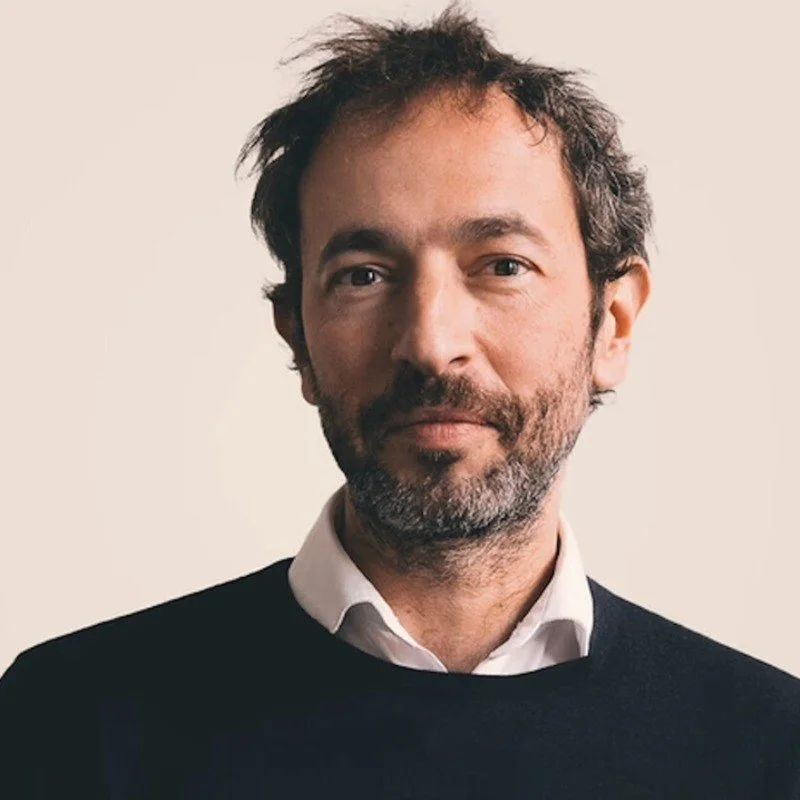
Edward Shenderovich is the Founder and CEO of Roebling, an AI engineering platform for industrial infrastructure working across energy, chemicals, critical minerals, and biomanufacturing. After initially setting out to solve bottlenecks in biomanufacturing, Shenderovich and his team uncovered a broader challenge: the economics of scaling physical infrastructure are often poorly understood until it's too late.
In this episode of Inevitable, Cody and Edward explore whether the US is making the same mistake with domestic manufacturing that climate tech once made with the “green premium.” If consumers were unwilling to pay more for cleaner products, will they pay more for American-made ones?
The conversation examines China's long-term manufacturing strategy, the gap between scientific breakthroughs and industrial scale-up, and why engineering—not invention—is often the missing link in commercial success. Edward argues that national security, data sovereignty, and AI infrastructure may become the forces that justify renewed domestic investment in manufacturing and energy systems.
They also discuss the lessons learned from the recent biomanufacturing boom and bust, why many bioindustrial companies struggled to achieve economic viability, and how AI can help bridge the gap between R&D and large-scale industrial deployment. Finally, Edward shares how Roebling is using AI-powered techno-economic analysis to help companies build factories that can actually compete on cost and performance.
Episode recorded on May 28, 2026 (Published on June 9, 2026)
In this episode, we cover:
(0:00) An overview of Roebling
(3:37) Why consumers rarely pay more for domestic or sustainable products
(6:12) How the US can compete with China's manufacturing strategy
(7:25) The gap between R&D innovation and industrial scale-up
(9:13) Why engineering is often the bottleneck
(11:25) AI data centers as a catalyst for industrial and energy infrastructure
(14:30) National security, data sovereignty, and domestic manufacturing
(17:31) Roebling's origins in biomanufacturing
(20:03) Why AI may finally help unlock biology at scale
(23:25) Building products that are better, not just greener
(26:11) How Roebling helps companies plan and finance factories
(31:08) Lessons from the biomanufacturing boom and bio-winter
(34:33) The opportunities of nuclear energy and industrial growth
-
[Cody Simms] (0:00 - 2:01)
Today on Inevitable, our guest is Edward Shenderovich, founder and CEO of Roebling. We're in the middle of the biggest bet on American manufacturing in a generation. Venture capital is pouring into companies, building physical things at home, much of it centered around national security.
The assumption underneath all of it is that buyers will show up at the prices these businesses need to charge. We've made a bet like this before. In climate, it was that buyers would pay a green premium for something cleaner.
They did not. Solar and batteries won by hitting manufacturing scale that drove cost below the alternative, and that scale was built in China. The technologies that never reached scale failed.
So the question worth asking is whether this new wave of domestic manufacturing is making the same bet the green premium did. The green premium asked buyers to pay extra for cleaner. The domestic premium asks them to pay extra for American-made.
Will the market pay it, at the price the math requires?
Edward is the right person to ask. From MCJ, I'm Cody Sims, and this is Inevitable.
Climate change is inevitable. It's already here, but so are the solutions shaping our future. Join us every week to learn from experts and entrepreneurs about the transition of energy and industry.
Edward, welcome to the show.
[Edward Shenderovich] (2:01 - 2:03)
Thank you. Great to be here.
[Cody Simms] (2:03 - 3:36)
The framing I'm curious to explore with you, and I think this conversation is going to go in, based on the discussions you and I have had in the past, I think this conversation may go in multiple directions, but hopefully all interesting for us and for our listeners.
The framing I want to start with, with you is to explore the idea of a domestic premium for manufacturing. And we've lived in climate tech and in energy tech, this notion of a green premium, where there was this idea that, ‘hey, maybe buyers are willing to pay more for something that is clean.’ And at the end of the day, I think largely that was proved false.
The market doesn't want to pay for a public good, which is clean air, lower emissions, future reduction of climate change, whatever that may be for the most part. And ultimately, clean energy won on manufacturing scale, largely in China, driving costs down on solar and batteries and now EVs. And the U.S. is trying to figure out, ‘OK, what is our role in terms of domestic manufacturing?’
I am curious if the domestic premium is the next thing that is going to go through that same reckoning, meaning there's a lot of emphasis right now on onshore manufacturing. But in many cases, the US can't do it more cheaply than China can. And is there an inflation in companies being built domestically today that are going to go through a reckoning at some point?
[Edward Shenderovich] (3:37 - 5:36)
I don't think there is a willingness to pay a premium by consumers in general. When I say consumers, it's both people that go to the supermarkets and purchase things that end up on their plates or buy clothing, whether they buy it in shops or online. But also the consumers of inputs, the businesses that are producing things locally, they're not willing to pay more for materials. I think they're interested in having a green discount rather than a green premium.
I also think that it is a question of national policy. Can US afford to have a trade deficit, continuously growing trade deficit with China, specifically as it relates to manufacturing inputs, whether it's metals or chemicals or products that are made with metals or chemicals, maybe like 75 percent of the electronics. We have seen China over and over like again and again build capacity, which is not economical from the real market perspective. They're taking the view of having that capacity as a matter of national security. They're not in the market economy. They're like US is in the market business and China is in the security business.
They're willing to subsidize manufacturing capacity, whether it's rare earths, which was Deng Xiaoping's policy or chemicals and definitely going to specialty chemicals, going into biomanufacturing, pharma. They almost don't care that production happens at negative margins.
They're taking some technologies from the West, maybe even getting inspired by what the market needs, building capacity to produce it at a very low cost and then dumping prices, owning the market and then raising those prices when there's no manufacturing capacity elsewhere. That has been a strategy that has worked for China for the last 20 years and I don't really see them changing it.
[Cody Simms] (5:36 - 6:11)
So that sort of is the start of my question, which is how does the US compete from a manufacturing perspective with this Chinese state apparatus that is willing to lose money to kickstart an industry and go try to pseudo-monopolize it? And will the input buyers domestically be willing to pay more for a US-produced component or not? Because they weren't willing to pay more for a greener component until China manufactured the cost curves down to make it cheaper than the alternative.
[Edward Shenderovich] (6:12 - 6:56)
I think there are really at least two pathways here. I do think that it is a matter of national policy and the US needs to support US manufacturers, whether it's with different types of subsidies or even tariffs on foreign-produced goods. And both are in place and maybe those just need to be emphasized or expanded in some way.
I also think that we can just produce goods that are of different value. If you're thinking about novel ingredients to displace something that's in the market now, you need to deliver something that's of significantly greater value. Not something that's more expensive, but something that should be cheaper and perform, functionally perform twice as good.
[Cody Simms] (6:57 - 7:08)
Well, this points to the US trying to double down on what the US has been good at, which is R&D. The question is, how do we go from taking R&D and then scaling it up versus handing it off to China to scale it up?
[Edward Shenderovich] (7:08 - 7:13)
I'm so glad you said that, because this is exactly one of the things that we're working on.
[Cody Simms] (7:13 - 7:25)
By the way, on that note, like solar invented at Bell Labs in the US, lithium ion batteries, you know, invented between the US and Britain. A lot of these technologies were invented in the West and then scaled up in China.
[Edward Shenderovich] (7:25 - 8:53)
I mean, we still have more Nobel Prize laureates than any other country. We have the best educational institutions. We have people from all over the world willing to come, wanting to come to the US to build lives here. China, I don't think can compete on that. It's not a culture that can accept as many immigrants as the US has been accepting over the years. It's just, it takes time to change culture.
For the last 5,000 years, China hasn't proven to be able to do that. But going back to your question on R&D, about 1 in 7 projects that are, that come out of R&D actually ends up being manufactured. So 1 in 7 dollars that is spent on R&D ends up getting products to shelves. And I think we can do better.
One of the problems that we've identified is that scientists working in R&D labs, like doing bench scale research or doing any types of, any other types of materials innovations, they're interested in proving a point. It is possible to do this in a certain way.It's possible to make whey protein for fermentation, or it's possible to make certain types of chemicals. Let's say we can make some bio-based product that would replace polyurethane. Not make a bio-based version of polyurethane that would compete head to head, but something that would be functionally different, functionally significantly superior and just replace that whole product line.
[Cody Simms] (8:53 - 9:12)
I feel like our university labs in the United States and I would say corporate R&D labs are full of incredibly intelligent, smart people who can say like, ‘yeah, we can do this.’ I did this five years ago. I did this 10 years ago. This is possible.
And yet we don't tend to actually move it up the scale chain.
[Edward Shenderovich] (9:13 - 10:47)
What they're missing is engineering. And I think that we've really underappreciated what engineering can deliver, and we don't have enough engineers, like process, industrial, chemical engineers, and we also don't have the economic structures to bring these engineers earlier into the process. So it's just too expensive.
Every bench scientist would love to have an engineer sitting next to him and saying, ‘well, have you thought of how it will actually scale? What is the process? What are the unit economics of you getting this from one liter scale to 1 million liter scale, or even 10,000 liter scale? What are the steps you need to take? What are the changes in your inputs?’
Because when you're a lab scientist, you're really using ideal conditions. And under these ideal conditions, you don't care how much your inputs cost. You're using the highest quality ingredients just to prove a point. When it works scientifically, it doesn't always mean that it works from the manufacturing perspective.
If we are to compete with China, we really need to think of unit economics in manufacturing. We need to understand how does it scale, not just from the physical perspective, not how do we build that factory, we need to understand how much it costs to build that factory and whether the pathway that we have taken on R&D actually makes sense. Or maybe there are other novel chemistries that can be used to make something similar, but at a lower cost.
So I think it's important to bring economics into science. Those economics can be brought by more engineering thinking. We have done this in the digital world.
[Cody Simms] (10:47 - 11:24)
I was going to say, we've done it in software. Like you look at the last 20, 30 years, you can't say America hasn't innovated because Google, say what you will about Meta and Facebook. America has definitely built infrastructure that drives mass software adoption into all of our daily lives.
And take a company like Apple that has clearly innovated on the hardware side as well, and the hardware software nexus and done a phenomenal job. It's just, we haven't built the production factories for any of this stuff and data centers might be the thing that we have to figure out how to fix in order to continue to win in the software side, right?
[Edward Shenderovich] (11:25 - 11:43)
Data centers are just basic infrastructures, just having piping. Data centers, by the way, also need a lot of new types of industrial engineering and chemical engineering. They're becoming like chemical factories with a lot of energy, with air cooling, moving to liquid cooling. So you have pipes, you have liquid coming directly into the server racks.
[Cody Simms] (11:44 - 11:52)
Is that the start of the manufacturing renaissance domestically is like that becomes the beachhead that drives more people back into hardware engineering?
[Edward Shenderovich] (11:53 - 12:12)
I think this is one of the drivers of changes in our views on industrial infrastructure. I also think that it will drive a massive change in our energy infrastructure. You may remember when we were in the first dot-com boom, partially in the background, that boom was driven by the year 2000 problem.
[Cody Simms] (12:12 - 12:16)
Oh my gosh. I love it when I get to wear my old man hat. Let's go.
Y2K, baby.
[Edward Shenderovich] (12:16 - 12:29)
Y2K was not in the minds of consumers, but it was definitely on the minds of every IT director of a Fortune 500, Fortune 1000s and all the smaller companies, what actually happens to my systems, what happens to my data.
[Cody Simms] (12:30 - 12:45)
For all of our fun Gen Z listeners, the actual problem was that the date systems and software didn't have four digits in them. And so as we moved from the 1990s to the 2000s, all of a sudden people were afraid that all the computer systems would think it was the year 1900.
[Edward Shenderovich] (12:46 - 13:11)
That led every company to re-evaluate their systems and led to massive investment in enterprise software. And that was in the background of the dot-com boom, but that was very real. Lots of companies upgraded their systems as a result.
That led to the creation of a role of the CIO, your Chief Information Officer, someone who actually looks at the day because the budget's increased and the CIO moved from under the CFO.
[Cody Simms] (13:12 - 13:24)
It was a forcing function that caused companies to have to actually think about software as a critical component to their business, not just a thing that someone procures for a given business department's need.
[Edward Shenderovich] (13:24 - 14:09)
That information moved from under the CFO to a separate function within the organization. So I think we're seeing something similar happening with AI data centers as drivers of the change in our energy infrastructure. And then we'll have other benefits from that.
We will be able to use that energy for other purposes, including manufacturing, including having more efficient energy systems. So I'm very excited about AI and the data center boom being the driver of this.
There are issues with building data centers. Where do we get all the turbines that we need? When are the nuclear SMRs coming? How do we build these data centers with all the transformers that we need? How do we upgrade the grid and get to the right grid energy connectivity?
[Cody Simms] (14:09 - 14:29)
All of that leads me back to my opening question on if there is a national security requirement for some of this critical infrastructure to be manufactured domestically, will the buyers of these things be willing to pay a premium for domestic manufacturing? Or do we need to iron out the costs domestically? And if the latter, how do we do it?
[Edward Shenderovich] (14:30 - 14:32)
So I think it becomes a matter of national security.
[Cody Simms] (14:33 - 14:42)
So you're arguing there is going to be a willingness to pay a premium for a domestically made transformer or a domestically made cooling rack infrastructure for data centers, etc.
[Edward Shenderovich] (14:42 - 15:00)
Let's start with just domestically made data centers. Data centers will be domestic. There are many conversations about AI sovereignty.
We're creating a new security framework where countries will need to have their own data centers, their own AI models running in those data centers.
[Cody Simms] (15:00 - 15:09)
And you think this will be regulated or you think the Googles and Metas of the world will opt in to just wanting it to be domestic, they will pay a premium for it to be domestic?
[Edward Shenderovich] (15:10 - 15:36)
I think you need to deliver that data to consumers faster. We've always had data centers serving data to us locally. There could be data centers elsewhere, but I do think that governments will regulate storage and transmission of data, of like national data.
You don't want our health data to flow to China. Yeah, that has been a problem. No other country wants their data to flow to another country.
[Cody Simms] (15:36 - 15:50)
So data sovereignty becomes the driver that requires domestic manufacturing of data centers, which in turn can hopefully spur more domestic manufacturing of the component parts supplying them.
[Edward Shenderovich] (15:50 - 16:11)
Certainly one of the reasons, yeah. The amount of money that we need to invest to change this is in trillions. The industry needs a lot of government support and government incentives.
And when I say it becomes a matter of national security, that's where the government can play an important role, not just in regulating, in actually being a capital markets player.
[Cody Simms] (16:11 - 16:29)
Again, back to my climate analogy from the Biden administration tried to do this in clean energy and ultimately half the country threw their hands up and said, we don't want this. And those regulations, well, they weren't regulations. They were incentives. They were supply side incentives, but they ultimately went away.
[Edward Shenderovich] (16:30 - 16:50)
Consumers are not willing to pay the green premium. They say that they're willing to pay a green premium, but only less than 5% vote for a green premium with their wallets.
In the same way, when you're trying to push a green initiative in the US, you will get backlash. But if you position that green initiative as a matter of national security, who's going to speak against it?
[Cody Simms] (16:51 - 16:56)
I guess that would be better positioning than as inflation reduction, maybe. No, people want that too.
[Edward Shenderovich] (16:56 - 17:00)
There's a lot that went into inflation reduction. It's a great euphemism.
[Cody Simms] (17:00 - 17:31)
You've spent the last few years mapping this sort of need to build domestic manufacturing, starting on the bio-manufacturing side, and I think reached some pretty austere conclusions about the US's ability to compete from a bio-manufacturing perspective with China and are now looking at it even more broadly from a techno-economic perspective on how do we get manufacturing competitive in the US? Maybe walk through your path here with what you've been building and what you're building going forward.
[Edward Shenderovich] (17:31 - 17:41)
We started Roebling with the idea that the world needs a lot more bio-manufacturing capacity, that there's a boom coming in bio-industrials.
[Cody Simms] (17:41 - 17:49)Same premise, right? Like a lot of it invented in the US and been scaling in China, right? Same thing we saw with solar, etc.
[Edward Shenderovich] (17:49 - 18:28)
What we're referring to in bio-manufacturing is mainly the process of microbial fermentation. That's something that was invented a long time ago, but really perfected by Genentech in late 70s and early 80s with their invention of insulin, what is called the synthetic insulin. Companies like Novo Nordisk and Eli Lilly took that on and built empires that were providing insulin and now providing GLP-1s, which are made using the same technology. And our vaccines are being made using similar technologies.
In parallel, we're also making things like xanthan gum that goes into chewing gum and lots of other products.
[Cody Simms] (18:29 - 18:29)
Critical infrastructure.
[Edward Shenderovich] (18:30 - 19:43)
Well, yeah, where will we be without it?
There's a promise in bio-manufacturing that all the products that are currently made with petrochemistry can be made using renewable carbon sources. There's this secular trend of the world moving from fossil carbon to biogenic carbon in making materials.
So we thought, well, it's there. There were tens of billions that were invested in bio-industrials up till maybe 2022 without the constraint as capacity. And we started mapping that industry from the tech and economic perspective and from the perspective of available infrastructure with the goal of building bio-manufacturing capacity.
Ultimately, after two years of doing development work, we realized that one of the things that's missing in the market is an efficient stack for capital project development in general. Like that capital project development is highly inefficient. That process is arcane and antiquated. It comes from 1920s. We're doing the same thing. We're going through the same stage gate process as we would go in 1920s or 1950s.
It's ripe for a change.
[Cody Simms] (19:44 - 20:03)
Edward, is one of the challenges with biology that by definition, biology is unpredictable, like biology by definition has mutations, has changes, adapts to its environment, as opposed to chemistry, which is rules-based. Channeling my inner Jeff Goldblum here from Jurassic Park, right?
[Edward Shenderovich] (20:03 - 21:09)
On some level, biology is also chemistry. We're just using a different method. Like it's a different form of energy.
Chemical transformation requires us to use our own energy. In biology, we're using the energy of microorganisms, not our own energy, energy that's like electricity or fossil fuel energy. In biology, we're leveraging the internal energy of organisms to transform a matter.
Biology is definitely super complicated for humans. It's a lot less complicated for AI. This is what we've seen with AlphaFold, what we've seen with lots of capital flowing into new AI biomaterials discovery platforms, different types of autonomous labs for biology.
We will crack biology. It is unpredictable. You need to account for mutations. You need to do different types of monitoring, but ultimately it's a data problem. We just didn't have the mechanisms for processing that much data and doing it in an efficient manner.
[Cody Simms] (21:10 - 21:18)
Why did pharma work in the West and creating alt chemicals from biogenic sources has been harder?
[Edward Shenderovich] (21:18 - 21:20)
Because pharma has infinite margins.
[Cody Simms] (21:20 - 21:24)
You're not competing against a commodity version of the same thing that is a fossil fuel base.
[Edward Shenderovich] (21:25 - 22:35)
Exactly. So our health and our lives are priceless, especially in the West.
Pharma R&D is also, by the way, not super efficient. They're looking for lots of different pathways. But when you actually find a drug that works, the margins on those drugs are infinite. So the cost of production capacity is really marginal compared to the value that you derive from producing those drugs. You don't really care about how much it costs to produce, not in a major way.
Bioindustrials, you need to compete with either commodity chemicals or commodity agricultural products.
I want to emphasize that in order for bioindustrials to win, we need to develop completely new products. Products that are not competing with commodities, but totally overshadowing commodities. Think about it from the software perspective. You have a product that works maybe 5% faster, 20% faster. You're going after an entrenched competitor, that will not work. But then with the advent of AI, you're looking at a completely different approach. Like the value that LLMs bring to us is massively different from the value that we're getting from online tools that we had before.
[Cody Simms] (22:36 - 22:50)
Asking Claude or ChatGPT for an answer compared to a Gemini-less Google for the same answer is night and day, just like the original Google search was night and day better than search that came before it 25 years ago.
[Edward Shenderovich] (22:51 - 23:02)
Totally. And it was incredibly fast, was much more precise. Now, like if you look at Claude for design, it basically replaces Google Slides, which had in turn replaced PowerPoint.
[Cody Simms] (23:02 - 23:24)
So it's interesting you're advocating for what the US needs to do is or what the West needs to do in biomanufacturing is rethink product development to not be using this infrastructure to try to be a greener version of X, but to actually think, what could we build that you can't build with a fossil fuel input?
[Edward Shenderovich] (23:25 - 24:00)
Not just with a fossil fuel input, but let's be more creative. Let's be 10 times more imaginative.
What are the functional characteristics of products that we really want? How do we make clothes that don't fade out? What needs to go into those clothes for them not to fade out? Or how can we make something that's infinitely stretchable? Or how do we make paint that's self-healing so that the scratches on cars self-heal within a matter of hours or days and you don't need to worry about them? How do we make tires that last longer, like maybe 10 times longer?
[Cody Simms] (24:00 - 24:07)
It might make products maybe more expensive, but ultimately multiple times better, I guess is what you're getting at.
[Edward Shenderovich] (24:08 - 24:26)
Yeah, I think it's a question of value and value is not just price. It's actually your utilities, what you derive from it. If we make these products greener in the process, great.
And we probably will make them greener in the process because I mean, the world ultimately needs to think about the environment that we live in.
[Cody Simms] (24:27 - 24:37)
Where are we today in any glimmers of new product development using biomanufacturing to do this?
[Edward Shenderovich] (24:38 - 25:37)
There are companies that have products in the market. I'm involved with one. I'm a small investor in a company called Cambrium, which has used AI to develop a peptide for collagen production.
That product doesn't exist. It induces human collagen production. All the collagen that we put on our faces or that we ingest is either marine collagen or mammalian.
And this allows us to have human collagen and like is now being blended into lots of cosmetic formulations. There's another company that's doing something similar in cosmetics called Debut Bio, a San Diego-based company. They're just inventing new materials for health and longevity.
People and companies are willing to pay a health premium. That's like a safety, like a national security premium. We've all heard the phrase safety first. So it's safety premium before the green premium. It's the health premium both consumers and companies and governments will be able to pay.
[Cody Simms] (25:38 - 26:10)
From a platform perspective, the company that you're building today, Roebling, my understanding of it is that it's helping people who want to do domestic manufacturing to model out the techno-economic analysis before you get into feed studies and hiring an EPC to start specking out your original factory. A, did I describe that correctly? And B, how did you land on this as the thing that needs to get built to help us? And what role did this whole biomanufacturing sort of focus play in getting there?
[Edward Shenderovich] (26:11 - 27:47)
What we built is maybe a little broader. It's a platform for intelligence and capital project planning. So it starts with techno-economic analysis, and you can do that at R&D level, where you're actually in labs and you need to understand manufacturability of what you're working on, get to your minimum viable factory.
It takes you further. So we built a platform that now delivers what are called Class V FEL1 Estimates out of the box with an AI autonomous engineer. If you have a proper operator sitting next to that AI platform, you get much better results.
And then Roebling delivers gap analysis for you to get to further stages of engineering deliverables and get to higher and higher levels of accuracy until you actually get to your final investment decision, what is called FID. And then you can hire an EPC.
Then you can start talking to engineers about your detailed engineering, where these engineering firms are really construction firms. They want to put steel on the ground.
So you have this whole market of FEED studies, the Front-End Engineering and Design, which worldwide is probably in hundreds of billions. That is something that can be significantly streamlined with AI.
We needed to build our own hybrid deterministic AI platform to actually validate the results of larger LLMs. We've created an integration layer, sort of like middleware that connects LLM output and allows us to validate it with our own process model. And we're constantly adding more and more thermodynamics, expanding the number of markets that we can go after.
[Cody Simms] (27:48 - 28:02)
So you're helping a company that thinks it wants to build a factory to produce X, Y, or Z to first understand, how do I even make this factory be able to produce my thing at a cost-competitive rate?
[Edward Shenderovich] (28:03 - 28:22)
Totally. We help understand and refine the production process with different unit operations, with CapEx estimation related to that process, and then do pretty sophisticated financial modeling, including a lot of scenario analysis and run Monte Carlo simulations on your process as you're developing it.
[Cody Simms] (28:23 - 28:36)
Is this most useful for a company as they're contemplating their first-of-a-kind build, or would a company continue to use you with each ongoing refinement they want to make as they scale out to building multiple factories?
[Edward Shenderovich] (28:37 - 29:06)
It's both. It's also for larger companies that want to redevelop their brownfields, understand how to make the most use out of their wastewater treatment facilities, replace certain equipment, evaluate equipment, and also evaluate what they're doing on their R&D side. It is like having an engineer sitting next to your scientists or sitting next to your business analysts that are making decisions on capital projects.
[Cody Simms] (29:07 - 29:16)
Maybe walk through the UI less conceptually for people. Like what would it actually look like if I were the scientist sitting there wanting to model this out?
[Edward Shenderovich] (29:17 - 30:48)
So right now, you actually can upload certain documents about your process or just type it out the way you would with Claude or ChatGPT. You talk to Roebling AI and then it starts building a process flow diagram for you in blocks. You get blocks that appear on the screen and these blocks are connected in different ways.
If you need to develop your own block, which is like a certain operation, maybe it's a certain type of a centrifuge or specific critical minerals processing unit or a turbine. You can model that in Roebling with basic thermodynamic functions that Roebling supports, changing pressures, changing temperatures. You can get very, very granular and the AI helps you do that.
So you have these blocks start appearing on the screen, then they're pulled together into different connections. And then you can actually see all the formulas of what happens in that process. You can test it and make sure that it works from the thermodynamic perspective.
You immediately out of the box get what is called the mass energy balances and you get a balance of plant, which is something you typically hire engineers for, and then you have your technical economic analysis out of the box. So you go to a different screen and it delivers numbers. It tells you whether the project is viable and delivers your CapEx model. So basically your financial model and your operating model allows you to get your LCA or CI scores and then run different scenarios.
[Cody Simms] (30:49 - 31:07)
Tying this back to the biomanufacturing topic we were on a few minutes ago, did this all come from you witnessing too many companies jumping right into buying bioreactors and inputs and missing the step of understanding what they needed to buy and why?
[Edward Shenderovich] (31:08 - 32:36)
That's exactly actually how it happened. A couple of years ago, we launched a platform called Scalar that was used by thousands of companies. It was an online tool, pretty simplistic online calculator for technical economic analysis in precision fermentation or in microbial fermentation.
Through an interface, you would input a few numbers. Out of the box, you would get pretty sophisticated technical economic analysis on your process and understand what the economics are. And you would directionally be pretty close to reality.
Lots of companies jumped on board, as I said, like thousands of companies used it, and we saw that there's demand for this. And we also saw that lots of companies are underwater. They're literally, they will never with the process that they have, with the approach that they're taking with biology, they will never break even.
And I think that we witnessed this coming by bio winter early. Honestly, our, the team of engineers got really depressed. We all pulled together to build domestic biomanufacturing capacity.
And we actually succeeded in that. There is a factory that we developed in final stages of design and construction. It's in Decatur, Illinois. It's a real factory. We fulfilled our mission there. Then we saw that there's a much, much bigger opportunity doing this across multiple verticals, applying the same learnings to specialty chemistry, oil and gas, and critical minerals, and even data centers.
[Cody Simms] (32:38 - 33:13)
So as we look at waves of history, we had clean tech 1.0 that arguably overexpanded and then contracted. We had this biomanufacturing winter that there was this biomanufacturing sort of domestic boom, and then a contraction that happened over the last few years. With the current sort of trend of build in the US, American dynamism, US manufacturing, are we also likely overinvesting and overbuilding currently in a way that's going to see a wave of contraction? Or do you think, are you more on the bull side that AI and everything is actually going to help us not screw it up this time?
[Edward Shenderovich] (33:13 - 34:15)
Booms and busts come and go. Exuberance also fades. Ultimately, financial realities settle in.
We need to build lots of data centers. We don't have the ability to build everything that we need to build. Data centers, many of them, are designed for last generation chips.
When you're building a data center, maybe only 20% of your capital goes into the actual construction of the data center and the rest goes into your racks and chips. I would say 80% of that capital is at risk. I think there will be a reckoning there.
But as I said, the silver lining is that we are building up our energy infrastructure, even though we may build a data center that will not be viable in three years or in five years, or viable even by the time it's built because it was improperly designed and development and construction took too long. The energy we uncovered or developed, built up for the data center could be used for something else.
[Cody Simms] (34:15 - 34:32)
Which is all infrastructure as well, right? So the domestic energy generation, the domestic transmission distribution lines, the fixes around power electronics, all of that will get used regardless of who and when the end consumer is that uses it, is what I'm hearing you say.
[Edward Shenderovich] (34:33 - 35:21)
Historically, we've been using more and more energy. If you read any Vaclav Smil, you'll see it's a never-ending trend. Humans want more energy.
As our energy consumption rises, we need novel ways of getting it. I'm very bullish on our nuclear future. I actually think that we don't have a choice.
If we didn't have disasters like Three Mile or Chernobyl, we probably would have been in a much better shape in terms of climate change, global warming. We would have weaned ourselves from fossil fuels earlier, but we had 30 years of non-investment into nuclear and now it's going through a renaissance and we will have more energy than less.
And that infrastructure that we're building up will be used for other purposes, including domestic manufacturing.
[Cody Simms] (35:22 - 35:39)
Edward, I super appreciate your willingness to go with me on a very wide-ranging conversation here today. You are building this startup, Roebling. If there's anything else you want the audience to know about what you're building or how they might want to use it or where you need help, please take a minute to describe those things.
[Edward Shenderovich] (35:39 - 36:18)
I would say that people should just go to roebling.com and see what we're building. It's R-O-E-B-L-I-N-G. It's named after a whole family of engineers.
John Roebling was the chief architect of the Brooklyn Bridge, which was one of the most audacious projects of late 19th century. His son, Washington Roebling, was the chief architect of the bridge, but ultimately the bridge was built by his wife, Emily Warren Roebling, who in the second part of the 19th century became this amazing woman engineer and de facto was the chief engineer of the Brooklyn Bridge for 10 years and was the first person to cross the bridge when it opened.
[Cody Simms] (36:19 - 36:27)
That is a wonderful sentiment, I think, for us to end on.
Edward, thank you so much for joining. This has been fun. I learned a ton. Appreciate you sharing your insights.
[Edward Shenderovich] (36:27 - 36:29)
Thank you, Cody. It was great to be here.
[Cody Simms] (36:30 - 36:56)
Inevitable is an MCJ podcast.
At MCJ, we back founders driving the transition of energy and industry and solving the inevitable impacts of climate change. If you'd like to learn more about MCJ, visit us at mcj.vc and subscribe to our weekly newsletter at newsletter.mcj.vc.
Thanks and see you next episode.