
Aalo Atomics on Beating the Odds to Reach Criticality
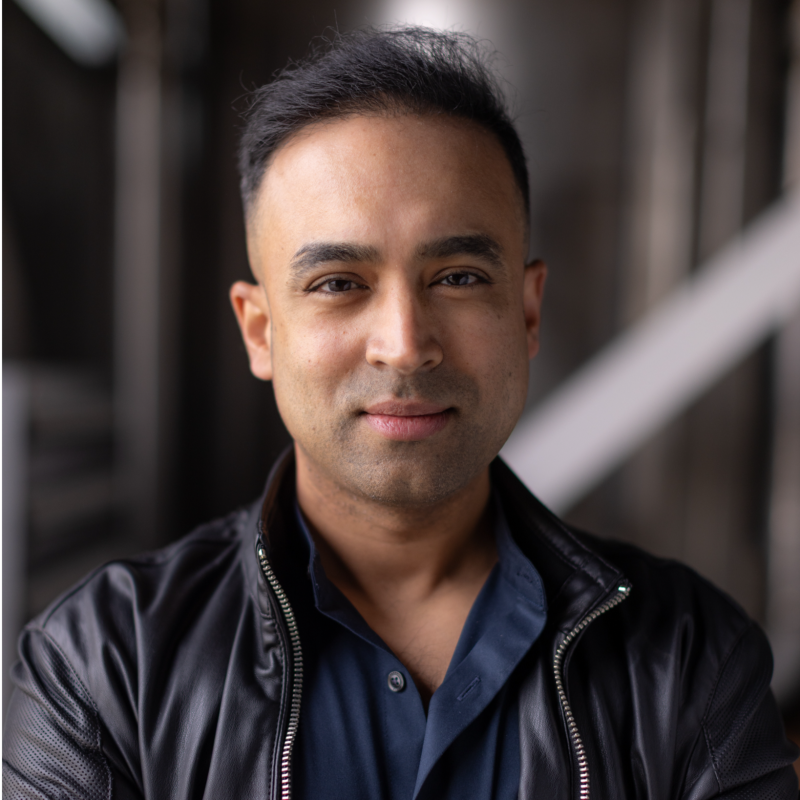
Yasir Arafat is the co-founder and CTO of Aalo Atomics, a company developing factory-manufactured modular nuclear power plants designed for AI data centers. Before founding Aalo, Yasir led the MARVEL microreactor program at Idaho National Laboratory.
In this episode of Inevitable, Yasir explains how Aalo became one of four U.S. nuclear startups to achieve criticality by the July 4, 2026 deadline. He breaks down what criticality means, why the milestone matters, and how the team went from a small startup to sustaining a nuclear fission chain reaction in less than a year.
The conversation explores why Yasir believes nuclear's biggest challenges are speed and economics rather than safety or reliability, and how Aalo is trying to address both through factory-based manufacturing. Yasir also shares how the company built its own reactor building in 36 days, tested its full-scale reactor systems, developed scalable fuel assembly manufacturing, and partnered with Idaho National Laboratory to learn how to operate a real reactor.
Finally, Yasir outlines Aalo's path from its zero-power Critical Test Reactor to Aalo-X, a full-powered reactor designed to generate electricity and power a co-located AI data center, and ultimately to the company's commercial Aalo Pod. The discussion also covers DOE demonstration pathways, future NRC licensing, the resurgence of nuclear innovation, and why Yasir believes multiple reactor technologies and companies will be needed to scale nuclear energy.
Note: Aalo Atomics is an MCJ portfolio company.
Episode recorded on August 6, 2026 (Published on August 18, 2026).
In this episode, we cover:
(0:00) An overview of Aalo Atomics
(2:00) What criticality means in a nuclear reactor
(3:38) Why the July 4 deadline was set and why it mattered
(7:07) The final 24 hours before Aalo reached criticality
(9:24) How accurately Aalo's reactor matched its physics models
(11:43) From the MARVEL microreactor to founding Aalo Atomics
(13:56) Why Aalo is focused on nuclear speed and economics
(17:05) Why Aalo built a zero-power critical test reactor first
(19:01) Building a nuclear reactor building in 36 days
(19:21) What Aalo tested beyond the reactor itself
(20:53) Building fuel assemblies for the next 100 reactors
(23:43) Why organizational readiness matters as much as reactor technology
(24:05) Running the CTR and Aalo-X projects in parallel
(24:56) Excavating through unexpectedly difficult basalt rock
(26:03) The progression from CTR to Aalo-X to the Aalo Pod
(29:29) Partnering with turbine suppliers and Crusoe
(31:27) The timeline for powering a co-located AI data center
(32:09) How DOE authorization supports first-of-a-kind reactor demonstrations
(34:01) Moving from DOE demonstrations toward NRC commercial licensing
(42:03) Why Aalo is betting on the next generation of sodium-cooled reactors
-
[Cody Simms] (0:00 - 1:27)
Today, on Inevitable, our guest is Yasir Arafat, co-founder and CTO of Aalo Atomics. On July 4th of this year, Aalo became one of four U.S. nuclear startups to reach criticality, hitting a presidential deadline that seemed nearly impossible when it was set. I invited Yasir on the show to unpack what criticality means, why it matters, what it took to get there, and how it impacts the company's plans going forward.
Prior to Aalo, which builds factory-manufactured modular nuclear power plants for AI data centers, Yasir led the MARVEL microreactor program at Idaho National Lab, designing the technology that became the inspiration for Aalo's commercial efforts. MCJ is an investor in Aalo via our venture capital funds. From MCJ, I'm Cody Simms, and this is Inevitable.
Climate change is inevitable. It's already here, but so are the solutions shaping our future. Join us every week to learn from experts and entrepreneurs about the transition of energy and industry.
Yasir, welcome to the show.
[Yasir Arafat] (1:27 - 1:29)
Thanks for having me on, Cody.
[Cody Simms] (1:29 - 2:00)
Well, you have been on a full-on sprint, I think, probably for the last few years, but especially for the last few months.
I know there was this major July 4 date that a number of companies in the nuclear space have been running toward, and you at Aalo, along with a few others, hit it. I wanted to have you on here to talk about this criticality milestone. So maybe let's start there.
What is criticality and what does it mean?
[Yasir Arafat] (2:00 - 3:19)
It's a great way to start this conversation. Criticality is one of the major milestones we've hit just on July 4th, and what this really means is when you have a fission nuclear reactor and you've built something real and then basically what happens inside a fission chain reaction is what you're trying to do is create neutrons from a fission chain reaction. They go and try to hit other uranium atoms and create three more neutrons.
When it propagates too much out of control, then you have too much reactivity. When you don't have enough, it dies down. Typically in a nuclear reactor, when you can manage and maintain these two things, the amount of neutrons that are born and the amount of neutrons that are vanishing from the core, when you can balance them in a delicate way, that's when you have achieved criticality.
And from there, when you add a little bit more juice, then you can create heat and power and so on and so forth. It's basically like when you get into a car, it's like turning the car on for the first time and you're going through ignition. You haven't pressed the gas too much yet.
The engine is running, all your lights are on, everything is working and you know it's going to work when you press the accelerator. That's basically what it means when you see criticality in the most simplest terms.
[Cody Simms] (3:20 - 3:25)
Would it be fair to say that you've created the conditions for a sustained nuclear reaction?
[Yasir Arafat] (3:26 - 3:26)
Yeah, absolutely.
[Cody Simms] (3:27 - 3:37)
You're one of the four companies that achieved it by this July 4 milestone.
What was that you were marching against? What was the request from the government? How did that all come about?
[Yasir Arafat] (3:38 - 6:39)
Yeah, I think to talk a little bit about the history of why this was an important milestone is equally as important as the milestone itself. For the longest time in the nuclear industry, we have designed a lot of amazing cool reactors, but for the last four or five decades, we stopped building them. All the designs were stuck on paper.
We call them paper designs in the industry. So we've had a lot of paper designs, but not really taking them from the paper to really building something and to show that it can really work in reality. Many of the reactors that are currently operating, in fact, most people don't know this.
20% of the nation's electricity comes from nuclear power plants. But those were built back in the 50s, 60s, 70s, mid 80s, and then we stopped. And after nearly 40 years of not building anything, the US built a gigawatt scale power plant called Plant Vogtle Units 3 and 4.
But those are not necessarily advanced reactor technology. They're basically an improved version of the water-based technology that we have been running for for a few decades. That stagnancy, there's many reasons for it, political reason, regulatory tightening their regulations, customer, some of the major accidents that happened in the 70s and 80s.
But over time, we didn't build anything new. 50 years almost passed by. When the Trump administration came into power and basically said, well, you know what, we need to really get ahead in nuclear in order to compete with other countries like China and Russia.
When the United States were not building any more new systems, there were a lot of innovations going on in India, China, Russia, and they were taking the baton away from the United States as the leader of nuclear energy. So the Trump administration decided to say, you know what, we've done enough R&D, we've done enough paper design. Let's go build new reactors.
We want at least three new advanced reactors to achieve criticality by July 4th of 2026. And when they came up with this executive order, that was last May, May of 2025. We literally, by the time they selected these 10 companies to go and get selected for this program, we had less than a year away.
When you think about that timeline, a year from selection to coming up with a brand new design and build a brand new reactor and turn it on and ensure that it works. Not an easy challenge. In fact, there have been nuclear companies that have been around for a decade, decade and a half and haven't got to that point.
So most of the industry really bowed out and said, you know what, it's impossible. But only a handful said, we want to try and Aalo is one of them. So we did and then we hit criticality exactly on July 4th, 20 minutes after midnight, we went on and sustained a fission chain reaction in Idaho National Laboratory.
[Cody Simms] (6:40 - 7:06)
Congrats on that. That was going to be the next question I wanted to ask you, which is like, take me back to 10 o'clock on July 4th or whatever it might be. I was actually watching the live stream, which was so cool that you guys did this.
Take me back to those moments before criticality and what was actually happening. What was the team itself working on and trying to prove as you were about to flip the switch?
[Yasir Arafat] (7:07 - 8:05)
24 hours before we went critical on July 3rd, we're basically rushing to get through all of the different steps. Can't take any shortcuts in nuclear. You have to follow every single thing methodically, ensure the right conduct of operations, make sure of the checks and balances that we have planned.
It has to be executed. We were hopeful that we will make it by July 4th, but many of us started questioning and said in our heads, like, are we going to actually make it? When we talked to the joint test group called the JTG that's assigned by DOE as the gatekeepers of every little step before you go to criticality, that's a combination of Aalo, DOE, and Idaho National Laboratory, we asked the JTG, like, hey, what is your estimation?
Can we actually make it to criticality by July 4th, by tomorrow on the deadline? What percentage would you say are successes? And they said, well, you guys have a 5% chance that you'll make it.
[Cody Simms] (8:05 - 8:05)
Oh, wow.
[Yasir Arafat] (8:07 - 8:13)
Yeah, they said, you have 5% chance that everything will go according to plan, and you guys can actually make it. And I was like, well....
[Cody Simms] (8:13 - 8:20)
Those are about the same odds that any startup has of surviving. No, you know....
[Yasir Arafat] (8:20 - 9:24)
That's very true. This is literally a day before the deadline. That's how much work.
And everything up to that point, everything that could go wrong, did, and we fixed it and recovered from that. But then when we started loading the fuel as our last attempt, everything went very smooth. And that's because we have done the rigor, the level of work and engineering that's needed to prepare for that last moment when it really matters.
But still, time was not on our side. In fact, basically in criticality, what you're trying to do is you have a very sophisticated physics model that predicts what your reactor design is and how many assemblies you're adding, when will you go critical? When you draw the control rods out, the poisons that really suppresses neutrons is the delicate balance between how much fuel you have and how much poison you have in the core that maintains this control of criticality.
So you have to predict all of this using your physics based models and see what your estimation is going to look like and how far you're off from your prediction.
[Cody Simms] (9:24 - 9:40)
As the control rods are lifting out sort of one at a time, you're monitoring what's actually happening, starting to happen inside the reactor and does it seem to be aligned with what you predicted based on the behaviors that your specific reactor design should enable? Am I following that correctly?
[Yasir Arafat] (9:40 - 11:06)
Absolutely. And in fact, why is that important? Because as a nuclear reactor company, you want to make sure that whatever your engineering and simulation models are, they have to be as close as possible to reality.
That's when you really have a robust model that you can now do other things with in the future. We predicted we will go critical on our 13th assembly based on the number of fuel rods we had based on the amount of uranium and then enrichment level and all of the manufacturing tolerance is all stacked up. So there's a lot of things behind that model that tries to capture reality as much as possible.
So we predicted 13th assembly will go critical, control rods drawn out 70 inches from the core. And we went critical exactly on the 13th fuel assembly. And we were half an inch away from what we have modeled.
I mean, this is super close to what our models are predicting on the physics perspective. So I've seen a lot of reactor programs in the past when you dig up literature and you see what they have modeled and how close they were. This was by far the closest I've ever seen.
And we're extremely proud of the amount of engineering models and rigors and the processes that we have built to be able to predict a moment like criticality accurately is, I think, an engineering feat of its own. It's a major accomplishment for us.
[Cody Simms] (11:06 - 11:43)
Congrats. And I'm curious how the milestone compares to what's happened in the national labs over the last couple of decades. You talked about how we as a country haven't launched new reactor technology to production in a few decades, but lots of new reactor technology has been built inside our various national labs. You come from that background, you designed the MARVEL reactor, which is the basis for Aalo.
How far did you get with that project? And how does that compare to what Aalo just accomplished?
[Yasir Arafat] (11:43 - 13:50)
We started MARVEL literally right before COVID. And the goal there was to show the very thing that the executive order was trying to do is, hey, we've done so many paper designs. Let's go ahead and build something real.
We need to show the world that nuclear can innovate and it can do that fast. It's not bogged down by its history and all those things. Everybody at that time, small reactors or advanced reactors, they were all on paper.
Nobody was building anything in reality. So we wanted to change that and we started MARVEL and the goal there was to show that it can physically be done in a relatively short amount of time. In that time frame, if you ask anybody like, hey, I'm going to come up with a brand new reactor design and I will go critical less than five years, they'll laugh at your face.
Five years was too long at that time because nobody did it. So we said, no, in MARVEL, we'll try to do that from an ideation to getting full approval under four years and try to get this thing built and run and operated. We did MARVEL in less than 30 months.
That in itself got a lot of attention from private industry saying, how are you guys doing this so fast, especially being in a national laboratory environment which has a perception of being slow and bureaucratic? But that was not true. We demonstrated that we can do it rather fast and industry was coming to us and asking how we were moving fast.
A big part of this is the regulatory framework that allows that rapid maturation of a technology. And at the time, the Department of Energy Idaho Operations Office was trying to reform the regulatory frameworks starting with the MARVEL and the PLA program. One was funded by Department of Energy, one by Department of Defense.
And so these two programs were really exercising some of those regulatory framework that allowed these four reactors to achieve criticalities. And we were the first ones to do it. For example, the environmental review normally takes two to three years.
MARVEL was the first reactor that actually used a slightly different approach to get the approval in less than 12 months instead of two to three years.
[Cody Simms] (13:50 - 13:55)
So did MARVEL itself also go critical inside INL then or not quite the same milestone?
[Yasir Arafat] (13:56 - 16:36)
No, in fact, when we got the approval from the regulator to say, hey, you have finished final design, start construction, that was October of 2023. That's when I transitioned from the National Lab to Aalo Atomics. The baton of leadership for MARVEL was passed along to other folks at National Lab.
In all honesty, like I think at the end of the day, there's always a lot of challenges that you face in a first-to-market project. And all the stars have to align for you to really hit something. So I'd left the Idaho National Lab around fall of 2023, started Aalo Atomics with Matt, we were just two people.
And one thing we wanted to change was how to rethink nuclear in a way that we can solve its two of the biggest challenges as we saw it. That is not as most people tend to believe, oh, nuclear has to be safer. That's not true.
Nuclear is pretty safe. And in fact, if you look at the data, the amount of kilowatt hours that we generated in terms of energy, we are as safe as solar, for example. And that's a pretty darn good record, despite what the public perception is.
Oh, nuclear needs to be more reliable, not true. Nuclear is plenty reliable. We have capacity factors that have reached almost 95% now commercially.
What was the challenge? The challenge was speed and economics. Can we deploy nuclear for new nuclear fast enough?
And the answer was no. Vogtle has shown us that, you know, if we build a first-of-a-kind plant, we estimated what, about nine years as a country and it took us double the time and double the cost. How can we really scale nuclear in a way that can be significantly faster?
Even if, let's say, we figure out a way how to magically get to the timelines for this gigawatt-scale plan, like how China has done, it really reached a steady state and how fast it can deploy. It's around like six years for an AP1000-style machine. Still not fast enough, in my opinion, I think we need to get to a world where you're deploying multiple megawatts every single year.
So we wanted to really solve that speed as well as the economics problem, because things were unpredictable in nuclear and deployment, the cost was also going up, and it's not like millions of dollars, billions of dollars. That makes it a significantly risky execution. And then we wanted to change those two things by figuring out a way how to make both speed and economics predictable.
That's where the factory-based mass manufacturing approach really comes to being the main DNA or the core thesis of Aalo. So we started off with the MARVEL program as a starting point. If you're just taking a technology and building it and selling it to the market, nobody's going to really get it because you don't have a really good product market fit.
[Cody Simms] (16:36 - 16:48)
The guts of the reactor are important, and I should underscore that, very important, but how you actually get the reactor turned into a power plant is ultimately what matters, is what I'm hearing you say.
[Yasir Arafat] (16:48 - 16:48)
Absolutely.
[Cody Simms] (16:49 - 17:04)
And that leads me to, I think, the next topic I really want to dive into, which is describing all of the work that you all executed on over the last year to actually stand up the reactor that hit criticality.
[Yasir Arafat] (17:05 - 18:56)
Let's rewind back in the last nine months or so. We have done our first groundbreaking at the Idaho National Laboratory in August, but that groundbreaking was for Aalo-X, our full-scale power plant. The reactor that we built was just a zero-power criticality test.
We were not even planning to do that originally. We wanted to take two years and build out the full-scale reactor and turn it around and make electricity as a one-step process. When the executive orders came out, we thought that was a great goal to shoot for.
We all agreed in the team that it would be a great learning experience if we do it iteratively. First, we will build a reactor, try to go critical, but it will not produce full power. It's going to have very low power, but we will prove out many things needed to build a nuclear reactor.
And step two would be, from there, build the entire power plant to go and make electricity at multi-megawatt level. We actually started the CTR program around September-ish when we officially kicked that off internally. From there, we did things so fast.
Just to give you an idea, we broke ground on the Aalo-X CTR, the critical test reactor, on November 10th at the site. People told us, hey, don't build your own nuclear building. Just build a reactor and put it inside an existing INL building, and you guys can go hit the July 4th timeline just fine.
Try not to take too much on. And we said, no, we're going to not just achieve criticality as the milestone, but we do want to learn on some of the key things that held nuclear back from commercialization. One is construction.
[Cody Simms] (18:56 - 19:00)
Back to the point of it's not just the reactor, it's the actual power plant that you need to build, right?
[Yasir Arafat] (19:01 - 19:16)
Exactly. So we said, okay, we want to try construction.
We want to actually try to build a building and see how far we can go, how expensive it is, how do we build it from ground up. And so people told us, you can't even build a tool shed under two years. Forget about a reactor building.
And we built ours in 36 days.
[Cody Simms] (19:16 - 19:20)
Were you like driving the backhoe on this thing, Yasir? How did you make that happen?
[Yasir Arafat] (19:21 - 20:49)
We actually used a subcontractor. But it's really fundamentally, how do you approach the architecture from a first principle thinking and really change the way of how do you approach what our nuclear reactor building should be, from how we traditionally do it? We can get into that more in detail.
So that's number one. Two, we built everything at full scale. We said, we don't want to build a subscale, small reactor model and try to pretend that we can figure out what a large scale reactor would do.
Let's go ahead and build the full reactor at scale, the way we would expect for a 30 megawatt thermal system. So we have enough fuel in the reactor to actually get 30 megawatt thermal system. And we built the whole fuel assemblies, the moderator components, the control rod drive mechanism, the reactor vessel, everything was built at full scale, the control systems.
And that way, we can maximize our learning from it. Third thing is fuel. Fuel was an important piece, no fuel, no reactor.
And yes, everybody is trying to make their first reactor work. But we're not working, trying to figure out how to solve the fuel problem for reactor number one. We are thinking about how do we take the learning from here and figure out how do we make fuel for the next 100 reactors?
Now, we have an advantage that we don't use any new fuel form. We use a fuel form that is commercially available, have been used, tested, qualified, and operated in nuclear power plants for the last 70 years.
[Cody Simms] (20:49 - 20:52)
You're using a, I think, a 5% enriched UO2 fuel, right?
[Yasir Arafat] (20:53 - 23:43)
That's correct. For this reactor, we use 5%. But then for commercial systems, we can get up to 8%.
The industry have really ramped up towards that direction. Even the fuel pellets are commercially available and off the shelf. The fuel bundles are unique to Aalo.
That part, nobody has done. So in addition to building a reactor and the constructing the building, we said, let's go ahead and build our fuel bundles in ways that we can truly scale for our next 100 reactors. So we actually designed and built an automated jig and showed that we can actually use that jig under a regulatory framework to go ahead and make fuel consistently and repeatedly and make all our fuel bundles before we load them in.
We've demonstrated that. And lastly, is the operations. How do you, as an organization, set up all of the safety management programs and plant programs to stand it up and really go and operate a nuclear reactor?
We tried to push the frontier as much as we could, trying to see how much scope can we do on our own. Turns out, operation is one of those things where you do need a lot of experience because experience is what makes operations better. We didn't have that, we were a startup company.
So yeah, we can hire consultants from outside, but we really wanted to learn and grow on our own. Being next to Idaho National Laboratory, who currently operate four nuclear reactors, test reactors on their site, they really have that day-to-day knowledge of how to run nuclear reactors appropriately. We partnered with Idaho National Laboratory and said, guys, help us understand and teach us how to do nuclear operations the right way.
So they came in last moment and really work with the Aalo team and our operators really tried to figure out how do you operate. So every operator in the control room were Aalo's operators learning and leveraging the experience base from Idaho National Laboratory and we run our own systems. So that experience is extremely extremely important to figure out, okay, how do we then now go to the next iteration of our reactor design where we improve it, not just for working properly as a nuclear reactor or working safely or be able to make it in a factory, but also how do you appropriately operate it in the field?
Can we make it so that it's easier on the operations team? Those are the kind of learning that companies who have not built a real reactor would never understand. We also tested out an entire supply chain.
To go from a paper reactor to a real reactor, you have to buy stuff. You have to make things. You have to maintain the quality level from design to manufacturing to procurement to execution.
All of that, we have proved that out as well. So really, at the end of the day, when you're building a reactor to achieve criticality, it is not just the tech that you're proving out. It's that organizational readiness that can help you get to the next level.
[Cody Simms] (23:43 - 24:04)
Sounds like you've had these two projects going in parallel, the criticality project or the critical test reactor, and then the first Aalo-X site as well. Have you had two full-scale teams driving these as separate projects or how have you project managed across two large-scale infrastructure projects at once?
[Yasir Arafat] (24:05 - 24:48)
The beauty is they were staggered when we were trying to pull off the CTR. A majority of the team in Aalo was on the critical test reactor because we have to really get that done right. We've had most of our construction team working on Aalo-X because they were really focused on doing the earth work.
Now, we've built a CTR entirely above grade and we wanted to get learning from an above-grade reactor. The full-blown Aalo-X, the full-powered reactor that's actually below-grade, there's always benefits to doing a below-grade reactor as well, which is can we go ahead and leverage the soil around the reactor for shielding purposes, for protection from getting resilient from the weather?
[Cody Simms] (24:49 - 24:55)
You've done a bunch of drilling through basalt rock to secure that reactor, if I'm not mistaken. Is that right?
[Yasir Arafat] (24:56 - 25:53)
Yeah, and doing that below-grade. We wanted to learn and boy, we learned because if there's any site in the U.S. that is hard to excavate, it was this site. Everything below 10 feet in, it's all lava, basalt, hard rocks.
We thought, and because we were so close to the Idaho National Laboratory facilities where they had sensitive equipment, we couldn't use explosives, we had to do controlled drilling and excavation. Originally, we thought, hey, the rock's going to be 6,000 psi strength, and that was it. When we started drilling, we found out the rock was 16,000 psi strength.
And that was significantly harder, but we finished the earth work on schedule and we just wrapped things up middle of June. Right now, the next step is to lay the foundation. We were having two different teams, but majority of the team was on the critical test reactor and the learning from that project will ultimately get into the full powered reactor system.
[Cody Simms] (25:54 - 26:03)
Can you describe ultimately the differences between the CTR, the critical test reactor, and Aalo-X and what it will look like once that's production ready?
[Yasir Arafat] (26:03 - 29:12)
Absolutely. From this CTR to the Aalo-X full power, we will get to what is called technology readiness level 9, TRL9. And what that means is like from there, you don't have any more technology shortcomings.
From there, it's all about scale up. So let me help you explain the difference between the CTR and the Aalo-X and then from the Aalo-X to the commercial product, because those differences are worth talking about. So CTR is a full scale nuclear reactor, but it has the capability to go 30 megawatt thermal, but we deliberately did not turn on that much power because we did not include sodium, the liquid metal coolant that is used to extract that heat out without overheating the reactor.
We didn't have sodium in the CTR, and so it's a zero-powered reactor. And we wanted to prove out mainly the nuclear portion of a nuclear reactor, and we proved that very closely to what our models look like as we talked about. So the next step from here would be now you have in Aalo-X, you have the reactor portion, but also have sodium included in the primary side.
We also have another set of systems called the steam generator. It's also a sodium-based system that will extract the heat from the reactor and able to make high temperature steam. And with that, we're going to have a 10 megawatt electric turbine that will take that steam and actually make electricity.
But we don't end there. That electricity that we produce, we want to hook it up next to a co-located AI data center so that we try out the entire stack from nuclear fission and heat generation all the way to making electrons and powering a data center so that when you combine a data center, which really has a lot of high spikes of pulses, sometimes they're 100 percent power and then boom, they go down in a matter of a fraction of a second.
How does a machine like that work well with a spinning turbine that is significantly slower to ramp up and down? How do we have battery energy storage in between and how does the entire solution work for nuclear and AI? We're going to prove all of that out at the Aalo-X site.
The learning from there goes into our commercial product, which is whatever we're building in Aalo-X, you multiply that by five on the reactor site, except the difference is now you don't have five small turbines, you have a shared steam drum and three turbines, each of them 25 megawatt electric. So as a power plant, it will produce 50 megawatts, each reactor will give you 10 megawatt worth of power. And so now all of a sudden, if a reactor is down for refueling or maintenance or if a turbine is down for maintenance, your power plant as a whole is not down.
But have you fundamentally changed nuclear technology from Aalo-X? Not really. We just architecturally changed it, not from a technology perspective.
So that's our progression from CTR to Aalo-X to the Aalo Pod.
[Cody Simms] (29:13 - 29:29)
That's super helpful. And you have partners lined up for on the turbine side and on the data center side that you've announced at this point too. You're sort of lining up the dominos behind the technology that you're building.
[Yasir Arafat] (29:29 - 31:20)
Totally, and I think the partnership extends way more than that. And I'm going to talk about these two that you just mentioned. Even though we're a vertically integrated company, meaning we're trying to build most of the hardware ourselves, we do rely on a healthy set of suppliers and partners, one of them being on the turbine side. So we partner with Baker Hughes, as well as Siemens and formed strategic partnership with those two major international turbine suppliers.
But for Aalo-X, our turbine is going to come from Baker Hughes. It's a 10 megawatt electric turbine and the turbine should show up in the next few months. So we're pretty excited to see nuclear is the new part.
The turbine is a mature, mature technology and it's super low cost, everything that's out there, that is the most available and has the highest level of experience and the lowest cost technology that can take heat and turn to power. We're going to bring one of those in. But then again, we also wanted to test out the data center side and we've talked to a lot of different data center customer and companies that we want to partner with. Out of all of them,
one that we have really been talking for a long time and have partnered with successfully is Crusoe. They're one of the major developers of Project Stargate out on Abilene in Texas. And we have partnered with Crusoe.
We've been talking to Crusoe for quite some time and we finally finished the contracting on having a true partnership with them. One of those first steps is to really demonstrate the nuclear and AI solution from Aalo-X as a demonstration project and then we'll take those learning and actually go deploy in the commercial sector. That's really the goal.
We did a major announcement groundbreaking for that data center a few days ago to bring that unit here and connect it to our reactor. So we're pretty excited about that. It will be the first time a nuclear and AI system would be co-located, co-built and do a demonstration like this for the first time.
So we'll learn a lot.
[Cody Simms] (31:21 - 31:26)
Have you guys announced a time frame for when you're targeting having that out?
[Yasir Arafat] (31:27 - 31:35)
Sometime 2027. Within the next 12 to 18 months, we will have the entire full power reactor built and power the AI data center.
[Cody Simms] (31:36 - 32:08)
I know part of the ability to do this is the fact that you're doing it at INL on DOE land and it relates to some of how the Trump administration, the DOE, is leveraging DOE approval for commercial nuclear reactors relative to the traditional regulatory pathways. Do you want to share a little bit about how you guys are leveraging that or what has come into effect over the last few years that have unlocked some of these opportunities?
[Yasir Arafat] (32:09 - 34:01)
Before even the executive orders came out, Aalo went deliberately to the Department of Energy for building Aalo-X before we even got selected for the reactor pilot program. As soon as we started the company, we went straight to DOE because from the MARVEL experience, we found out that Department of Energy, especially the Idaho Operations Office, they really have built that muscle for first-of-a-kind nuclear technology, deployment and demonstration. The executive orders really reinforced that capability.
You have multiple reactor companies that have actually achieved criticality under that new framework. The key difference there is NRC is still licensing commercial systems that will make electricity that would go on the grid. DOE, its purpose is to advance nuclear technology in the United States and be able to create that framework that can really expedite the authorization of a brand new technology and show that it can run safely and still be able to do it at a speed that's reasonable for innovation in the nuclear space.
They did not lower any of the safety bar or the quality bar. They still maintain the quality and safety, which is really non-compromisable. A lot of people mistake like, oh, if you're going fast, that means you're not safe.
That's not true at all. The Department of Energy did a really good job at maintaining that rigor that's expected from the nuclear industry. However, they removed a lot of the red tape and things that are low value out of the way so companies like us can actually move and demonstrate fast.
The intent of the reactor pilot program was that once you prove this out, under the DOE authorization framework, you then take the learning to the NRC and license them commercially for future reactors. Those were part of the executive order.
[Cody Simms] (34:01 - 34:27)
Just to be clear, you couldn't take the current design and go launch it in Springfield for Homer Simpson to manage, for example, under the current DOE authorization, it would need to go through an NRC approval process still. The hope is that the fact that you will have gone live on DOE land using the DOE frameworks will help the NRC interpret your application more quickly.
[Yasir Arafat] (34:27 - 34:44)
I think for the most part, that is correct. There are some cases where that can change, but in general, that is the case where DOE is for demonstrations and first-of-a-kind prototyping, and then you would essentially move over to the NRC for commercial licensing.
[Cody Simms] (34:44 - 35:06)
First-of-a-kind prototyping, but you can go live commercially on DOE land, which is what the Crusoe partnership is expecting to do. Even though it's somewhat of a proof-of-concept prove-it, it will actually be producing power and it'll be running a production data center and calculating inference AI for some customer, right?
[Yasir Arafat] (35:07 - 35:11)
Not for some customer. This whole endeavor is not a commercial endeavor.
[Cody Simms] (35:11 - 35:13)
Oh, interesting.
Okay.
[Yasir Arafat] (35:13 - 35:24)
This is a demonstration and prototyping endeavor. The idea was to learn the entire stack before we can actually take it to a commercial project ultimately.
[Cody Simms] (35:24 - 35:26)
That's helpful clarification. Yeah, thanks.
[Yasir Arafat] (35:26 - 35:26)
Absolutely.
[Cody Simms] (35:27 - 36:27)
Something I think I want to take a step back and reflect on, which is five years ago, I think almost nobody would have predicted that four, and now I guess Oklo had an announcement just last night as we're recording this that they've hit criticality. So five reactors have hit some form of criticality in a single summer. The kind of capital and attention that's going into nuclear right now, again, I think no one would have probably predicted five years ago.
We're clearly in go-go boom times right now. How do you think about building this company so that it holds up for the long-term, even in the inevitable ups and down waves that we see for sure happening in nuclear, and we see for sure happening in technology, and we will probably see happening in AI as well. It's great that you're on this enthusiasm crest at the moment.
How are you guys thinking about that as you continue to build the business?
[Yasir Arafat] (36:28 - 38:26)
And again, Cody, criticality is just the first step in a row of 10 major milestones. Any company you have to go through from going from a small startup to an organization that can truly scale nuclear the way it's meant to be. And it's a long journey.
Criticality is getting a lot of attention because an executive order really forced all that and catalyzed it to happen. And that's amazing because the last time that happened was 50 years ago, it's a big deal. It's a lot of work that we had to pull together and miracles and engineering marvels to make this a reality.
And a few companies have gone through that among all the various companies that have been around the United States. But that is just the beginning. Ultimately, all of these companies, including us, are going to move towards full-scale power.
That's where the rubber meets the road, not small-scale power, but full-scale power. And when you get there, you're going to see some companies make it, others don't, in a reasonable amount of time. But that's still another milestone.
Ultimately, what really matters is when you go and make full power, can you continue making that power? And what fraction of the time is your plant online, and what fraction of the time is actually offline? How reliable is your technology in the field, and how many hours have you run your system to really create that confidence level, a customer will be like, okay, you know what?
I need 99.9% of the time electricity availability from a generator. All those technology has proven that they can deliver that power. Let's go ahead and actually deploy.
So that, I think, is where the rubber surely meets the road. And from there, there may be a few companies that will make it to that level. However, even that is not the end game.
The end game, actually, I keep on adding more things.
[Cody Simms] (38:27 - 38:30)
It's like every good Avengers movie. There's always the end scene.
[Yasir Arafat] (38:31 - 39:53)
There's always the next thing. From there, when you have shown that your operations uptime is pretty strong, the next thing will be like, okay, what is your economics? What is the dollars per kilowatt hour you're getting, or cents per kilowatt hour, for your cost of electricity?
If you're too expensive, you're only applicable to a small niche market. If you're actually very low cost, and all of a sudden you'll see a massive wave of orders that can convert to commercial farm contracts, from there, it's not going to be demand that will hold you up. It's your supply, meaning can you truly scale up from there?
So we've been thinking about that entire journey from day one at Aalo. And that scalability is what drove a lot of our decision making that's needed to truly scale nuclear. So you'll see like on paper, all those design individuals, it's not the most perfect coolant or the perfect fuel or the perfect temperature range.
None of these seem perfect, but together when you put it together, it's actually a convergence of multiple Venn diagrams that's needed to scale. Like for example, are the supply chain available? Can you make a lot of these materials?
Can you transport them effectively throughout the country? Is there a market that will buy at that price point? Can it be reliable enough?
So if you connect all those Venn diagrams together, you find a very little small design space, and that is where our technology is essentially based upon.
[Cody Simms] (39:53 - 40:26)
In the large light water reactor world, there are a handful of vendors building large scale reactors, or I guess owning the technology of large scale reactors is probably the more accurate way to describe them. Hitachi, Westinghouse, etc. etc.
Not to get into all the different categories of different reactor types, but is it reasonable to expect that there will be multiple companies out of this current generation of startups that ultimately become large businesses and multi-decade going concern companies?
[Yasir Arafat] (40:27 - 42:03)
I sure hope so, because I think the way the demand is right now, we need multiple wins in this sector, and we want nuclear of every sizes and shapes and technologies, and we hope that they can all get to market and be able to deploy commercially and really scale up. So we want those large scale water-based reactors, as many as we can build, we should not even hesitate. If there's a mechanism how to do that effectively in this country, we should absolutely go build many of those as much as we can.
Same with SMRs, if they are economically feasible and timeline and everything works out, and it's mature enough and we can create a supply chain that can deploy many of these, we should absolutely try to do them. And again, same with the small reactor space, not all small reactors are all flocking towards a single market. We are hyper-focused on AI data centers.
There are other small reactor companies who are focused on DoD application. There are other companies that are focused on space application. What we are seeing here is really a resurgence of nuclear in almost every vertical that you can see here, and it really is a very amazing ecosystem that we are seeing today, where we have not seen such an ecosystem of nuclear advancements in the last 50, 70 years in nuclear.
So we're living at a very interesting time, and I sure hope that many of these companies, including ours, get to the finish line and actually truly deploy and scale commercially. It's not going to be a one company scoops it all. I tend to not believe that's going to be the outcome, but I do believe that we are not going to see every player get to the finish line either.
It's going to be somewhere in between.
[Cody Simms] (42:03 - 42:12)
Besides backhoe drivers and basalt rock drillers, where do you need help right now as you guys go after the next milestone and get Aalo-X up and running?
[Yasir Arafat] (42:13 - 44:24)
We're super excited about the next phase, and that's because at the end of the day, I'm a nuclear nerd. If you look into the evolution of nuclear technology, we were mostly water-based industry. Most of our commercial reactors are water-based.
From there, there's another advanced reactor that the industry is working towards, and in fact, we have the highest amount of operational experience in that reactor type, and that is sodium-cold reactors. It really has a lot of promise in the sense that it is 100 times more thermally conductive. It's a readily available material.
If you maintain the oxygen level, it really becomes the most compatible coolant to structural steel than any other fluids, including water. So it really has a lot of this promise that the US was working towards, and then it stopped. Not because of technology, but because of a political reason.
When we built the Aalo-X full-powered reactor, we would become the next continuation of that stream of sodium-cold reactors in this country and really able to bring this advanced reactor come to life. The reason we like this technology so much is not just for the near-term. In the future, we can make modifications to the system, and let's say when Halo becomes unlocked fully and the cost goes down, we can convert these reactors into waste-burning reactors that can truly sustain the entire fuel supply chain.
We didn't think that was a good idea to begin with as a company, because there's supply chain challenges and there's operational challenges. We want to start off using a thermal spectrum reactor and make sure it's economically feasible, and then move towards that future at the end of the day. So I think we're excited.
This will become the next big sodium reactor demonstrated in this country after so many decades of stagnancy. We're one of the few companies that are approaching, or pursuing, sodium-cold reactor technology, and I would say like confidently, we are ahead of the curve in that space. We'll make sure we can build a reactor, demonstrated, operated, and show that can actually become one of the best nuclear technology we can rely on for the future.
So we're excited about the potential.
[Cody Simms] (44:25 - 44:47)
Yasir, congrats on your sprint. I hope you've had a minute to reflect on an incredible milestone as you've probably already had to turn your attention to the next one. I'm excited to continue to follow along and support you in your journey.
We're thrilled to be investors in Aalo at MCJ. Look forward to the next wave of incredible announcements.
[Yasir Arafat] (44:48 - 44:55)
Amazing. Thanks, Cody. Really appreciate you.
We're excited about the next steps, and we'll do great things. So follow us along.
[Cody Simms] (44:56 - 45:22)
Inevitable is an MCJ podcast. At MCJ, we back founders driving the transition of energy and industry and solving the inevitable impacts of climate change. If you'd like to learn more about MCJ, visit us at MCJ.VC and subscribe to our weekly newsletter at newsletter.MCJ.VC. Thanks and see you next episode.