
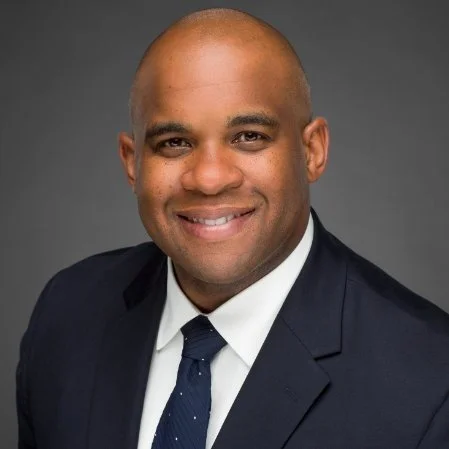
Willie Phillips is a former chairman of the Federal Energy Regulatory Commission (FERC) and now a partner at Holland & Knight. During his time at FERC, Phillips helped lead major reforms to transmission planning and the electric grid’s interconnection process. He now advises the companies and utilities he once regulated, giving him a unique perspective on how developers can navigate the regulatory system.
In this episode of Inevitable, Phillips explains how FERC works, what companies routinely get wrong when engaging with regulators, and why early participation and pre-filing conversations can dramatically improve the odds of success. He also breaks down the Supreme Court’s overturning of the Chevron doctrine and how his team designed Order 1920 around reliability and existing legal precedent.
The conversation then turns to the bigger challenge facing the U.S. grid: rapidly growing electricity demand from AI, data centers, electrification, and industrial activity. Phillips argues that the grid was not built for this moment and that the country needs faster, more coordinated planning while preserving the role of states and regional authorities.
Finally, Phillips discusses large loads, behind-the-meter generation, vertically integrated utilities, and the possibility that hyperscalers could become major power generators. He argues that regulators, utilities, and technology companies have an opportunity to work together to build the infrastructure needed for the next era of the American economy.
Episode recorded on July 29, 2026 (Published on August 25, 2026).
In this episode, we cover:
(0:00) An overview of FERC and Willie Phillips’s career
(6:31) How companies can successfully navigate the FERC process
(9:07) What overturning Chevron means for federal regulators
(12:00) Order 1920 and the need for long-term transmission planning
(13:35) Reforming the interconnection queue
(15:39) How FERC navigated legal uncertainty around grid reform
(17:29) Why America needs to “do big things” with the electric grid
(20:42) FERC, states, and the future of grid planning
(23:33) America’s energy infrastructure race with China
(25:02) Why large loads are transforming the grid
(27:07) A 21st-century economy running on 20th-century rules
(28:18) FERC’s approach to accelerating large-load interconnections
(30:15) Why reliability, affordability, sustainability, and speed matter
(31:30) The jurisdictional questions around large loads
(33:06) Organized markets vs. vertically integrated utilities
(37:40) Reliability, affordability, and the value of invisible infrastructure
(40:35) Behind-the-meter generation and co-location
(43:17) Could hyperscalers become major power generators?
(44:09) Turning hyperscalers into partners in building the grid
(46:09) Why the energy transition needs the voice of investors and innovators
-
[Cody Simms] (0:00 - 0:43)
Hey, it's Cody. Before we get into today's episode, I want to tell you about something happening during Climate Week NYC. Jeff Lawson founded Twilio and turned it into a $4 billion public company. Now, he's running Inertia, building laser fusion, and he just closed a $450 million series A. We're taping a live episode with him on September 22nd in New York at the JP Morgan Chase Tower. The link to join us will be in the show notes or just go to inevitable.fm/NYC2026. Hope to see you there.
[Cody Simms] (0:43 - 3:06)
Today on Inevitable, our guest is Willie Phillips, former chairman of the Federal Energy Regulatory Commission, or FERC, and now a partner at the law firm Holland and Knight in Washington, D.C. FERC is the independent federal agency that regulates the interstate transmission of electricity, natural gas, and oil. It sets the rules for wholesale power markets. It decides how transmission gets planned and paid for, and how new projects connect to the grid.
Five commissioners run it, appointed by the President of the United States and confirmed by the Senate, with no more than three from either political party. Chairman Phillips has spent more than 20 years in the energy industry. He was assistant general counsel at the North American Electric Reliability Corporation, or NERC, which sets and enforces reliability standards for the North American grid.
He then served seven years on the District of Columbia Public Service Commission, the last three as its chairman. President Biden appointed him to FERC and elevated him to Chairman, where he led the largest overhaul of regional transmission planning in more than a decade, along with the reforms that reshaped how new energy projects get connected to the grid. I was looking forward to this conversation because Chairman Phillips lived through an incredibly dynamic time at FERC.
During his tenure from 2021 to 2025, the agency moved from relative obscurity to the center of the American energy conversation. Interconnection, transmission, large loads, behind-the-meter generation, topics that are now commonplace, all landed on his desk. And today, he advises the industry he used to regulate, which means he can speak to it from both sides.
From MCJ, I'm Cody Simms, and this is Inevitable. Climate change is inevitable. It's already here, but so are the solutions shaping our future.
Join us every week to learn from experts and entrepreneurs about the transition of energy and industry. Chairman Phillips, welcome to the show.
[Willie Phillips] (3:07 - 3:08)
Hey, thank you for having me.
[Cody Simms] (3:08 - 3:11)
So let's start from the top. What is FERC?
[Willie Phillips] (3:12 - 3:57)
Well, that's a great question and a great place to start. So I guess first taking a step back, every state has a public service commission or a public utility commission, all 50 states and the District of Columbia. FERC, they are the Federal Energy Regulatory Commission.
It is the governing body that really regulates electric, natural gas, and oil across state lines for the entire country. FERC sits in Washington, D.C. It is a multi-member agency. That means that there are five commissioners.
At no one time can you have more than three from the majority party. And the president selects the chair of the commission. And I was selected by the Biden administration.
[Cody Simms] (3:58 - 4:11)
Maybe describe a bit about how the FERC commissioners interact, what that looks like. I believe it's intended to be a bipartisan agency, sort of regardless of who is in power in Washington. Is that right?
[Willie Phillips] (4:12 - 4:53)
That's right. FERC has staggered seats. That means that most of the time there's only one or two commissioners that will come up for reappointment at one time.
And so you, for the most part, have commissioners that overlap administrations. And just traditionally, FERC has been bipartisan in that you really don't look at calling the balls and strikes in terms of winners and losers in a political sense. Really look at it in terms of facts, the law.
It's a quasi-judicial agency, meaning that some of the things you do are like a legislative body and some of the things you do, they're like a court. It really takes on that very formal presentation when you're dealing with FERC.
[Cody Simms] (4:54 - 5:01)
And it works in conjunction with the Department of Energy, but is not directly part of the Department of Energy. Is that the right way to think about it?
[Willie Phillips] (5:01 - 5:18)
That's right. It's an independent agency, but it sort of sits within the Department of Energy. Under the organizational act that really reorganized DOE in the 1970s, FERC was a creation of that. So we play with DOE.
[Cody Simms] (5:19 - 5:31)
And the chairman of FERC is appointed by the president of the United States. You held that role, appointed by President Biden, for a while until President Trump came into office, I think. Would that be the right framing there?
[Willie Phillips] (5:32 - 5:51)
That's right. I was appointed as a commissioner, then elevated as chairman under the Biden administration.
And of course, as the president has the authority to do, came in and he selected a new chairman, who's actually a good friend of mine. Mark Christie was chair for a while. I remained a commissioner up until a little bit over a year ago when I came to Holland and Knight.
[Cody Simms] (5:52 - 6:05)
You spent, I think, 12 years as a regulator and you now advise people that you used to regulate. I'm curious what you see from the chair that you're in today that you couldn't see from your prior one.
[Willie Phillips] (6:06 - 7:12)
I like the joke, you know, where you sit sometimes determines where you stand. I've had the unique opportunity to be both a state regulator, I was chair of the D.C. Public Service Commission for over seven years before I went to FERC. I also was at a very little known agency called the North American Electric Reliability Corporation.
I was assistant general counsel there and in private practice before that. So now having come full circle and being back in private practice, I feel like I have a sort of unique perspective to see the wide area of view. And I take the experience that I had working as a regulator and I'm able to leverage that information to help my clients and everything from startups to Fortune 500 companies and utilities to help them navigate the regulatory process.
And what I really try to do is look at the issues that they have in front of them through the eyes of a regulator. Like I know very well what a regulator is thinking, what questions they might have. That's the value.
That's what I bring to the table now.
[Cody Simms] (7:13 - 7:25)
What would you say that developers and founders systematically get wrong when they walk into a FERC process? What actually moves a docket versus what people think moves it?
[Willie Phillips] (7:26 - 8:42)
The thing that you can do to position yourself for success when you're in front of an agency like FERC is number one, just participation. It is critical that if there's something important to you, you engage early and often. The other way to look at this too is FERC has ex parte rules.
That means, and I don't want to get too technical here, but basically they cannot talk about a proceeding once it is a live contested proceeding. FERC commissioners can't talk privately about that. But up until those ex parte rules attach, FERC commissioners, FERC staff, they can have conversations with you about what you plan to do.
And so I'm a huge proponent of pre-filing meetings when it comes to issues that are huge. FERC's an economic regulator. So I like to say 7% of the economy is energy, but it's the first 7%.
These are huge numbers. It's not unusual to have multi-billion dollar projects in front of FERC for approval. And so it makes sense to take the time on the front end to educate the commission, talk to their staff, get their feedback so that you can make the best filing possible for your proposal.
[Cody Simms] (8:42 - 8:59)
Are there any examples you can share of something a company did that took them a week that actually might have saved them a year? A thing that really helped move the needle that folks might not be fully realizing was that important in the first place?
[Willie Phillips] (9:00 - 9:49)
What's in my mind now is simply coming to FERC, bringing your executives or bringing your general counsel and having them explain your position and asking FERC, asking the FERC staff to say, hey, I know you can't prejudge this, but what's your initial reaction to this? Does this hit your ear right? Would you phrase it this way?
Would you make this argument? Before you file FERC staff or commissioners themselves, they can absolutely say, look, I may not rule favorably for something like this. I can't say exactly what I'm going to do, but I would say it like this.
And so I've seen people go from having a filing that was going to be outright rejected to one that was successful based upon incorporating feedback that they received in pre-filing meetings. I cannot overstate the importance of engaging early.
[Cody Simms] (9:49 - 10:17)
Let's go from back to what you built and the work you did in that role, because as I understand it, a lot of legal ground moved underneath you while you were in your chairman role and broadly in your commissioner role. You were chair when the Supreme Court threw out the Chevron doctrine, as I understand it. Maybe for folks who caught the headline and not much else about it, maybe explain what the Chevron doctrine actually was and what happened while you were sitting in the chairman role at FERC.
[Willie Phillips] (10:18 - 11:59)
For decades before the past two years, I think when the Supreme Court issued its ruling, there was this doctrine that basically said that courts would give deference to agencies like FERC when they make decisions that are technical decisions within their purview. That's a very, very high level way of explaining the Chevron doctrine. And so what that basically meant was that once FERC made a decision, unless there's some type of extreme error, legal error within that decision, that it would stand and it wouldn't be overturned by appellate courts or the Supreme Court.
Well, the Supreme Court came in a few years ago, and this has been happening over time. And there's another doctrine that they introduced, and I'm trying to think of the name of it off the top of my head. But this one was saying, this is the essence of what the Supreme Court said.
There are big issues that we believe that Congress has to decide. Congress has to give guidance when it comes to these central issues. We're not going to allow independent agencies to basically make law.
A court can disturb a decision if it violates that new principle. So in reference to the Chevron case that we were discussing with the Supreme Court and overturning the Chevron doctrine, the principle that I couldn't think of was the major questions doctrine. That's what really replaced the Chevron doctrine going forward.
And that's how courts will determine whether or not a regulatory agency decision can be overturned or not.
[Cody Simms] (12:01 - 12:42)
And I know one of the big achievements of your chairmanship was Order 1920, which had to do with how transmission is ultimately planned for, for lack of a better term. I'm sure you can describe it better than me, but maybe describe that process and sort of outcome that you created. And then the Chevron doctrine, did it ultimately have an implication on the ability to implement Order 1920?
For me, it's so interesting to understand how a major federal agency like FERC then interacts with the rest of the federal government. And obviously, we're going to get to how it interacts with state and regional authorities as well, I think.
[Willie Phillips] (12:42 - 14:16)
I think it's a great topic, and I'm happy to talk about it. So we issued Order No. 1920, and this one involved long-term and regional planning and cost allocation. And really, the problem that we had then and still persists a little bit today is that planning for our grid had become too siloed.
It dealt with local problems instead of regional problems. And as an adjunct to that, it takes way too long. On average, it can take seven to 10 years to get a transmission project built from design, actual through construction.
And that's unacceptable. What we did is we looked around the country. There are different regions around the country, different RTOs and ISOs, regional transmission authorities or organizations.
And we looked at what they were doing that worked well and what things we could implement on a nationwide basis to try to speed this process up. Another component to Order No. 1920 was Order No. 2023, which dealt with interconnection queue reform. Interconnection process is a part of the transmission process in that this is the period where you look at the projects that are in the queue and then determine what upgrades are needed in order to bring those projects onto the grid.
This is hugely important, not just to renewable energy projects, but all energy projects on the electric grid. It takes between three to five years just to get through the interconnection queue process in some regions.
[Cody Simms] (14:17 - 14:34)
From what I hear, a number of projects that are in the queue often aren't ever going to come to fruition. They're there as placeholders in case you can find funding for your project or you can get permitting for your project, but they're not actually likely to ever ship, which just creates a clog.
[Willie Phillips] (14:35 - 16:21)
There's definitely some gaming that's happening in the interconnection queue process. And what you see is people get into the queue, they move up. And to your point, if you actually get approved by a regional organization, then you see that there's a half a billion dollars or a hundred million dollars in upgrades that are needed for my project.
Someone under the old rules would say, well, I'm going to pull out, I'm not going to proceed with my project. And what happens then is you have to restudy the entire queue and it starts the process all over again. And that study process can take months and months.
It can take six months or more just to do the study. You're at this wash, rinse and repeat problem when it came to the queue. What we did, Order Nos. 1920 and 2023, is we came in and said, we're going to require these project developers to have more skin in the game.
You have to put up a guarantee to make sure that the projects that are in the queue are real and that if you pull out, then you're going to pay a penalty. We also said that we're going to look at new technology to try to make sure that we can get as much, I call it, juice as you can out of the current process, grid enhancing technologies, both on the planning side and on the interconnection side. And we've seen some regions like MISO in particular, which is in the Midwest, Midwest ISO, they've used artificial intelligence, AI, those in automation to help bring those timelines down.
And I've heard anecdotal evidence of interconnection study going from six months down to a couple of weeks. And that's the type of innovation that we're going to have, that we're going to have to have if we have any chance of meeting our goals and things that we all care about.
[Cody Simms] (16:21 - 16:57)
Obviously, from a number of people I know that are trying to get projects through the queue, that type of reform is amazingly impactful. Taking a step back and knowing that these things were happening at the same time as this Chevron doctrine was kind of looming large over FERC generally, how did you, as the chairman at the time, navigate these changes between reform that you knew needed to take place and this unclear situation about what authority FERC might have to help try to push change through?
[Willie Phillips] (16:58 - 17:58)
I had the entirety of our Office of General Counsel working on this problem because I believe that it's that important. We looked at this from every single angle and we really grounded what we did, Order No. 1920, in reliability with that foundation, looking at how can we improve the reliability of the electric grid? And then we built upon the already approved and challenged rules that the commission had had over a decade ago.
FERC attempted these types of reforms in Order No. 1000, a little bit over 10 years ago. We didn't see the type of development and progress that we really wanted to see out of Order No. 1000, so Order No. 1920 builds on that. Because we used Order No. 1000 as the foundation, my team told me that we were on great ground in terms of any legal challenges that might come, whether or not the Chevron doctrine was overturned or not.
[Cody Simms] (17:59 - 18:08)
So because Order 1000 had already been challenged in court, it was therefore essentially precedent that it was OK to use it as the basis of future orders.
[Willie Phillips] (18:09 - 18:10)
Exactly. You get it.
[Cody Simms] (18:11 - 18:15)
It sounds like in some cases it's a good thing when legal cases are brought against FERC.
[Willie Phillips] (18:15 - 18:38)
Well, I will say this, FERC is one of the most litigated agencies in all of government and it's really a midsize agency. It's not as large as some of the others, but you can count on almost every single thing that FERC does, it will be challenged. In fact, Order No. 1920, it is currently pending right now at the Fourth Circuit.
But I believe that we're going to have a great result and outcome there.
[Cody Simms] (18:39 - 19:19)
So taking a step back from the specifics of orders and legal cases, big question that seems to be at play is how centralized should the U.S. grid be from a planning perspective? Historically, very decentralized. And I think one of the things that you were shepherding as commissioner and as chairman was the idea that we needed to be more planful in terms of defining ultimately how our grid interacts, how transmission works and where we anticipate both load and where we anticipate generation to come from.
[Willie Phillips] (19:19 - 21:23)
You've touched on something that I have pretty strong opinions about. I really look back to a time when America, me and my friends call it, "did big things." We do big things.
That's what we say. We sign off from each other. We have our chats or whatever.
We always say, "hey, do big things." And that's how I feel about America. And I look back, reminds me of a time in the 1950s where the country was facing another infrastructure problem, and it was for the transportation system.
And President Eisenhower had an opportunity. He said we could continue to do this in a piecemeal fashion, state by state, locally, or we can have an interstate highway system where the federal government comes in, sets rules and guidelines that the entire country will use. And the states can be a part of it.
It can help build it, permit it, construct it. But it's going to be universal. And it was very unpopular at the time when this idea was proposed.
But through his leadership, working with the states, brought them on. They didn't trust the federal government either. We were able to, I believe, construct one of the greatest infrastructure projects in modern government history.
It is the backbone of the American economy today. And I think it's an asset. That's a national security asset.
That's a long way for me to get to the answer to your question, which is that I believe we're at the same inflection point with our energy and electric grid. If the interstate highway system is the backbone, I think the electric grid is the nervous system of our economy and we have to treat it as such. And if we treat this as a national security asset that it is, I believe that we need to have a stronger end when it comes to planning where you're going to have transmission, where you're going to have generation and making sure that projects are efficiently and economically deployed because we have to do this affordably.
If we don't do this affordably, we will not do it successfully.
[Cody Simms] (21:24 - 21:38)
Now that you're no longer at FERC, taking a step back, do you think that ultimately to do that, it requires a rethinking of FERC's charter or does FERC have the authority to drive that long term planning?
[Willie Phillips] (21:39 - 23:28)
So right now there's a jurisdictional element to this conversation. States traditionally have jurisdiction over permitting, siting and the generation resources that we use as a nation. We have abundant resources when it comes to the fuel that we can use to move our economy.
I've traveled the world as a regulator and I can tell you the world is envious of the resources that we have. But FERC does not make those choices. The states deliver up to the nation what the generation mix will be.
But FERC does assess the rules and make sure that everything is fair. So I am reluctant, probably because I'm a former state regulator, that FERC doesn't step over the jurisdictional line and trample on the state's abilities to do what they have traditionally done. What I think we have an opportunity for, though, and FERC can do this now, the federal government can do this now, is to work with the states under the current regime.
That would be, I think, the preference is to come together. And to the credit of the current FERC commissioners, of current FERC chairman, also with state regulators that I know, they're doing everything that they can. To move this issue forward.
The problem is technology moves fast and the government and regulations need to try to keep up. That's the biggest problem facing us right now. So you've had reliability and affordability.
Those are the foundational principles that every regulator has always had. What we've done now with the increase in energy demand on our system is that we've added a need for speed. If everything in our industry has changed, I think we also need to look at changing the way we regulate it a little.
[Cody Simms] (23:28 - 24:14)
And I think speed becomes especially important as we are in a world where the demand needs on the grid are growing at such a substantial rate. You hearken back to the 1950s previously, and that was an earlier time of just great demand growth across America. We're seeing it again.
I can't help but strike a comparison to China, which moves incredibly fast and I would say has very little states' rights in determining what is getting built out and where. I'm curious how much you hold that comparison in your mind as you think about what our ultimate grid should look like and who owns the right to decide where interstate lines should go.
[Willie Phillips] (24:15 - 24:39)
Let me be clear about a couple of things. Number one, I believe that our regulatory framework that we have, the regulatory compact that we have between utilities, the people and government, it is one of the reasons why America is and can lead in this global race, especially when it comes to artificial intelligence. And we can talk about that a little bit more.
[Cody Simms] (24:40 - 24:42)
We're going to get to large loads for sure. Don't worry.
[Willie Phillips] (24:42 - 25:18)
We are. I think that that is a benefit and that is a feature, not a flaw of our American system. And that's why so many people, despite the speed that you can get in other places like India and China, they want to come here. That's why we have so much activity and growth here.
So that's a good thing. That being said, I want America to lead. I believe that this is a race that we cannot lose.
Now, it's not the only factor to talk about, but you've heard the stories about business trips, business leaders going to China and different places and walking in the factories.
[Cody Simms] (25:19 - 25:27)
My partner Ty did that last fall and just was blown away, like checking out how the battery factories are working and car factories and whatnot.
[Willie Phillips] (25:28 - 25:43)
And some of them are even dark because their robots work and robots don't need lights. We are definitely in a competitive race and we have to use an all of government approach to make sure that we're able to keep up with the pace of technology.
[Cody Simms] (25:44 - 26:10)
Let's go to the large load topic, which is obviously such a big one. Maybe first frame what large loads are and why it's become such an issue. I think everyone understands AI data centers use a lot of power, but maybe the idea of what large loads are doing to transmission relative to what we had seen before this phenomenon is a framing that might be a good baseline for all of us before we jump into this topic in more detail.
[Willie Phillips] (26:11 - 27:31)
Basically, what we've had now is that after over a decade of relatively flat growth in our energy demand, we've seen a spike in the past two, three years and it really started happening when I was chair of FERC back in like the 2022, 2023 timeline. And there are many different drivers, right? There's everything from artificial intelligence, data centers.
That's a huge part of it, but it's also electrification. It's electric vehicles, still the return of industrial manufacturing, while it's been a little uneven, we're all hopeful that it returns and we're seeing upticks in certain pockets across the country. All of these different innovations, all of these different industries, they're pushing the grid, putting pressure on the grid and adding load.
If you look at the load growth, conservative estimates, they tell us, if you look at IEA and other folks, 2% per year between now and 2050, that's a 27% increase in the amount of electric demand on our system in under 25 years. There hasn't been a time in our lifetimes where we've had that much demand come on our system. We're looking at over five terawatt hours of electric demand on our system.
This is a huge, huge number.
[Cody Simms] (27:32 - 27:48)
I sort of think of it as the grid was built on an assumption that customers are largely passive and all of our transmission infrastructure and whatnot was really built out to serve the generators of power. And that is flipping on its head right now in real time. Is that an accurate way to think about it?
[Willie Phillips] (27:49 - 28:21)
It's an excellent way to think about it. And I think you put your finger on something important. We have a grid that simply wasn't built for the moment that we're in right now.
It wasn't designed to move as fast as we need to go and to handle the amount of demand that we're having right now. And so with that, we're trying to, you know, as they say, change the tire while driving the car at the same time. We have a 21st century economy and we're using rules for the 20th century in order to get us to where we need to go.
I love your analogy.
[Cody Simms] (28:22 - 28:59)
So we spent the last few minutes talking about the need to have a bit more of a centralized view of planning for our grid and transmission in terms of where build out should happen and how it should happen. And yet, as I understand it, given this backdrop of everything that's happening with large loads coming online, FERC just ruled recently after you were no longer there on how to handle large loads and basically punted on centralized planning for them, pushed regulation down to regional authority. Is my understanding there correct?
And if so, like, love to hear how you think about that.
[Willie Phillips] (29:00 - 30:56)
It's important to see how this docket came to be that FERC just issued its set of orders on last month. So back earlier this year in January, I think the DOE came out with an ANOPR. This is something that DOE can always do, but it's an Advanced Notice of Proposed Rulemaking and basically proposing to FERC that they do something to help accelerate the timelines, to bring more generation on, to make sure that we have enough transmission to serve this increase in demand and load, especially for large loads.
In response to that, FERC had the opportunity to just reject it, to do a complete wholesale new rule change, or they could do something in the middle. FERC chose, I think, to do something more measured in the middle. But if you look at the reaction that we've gotten from Capitol Hill, from the utilities and from the administration, I think a lot of what FERC did was striking the right tone.
Unfortunately, this is so critically important that we have to move in a measured way. I think that FERC recognized that and that they looked to the RTOs and ISOs and said, tell us what you're doing. Prove to us that your tariffs are just and reasonable in the way they approach bringing on large loads.
And so while I think this is a step, that's an additional step that a lot of folks maybe would like to see FERC get past very quickly, I think it's a necessary step. I would be a little more generous to our friends at FERC and say that they're taking the time and the due diligence to do what needs to be done. But the clock is ticking and we need to have a real resolution in terms of what's next.
And so everybody, look, FERC has never been more important. It was a sleepy little agency when I got there. Today, all eyes are on FERC.
It's never been more important than it is today.
[Cody Simms] (30:57 - 31:14)
And it seems like Secretary of the Department of Energy Wright has been getting hands-on and involved in these processes in a way that feels like the secretary of the DOE hasn't been as involved over the last few decades. Maybe describe some of what has transpired in that regard.
[Willie Phillips] (31:15 - 32:11)
I think you've definitely seen an uptick in activity between the administration and FERC and other agencies. I think that we are in a critical moment right now when it comes to energy policy. I think we're at perhaps the most consequential moment of our lifetime.
The decisions that we make today, they're going to impact our ability to meet our energy needs decades down the road, 50 years down the road. We have to get this moment right. And so there are three things I think you care about if you're regulators, reliability, affordability and sustainability.
I throw speed in there as a part of sustainability, but making decisions not just for customers today, but customers of tomorrow, that's how I define sustainability. And so it doesn't surprise me that Secretary Wright has special attention that's being paid to FERC in this moment.
[Cody Simms] (32:12 - 32:28)
It seems like there's been some debates on the size of a load that matters in terms of falling under FERC's thresholds. Explain what that is and what it means to be under a threshold of load size, what that triggers from a FERC perspective.
[Willie Phillips] (32:29 - 33:03)
There is an open question, if you will, in terms of, like I said before, where the jurisdictional line is. NERC has authority under the EPAct 2005, which is the Federal Power Act Action Section 215 for reliability across the United States, which actually goes all the way down to the bulk power system, which is a 100 kV threshold in terms of where reliability standards attach. And FERC has jurisdictional reliability through NERC, where I used to work.
[Cody Simms] (33:04 - 33:05)
Which is more state oriented, yes?
[Willie Phillips] (33:06 - 33:47)
Well, NERC has delegated authority from FERC, and so NERC has been designated as the ERO, the Electric Reliability Organization for the country. And in fact, NERC has MOUs with Canada as well as Mexico.
So it's the North American grid, because much of our grid is interconnected, except for Texas in a huge way. ERCOT, they are separated from the rest of the grid, but still NERC rules apply there. But the question becomes beyond the reliability context, where exactly the state's authority begins, where it ends, and where FERC's authority begins and ends.
[Cody Simms] (33:48 - 34:28)
Maybe an interesting way to make this feel real for people is to talk about where you came from and where you grew up in the Southeast. As I understand it, some of the jurisdictions where you actually came from wouldn't actually be part of this most recent ruling. They wouldn't have this large load definition apply to them, if I'm following correctly.
Maybe describe a little bit about Fairhope and the utility structure there and how you're seeing a ton of data center growth in the Southeast, how this part of the country is navigating all of this change.
[Willie Phillips] (34:29 - 35:48)
Cody, I have to say, you do your research. You know that I'm from Fairhope, Alabama, which is down on the Gulf Coast, and that's where I grew up. I went to Fairhope High School and also went to college in Alabama.
The way to explain this simply, there are different regions that have organized markets, have organized organizations that control the grid for that region. PJM, MISO, SPP, New York ISO. In the Southeast, there isn't an organized market or region.
There are very large, vertically integrated companies and utilities that manage their system. And they would argue that they do a very good job, if not even a better job, regulating themselves in those regions. And I have to say, oftentimes prices are lower and things of that nature.
They're able to move faster. There's an ongoing argument about the pros and cons of being in an organized market. But that's where we sit.
To your point in question about the recent FERC show cause orders and whether or not they apply, they only apply to the RTOs and ISOs. But the FERC commissioners have encouraged all of our regulated utilities in the country to respond, participate as they see fit.
[Cody Simms] (35:49 - 36:24)
I think it just underscores the complexity that you're navigating when you are inside FERC and making changes. Or if you're a power developer or a data center developer trying to build a large load, the complexities of our structure are very real. I'm curious if you think the vertically integrated model handles hundreds of gigawatts of new load better or worse than an organized market.
You spent a career reforming the market side where you came from. Fairhope is sort of on the other side of that line. You've had a front row seat to both of them.
How does this play out?
[Willie Phillips] (36:24 - 38:22)
I don't see it in terms of a good and bad. I mean, I think there are good aspects and there are aspects that could be improved on both sides all the time. The one thing I will say is when it comes down to electric utility service, no one cares more about providing reliable and affordable utility service than electric utilities.
They have done this for over 100 years. And even where I come from, we have hurricanes and natural disasters all the time. It is the most surprising thing to go to the wall, hit the switch and the lights don't come on.
I live in D.C. now. I live in the old city, they call it, which is all underground. And so it's very uncommon that we have any outages here.
My kids are younger and we had one the other day and they happened to be home. And it's so funny to see them because even I go hit the switch, even when I know the lights are out. But to watch them just do it over and over and over and over again.
Because they don't have any experience with outages at all. That's the level of service that customers have come to expect. And so I have a lot of respect for utility operators and what they're up against.
And there is a fundamental misunderstanding of the regulated utility model and the financial constraints that these companies come under. We use the lowest cost, most efficient option by default in the utility. I was a regulator on the state level and we had rate cases and the prudence review for everything that utility does.
It is thorough. And so we're in the middle of this conversation now about affordability. And it's huge, it's real and it's important.
There are a lot of people right now that are hurting. I think that new utilities have come into focus with that.
[Cody Simms] (38:23 - 38:28)
It feels like it's going to be one of the issues of the year from a midterm election perspective.
[Willie Phillips] (38:28 - 38:48)
I think that's right, because right now it's not just utilities. The cost of everything has gone up. Inflation is up.
I think it's like above 4% right now. People are very hypersensitive to cost. But I really want to underscore the point.
This is something that utilities have been focused on for a very long time.
[Cody Simms] (38:49 - 39:30)
On the affordability note, that's been one of your three buckets from the beginning. You've said it a few times now, affordability, reliability, sustainability. I come from the tech world where one of the sayings is fast, cheap or good, pick two.
And it's really hard to build a product that does all three. You either build it fast and cheap, you build it fast and good, or you build it cheap and good and it takes a long time. I'm curious, as you've seen these three competing agendas play out, do you get economies of scale from any of them?
If you focus on affordability, is there a way to also make reliability and sustainability good, too, or do they mostly butt heads with one another?
[Willie Phillips] (39:31 - 39:48)
I see it this way. It's like a three-legged stool, reliability, affordability, sustainability. When you have a three-legged stool, each leg of the stool is kind of important to the overall operation of the thing.
But if you have three equals, I believe that reliability is first among equals.
[Cody Simms] (39:49 - 39:50)
There's no power grid without power.
[Willie Phillips] (39:51 - 41:16)
That's right. Reliability is something that you don't notice until you don't have it. That was my North Star as a regulator.
Now, as I advise utilities, I make sure that they know that that should always be the starting point in any argument that you're trying to make. And people can understand that. Look, in this affordability discussion that we're having, it's folks don't, they don't want you to be cheap with the electric grid because they want it to work when they need it to work.
What I think that folks really want to see is they want to see value. They want to know that you're a good steward of the money that you're collecting from them that's basically coming straight from their paycheck and that they can look out and say, this is my utility company and they're doing X, Y, Z that I'm happy to see them do and that I'm proud of. I think that one of the things that utilities have to start doing is telling the story and the tale of the invisible infrastructure that they have in many of our jurisdictions around the country that you don't see.
Like you drive through New York City, you see the infrastructure everywhere you go. And I look at that and I say, oh, my God, I never want to have this responsibility for all of these millions of people. But if you're just driving around Fairhope, Alabama, you may know somebody that works at Riviera Utilities.
Other than that, all you ever see is your bill. There is no connection. I think that our utilities have to connect the dot to let people know just how much you're getting for your buck.
[Cody Simms] (41:17 - 42:16)
I want to talk a little bit about gas and electric. We're seeing just this boom in behind the meter gas coming online. I'm not sure that many of the folks building these plants to power these data centers are really used to operating power plants.
Typically, utilities have either built or commissioned power plants. And now we're kind of going a different direction where there is this whole phenomenon of, you know, for lack of a better term, I might call them cowboys out kind of building these large scale power projects that may someday get interconnected to the grid. That seems to have lots of implications for reliability and in the future, affordability as well.
I'm curious how you've thought about that and what role FERC has in regulating these power plants that are currently not grid connected assets.
[Willie Phillips] (42:17 - 43:58)
This is how I look at it. You have, we call it co-location in some cases, right, where you bring your own power plant and you have it built just for your facility. The generation that's produced goes directly to the load of the project that you have.
These are traditionally behind the meter. But the question becomes whether or not they're connected to the grid. Where you have a behind the meter co-located load that's connected to the grid, I think there's a question about whether or not that's FERC jurisdictional.
If you're completely off grid, if you basically have a micro grid that has its own backup generation, then I think there's another question about whether or not that has any impact on the bulk power system and whether or not FERC has jurisdiction over it. I think the argument for the latter, the completely off grid, I think that there's minimal impact that it would have. But the reason why we're talking about this and the reason why behind the meter generation is such a big deal today is, again, it comes down to speed.
We are in this situation where you have some of the largest companies, tech companies in the world, you know, the major three that are doing this. They don't have a choice. They cannot wait because right now there's so much economic investment, there's infrastructure investment that's happening right now.
They're looking to alternative ways to serve their generation needs. And that's behind the meter. That's another question that FERC has in front of it and that they're looking at to determine how deep does FERC jurisdiction reach when it comes to co-location.
[Cody Simms] (43:59 - 44:50)
Let's maybe close out with the idea of thinking forward 20 years, which is what some of your landmark Order 1920 that we talked about earlier was trying to get our planning systems to do and think about a world in 20 years and where AI and data centers and all of that might be. And we got, you know, Elon Musk trying to build them in space. And, you know, who knows what else is happening?
I think there is a chance that 20 years from now, the hyperscalers are some of the largest power generators in the world. If that is the case and the rest of our grid buys power from the power that the hyperscalers ultimately commissioned for data centers initially, what kind of world are we in? Is that a ridiculous thought to have?
And do you see that as potential for where we might be going?
[Willie Phillips] (44:51 - 45:22)
I believe that you put your finger on something that's possible. These technology companies and hyperscalers, they're going to get into the power generation and utility business. I would caution folks that want to do that for the long term.
In my view, it's more of a short term solution. It's an imperfect but maybe necessary part of the solution. If we're still having the conversation in 20 years about providing generation to large loads, we have failed.
[Cody Simms] (45:23 - 45:23)
For sure we have.
[Willie Phillips] (45:24 - 46:38)
What I would like to see, and I think this is the opportunity of a lifetime that we have in front of us, is for regulators and governments to look at hyperscalers, look at data centers and AI developers as partners and bring them into the tent and say, hey, look, instead of doing this the way we normally do it, where we say we set the rules and you're going to build here, we're going to approve your transmission and it's going to serve this type of project in this kind of way. I'm being overly simplistic here. Sit down with them and say, how can we build this network across the country in a way that we can have a win, win, win, a win for you, a win for existing ratepayers?
Because balancing and making sure that they're protected, that's an important part of this. And making sure that we have the national security asset to go back to where we started here with our transmission system, that's going to make sure we have enough power, enough generation, enough transmission to power our economy in this 21st century. That's where I think we are headed.
That's where I think the opportunity is. I really hope that we don't miss this opportunity. I'm optimistic, though, about the opportunity that's in front of us.
[Cody Simms] (46:39 - 46:50)
Chairman Phillips, I know I've taken a ton of your time here. You've got a lot going on I am 100 percent certain of you're working on some of the most critical issues facing our economy today.
Any last thoughts you want to share?
[Willie Phillips] (46:51 - 47:23)
Yeah, I just really want to thank you for the opportunity to speak to your community and your customers and clients. Let me say this. I think that right now, when it comes to VC and PE and the interconnection that we have between them and infrastructure projects that we have on the energy side, it's critically important.
And the voice of those folks, it needs to be heard. And so I thank you for bringing me in and helping to bring this conversation top of mind for those folks.
[Cody Simms] (47:23 - 48:10)
Well, thank you. I mean, we hear from startups and innovators a lot on the show, but hearing from someone who sat on your side of the table is an incredibly valuable experience. And thank you for your service.
And thank you for all that you've done to shape how all of this is playing out across America. Inevitable is an MCJ podcast. At MCJ, we back founders driving the transition of energy and industry and solving the inevitable impacts of climate change.
If you'd like to learn more about MCJ, visit us at mcj.vc and subscribe to our weekly newsletter at newsletter.mcj.vc. Thanks and see you next episode.