
Overstory Cuts Outages and Wildfire Risk for Utilities
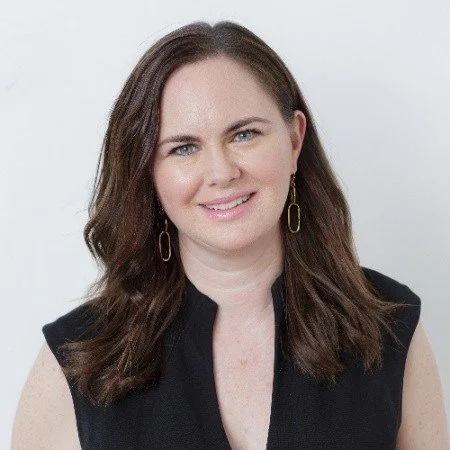
Fiona Spruill is CEO of Overstory, a company helping electric utilities reduce power outages and wildfire risk using satellite imagery, aerial data, and AI-powered vegetation intelligence. Since joining as employee number 10 and later stepping into the CEO role, Spruill has helped Overstory evolve from a vegetation mapping startup into a resilience platform serving many of North America's largest utilities.
In this episode of Inevitable, Spruill explains why vegetation management is one of the largest operating expenses for utilities and how improving grid resilience starts with better risk prioritization—not simply collecting more data.
The conversation explores how Overstory combines satellite imagery, computer vision, and customer data to help utilities identify vegetation threats, wildfire fuels, and infrastructure risks before disasters occur. Spruill also discusses selling into the utility industry, the growing importance of resilience as climate risks expand beyond the western U.S., and how the company navigated an extraordinary leadership transition following the loss of co-founder and CEO Indra den Bakker.
Note: Overstory is an MCJ portfolio company.
Episode recorded on July 22, 2026 (Published on August 11, 2026).
In this episode, we cover:
(0:00) An overview of Overstory
(4:44) Why vegetation management is one of utilities' biggest expenses
(6:17) How Overstory helps prevent outages and catastrophic wildfires
(7:33) From vegetation mapping startup to grid resilience platform
(9:14) Why utilities need better prioritization
(12:03) What utilities see inside the Overstory platform
(14:12) How satellite imagery, aerial data, and AI power the product
(17:31) Supporting wildfire prevention and public safety power shutoffs
(19:16) Where Overstory fits within utility resilience strategies
(21:21) Lessons from selling climate technology to utilities
(25:18) Serving both rural co-ops and North America's largest utilities
(28:21) How wildfire risk is expanding globally
(30:26) Fiona's leadership journey and Overstory's evolution
(34:44) Building a global remote-first company and culture
(38:21) Overstory's fundraising journey and investor partnerships
(42:09) Measuring climate impact through operational change rather than avoided disasters
-
[Cody] (0:00 - 1:08)
Vegetation management is one of the largest operating expenses a utility carries. Utilities in the U.S. spend six to eight billion dollars a year managing trees along their lines. And it's also one of the biggest sources of outages and catastrophic wildfires.
And as we've all seen, that risk isn't confined to just the West either. The South, the East Coast, and Europe are all dealing with it now too. And it's only intensifying as storms get worse and fire seasons get longer.
Fiona is running the company utilities are turning to as that risk becomes unavoidable. From MCJ, I'm Cody Sims. And this is Inevitable.
Climate change is inevitable. It's already here. But so are the solutions shaping our future.
Join us every week to learn from experts and entrepreneurs about the transition of energy and industry. Fiona, welcome to the show.
[Fiona] (1:09 - 1:11)
Thank you so much, Cody. It's so great to see you.
[Cody] (1:12 - 1:38)
Well, this is a super full circle moment. You were reminiscing before we hit record about the chair you're sitting in and the room you're sitting in. And I'll let you tell the story.
But super fun to get a chance to reconnect in this context after you and I, my gosh. I mean, I think we first were working on user research around New York Times website users back in like 2004. So it's certainly been a minute.
[Fiona] (1:38 - 1:41)
Absolutely. Yeah, 2004. It may even have been earlier.
[Cody] (1:42 - 1:43)
Earlier than that. Might have been. Yeah.
[Fiona] (1:43 - 2:51)
We worked together on the early days of the New York Times website and always had such respect for you. So it was awesome to reconnect in the climate world. So, yeah, I'm in North Carolina right now and sitting in the exact seat where I reconnected with you after 16 years.
I think it was that we were both in an MCJ webinar. I think it was. And I saw the name Cody Sims and I was like, wait a second.
I knew a Cody Sims and I reached out to you and then we had a call and you were working at Techstars then. And we were talking about all the companies in the Techstars portfolio that had a climate angle. And Overstory was one of them.
And Overstory had been on my list of companies that I had wanted to connect with. I, at the time, I knew I wanted to work in climate, but I didn't know where and with whom. So I was talking to a whole bunch of companies and was thrilled.
And so you're responsible for it all. You're the reason that I am at Overstory because you connected me to Indra, the original CEO and co-founder.
[Cody] (2:51 - 3:03)
I will take zero credit because you're responsible for the path you've created for yourself. But so fun that you weren't yet at Overstory and I wasn't yet at MCJ the last time. We were both sitting in the exact chairs we're currently sitting in.
[Fiona] (3:04 - 3:09)
Absolutely, yeah. I think it was May of 2020, maybe?
[Cody] (3:10 - 3:17)
Probably, yeah. We were all doing these weekend COVID-era webinars, learning about climate change. What a crazy time.
[Fiona] (3:17 - 3:25)
This is actually my parents' house in North Carolina. And so I did that pandemic thing where I moved in with my parents for three months.
[Cody] (3:26 - 3:47)
People who listen to the show may not know this, but I actually record the show in a closet off my living room that I've now turned into a podcast studio. But I used to actually use it as a little office that I could shut the door on and get away from my family when I was on calls. And so quite literally, you and I are both in the exact same seats we were in, in quite different professional seats at the time.
[Fiona] (3:47 - 4:08)
That is super, super cool. This is also the seat where I first talked to Indra and the place where I started to talk to him and his co-founder and partner Anik about seriously joining Overstory. And my daughter was standing outside the door and I opened the door.
I didn't know she was listening. And she said, we're moving to Amsterdam?
[Cody] (4:09 - 4:15)
Surprise! Surprise! Yeah, and you've been in Amsterdam now for many years, I think.
[Fiona] (4:15 - 4:43)
Coming up on six years in the fall, I moved there to join Overstory after having lived in New York for 21 years. Moved with my husband and two children who were eight and four at the time. So yeah, I was employee number 10 at Overstory, joined as chief product officer.
So back in those days, we had a bunch of models, but didn't really have a product yet. So I got to work on the first version of the product, which was super fun.
[Cody] (4:44 - 5:24)
Well, I want to dive right into the product itself. And I think to do that, maybe important to set some context on the utility space at large. And one of the things that has always stuck with me is I remember one of the first times you and I chatted after you became an expert in this space and were running the company.
We caught up and you shared a fact with me that sticks with me to this day, which is basically telling me that vegetation management is one of the single largest OPEX line items for utilities. That the average utility generates power, has poles and lines and does tree trimming. That always really stuck with me.
I'd love for you to maybe add a little context around that.
[Fiona] (5:25 - 6:05)
Yeah, absolutely. So I think in the U.S., utilities spend between six and eight billion dollars a year managing the trees along their lines. So they are also a big tree trimming company.
In most cases, they actually rely on contractors to do that, but it's often the largest line item in their operational budget. It's a huge source of outages. And unfortunately, some of the most catastrophic wildfires have come from the interaction of trees and or sparks coming off of the equipment and igniting dry grasses.
So it's a real issue also when it comes to wildfire prevention.
[Cody] (6:05 - 6:17)
Maybe describe in that case what Overstory is offering is today and just bring us up to speed and up to date with how the company has evolved.
[Fiona] (6:17 - 7:14)
Yeah, absolutely. So at a high level, we map a utility's whole network with satellite and aerial imagery in order to identify where trees could strike a line and where there are dry grasses or shrubs that could catch a spark, ignite and spread into a catastrophic wildfire. And so we're then trying to give the utility specific things that they can do to reduce risk.
So to make their actions really data driven and to make it really clear where they can spend the time and money to have hopefully the biggest effect on eliminating risks, because that's what we're here to do. And this is both the risk of wildfires, but it's also the risk of power outages, which, of course, in a world of a changing climate, power outages can mean lives lost, of course, has huge economic impact. So it's really the whole piece.
[Cody] (7:14 - 7:33)
And is Wildfire the North Star at this point? Are you building products around wildfire management or would you say broadly the idea is helping them have a 360 degree view of their system overall?
[Fiona] (7:33 - 9:11)
It's more the latter. So it's more resilience broadly. Now, wildfire is a huge piece of that, and it's a big focus of ours right now and has been a big focus for the last 12 months and will continue to be.
But I would say, well, just to take a step back, we started in 2019. We were part of the Techstars program, which is, of course, how you got to know Overstory. And early on, we were really focused on understanding vegetation broadly.
And so in the very early days, we weren't yet focused on electric utilities. We were, like many early stage startups, we were trying to get to product market fit, and we worked with some forestry companies, some railroad companies, NGOs. It wasn't until 2020 that we really narrowed that focus onto electric utilities, and we've been laser focused on them ever since.
So that's our only focus is really helping utilities prevent power outages and wildfires. So it started with that very specific trees along power lines. And now our goal is to be the one stop shop resilience platform where we are allowing utilities to have a network wide view of all the different risks and how they intersect, because that's a big problem right now.
There's a real siloed understanding of all the risks. And of course, that's not life. That's not how it actually works in the real world.
It's a combination of the health of the asset and the potential fuels around that asset that lead to what could potentially happen. So it's a broader focus now.
[Cody] (9:11 - 9:14)
How have they historically managed that problem?
[Fiona] (9:14 - 9:57)
Well, I think very much in silos. So you have the vegetation management department, which is doing their thing and trimming the trees. And then you have the departments that are focused on assets.
Sometimes you have a separate wildfire department. So it is very siloed, and they're investing a lot in these areas. They're doing a lot.
There's a lot of innovation. They're working with a lot of outside technologies. But I think if you talk to just about every utility that I talk to right now, they want a more holistic picture because they want to have a truer sense of where they can actually invest to have a real impact on being more resilient.
[Cody] (9:57 - 10:19)
And how much of the need is better data? And how much of it is they don't even have the staffing capability to do the type of analysis that needs to happen today? I assume these utilities are dealing with the same workforce issues that every other industry is dealing with right now in terms of adequately staffing these types of functions.
[Fiona] (10:19 - 11:14)
Absolutely. I think that there's huge staffing pressures right now. Of course, every utility is different.
So I'm going to make some generalizations here. In some cases, of course, they do need better data and more data. But broadly, I would say it's pretty rare for a utility to say to us, please just give us more data and give us more problems.
They generally feel like they can't even address everything they already know about. So it's really about helping them prioritize and make sure that they are spending the time and money. And there's also a huge safety component to this as well, because every time they send someone out into the field, there are safety risks.
So if we can help them be even smarter about when they need to send people and when they don't and where and what equipment to send, that helps on all of those fronts.
[Cody] (11:15 - 11:21)
Is the regulatory space changing around them with respect to vegetation management today?
[Fiona] (11:21 - 11:48)
Yeah, I think the regulatory space is always changing, and that's a very big aspect of what they have to deal with and what we really hope to help them deal with, to help them show in a very data-driven and specific way what they're doing and why to be able to address all of these different risks. It's a big component of what they're dealing with.
[Cody] (11:48 - 12:03)
Maybe just before we go super deep into how the business is evolving, just describe the product. Walk us through what a utility sees when they're using Overstory and what ultimately they're getting from the system.
[Fiona] (12:03 - 14:08)
At a high level, they see a bird's eye view of their network. So the only thing that a utility has to give to us in order to get to be onboarded onto Overstory is we have to know the location of their poles and lines. So it's a very seamless process.
Often that data is not correct because in the past, they probably only needed to know where the location of a pole was to the fidelity of someone going out and finding that pole. But for us, and we're getting down into feet or in some cases inch-level measurements, we need to really be certain that the pole is where we think it is. So we've actually built a lot of technology to help correct that data to be more certain about where the poles and lines are.
So they get a sense of, okay, they can look a bird's eye view of where the highest risks on their network. And that takes into account a bunch of different things. It's proximity of the vegetation to the line.
It is also where there are a bunch of unhealthy trees. It can also take into account historically where there have been outages. For customers that are really concerned about wildfire, we're also looking at the intersection of asset health and the potential fuels around those assets and how they could ignite.
So it really depends on what is the problem that the utility is trying to solve. That depends on what their view in the product is going to be. And then we spend a lot of time listening to our customers and understanding what their sense of risk is.
And so they really define the risk matrix and what's going to be high priority, what's going to be low priority. And then we run a series of models that determine where the risks are. Of course, the height, location, the health, and in some case the species of every tree on their network.
And from that, we recommend actions within the product that they could do to go out and reduce those risks.
[Cody] (14:09 - 14:12)
And where do you get the data? Where does that data come from?
[Fiona] (14:12 - 14:54)
So the data that we acquire is the remote sensing data. So we have a bunch of partners where we're getting satellite data from, and we also use aerial data. And so in the early days, we basically had one or two sources.
Now we have many, many sources of those data, which allows us to get that data quickly, to get to process it fast, and also in a more cost effective way. So that's the remote sensing data that we acquire. And then, of course, we are getting more and more data from our customers as well about where the outages have occurred and other types of data that helps to make our recommendations even more useful to them.
[Cody] (14:55 - 15:07)
How have technology changes in the last few years, particularly around computer vision and AI, changed what you've been able to offer?
[Fiona] (15:07 - 15:52)
So I think like every tech company in the world, we are remaking how we build the product and how we do everything we do every day. And so I think that LLMs broadly are helping us build our models more efficiently, build our product, troubleshoot QA. That's a story that's probably not unique to us.
On the computer vision front, almost all of our models are home built. That's very much a part of our intellectual property. So we are constantly staying on top of all the advancements on that front and getting more and more accurate so that utilities really feel like they can absolutely rely on all the recommendations that we're giving them.
[Cody] (15:52 - 16:20)
I saw a video you guys posted on LinkedIn or where it was, but it was you show a blurry bird's eye view picture of a bunch of trees, power lines, and then you ran a swiper over and it went down to I mean, it looked like the highest resolution photo I've ever seen. And I was curious if you could describe what that is that you're overlaying on top of it. Is it you guys providing an intelligence layer on top of the imagery you're able to ascertain?
[Fiona] (16:20 - 17:03)
Yeah, I don't know exactly what you're talking about, but I think the LinkedIn post you're talking about is probably relating to our fuel detection model, which is very high fidelity and the first on the market at that degree of resolution, which really, when you're talking about fuels and the likelihood of a spark turning into a wildfire ignition, you really need to have a high degree of fidelity and high resolution imagery in order to be able to do that. You need to be able to make the recommendations that you need to make. And so I think in that case, that's what that was about is sort of showing we can really get down to the level of understanding the different fuels that might be under the line in this case.
[Cody] (17:03 - 17:31)
And on the wildfire side in that regard, how much of your customer use is long term preventative maintenance? And as we saw here where I live in Los Angeles with the Palisades fire last year, there was quite a bit of, oh my gosh, within the next week, we know there's going to be this major wind event. And is there some last minute work we need to do to navigate specific impacts of what we expect from this specific event?
[Fiona] (17:31 - 18:00)
It's really both. I would say in the near term, we do have some customers who are using Overstory to determine whether and when they should do a what's known as a PSPS, a public safety power shutoff. So that's one near term way.
I would say in most cases, it's not absolutely right now. Once there's a red flag warning, it's more about what to do in the future. But utilities are using it in both cases.
[Cody] (18:00 - 18:13)
I guess the PSPS, as you refer to it, I hadn't heard that term before, would be, oh, shoot, we didn't get these lines trimmed, even though we probably knew we should have. And so we probably need to shut things down for now. Is that how that would work?
[Fiona] (18:13 - 18:56)
Well, I don't want to make it sound like a PSPS public safety power shutoff is a failure in any sense, because that's not necessarily. Sometimes it's just that the conditions are so bad in terms of wind and the dryness that it's simply the most responsible thing to do. And listen, utilities, their entire way of operating is to keep the power on.
So you can imagine if they are considering turning the power off, that things are pretty bad. And that's a big area of focus is putting together these programs of really understanding when they need to turn the power off and not. So that's just one area that we've seen our customers using Overstory.
[Cody] (18:56 - 19:16)
How did they use Overstory in the broader suite of solutions they use in this space, whether it's drones, whether it's truck rolls, whether it's dynamic line reading technologies? If I'm a utility executive today and I'm building my portfolio of grid intelligence, how am I thinking about constructing it?
[Fiona] (19:16 - 20:42)
So broadly, we are in the realm of prevention. So there's a bunch of technology, really interesting technology that happens either after the spark in the wildfire realm, after the spark or after the wildfire has actually started. But we are all in the prevention space and lane.
And so I think where they're thinking about us, and as I said a little while ago, I think there's clearly signals that they want to bring more together. So things feel too segmented. But where they're looking to Overstory is they're thinking about, okay, how do I make sure that where I'm spending all this money to try to prevent power outages and wildfires, how do I make sure that it's actually having an impact?
And that I'm not spinning my wheels on things that are not actually where the biggest risks are. So broadly, that's where we come in is how do they make sure that the work that they're prescribing is the right work at the right time, and that it's done in the most efficient way. Largely, that has been in the vegetation realm.
It's starting to be more broadly into asset health and other areas as well, just broadly in the whole realm of resilience and also, of course, anything in the realm of wildfire mitigation.
[Cody] (20:42 - 21:15)
What have you learned now, multiple years in about selling into utilities? Take this as a moment to be the wise sage who can share both with other startup CEOs about what you've learned and what maybe they might want to take as advice. But also, hopefully quite a few utility executives are listening to this episode as well.
And maybe what advice you could give them about the sales process and how you have navigated it. Use this as your bully pulpit to share a little bit about your learnings.
[Fiona] (21:15 - 21:17)
And also investors as well.
[Cody] (21:17 - 21:21)
Many investors who think, oh, utilities, that sounds hard. I don't want to do that.
[Fiona] (21:21 - 23:53)
At least a few years ago when I would be talking to investors and say that we sell exclusively into utilities, sometimes see the blood come out of it. But that has changed a lot. And I think that AI and the fact that the tech industry and utility industry, their futures are more entangled than they were a few years ago.
And the tech industry has come to have a lot more, at least I hope they have, a lot more respect and understanding of just what it takes to generate all this power. But sort of getting back to your original question, we are all in on utilities for a reason. We are here to help communities adapt to climate change and to be more resilient.
And we see utilities at being right at the heart of that. And you cannot solve climate change without having a resilient and reliable electrical grid. It just can't happen.
That's why we think that there's just huge impact here. And that's why we've decided to stay focused on this one industry. Sure, utilities, and they will own up to the fact that they are often not the fastest moving group of people, but they've got a huge amount of risk that they're dealing with.
And the risks are just getting worse each year. The storms, I talk a lot to utilities in the South and the storms that they're dealing with, the utilities now that are having to deal with wildfire risk in the South and in the East. PG&E runs this incredible wildfire conference every year.
And there are East Coast and Southern utilities there, which would have been unheard of even a year or two ago. But now the risks that they're dealing with are real and ripe. And in many cases, they're existential.
Listen, I understand why they want to ask a lot of questions, why they have serious cybersecurity requirements. All of this makes a lot of sense. You have to go in eyes wide open that this is not going to be a quick process.
And that's why, you know, we've focused a lot on the partnership side and why building that trust, really understanding their pain and what they're trying to accomplish is key. If you go in and just with a bit of a cowboy attitude and say, OK, we can get this done in a month or two without actually like really building those relationships, then it's not going to work. So that's the approach we've taken.
[Cody] (23:53 - 24:10)
Anything you've learned about how to structure an initial engagement, how to navigate pilots, contracts that you think works broadly, you don't need to unveil any overstory secret sauce, but things that you think are the right shape for this industry in this customer segment?
[Fiona] (24:10 - 25:00)
Well, I would say, especially in the U.S. and Canada, where utilities are not competing with each other, that word of mouth recommendation matters a ton. So that's why your reputation matters a ton. And so we often when we're talking to a new prospect, we will try to connect them with one of our existing customers as quickly as possible.
And some cases they'll get on a call. And that, of course, is the best for us to have our customers speaking on our behalf is the best. And so I would say that's one thing that we focus on a lot.
And we care deeply about that trust and reputation. And we're not perfect. We make some mistakes occasionally.
And our approach is to own up and fix as quickly as possible, because that's how you build those reputations.
[Cody] (25:00 - 25:18)
And you sell to everybody from giant utilities like PG&E to small rural co-ops. Have you found that it's the same product you're selling to each of these customers? Or do you need to build different products depending on the customer type that you're going after?
[Fiona] (25:18 - 26:54)
Our initial focus was on the co-ops, so on the smaller utilities. And then we actually found that that product that we built for the co-ops had a lot of traction with the larger utilities, what are known as the investor-owned utilities. The bulk of our focus now is with the investor-owned utilities.
So we serve six of the 10 largest utilities in North America. At a very basic level, they're trying to accomplish the same thing. They're trying to avoid power outages and wildfires.
Of course, there's a different degree of resources. The budgets are bigger, often a different degree of technical depth. And some of them have in-house data science departments, whereas the smaller utilities don't.
And so I would say it's a very different engagement process. But ultimately, what we are giving them, we want it to be working for them and working in their systems. And that is the case, whether it's a very small utility or the largest.
We have taken a very open approach. And one of our key results is how many programs have been permanently changed at the utility because of Overstore. That's how we measure success, is are they actually changing their workflows?
Because if you're just dumping a bunch of data on them and trying to tell yourself you're doing a great job because of all the data, you're not. So that's why we have to meet them wherever they are in whatever system they're using, because that's how you're going to actually have an impact.
[Cody] (26:54 - 27:15)
And you talked about how many of these utilities are relatively siloed. They might have vegetation management in one department. They might have wildfire in a different department.
They might have asset management in a different department. Do you have to go get all of them lined up to make your initial sale? Or can you sell into one department and then expand the business into others?
[Fiona] (27:15 - 27:38)
In the early days, it was quite a bit more siloed. We are now lucky enough because of the reputation that we've built and because of the traction that we have that most of our contacts are at the C-level. And so therefore, we'll go in in one department, but we have those broad contacts across the other departments as well.
So we're able to pull it all in.
[Cody] (27:39 - 27:42)
That's part of, I guess, landing bigger deals as you've become a bigger company.
[Fiona] (27:43 - 27:43)
Exactly.
[Cody] (27:44 - 28:21)
How has the geographic interest shifted? You talked about in the U.S. Now you're talking to utilities on the East Coast and in the Southern states. But outside of the U.S. as well, where are you seeing lots of interest in wildfire management, in vegetation management, in uptime management? Obviously, the company itself is based in Europe and Amsterdam. But I'm curious what that overall, if I were to take a step back and look at what are the heat spots on the map around the globe that are really, truly, deeply worried about wildfires today? What does that look like?
And how has that changed even in the time you've been in the role?
[Fiona] (28:21 - 29:55)
So one technicality is we were founded in the Netherlands and we have a very global team. So represents about just north of 100 people, 16 nationalities, 16 languages spoken. We work from 12 different countries.
So we are fully remote. And for a company of 100 people, I think one of the most truly global companies, at least that I know. But we actually flipped.
We are now a U.S. company. We have a Dutch subsidiary now. So that's the technicality.
But to answer your question, I mean, one of our superpowers has been our focus. So we have really stayed focused on the U.S. and Canada because honestly, we've just had so much momentum and would sort of be irresponsible to shift that focus. But that is changing.
And you're going to see us be looking into other areas more seriously. I think what has happened in Europe this summer with the heat wave, it is a very, very big deal, especially what France has gone through. The wildfires right now in France, what the horrible tragedy that happened in Spain a few weeks ago with many lives lost.
If you're asking, unfortunately, wildfire is a global problem. There's even wildfires in Britain and the Netherlands where there are known to be very wet countries. But I think the southern European countries and including France is an area that are really feeling the pain a lot.
The European Union is putting a lot of emphasis on firefighting. So that's an area that we're looking at.
[Cody] (29:55 - 30:26)
What's next for Overstory? And I'll ask the question in a very open-ended way. What's next on product?
But also, you've navigated a lot of change in the organization over the last two years or so. Some of it very hard, I'm sure, for the company to manage. Maybe reflect a little on that and then talk about what's next for the business.
You laid out this incredible global company that's got a fully remote workforce. How has the company evolved and where do you feel like you're going?
[Fiona] (30:46 - 32:55)
That's why I picked up and moved my whole life after 20 years in New York, to join these two amazing co-founders, Indra Denbacher and Anik Skouten, because I was just super excited about who they were as people and I wanted to build a business with them. And tragically, Indra was diagnosed with cancer in late November of 2023. So he and Anik, who was his co-founder but also his life partner, and Anik was the COO, Indra was the CEO.
And so they had to step away from the business overnight, literally. So I stepped in as CEO then. Tragically, we lost Indra in October of 2024 at the age of 35, which is just unimaginable.
And they are and were very close friends of mine. I feel close to their families. It has been a tremendous thing for the company to navigate.
I know Indra would be so proud of how we have done that and resilient. So to transition into what's next for Overstory. So we really want to be the one-stop shop resilience platform for utilities.
And I think resilience is a word, sometimes you could say maybe it's overused, but it's absolutely a word that applies to our team. I mean, the way that we have dealt with what was truly a personal tragedy and really done Indra proud in everything that we've been able to build and how we've been serving our customers. I'm super proud of that.
So yeah, what's coming next is stay tuned. There are going to be some exciting product announcements coming. But we started in the vegetation space being the satellite vegetation people.
We are already much broader than that in terms of the impact that we're having in the wildfire space and more broadly and how utilities are making decisions about how to create a resilient grid. And we're going to be building a lot that is right for the AI world that we are living in. And that's what we're excited about.
[Cody] (32:56 - 33:08)
First of all, thank you for framing the founding story the way you did. And obviously, I didn't know Indra super well, but knew him when he was in Techstars and MCJ. We made our very first investment in the company when Indra was leading the business.
[Fiona] (33:09 - 33:10)
He's been on this podcast too.
[Cody] (33:10 - 33:37)
He's been on the show, an amazing visionary founder that we all lost way too early. And I think the way you described the resilience of the company and what you've built and what you've continued to build and your ability to step in and drive as a leader, Fiona, through that is unbelievable and incredible. And I can't even imagine the strength it took to do that over the last few years.
[Fiona] (33:37 - 34:23)
Well, thank you. I keep a picture of him next to the shelf where I work back in my office in Amsterdam and think about him a lot and all the amazing decisions that he made with Anik in the early days. And so much of that focus, that positivity, that really caring deeply about customers, caring deeply about the mission, all of that is very much a part of what Overstory is.
And so I've been proud to carry that forward. Also, Indra had an incredibly wonderful sense of humor, a biting sense of humor. And I think it's very important to laugh.
Building companies is hard and this work is hard. And so I try to remember to laugh a lot. I think that's really important.
[Cody] (34:23 - 34:44)
That is a good lesson. You know, and you're working in a space that is very serious as well. So I think being able to help a large now global company also maintain its sense of culture, I'm sure has been interesting.
What do you guys do? Do you do team off sites or how do you navigate that largely distributed team?
[Fiona] (34:44 - 36:48)
So we believe fully in remote work and think that our ability to tap specialized people in all corners of the globe comes from the fact that we let people work where they're working. I also am really proud of the fact that we're about 50% female. And I think that that is not all that common in deep tech companies like ours.
And I think that flexibility, we work really hard, we care deeply about our work, but we also prioritize life too. And that's a good thing. So we believe deeply in remote, but we also care deeply about our time together in real life.
Before I worked at Overstory, I worked at Meetup, which is all about bringing people together, the power of bringing people together in real life. I care deeply about that as well. So the things that we do, the whole company comes together once a year, usually in Europe in different fun places.
And so we spend three or four days together really just connecting, connecting with the importance of our work. So that happens once a year. We also have mini team gatherings.
So the different teams will get together in different spaces. And then we also give everyone at Overstory a budget to go meet up with other Overstoryans. And the only requirement is there's at least three people there, just so you can't go visit your friend Sam in Stockholm, but at least you need to bring some people together.
And that has been awesome. So it's all self-organized, obviously. And it brings together people from different departments, different disciplines.
They've rented the house in San Sebastian, and they just come together and co-work and go hiking. We've gone to Athens, to Stockholm, to Edinburgh, Montreal. Lots of great connections.
I'm not going to tell you we've 100% cracked the code, but we are very intentional about this. We're constantly evolving, trying to keep that connection. And I think it's working.
[Cody] (36:48 - 37:09)
We're a remote culture at MCJ as well, much smaller team than you. But I'm curious, there's a bit of a movement right now of people wanting to go back to the office. In particular, I would say a lot of young people I talk to in their 20s are looking for that personal connection.
How have you navigated that portion as the leader of the company here?
[Fiona] (37:09 - 37:29)
So the great news is that with the size and scale that we're at now, there are natural hubs that have formed. So we have many hubs in New York City, in Philly, in San Francisco, in Philadelphia, certainly in Amsterdam, in London, even a mini-mini hub in Porto, in Portugal.
[Cody] (37:30 - 37:32)
That's not terrible. Not a terrible place.
[Fiona] (37:33 - 38:07)
Very, very nice place. We have a few within an hour or two of Paris. And so we give everyone a budget for co-working every week.
And so it's not required by any sense of the word, but a lot of folks, they genuinely like to get together and they do that ad hoc. So that's really great. It all depends on people's personal circumstances, but we really try to lean in on both.
Do all the remote best practices, but yet also really make time for that in-person connection because, of course, there's nothing like it.
[Cody] (38:07 - 38:21)
We at MCJ are proud to be three-time investors in Overstory. Maybe trace a bit about the financing history of the business and how you have envisioned continuing to grow the company beyond that.
[Fiona] (38:21 - 39:23)
Yeah, we are thrilled to have MCJ as a multi-time investor. And we started by talking about, I am at Overstory because of MCJ 100%. That is how I connected with them.
And we've had multiple people who have also come because of the larger MCJ community. And so we really continue to thank you for that and the high caliber connections and just the high caliber of people that come into and out of the MCJ world. So that's a very, very much a part of the Overstory story.
So one of our earliest investors were Techstars. Hugo August, who was with Techstars, led that early investment. And then he is now a partner at Somapa Next, which has also been an early investor in Overstory.
Pale Blue Dot, a very significant early investor for Overstory out of Malmo in Sweden. So a lot of our earlier investors were European. We brought on quite a few more American investors.
[Cody] (39:23 - 39:42)
By the way, just a plug for Pale Blue Dot. Anyone who wants to really dig in on the European climate space, they host an amazing event, which I was planning to be at this fall and then I've had to cancel, unfortunately. But an amazing event in Malmo every fall called The Drop.
[Fiona] (39:42 - 39:43)
Totally agree.
[Cody] (39:43 - 39:47)
Which is really the place to be, I think, for European climate tech.
[Fiona] (39:47 - 41:04)
It is wonderful. Yeah, I was there two years ago. So also totally agree with that plug.
They've built a really, really good community. So that's awesome. So yeah, we are lucky to have some wonderful, wonderful investors.
And we talked about this company has been through a lot. And those investors have 100% been through that with us and have been really, really supportive. Closed our Series B late summer last year, led by Bloom, which is a wonderful fund based in London.
Also an office in Amsterdam. Also brought on EIP, Energy Impact Partners, which has strong ties in the utility world. And then all of our other investors have participated in all the follow on rounds.
And so I feel really, really lucky to have the investors that we have. And we're not fundraising now, not looking to fundraise in the near term, but the quality of the people is really, really important to me. And so whatever new investors that we bring on, it's a partner in building this business.
That relationship is really, really important. We're lucky that I think that we can get money from a lot of people. But to me, it's about who are the people who are going to join the journey with us.
[Cody] (41:04 - 41:06)
Where do you need help right now?
[Fiona] (41:06 - 41:36)
Well, we are hiring for a bunch of critical roles. So go to overstory.com and check out the careers page. And I would say MCJ World is a great source of great talent.
So especially in the engineering and product realm, we've got a bunch of key open positions. So I think that's the main area where I would ask the listeners of this podcast to send great people our way. I'm a little bit biased, but I think it's a fabulous place to work.
[Cody] (41:37 - 42:09)
Fiona, you're building a company that when you are wildly successful, the world doesn't know what you did saved lives. Your customers should know. I assume you're helping them maybe understand a little bit about like, oh, this work that we helped you do a year ago, if you hadn't have done it, here's the counterfactual.
How do you think about your impact in that regard? It's this sort of, I don't know the right way to phrase it, but this unseen hero role that you fill.
[Fiona] (42:09 - 44:04)
For us talking about the number of catastrophic wildfires that we've prevented, that would be ridiculous, at least to actually put forth a number. At this stage in the journey of utilities tracking their ignitions now, there's a growing degree of sophistication on that front. PG&E, for example, their ignitions data is incredible, but many other utilities do not have that data.
And even if you can track your ignitions, of course, there's a lot of other factors that go into what becomes a catastrophic wildfire. So I'm not going to lie, it's hard for the business that we're in to come up with the exact impact measurement. In the early days, we looked as a very broad measurement, just in terms of the miles that we were analyzing as a proxy for impact.
Now we're much more focused on, and I mentioned it earlier, is how many utilities are actually permanently changing operational programs because of overstory. And that right now is the closest proxy that we feel like we have to saying, okay, what kind of an impact are we having? Of course, we have one customer in Canada who can attribute a 45% drop in vegetation-related outages to using overstory.
That is incredible. In many cases, the data, the fidelity of being able to track that, and the last thing we want to do is put out phony numbers. But I certainly hope in the future to be able to have more reliable data points like that to be able to share.
But we know, just based on the customer feedback, the size of the contracts, et cetera, we know that the impact is there. But exactly how you talk about things that you've helped them avoid is tricky.
[Cody] (44:04 - 44:30)
Well, it's an amazing challenge that you all are taking on. And I assume each of the employees at Overstory hopefully recognize there probably are many sliding door moments in the world that Overstory has flipped the narrative on because of the work you've done, that if your platform hadn't been there, things in the real world would be very different than they are today for many, many lives out there.
[Fiona] (44:30 - 45:06)
Yeah, I still interview every candidate before they join Overstory, and I talk a lot to those people about why they want to join Overstory. And so I know that having a real impact on this front and helping to make communities safer in the face of climate change is why people want to work at Overstory. I certainly hope that the team feels that, and we try to talk about it a lot as a team.
It's why I'm working at Overstory. It's what I want my life's work to be. And so I'm not going to fake it.
I'm not interested in working on something that doesn't have a real impact.
[Cody] (45:06 - 45:14)
Fiona, thank you so much. This has been awesome. It's great to catch up.
Congrats on all that you've built and all that you're doing to lead this company.
[Fiona] (45:14 - 45:26)
Well, thank you, Cody. It's great to chat with you. Thank you for everything that MCJ has done for Overstory over the years.
And yeah, look forward to many more chats and connections in the future.
[Cody] (45:50 - 45:53)
Thanks, and see you next episode.