Why Climate Jobs Aren't Enough Anymore
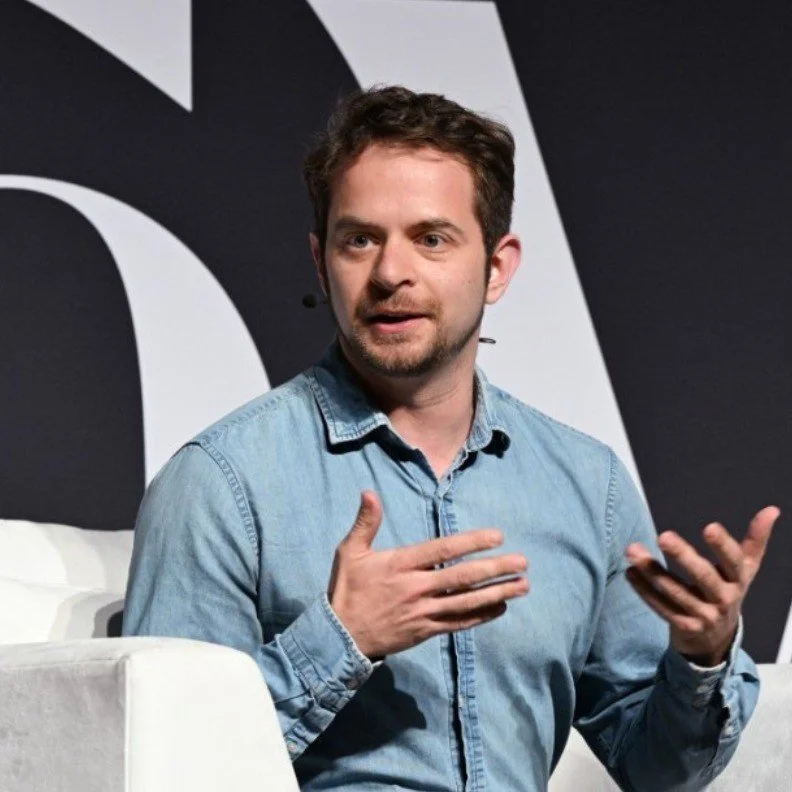
Eugene Kirpichov is Co-founder and Executive Director of Work on Climate, a global community helping professionals take action on climate across industries and disciplines. Created to help people transition into climate-related careers, the organization is now evolving toward a deeper goal: empowering individuals to become climate leaders—people who transform their companies, sectors, and communities from within.
In this episode of Inevitable, Kirpichov shares why the “get a climate job” model is no longer enough, and why systemic change depends on how professionals use their power. The conversation explores the concept of regenerative economics, the breakdown of siloed climate thinking, and the need for new economic architectures that support resilience, not extraction. We also dive into what it means to build bottom-up leadership, how Work on Climate is shifting its model, and why now is a critical moment to invest in alternatives that go beyond federal policy.
Episode recorded on Jan 22, 2026 (Published on Feb 3, 2026)
In this episode, we cover:
(2:40) Climate as one piece of a larger systemic crisis
(7:19) An overview of Work on Climate
(11:28) Why the climate job market isn’t enough
(17:08) The shift from jobs to leadership and power
(24:49) What a regenerative economy actually means
(32:00) Building new economic operating systems
(37:00) The Work on Climate member experience
(46:49) Final thoughts on reclaiming power
-
[00:00:00] [Cody Simms]
[00:00:00] Today on Inevitable, our guest is Eugene Kirpichov, co-founder and executive director of Work on Climate. We're about a year into the Trump administration, and the U.S. government has clearly stepped back from treating climate change as a top priority. At the same time, the language in the ecosystem is shifting.
[00:00:19] People talk less about the climate tech movement and more about energy, industry, and resilience. And more importantly, people are trying to make sense of climate alongside other systemic shocks, the rise of authoritarianism, the unknowns of AI, and the sense that multiple things are breaking at once. So I wanted to talk to Eugene, not just about careers in climate, but about how the climate tech movement itself is changing, what assumptions have stopped working, whether the enthusiasm of the last few years has translated into real systemic change, and how people are rethinking where they can have actual impact.
[00:01:00] Eugene sits at a unique vantage point through Work on Climate, which has helped thousands of people transition into climate-relevant work, and is now actively rolling out a shift toward leadership, power, and systems-level change across its community. We talk about regenerative economics, leadership as a mode of climate action, and what it looks like to move from individual job changes to institutional impact. From MCJ, I'm Cody Simms, and this is Inevitable.
[00:01:35] Climate change is inevitable. It's already here, but so are the solutions shaping our future. Join us every week to learn from experts and entrepreneurs about the transition of energy and industry. Eugene, welcome to the show.
[00:01:56] [Eugene Kirpichov]
[00:01:56] Thanks for having me. Pretty exciting.
[00:01:58] [Cody Simms]
[00:01:59] I'm super excited to jam with you on this topic, which to me is so fascinating. Just how are people thinking about changing their careers, shifting their careers to work in climate, work on climate, as you have so coined. And I guess where I'd love to start, I want to do a whole dive into what is the organization, how is it changing, this, that, and the other, but would love to just start with hearing your perspective at a high level.
[00:02:25] In the last 12 months or so, how are people approaching climate work? And are you seeing a difference? You know, there's been a lot of change that's happened, you know, at least in the United States in the last 12 months.
[00:02:38] That's for darn sure.
[00:02:39] [Eugene Kirpichov]
[00:02:39] Yeah, I think this is a really good point to start on. I think in the last 12 months, what I'm seeing is that people have stopped falling for the feel good rhetoric and bullshit and approaches that don't work. I think all this stuff about do well by doing good and how sustainability is good for business, so it is just a matter of doing what's best for business.
[00:02:58] It is simply not true. Everyone can see that. And people are seeing that the traditional approaches to climate policy, that really didn't have enough teeth.
[00:03:07] Now we see what happens when they don't have enough teeth. People are starting to ask, okay, that didn't work. What is actually going to work?
[00:03:14] And some people, you know, are not asking that some people are paralyzed by despair and grief and so on. And hopefully, you know, we, among others will help them move from that paralysis to action. But another thing I'm noticing is that it's not really a climate phenomenon by itself.
[00:03:29] This leads into regenerative economics. So more and more people are becoming aware of what's called the polycrisis, even if they don't call it that. What that is referring to is the fact that we're facing multiple overlapping and interlocking crises at the same time.
[00:03:45] Breakdown of the climate system, breakdown of biodiversity, breakdown of, you know, our mental health, breakdown of our ability to govern society democratically, AI risks, global collaboration risks, and so on. And we're just not nearly on track to solve any of these crises in any meaningful way, one by one. So there is simply no hope of solving all of them one by one.
[00:04:07] So people do feel like everything is breaking at the same time. And this resonates even with people for whom climate was a remote concern.
[00:04:14] [Cody Simms]
[00:04:15] So much to unpack in what you just said. I think you almost just gave the preview of like the next hour of what we can talk about. But at a high level, what I heard you say is one, there was a trend over the last maybe five years where people felt bored in their careers, felt like, hey, you know, I'm just generating another ad click for Google or Facebook or whatever, and can I go work on something that has meaning and feel good about myself?
[00:04:40] And you're saying there was a tidal wave of that and people may be now questioning, did that actually generate the systemic change that I thought it is sort of one thing I think I heard you say. The other thing I heard you say is there are plenty of people who are very concerned about climate change and it is a very severe risk to the world we know, but it's not the only risk to the world we know.
[00:05:04] There's risk of authoritarianism. There's risk of who knows what's going to happen with AI. There's risk of other things in our world and you're seeing more and more people pull some of these other things up to the same level as climate change and try to negotiate how they think about all of them together.
[00:05:22] Am I following both of those things correctly?
[00:05:24] [Eugene Kirpichov]
[00:05:25] Yes, more or less. So on the first thing, I think that for many people who wanted to work on climate, it was always existential. So they weren't, most people aren't just asking themselves, you know, why don't I work on something meaningful?
[00:05:37] Usually it's more like they're like, oh my God, this thing is big and how am I going to look my kids in the eye if I don't work on that.
[00:05:43] [Cody Simms]
[00:05:43] Climate change specifically hit me in the face. I read some literature. I became aware that there is a specific problem that is going to be real in the lifetime of my children and I want to do something about it.
[00:05:57] It was a very intentional motivation is what I'm hearing you say.
[00:06:00] [Eugene Kirpichov]
[00:06:01] That's exactly right. And on the second point, I think it's not just that people are becoming aware of other crises. It's not just about like, what about the other crises?
[00:06:09] It's not just climate. It's more that more and more people are seeing that these really are the same crisis. There are different heads of the same Hydra and you can't kill a Hydra by cutting off its heads one by one.
[00:06:20] The Hydra is the economic system we have itself, which it has many great qualities. You know, it is very efficient. It has produced remarkable technology.
[00:06:29] It has, you know, solved some problems of human disease and so on. It has taken many people out of poverty. But something it doesn't have is the ability to manage the health of systems that it depends on.
[00:06:40] As long as the systems you depend on like climate and public trust and people's mental health and so on are not too sick, it looks like it's working. And now it is really stopping to work. And so people are asking, how the hell do we resolve this predicament?
[00:06:54] [Cody Simms]
[00:06:54] With all that context of kind of where we are today in 2025, super helpful. Thanks for kind of orienting us to your current headspace on all this. Take us back to you started work on climate.
[00:07:04] You created this thing. What is it or what has it become? And then I think we'll shift into where is it going?
[00:07:10] But just to orient people who maybe aren't as familiar with the community that you've built, describe the Work on Climate community as we've all known it for the last few years.
[00:07:18] [Eugene Kirpichov]
[00:07:19] Sure. So I will begin with a little bit of its history. In 2020, I quit Google together with my co-worker from Google AI.
[00:07:26] We wanted to find what are we going to do about climate? And then both of our goodbye notes went viral and we had half a million people read them. And hundreds of people were reaching out and saying that they also want to do something about climate, but they don't know how.
[00:07:40] We at the same time, we were talking to many, many experts who were already building climate solutions. We were thinking like, oh, my God, this thing is actually buildable. It is actually not about just resisting the bad stuff.
[00:07:51] It is about building a replacement system. And it was so inspiring. There is all this work to be done.
[00:07:57] There is all these people who want to do the work. At the time, I think a quarter of all venture investment was going into climate tech, which at the time I was shocked that this isn't on the front page of New York Times. So we thought, let's put the two and two together, like let's help these people who want to work on climate actually work on it because climate needs them.
[00:08:13] And if we just do that, then implementation work will go faster and climate progress will happen.
[00:08:19] [Cody Simms]
[00:08:19] And this is mostly mostly technologists. I mean, that was your kind of world, or would you say it was a broad swath of people working in all sorts of different disciplines?
[00:08:29] [Eugene Kirpichov]
[00:08:29] I think at the very beginning, it was mostly technologists just because by the nature of our networks, but relatively quickly turned into all kinds of, you could say, people who are in a position to consider career mobility. So we didn't have that many, for example, dishwashers or other people who are not in a place to consider career mobility. But we did have, you know, salespeople, businesspeople, engineers, lawyers, public health professionals, journalists and so on and so on.
[00:08:54] It was that kind of community. And so we started the community and we really started it to replicate the experience that we had, which is that when you have somebody going with you along this path, it is a whole different story. Really, it is about the transformation of your identity.
[00:09:11] Maybe, you know, I was somebody in the world of big data and now in the world of climate, I was nobody. And it is a tough thing to face if you don't have somebody by your side who can validate you and who shares your challenges and without the encouragement of other people like you have done this before. So we wanted to give that to people.
[00:09:30] And that's why we started the community. And over the years, it has pretty quickly become the largest community of the sort that I know of. Several thousand people, over thirty four hundred people, according to our latest numbers, say that not only they found a job in climate, but it was because of the community to a substantial degree.
[00:09:48] So that is really, if you do some napkin calculations, that's hundreds of millions of dollars of economic value that we moved into climate on the budget of, I don't know, probably by today we spent maybe a million and a half total.
[00:09:59] [Cody Simms]
[00:10:00] And, you know, it exists mostly as I know you have a very active Slack community and then I think you also do events and workshops and things like that. Maybe describe a little bit about what the activities of the Work on Climate community are.
[00:10:12] [Eugene Kirpichov]
[00:10:12] So the activities of our community, it's not that different from activities of other communities, events and workshops and mentorship programs and resources and, you know, different kinds of communication channels. In our case, Slack, it is that so it is a variety of things that get people together so that they can build relationships, educate them and unite them around the common purpose that they're here to pursue. And so as a result, people form relationships around the common purpose, which is exactly what we want to happen.
[00:10:39] And those relationships then enable them to find careers or find co-founders. Like, for example, I know a couple of guys who met in the community. As co-founders and then not that long ago, they raised thirty million dollars.
[00:10:51] So pretty remarkable.
[00:10:53] [Cody Simms]
[00:10:53] And yet you said, you know, hey, we've had millions of dollars of economic value, you know, created thousands of people who've transitioned their careers. It feels like something felt like it wasn't quite working or resonating. You mentioned something about there was a narrative bullshit and people, you know, falling victim to if I do good things, you know, good things will happen.
[00:11:15] That wasn't the exact word you used, but the similar sentiment, it sounds like you are detecting an underlying sentiment that people aren't feeling like the results are matching the impact that they were hoping to have.
[00:11:27] [Eugene Kirpichov]
[00:11:28] Yeah, I think there is multiple factors that contributed to our determination to shift. So it actually started before Trump even got elected. For me, it started when I listened to a podcast by Daniel Schmachtenberger about the polycrisis, where he was talking about exactly what I'm talking about.
[00:11:45] I thought, oh, crap, this isn't the kind of stuff that you can solve by getting people into jobs. By getting people into jobs you can accelerate some kind of progress that's already underway, but you can't fundamentally turn around, you know, the economic system in the direction to give it a capability as fundamental as managing its own health and the health of systems it depends on. It's just not the same level or kind of tool that we need. Then also Trump got elected and all of this flight of capital and flight of talent away from climate started happening.
[00:12:16] And it just became very, very obvious that the job market is simply not equipped to do something about this problem in a sufficiently resilient way. It can never, ever mobilize enough people because maybe you're an architect, but they need an electrochemist or maybe you're a lawyer, but they already have a lawyer. Like we can't be at the mercy of the job market and how many people will mobilize.
[00:12:37] And perhaps even more importantly, the job market can't mobilize people in the right way. What I mean by the right way is a job is generally somebody already knows what needs to be done, but they need you to do it. Certainly there is creativity and leadership within that.
[00:12:51] But at the core of it, like really the change has already happened if there is a job opening.
[00:12:56] [Cody Simms]
[00:12:56] That's a super interesting insight that by the time they're posting a job, it means they've already identified the need to have someone come in and be a driver of change.
[00:13:05] [Eugene Kirpichov]
[00:13:05] That's right. But what really needs to happen is a really significant change of practices, significant rewiring of industries and really what's called systemic change, even though different people mean different things by that. That requires us to stop seeing ourselves and seeing other professionals as a talent pool.
[00:13:23] And it requires us to start seeing each other as power. What I mean by power, I think many people have all kinds of uncomfortable associations with this word. I mean it in the sense of physical power.
[00:13:34] Like you know how a small engine of a small car can move something small. The engine of a container ship, a hundred megawatt engine of a container ship can move something much bigger. And we professionals, we can also move pretty big things because we have some authority.
[00:13:48] We have some trust and influence with our peers. We have a knowledge of how to navigate our industry and we have some resources oftentimes. So these are all components of power that we can use in order to move things.
[00:14:00] If I may give a couple of examples of what that may look like, just to inspire people who are thinking like, how do I move something? One of my favorite examples is this gentleman we know. His name is Kyler.
[00:14:11] He's a finance professional. When he was looking for what he's going to do about climate, he did neither of the things you expect he would do. So neither did he simply compete for finance jobs at climate startups, nor did he green his current finance job at the time.
[00:14:29] I don't even know what his job at the time was. But what he did instead is he joined a building inspection company and he convinced them to start a new line of business focused on energy efficiency retrofitting opportunities. So they work with $20 billion worth of real estate.
[00:14:44] They have 6,000 building inspectors. Now, thanks to Kyler using his power in this way, now they're using their power to decarbonize the built environment. Another example is our board member Zoe.
[00:14:57] She was a UX content strategist at Google at the time. She used her power to move the power of others at Google. So she started a community of employees.
[00:15:06] That community, their mission is to help Google build climate solutions. So they're not putting out strongly worded banners down with AI or anything like that, even if maybe that wouldn't be such a bad thing to do. But that's not what they do.
[00:15:20] So what they do is they have developed a network that reaches the right business executives and they help Google incubate lines of business. Another final example is something that I did. So not that long ago after I left Google myself, shortly before that, I was presenting at an AI conference called Predictive Analytics World.
[00:15:41] And then when I learned that there is all this work happening in climate, I was like, huh, I didn't see any of that work at that conference. Like, what the hell? It should be there.
[00:15:50] So I simply emailed the chair of that conference. It's not like I had a very strong relationship with him. I just knew his email.
[00:15:56] So two emails later, he was like, you're right, Eugene, there's a lot going on. Do you want to chair the climate track?
[00:16:02] [Cody Simms]
[00:16:02] Hey, cool.
[00:16:03] [Eugene Kirpichov]
[00:16:03] So this is just an example of how you can like quite easily sometimes use your power to change how an industry works, even if it's not monetized.
[00:16:12] [Cody Simms]
[00:16:12] What advice do you give people who are motivated or interested to do that, but a little bit afraid of the current political moment in terms of trying to do that?
[00:16:21] [Eugene Kirpichov]
[00:16:22] Yeah, I don't think that the current political moment is chasing individual people who are doing something about climate, at least not yet. So for now, I would say don't worry about that. And I actually haven't met that many people who are saying like, man, I would really be doing something about climate if not for the current political moment.
[00:16:38] [Cody Simms]
[00:16:38] Okay. Well, that's good to hear.
[00:16:40] [Eugene Kirpichov]
[00:16:40] Yeah. I think the barriers are usually quite different. It's more like I want to do something, but I don't know what.
[00:16:45] I want to do something, but the kind of thing I want to happen, like it's just not the kind of thing that people like me do. I just don't see myself doing that and so on. So these are really psychological identity barriers, sometimes time barriers, sometimes skill barriers.
[00:17:00] They're all surmountable. We're here to surmount them and really like put this tremendous passion that professionals have to work for the climate movement.
[00:17:07] [Cody Simms]
[00:17:07] So I'm hearing you say you recognize this, this idea that sure, we can still help people find another job if they're dissatisfied in their job and want to switch jobs, but we also want to help people understand that they can make a big impact and difference by embracing their own power and thinking about how they leverage their interest and skillset to push for positive solutions around climate change or around this broader sort of regenerative economics concept that I think we're going to spend some time talking about. And it sounds like you're shifting the programming and shifting some of the emphasis of the work on climate push for those ideas. Can you describe a bit around, I guess, first of all, did I get that right?
[00:17:53] And then secondly, can you describe a little bit about what some of the changes you all are implementing into your platform?
[00:18:00] [Eugene Kirpichov]
[00:18:01] Basically we're pivoting from helping people find climate jobs to helping people develop into climate leaders. I think many times I see the word climate leaders being used in a sense that doesn't mean anything. What we mean is people who don't wait for somebody to ask them to do things, but people who go and push for change that would not have happened if not for them.
[00:18:21] So people who are really transforming their companies and transforming their industries and their communities. So this way we hope to unlock this latent power that professionals have to really rewire our economy. And the way we do that is, so it leans on a few kind of pillars.
[00:18:36] One is obviously we need, we're going to be doing programs that help people develop as leaders and help them understand what does leadership look like? Like the kinds of examples I gave you, when people hear them, they're like, oh, everyone should know about this examples. I had no idea you could do that.
[00:18:51] So it is a combination of, you know, this kind of storytelling and education, various, you know, other psychological leadership development techniques. But in order for it to translate into systemic change, you need to do it in a concentrated manner. So for example, if you want really systemic change happens place by place and sector by sector.
[00:19:11] For that reason, we are reorganizing work on climate into many chapters that are focused on certain sectors and regions. Our first strategic pilot chapter is focused on food systems in the area. In that chapter, we are getting together, you know, all kinds of professionals throughout the entire food system in the Bay Area.
[00:19:29] And we're going to be helping them identify where is their power? Like what can they influence individually? And then what can they influence together?
[00:19:37] So if people intervene at multiple leverage points at the same time and keep pushing, that's how systemic change really happens.
[00:19:44] [Cody Simms]
[00:19:45] It's like Davos, but instead of global world leaders, it's people in existing food companies who have some ability to drive change and care about climate coming together to align, even if they might be competitors with each other, to align on how they can push change throughout their industry.
[00:20:03] [Eugene Kirpichov]
[00:20:04] Yes, but I also want to point out that there is a lot more to this work than just convening. So it's not like we're just organizing meetups where people hang out over pizza and commiserate about how their sector is not regenerative enough yet. This is just, you know, table stakes.
[00:20:20] You do have to get people together. But then what you have to do is help people develop as leaders, help them understand, you know, form a vision, help them develop the skills of increasing their power so that they can move bigger things and facilitate their work together so that they share a vision and are able to understand what they can work together on. Then to actually form a container where people really do work together on something.
[00:20:44] So, for example, imagine that you want to tackle the food waste problem in the Bay Area. Then you can create a container like a fellowship that includes people from food producers, grocers and ingredient suppliers and university and hospital systems, food service organizations and so on and help them align on the vision and then help them keep pushing towards that vision. That's called an impact network.
[00:21:06] And that is the kind of stuff that really is going to be the next step for our development is transforming these chapters into impact networks.
[00:21:12] [Cody Simms]
[00:21:13] How much do you think this is a reaction to a weaker federal policy environment around climate, you know, such that you need leadership to there's a vacuum of leadership and you need it to come sort of from the bottoms up? And how much do you think this is just a natural evolution of how this movement is growing, shifting and evolving or a little bit of both?
[00:21:34] [Eugene Kirpichov]
[00:21:35] I think it's definitely a natural evolution. This source of power, professionals who know their sectors and have influence and have trust and and have connections and so on, this source of power is right here. Honestly, it is stupid that the climate movement has not been calling upon this source of power, except in an incredibly limited way.
[00:21:53] Like if there is a job vacancy, you can apply for it. But like that's not it's not really power. There are very few organizations that have actually been helping professionals use this power.
[00:22:03] God knows the climate movement has needed new sources of power all along. Just we have been putting all our eggs in the basket of federal policy. Like, yeah, that's not a bad source of power.
[00:22:12] If you have it, by all means, use it. Certainly, when it's not there, then it really prompts you to consider what other sources of power can we use. And honestly, we should have been using other sources of power all along.
[00:22:23] Then we wouldn't find ourselves empty handed right now.
[00:22:26] [Cody Simms]
[00:22:26] I want to talk about specifically anchoring on climate relative to the broader sort of regenerative economics challenge that you mentioned. It sounds like you're keeping the name climate in the name of the organization. You're still anchoring toward people who are motivated to solve climate change related problems.
[00:22:43] But you're also, I guess, introducing them to these other sort of macro global systemic headwinds that we all face and how they're interrelated. Is that the right way to think about the sort of broader regenerative economics challenge that you threw out at the beginning?
[00:22:58] [Eugene Kirpichov]
[00:22:59] That's exactly right. So some people do ask us, like, why don't you rename to, you know, work on regenerative economics?
[00:23:04] [Cody Simms]
[00:23:05] It's not quite as not quite as catchy.
[00:23:07] [Eugene Kirpichov]
[00:23:08] Yeah, that's one reason for sure. So I think in any kind of collective action, systemic change effort, you have to scope it. So I think the way I see our work in relation to the work of others in this movement is there are many organizations that are doing something about regenerative economics.
[00:23:25] They mobilize different constituencies to do different things about it. What we do is we mobilize the power of people who particularly care about climate to act on climate in ways that actually build towards the vision of a regenerative economy, which is much better than building it without having a vision, like where your only vision is fighting the bad guys.
[00:23:44] [Cody Simms]
[00:23:45] Describe a regenerative economy.
[00:23:46] [Eugene Kirpichov]
[00:23:46] I'm so glad you asked. So there is a few ways that I like describing it. I will first begin by just coming back to the fact that the main problem with our economic system today is that it lacks the facilities for managing its own health.
[00:24:02] So really, with today's economy, the harder it goes, the sicker it gets. And in a regenerative economy, it's the exact opposite. The harder a regenerative economy goes, the healthier the climate gets, the healthier the soil gets, the healthier the people get that are part of this economy.
[00:24:16] The more there is community trust and trust in ecosystems so that it's easier for people to collaborate, the more meaning there is shared between people and so on. So this is kind of an aspirational vision.
[00:24:27] [Cody Simms]
[00:24:27] By the way, that all sounds wonderful. I don't know who in the world would say, I don't want that. So in theory, sounds great.
[00:24:34] [Eugene Kirpichov]
[00:24:35] Yeah, in theory, it sounds great. But I want to like not dismiss this and not minimize this, because even like allowing yourself to imagine like what would it be like to have an economy where this is the property, where the property is not just harm reduction, but where the economy positively contributes to things like is it possible to do something like that, which is going to bring into the second and third frame. The second framing that I like to use when I talk to kind of particularly cold, hard business people who are very much in the problem solution mindset is it's an economy that has successfully solved tragedies of the commons.
[00:25:10] I think that even the staunchest capitalists can agree that our economy does suffer from various kinds of tragedies of the commons, where, for example, there is a shared water resource and everyone is incentivized to just use as much water as possible. Because like if you don't, then others are going to use the water and there's no water left for you.
[00:25:27] [Cody Simms]
[00:25:28] The classic line from a fantastic movie, There Will Be Blood is, "I drink your milkshake." If you haven't seen that movie, I'm sorry, that reference sounds very weird, but that's exactly what that's about. I am going to take the resource from under your feet if you're not going to use it.
[00:25:41] [Eugene Kirpichov]
[00:25:41] Exactly. This is really the root cause of all the crises we're talking about. For example, no nation or no fossil fuel company wants to be the first one to give up fossil fuel revenues.
[00:25:52] Like, yes, maybe you give them up, but others don't. So the overall amount of fossil fuels has not decreased and now you're the sucker and nobody wants to be the sucker. Or this is also the process by which all the big AI companies, they've started from this noble vision of a benevolent AI that strengthens humanity and is very safe and wonderful.
[00:26:12] The next thing they see is that their competitor is making more money. They're now at threat of obsolescence. So this immediately changes their values.
[00:26:20] And now they're entering an arms race and the original values are forgotten. And they justify it to themselves, like not unreasonably that, hey, if we are like the only ones building according to the original vision, we're going to disappear. And the landscape will not actually be dominated by a good vision.
[00:26:35] It will be dominated by the other guys.
[00:26:37] [Cody Simms]
[00:26:37] In order to achieve our vision, we have to crush everyone else. Otherwise, we won't be able to achieve our vision. And it just creates this downward spiral.
[00:26:45] [Eugene Kirpichov]
[00:26:45] The second framing is that the regenerative economy figures out how to solve these issues. It is recognized in the economy that you can't solve these things by market forces. It's the wrong tool.
[00:26:55] It's like, you know, if you want to make a rabbit fly, you can throw it up in the air and it will fly for a little bit. But in order to really fly, it needs to grow wings. It's not like gravity cannot be overcome, but not with a goddamn rabbit.
[00:27:06] All right. You need the bird. The third framing, it answers the how.
[00:27:10] So how do we actually do this? Or at least gives a very partial answer. So let us look at something like the Amazon rainforest.
[00:27:18] I will not say that we must all go and live in the forest, but bear with me. So look at something like the Amazon rainforest or really any healthy ecosystem. So various beings in that ecosystem are exchanging resources with each other.
[00:27:30] They are exchanging signals with each other. Like it's an economy, really, in a meaningful sense. And so likewise, our economy is in a meaningful sense, also a living system.
[00:27:39] Look again at the rainforest and observe that it's been around for tens of millions of years. And it is actually not in danger of destroying the systems that it depends on. It does have this property.
[00:27:49] It is a regenerative economy. The third framing, it is an invitation to recognize that our economy is a living system and that maybe we can look at that forest and ask, how do they do that? Like, I want our economy to have that property.
[00:28:02] Is there something that we can learn from how the forest functions or, you know, from how an elephant functions, how a human body functions, so that maybe our economy also learns to have this property where as activity goes on in the economy, it actually maintains its health. So it is an invitation to observe those principles and apply them. It does not mean that we need to go back to the forest.
[00:28:24] It just means that we need to ask, how do they do that and learn from some of the answers.
[00:28:27] [Cody Simms]
[00:28:28] A question I have is we can all name spot examples of organizations, government structures, companies that I think generally try to uphold these values. You know, Patagonia famously would be a company that tries to uphold these values. Costa Rica might famously be a country that tries to have a government system that upholds these values.
[00:28:51] How do you move from point examples to broader change? Does that make sense?
[00:28:58] [Eugene Kirpichov]
[00:28:59] That's a fantastic framing, Cody. I hope that I don't get too abstract with this. So this is a situation I often find myself with the only person in the room who is truly, genuinely inspired and moved by abstract ideas.
[00:29:11] What I'm about to say may resonate with people who share that. Let us consider the path that life has taken until it formed the Amazon rainforest. All right.
[00:29:20] Initially, we had this soup of primordial soup of chemicals, then the primordial soup of amino acids and RNA chains. Then we had a soup of single-celled organisms that learned to multiply and they turned out to be very successful. So these molecules organized in a more complex way.
[00:29:34] Then we had a soup of multicell organisms that also turned out to be very successful thanks to their more complex organization. Then we started having animals and humans and then humans started creating their own ecosystems. But my point is that it really the path that life took evolutionarily was a path of increasingly complex organization.
[00:29:53] It was not just a path of competition like the elephant. It is not a very competitive bacteria. It is an entirely different thing from a bacteria.
[00:30:01] So our economy has not completed the process yet. So I think that what needs to happen is for our economy to learn to organize itself in more complex ways. So what we really need is, I mean, yes, we do need technological innovation as well.
[00:30:15] It certainly can't hurt. But I think what we really need is innovation on economic architectures. So on things like forms of ownership and governance and forms of incorporation and types of financing stacks and ways to govern shared resources and ways for people to work together and make decisions together and so on.
[00:30:34] And I think that many people, especially technologists, tend to think that that is like too woo-woo or too simple or it is for people who are less smart than us. I'm probably like speaking things that some people are thinking. I encourage us all to stop thinking that way.
[00:30:52] It is really an entirely new category of innovation and it is incredibly exciting and promising. And this is actually the way out of this. So just as there were times when, for example, digital innovation was just coming along.
[00:31:04] I'm sure there were people who are like, what is this digital innovation? Now, innovation is when we create a better engine or like innovation is when we create a new form of concrete. Like what is this Internet nonsense?
[00:31:14] It's all a fad. So I think we're at the same moment. But with innovation and economic architectures themselves, that is what needs to happen.
[00:31:21] And as we figure out new components of economic architectures, new types of ways for humans to work together, what I like to call network vehicles, if they are competitive, they will end up dominating in the economy. And we need to come up with healthy ones that end up dominating the economy and then the economy is regenerative.
[00:31:39] [Cody Simms]
[00:31:40] The global geopolitical storyline right now would say we're moving in the opposite direction, right, where there's a rise of authoritarianism. There's a rise of, you know, sort of I'm going to go grab my share of what I can get and I don't care how it impacts the rest of you. Would you argue that this is sort of the light comes from the depths of the darkest trench and that we're at the low point right now and nowhere to go but up?
[00:32:07] Or do you think there's something maybe more specific that is actually causing a groundswell of change that maybe you don't see if you just read the headlines in the news?
[00:32:19] [Eugene Kirpichov]
[00:32:19] Yeah, I think that what we're seeing in the news is the current system eating itself. My attitude towards that is let it eat itself. It will eat itself.
[00:32:28] Our job is to plant the seeds of a new system that then will grow and outpowering the current system, which is getting, really it's thrashing around. I would not say that is getting stronger in a meaningful sense.
[00:32:40] [Cody Simms]
[00:32:40] Let's go back to the climate lens from a climate perspective. How do you square that with China, which is arguably the most authoritarian of governments out there? And yet, you know, if you look at the numbers, is making substantial progress on electrification, you know, renewable power, batteries, EVs, all of the technology changes that, gosh, I wish, frankly, we were making in the United States, but we're making them much more slowly than China is.
[00:33:09] [Eugene Kirpichov]
[00:33:10] Yeah, I think it's fantastic that China is doing that. And in the case of energy in particular, we are very lucky that renewable energy actually has a business case for it. So I will not be terribly surprised if we end up decarbonizing the entire energy sector without meaningfully changing the economic system like that can happen.
[00:33:28] But there are other sectors where things are not as easy. And there are also systems outside of climate that we're also destroying. And when they get destroyed, the rest of the economy also collapses like our food systems may collapse that you do not address by installing more solar.
[00:33:43] [Cody Simms]
[00:33:43] Oceans and sea life, you know, would be another, I think, prime example of that. Right?
[00:33:46] [Eugene Kirpichov]
[00:33:46] Yeah, I think that's exactly right. Like you touched on it being an authoritarianism of China. I think it's also useful to point out that the ideas of regenerative economy, they lie outside the spectrum of, you know, liberal or dictatorial outside the left right spectrum.
[00:34:06] For example, policy and this paradigm plays a completely different role. So our generative economy embraces the idea that the system should regulate itself. So policy should create the conditions that let the system regulate itself and that, you know, nudge it in ways so that the system rewires itself and reorganizes itself and ultimately regulates itself.
[00:34:28] This is actually very interesting because this makes this concept not abhorrent to conservatives. One of our largest donors invited me to an event with the American Enterprise Institute, a well-known right wing think tank, at least center of right. And I spoke with many people there about regenerative economics and they were into it.
[00:34:47] They were like local place-based sovereignty. Hell yeah. No top-down daddy telling everyone what to do.
[00:34:53] Self-regulation. Hell yeah.
[00:34:55] [Cody Simms]
[00:34:55] It's probably worth being very distinct that if folks are listening and aren't quite familiar with these concepts, you might think, oh, well, that's socialism. But it's actually what I'm hearing you describe is quite different from a socialist architecture.
[00:35:08] [Eugene Kirpichov]
[00:35:09] Yeah, it is completely different from socialist architecture. Socialist architecture is top-down. A regenerative economy is bottom-up.
[00:35:16] And both the left wing vision and the right wing vision are in a meaningful sense top-down.
[00:35:21] [Cody Simms]
[00:35:21] As I think about the future of your organization and work on climate, how is the journey of someone changing? If they show up now and they say, hey, I'm ready to do something different in my career. I want to work on climate.
[00:35:36] I go to this website my friends have told me to check out. It's not just going to be a bunch of job listings. What is their experience now feel like?
[00:35:43] [Eugene Kirpichov]
[00:35:43] I will answer what will their experience feel like, because we're at the beginning of executing this. We have taken the first steps, but we're not done. So what their experience will feel like is, yes, they join the community.
[00:35:55] Then most likely there is a chapter out there for them. For example, maybe they're interested in built environment and maybe they live in New York. So there is a chapter focused on built environment in New York and it has all kinds of local activities where this person can come and learn about what the regenerative solutions in the built environment in New York look like and build relationships with other really strong in-person relationships with other people who also want to transform the built environment.
[00:36:22] And it's not going to be just startup founders. It's going to be people who work at construction and architecture firms and real estate developers and investors. And it's going to be regulators and it's going to be tenant association members and so on.
[00:36:35] So they build relationships with these people and together through the activities they participate in, this person will form some vision that will be changing over time. But they will begin forming a vision of what are the options available to them, how to use their influence and their power as a professional. It's possible that it will turn out that they find the job working for somebody who does this.
[00:36:55] It's also possible that they will find a way to influence things inside their company. It's possible that they will find collaborators with whom to start the climate track at the real estate conference. It's possible that they will learn about an industry policy effort where maybe they will be rewriting local law 97, writing the next iteration of it.
[00:37:15] And it will turn out that this person has exactly the right networks to strengthen the policy with the recruit experts into it. So they will find ways to act as a leader in this way. Also, they will observe that from time to time, this chapter is forming kind of impact network cohorts where if some people are down to join for, let's say, a nine-month journey, then they can be part of really a concentrated thing where they work together with other people to really change something at the more systemic level.
[00:37:44] So they will become part of many such networks or they will have the option of participating in them. They will exercise their influence individually and together. You might be asking, how does this lead to changing the economic system?
[00:37:56] So that is kind of a gap in what we have described so far. The way that I see it is once we create the fabric of transformation, these networks of professionals that are capable of acting together to transform a system, then these networks are actually capable of doing the things that it takes to make the sector regenerative and to make its relationships with other sectors regenerative. I or anyone on the Work on Climate team may not know what it's going to look like for that particular sector.
[00:38:22] But the point is that the people know because they know this industry.
[00:38:25] [Cody Simms]
[00:38:25] You and I both came into this work from sort of a career orientation of technology, and it strikes me and I think you kind of made this reference earlier in our conversation. This reminds me a lot of what happened between the 1990s when the Internet was a bunch of hackers and purple hair punk, like almost pseudo libertarian, like the Internet should be free and open and available to everyone, to like by the mid 2000s when we had really transitioned into a digital economy broadly. And it wasn't about I'm going to go to Monster.com and find an Internet.com job. It was about I'm going to apply Internet technology principles to my work wherever I may be. Knowledge of how open source projects work, knowledge of what APIs are, you know, knowledge of collaborative coding environments, whatever it might be. And you saw the global economy shift to a digital economy.
[00:39:23] I'm hearing sort of similar history repeats itself ideas here about what you think might happen from people who maybe came originally as climate motivated to people who can go from I'm going to work in a climate tech job to I'm going to apply my background knowledge and skills broadly into the economy to bring these skills to bear.
[00:39:45] [Eugene Kirpichov]
[00:39:46] Yeah, I think the Internet is a fantastic example in several ways at the same time. So on one hand, it is an example of where our economy really got transformed in a meaningful way. So it's not like it's impossible.
[00:39:56] It has happened. It's happening right now with AI, maybe not in a way that I like, like I don't like it at all, but it is being transformed. So that is actually an example that we can develop new capabilities very quickly from time to time.
[00:40:08] It is also illustrative in another sense. So John Fullerton, who wrote the original paper about regenerative capitalism, and he also published a book called Regenerative Economics. I encourage everyone to go and buy this book.
[00:40:21] He actually observes that the Internet itself is one of the most regenerative things humanity has ever created. It has really created this massive living system where the flow of information, in many cases for the flow of empathy, even was regenerative. But it is also illustrative in another way.
[00:40:38] The system got co-opted. It got co-opted and now the same Internet that was facilitating a regenerative flow of information, now TikTok is using it to be a parasite on your kids' mental health. So that is something we have to watch out for in any kind of structure we build.
[00:40:53] It must be not just good by itself, but it needs to be able to win in a fight to death with incumbents. And it needs to be able to be resistant to kind of offers that it can't refuse, which is something that happens to many climate tech startups, right? They get an offer they can't refuse from Shell or from Monsanto.
[00:41:10] And next thing you know, they're just making Monsanto more money.
[00:41:13] [Cody Simms]
[00:41:13] You talked about this, the arms race of AI or whatnot and how ultimately money corrupts because you feel like you have to outspend your competitors. I still don't fully have my arms around how that cycle breaks.
[00:41:28] [Eugene Kirpichov]
[00:41:28] I don't fully have my arms around that either. Let's take, again, the example of the food system. With the food system, I personally believe that a regenerative food system, it does not look like, you know, Monsanto buying a lot of regenerative technology from climate tech startups.
[00:41:43] I don't think that's what it looks like. I think what it looks like is a complex regenerative network of food producers that are in the right regenerative relationship with each other and with others who they work with. And this network is so powerful that Monsanto simply has been outcompeted.
[00:41:59] So I think that is my answer to that. Certainly, there are formidable difficulties on the path to that. How do we build a network like that?
[00:42:07] How do we make sure that Monsanto doesn't kill the network when it really starts threatening it? These are all very important questions. What is the analogy in the AI world would also be a really important question.
[00:42:18] I believe that it's possible. I believe that people who are deeply in the field can figure it out. But our job is to kind of kick off and enable this process of them figuring it out.
[00:42:28] [Cody Simms]
[00:42:29] Eugene, this has been super fun and eye-opening and enlightening. And it's really fascinating. I mean, you sit at the and I know you don't want to sort of identify this way, but you sit at the top of a very large community.
[00:42:40] I know, you know, community is regenerative itself. The community is hopefully self-regulating, but you've helped catalyze it. You've embraced your own power, your own leadership to help others see what it could be.
[00:42:53] I'm so grateful for the leadership you've brought to this. And it's fascinating to see how you're evolving the work that you're doing going into 2026 and beyond. How should people follow along as they want to see the course you're charting?
[00:43:06] [Eugene Kirpichov]
[00:43:06] I do not indeed want to see myself at the top of this, because I think one of the biggest really dangers of any kind of systems leadership is thinking that you're right. And I'm not saying this like in a metaphorical sense, like all kinds of people who are thinking about existential risks and about the future of humanity and have grand visions. And that includes the likes of Peter Thiel and Elon Musk and so on.
[00:43:29] Like they're not monsters. They have a vision. The problem is that they believe that they're right and they forget about the existential risk of what if they're not right.
[00:43:37] So a regenerative economy invites us to explicitly design for the unknowability of what is the future. And that is a crucial component. Yeah, so I take my responsibility here extremely seriously in terms of trying to design our work for like not depending on me being right.
[00:43:55] That's why our work is so much about helping other people figure out how they're going to transform their sector. In terms of how people can follow on or get involved, well, just to follow me or Work on Climate on social media, everything important gets published there. In terms of how to get involved, the most important thing for this movement is resources.
[00:44:16] And it's not just for us, it's for other organizations that are doing regenerative work. And I think now is the right time for all kinds of holders of philanthropic capital as well as other capital to very seriously consider this, because it is obvious that the old way of doing things, the tactics have stopped working and we're not going to solve this simply by making the incremental transition from advocating for federal policy to advocating for state policy. Like that's not good enough.
[00:44:41] You need to try really new things.
[00:44:43] [Cody Simms]
[00:44:44] Eugene, anything else we should have hit on today?
[00:44:46] [Eugene Kirpichov]
[00:44:47] Yeah, I think there is maybe one more thing I want to say to inspire professionals to really consider using their power in these ways. I want to point out, this is not a new thing. It's already being done, but it's being done by people you don't like.
[00:44:59] This is how industry bodies work and industry associations. So to the extent that various industries are doing work to entrench their position, this is how they do it. They build their power.
[00:45:11] They use their power. They exercise it in all kinds of contexts. One of the appealing things to me about Work on Climate's vision and about this whole movement is the potential to make it so that it's not just the suits running the show and shaping how different industries work, but people who actually stand for something running the show and shaping these industries.
[00:45:34] So that's what we're here to make happen.
[00:45:36] [Cody Simms]
[00:45:37] Well, Eugene, thanks for sharing your vision and thanks for your leadership. And congrats on all that you've accomplished with Work on Climate and exciting to see the shift happening and excited to follow along as it does.
[00:45:48] [Eugene Kirpichov]
[00:45:48] Thanks, Cody. This was great.
[00:45:49] [Cody Simms]
[00:45:50] Inevitable is an MCJ podcast. At MCJ, we back founders driving the transition of energy and industry and solving the inevitable impacts of climate change. If you'd like to learn more about MCJ, visit us at MCJ.VC and subscribe to our weekly newsletter at newsletter.mcj.vc. Thanks and see you next episode.