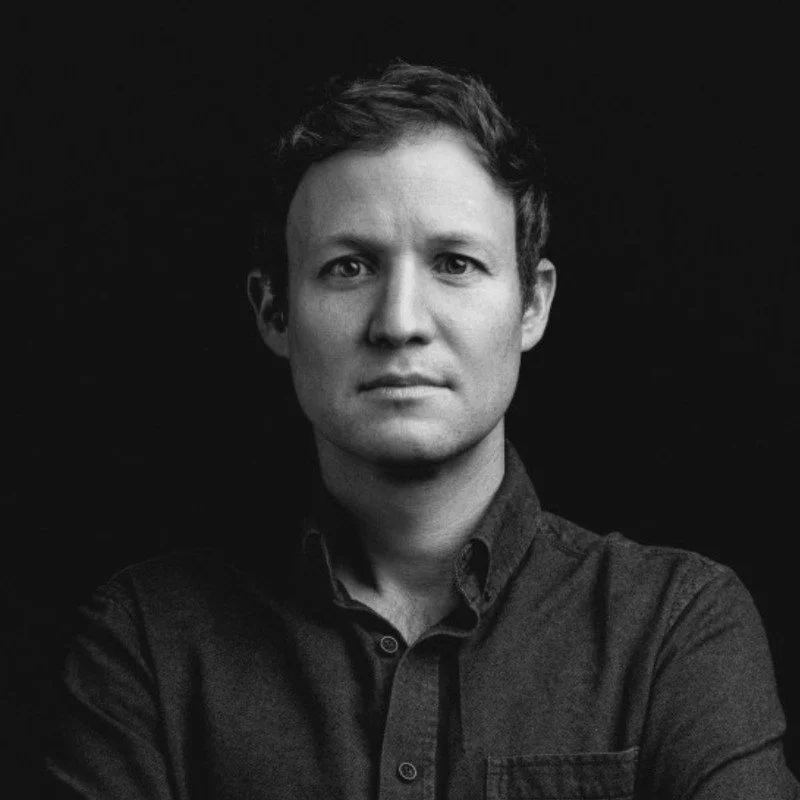
Stu Landesberg is Co-founder and CEO of Seneca, a company developing autonomous aerial systems to detect and suppress wildfires before they grow out of control. Designed for rapid initial response, Seneca’s technology deploys robotic aircraft that launch within minutes, helping protect homes, infrastructure, and communities in fire-prone regions.
In this episode of Inevitable, Landesberg shares why he left Grove—his first company focused on sustainable consumer goods—to tackle what he sees as a civilization-level challenge: early wildfire intervention. The conversation explores how climate conditions, outdated fire cycles, and insurance market failures have converged to threaten life in the American West. Landesberg walks through Seneca’s approach to changing that trajectory: distributed strike teams of large autonomous suppression copters, built in the U.S., designed to reach fires faster than any existing response method. He also unpacks the product’s potential for mop-up operations, prescribed burns, and utility asset protection.
Episode recorded on Jan 14, 2026 (Published on Jan 27, 2026)
In this episode, we cover:
(2:40) Wildfire as a threat to housing and the economy
(10:07) The urgent need for faster fire response
(15:12) Why helicopters aren’t a scalable solution
(20:03) New use cases beyond initial attack
(28:25) What autonomy looks like in practice
(33:11) Why Seneca isn’t just another drone company
(38:21) Wildfire as a climate and national security risk
(46:18) Seneca’s first deployments and what’s next
-
[Cody Simms] (0:00 - 1:47)
Today on Inevitable, our guest is Stu Landesburg, Co-Founder and CEO of Seneca. Seneca is building autonomous aerial fire suppression systems—effectively robotic firefighters in the sky designed to launch within minutes, find wildfires early, and knock them down before they outrun ground response. The idea is to fill a missing layer in our firefighting infrastructure, the gap between engines that can't always get there in time, and crude aircraft that are scarce, expensive, and not always immediately available for initial attack. Stu and I recorded this episode just after the one-year anniversary of the LA wildfires, and a year later, the physics of the problem haven't changed. Wildfire is still a race against time, and once you miss the early window, you're no longer talking about suppression—you’re talking about containment, loss, and recovery. In this conversation, we dive into what Seneca is building, how it works in practice, where it fits operationally, and why early airborne response may be one of the most important unsolved problems in climate resilience. From MCJ, I'm Cody Simms, and this is Inevitable. Climate change is inevitable. It’s already here, but so are the solutions shaping our future. Join us every week to learn from experts and entrepreneurs about the transition of energy and industry. Stu, welcome to the show.[Stuart Landesberg] (1:47 - 1:49)
Thanks for having me, Cody. Great to be here.[Cody Simms] (1:49 - 2:39)
Well, it's great to have you back. For guests who maybe haven't put it together—you were here a couple years ago, back when you were building a completely different company, Grove, which you took public. So congrats, nice milestone there for you as a founder, I'm sure. I like to start these conversations by acknowledging why now—why are we having this conversation now? I'm sitting here in Los Angeles. It's roughly one year after the anniversary of the LA wildfires, which completely changed the city where I live. I know you in Northern California experience wildfires all the time. And so here you are, a successfully exited founder who decided to go all in on the wildfire problem. Maybe share a little bit about what you saw and why this is the thing you wanted to do next.[Stuart Landesberg] (2:40 - 4:49)
It's interesting you call me a successfully exited founder. I think the mentality of using one's time to use technology to solve the world's most important problems is such an amazing gift, and moving from one project to another is a really fun thing. But I don't think the mentality ever changes. When it comes to wildfire—and it's touched you personally, it's touched me personally in little ways like losing my home insurance and in big ways, like my father-in-law's house only still standing because of the bravery of firefighters—you start to see how exceptional this problem is. We often think of wildfire as random and uncontrollable, but when you dig deep, the opportunity to apply technology is incredible. My first company, Grove, was focused on sustainability. I've always cared deeply about environmental resilience and stewardship. Wildfire is absolutely an environmental and human problem. And for hundreds of millions of people globally, this is an extinction-level problem for civilization as we know it in fire-prone regions. It’s a societal problem, a climate problem, and one I’m deeply motivated to work on.[Cody Simms] (4:49 - 4:59)
Extinction level in that people won't be able to afford homes anymore because they can't get them insured? Unpack that a little bit.[Stuart Landesberg] (4:59 - 7:51)
I use the word extinction deliberately. Fire intensity has more than doubled in the last 20 years, and risk has gone up orders of magnitude. Climate conditions, fuel loads, and lack of technological progress in suppression have created a situation where homes are burning at unprecedented rates. Fire is a total loss event, which makes insurance untenable. Without insurance, you can’t get a mortgage. Without mortgages, the American dream breaks down. If you can’t buy a home in the American West, what does that mean for half our country? We’ve got maybe 10 to 20 years to catch up to the growth of fire risk, or we’ll see the American West move backward.[Cody Simms] (7:51 - 7:54)
Everybody get your Canadian visas ready, right?[Stuart Landesberg] (7:54 - 8:04)
Canada’s burning too. It’s the entire West Coast.[Cody Simms] (8:05 - 8:45)
I saw a stat that said California isn’t in drought for the first time in 25 years. How much of wildfire is related to drought versus extreme swings?[Stuart Landesberg] (8:45 - 10:06)
Interestingly, the biggest fires tend to happen after very wet winters. You get massive vegetation growth, followed by hot, dry summers. That combination creates optimal fire conditions. Full reservoirs don’t mean low fire risk year-round.[Cody Simms] (10:07 - 10:46)
That insight—needing to detect and suppress fires quickly—is one of the ideas behind Seneca. What is Seneca?[Stuart Landesberg] (10:47 - 11:14)
We build advanced technology to equip firefighters in situations that were previously unsafe, inefficient, or impossible. Our first product is a strike team of five very large autonomous suppression copters.[Cody Simms] (11:14 - 11:15)
These are big.[Stuart Landesberg] (11:15 - 13:25)
They carry over 100 pounds of Class A foam each, fired at high pressure. Together, they deliver the suppression power of a wildland engine. Fire grows exponentially—every megafire started as a spark. If you can bring that suppression within five minutes, you have a real shot at stopping it.[Cody Simms] (13:25 - 13:54)
What does initial suppression look like today?[Stuart Landesberg] (13:54 - 14:16)
Detection has improved—cameras, satellites, sensors, and people calling it in—but response is still slow.[Cody Simms] (14:17 - 14:29)
If you see smoke, call 911.[Stuart Landesberg] (14:29 - 15:11)
Even in Southern California, it can take 20–30 minutes for a helicopter to arrive.[Cody Simms] (15:12 - 15:22)
Those helicopters cost $30M+?[Stuart Landesberg] (15:25 - 17:08)
Yes. They’re scarce, expensive, and centralized. Many fires start with a lone firefighter hiking in with a shovel. By the time support arrives, it can be hours—and the difference between five minutes and two hours is the difference between half an acre and hundreds of acres.[Cody Simms] (17:08 - 17:22)
Can these fly in high winds?[Stuart Landesberg] (17:23 - 18:51)
That’s a physics problem. But the bigger point is: no one cries when a drone dies. We can operate where it’s too dangerous for humans.[Cody Simms] (19:42 - 20:02)
So you’re focused on first-15-minute response, not megafires.[Stuart Landesberg] (20:03 - 23:13)
That’s where we started, but customers are finding many uses—mop-up, prescribed burns, night ops, inaccessible terrain, utilities, ranchers, and more.[Yin Lu] (27:10 - 28:10)
MCJ Collective is a vetted member network for tech and industry leaders building solutions for the energy and industry transition. Learn more at MCJ.VC.[Cody Simms] (28:11 - 28:24)
Are these fully autonomous?[Stuart Landesberg] (28:25 - 32:25)
We aim for a “seven-star experience”—autonomous dispatch, navigation, detection, and suppression, with humans able to override.[Cody Simms] (32:26 - 33:10)
What makes Seneca different from retrofitted drones?[Stuart Landesberg] (33:11 - 35:32)
These are more like helicopters than camera drones—250–350 lbs, 12x12 feet, made in the US. American resilience is core to our mission.[Cody Simms] (35:33 - 35:56)
Are you sourcing from the US?[Stuart Landesberg] (35:56 - 37:02)
To the fullest extent possible, with allied nations when necessary.[Cody Simms] (37:03 - 37:18)
So you’re not selling a commodity.[Stuart Landesberg] (37:19 - 38:20)
Reliability matters more than cost when lives are at stake.[Cody Simms] (38:21 - 38:49)
Any dual-use defense potential?[Stuart Landesberg] (38:50 - 40:54)
Protecting communities from fire is national security. Fire has done more damage to American cities than any foreign adversary in the last 50 years.[Cody Simms] (40:55 - 41:10)
What’s the business model?[Stuart Landesberg] (41:10 - 42:24)
Five-aircraft strike teams with mobile or remote launch infrastructure, sold to fire agencies, utilities, HOAs, and landowners.[Cody Simms] (42:24 - 42:38)
What about airspace?[Stuart Landesberg] (42:38 - 43:08)
We handle regulatory complexity and deconfliction.[Cody Simms] (44:33 - 44:35)
What does scaling look like?[Stuart Landesberg] (44:35 - 46:06)
Great people, American manufacturing, and delivering a jaw-dropping customer experience.[Cody Simms] (46:07 - 46:18)
Are you deployed yet?[Stuart Landesberg] (46:18 - 46:40)
We’ve flown with agencies across several states. You’ll see us on fires this summer.[Cody Simms] (46:41 - 46:54)
How did you finance this?[Stuart Landesberg] (46:55 - 48:23)
We raised $60M in October—the largest VC round in fire tech.[Cody Simms] (48:23 - 48:30)
The Anduril of firefighting?[Stuart Landesberg] (48:31 - 49:23)
That’s fair. Firefighters deserve the same innovation as the military.[Cody Simms] (49:23 - 49:46)
What about emissions?[Stuart Landesberg] (49:47 - 51:26)
Mega-fires are massive emitters. Reducing them helps climate, habitats, and human health.[Cody Simms] (51:29 - 51:47)
I see the impacts in real life.[Stuart Landesberg] (51:48 - 51:52)
Nature is always more powerful.[Cody Simms] (51:52 - 51:58)
Anything else?[Stuart Landesberg] (51:58 - 54:09)
We have a narrow window—but humans can still bend the arc. This is urgent, meaningful work, and a privilege.[Cody Simms] (54:10 - 54:14)
Thanks for dedicating yourself to this.[Stuart Landesberg] (54:14 - 54:15)
Privilege.[Cody Simms] (54:15 - 54:17)
Stu, this has been awesome. Thank you.[Stuart Landesberg] (54:17 - 54:18)
My pleasure.[Cody Simms] (54:19 - 54:45)
Inevitable is an MCJ podcast. Learn more at MCJ.VC and subscribe at newsletter.MCJ.VC.