
Turning Students into Founders at Stanford Climate Ventures
Dave McColl is Executive Director of Stanford Climate Ventures (SCV), a program designed to help students build climate companies through rigorous go-to-market strategy and hands-on company building. SCV is a project-based course at Stanford University that has helped launch dozens of startups across energy, infrastructure, and industrial decarbonization.
In this episode of Inevitable, Yin Lu, General Partner at MCJ, sits down with McColl to unpack the SCV playbook—from “earned secrets” to the importance of customer discovery. The conversation also features three founders who came out of the SCV ecosystem:
Carla Pinzon, Founder of Expand Power, solid-state transformers for a more flexible grid
Raj Tilwa, Founder of Focal, personalized heating systems for commercial spaces
Nico Pinkowski, Founder of Nitricity, decentralized fertilizer with air, water, and renewable power
Together, they share how SCV shaped their companies, from early pivots and customer insights to product-market fit, and what it takes to build sustainable businesses.
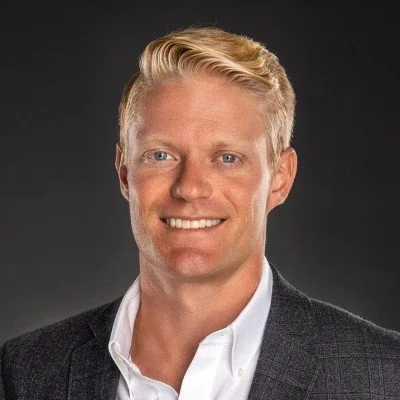
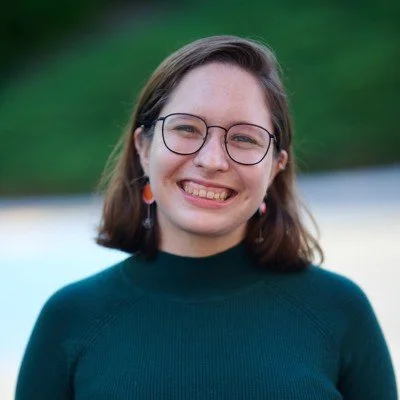
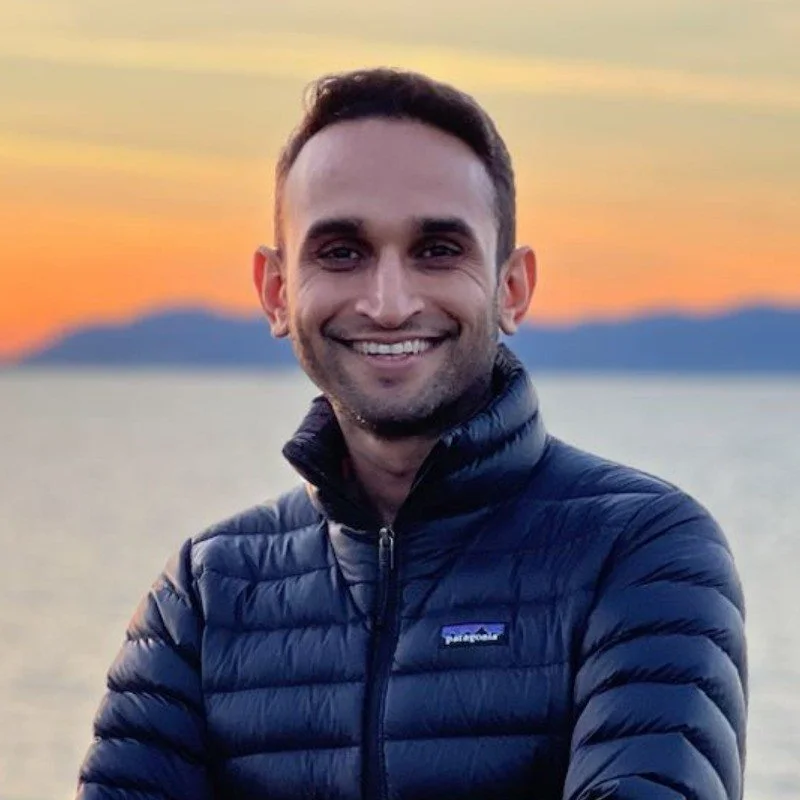
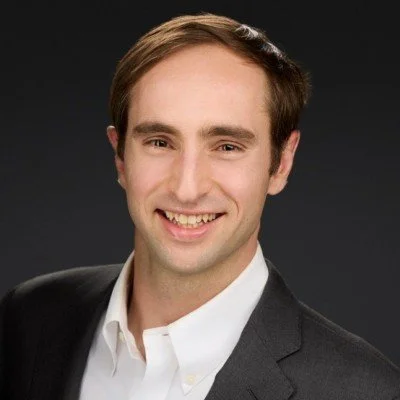
Photos in order: Dave McColl, Carla Pinzon, Raj Tilwa and Nico Pinkowski
Episode recorded on March 13, 2026 (Published on April 14, 2026).
In this episode, we cover:
(0:00) An overview of Stanford Climate Ventures (SCV)
(5:12) The origin of SCV and its community-driven model
(10:14) How SCV works: discovery, iteration, and “earned secrets”
(16:25) The biggest founder mistake: ignoring the customer
(18:56) What predicts success: discovery volume and team dynamics
(25:51) Carla Pinzon (Expand Power): solid-state transformers for a modern grid
(32:21) Finding product-market pull through customer discovery
(35:56) Raj Tilwa (Focal): personalized heating vs heating entire spaces
(44:21) 100+ interviews to find a real painkiller in hospitality
(52:10) Nico Pinkowski (Nitricity): decentralized fertilizer production
(58:31): How product-market fit can take years
-
[Yin Lu] (0:00 - 2:28)
Hey everyone, Yin here, getting behind the mic today to tell you more about the Stanford Climate Ventures community. This ecosystem is a high signal breeding ground for early entrepreneurs in climate and energy. For those of you who don't know, Stanford Climate Ventures, or SCV as it's known in shorthand on campus, is a three-quarter long project-based course sequence that focuses on the creation and development of new high-impact companies addressing key problems in the climate and energy space.
People who have gone through the class say it is a critical launchpad for aspiring entrepreneurs because of its pragmatic approach. These companies have raised a collective $2.7 billion in capital, employ over 1,000 people, and across 18 different countries globally. Stanford has historically yielded such a high concentration of founders building in the space.
As a point of reference, 18% of MCJ's portfolio companies have a Stanford alum as a founder. Just to name a few names of folks you've probably heard from on the podcast before, Hannah Sieber, who's building Artyc, Siva Yellamarju, who's building Fourier, Carl Hoiland, who started Zanskar, Carri von Muench of Pacific Fusion, Nico Pinkowski, who you'll hear from later in the episode, who started Nitricity, Chase Lochmiller, who founded Crusoe, just to name a few. Folks working on technologies varying from cold chain to H2 to geothermal, nuclear, AI data centers, grid resilience, the list just goes on and on.
This high concentration of founders building in the climate and energy space at Stanford partially comes from the fact that there are so many founder-centered programs on the Stanford campus. You have the likes of the Stanford Energy Club, TomKat Innovation Transfer Program, StartX, and each one of these is worth its own deep dive. The program that we hear consistently from founders as critical to their founding journey is SCV.
And because of this, we really wanted to talk to the person who's running SCV to learn more about what the magic sauce is. And we want to hear from founders who came out of this ecosystem, who are building companies at various stages. And so please enjoy this two-part conversation, first with Dave McColl, who's the Executive Director of SCV.
Then with three founders, Raj Tilwa, who's reinventing the heating technology space with a seed stage company headed to A called Focal. Carla Pinzon, who is building a solid state transformer company at the pre-seed stage called Expand. And lastly, Nico Pinkowski, who is reshaping the organic fertilizer industry with a Series B company called Nitricity.
[Cody Simms] (2:29 - 2:52)
From MCJ, I'm Cody Simms, and this is Inevitable. Climate change is inevitable. It's already here.
But so are the solutions shaping our future. Join us every week to learn from experts and entrepreneurs about the transition of energy and industry.
[Yin Lu] (2:56 - 2:58)
Dave McColl, welcome to the show.
[Dave McColl] (2:58 - 3:00)
Thank you, Yin. Excited to be talking with you.
[Yin Lu] (3:01 - 3:20)Great. I've been wanting to have this conversation for a long time. And I want to chunk up our conversation into a few different parts.
One, we want to learn about your background. Two, I want to dissect SCV a bit more, just to learn about what the magic sauce is. Three, I want to learn from your perspective, what are some of the trends that you anticipate over the next 10 years?
[Dave McColl] (3:20 - 5:07)
Awesome. Yeah, I was born in San Diego to a big family that was also a very big Stanford family. And so I went to my first Stanford football game at six months old and have just basically never left.
I ended up going to undergrad. I was lucky enough to go there, which is really where I found my thing that I love to do in just creating community and being a part of it. From there, I went to a large energy company called Enel and did startup scouting there.
And essentially it was the same thing of, hey, who's doing what in the energy world? And how can we bring them in and try to do something cool with them? And that was great.
But I ended up going back to Stanford to do my master's in energy engineering. And that was where the very first iteration of what is now Stanford Climate Ventures was being taught. And it's funny because back then it was basically one flyer in the basement of the energy engineering department that said, “hey, if you're interested in energy entrepreneurship, come hang out in this classroom.”
So I did. And there were only about eight grad students there. Dave Danielson and Joel Moxley, two of my co-instructors in the class who really launched all of this, were sitting there.
And I don't know that the class quite had as much shape as it does today. But the 10 grad students who were in that room were my 10 basically closest friends from campus who were the people that I would always talk to about energy and climate type things. You got to remember this is in 2017 when it wasn't quite so hot.
And there was just a few of us nerds who really liked to go deep into it. And they had managed to get all of those people into one room uncoordinated. And so I said, “hey, whatever these guys are doing, this is something I want to be a part of because they know how to get all the people that I genuinely enjoy hanging out with together.”
That was my road to what became Stanford Climate Ventures.
[Yin Lu] (5:08 - 5:11)
What led to this ecosystem starting on Stanford's campus?
[Dave McColl] (5:12 - 7:30)
So Stanford Climate Ventures is really the playbook of Dave Danielson. And so Dave, he was a PhD at MIT back in about the 2004 era. And there was a new textbook that was coming out.
And they had offered a dollar for every typo that students could find. And so Dave combed meticulously through this textbook and found like 500 typos. And he took his 500 bucks, went to The Muddy Charles Pub at MIT and basically said, “hey, if anybody wants to talk about energy stuff, I'm here and I've got free beer.”
And from that moment was where the MIT Energy Club was started from. So he started the MIT Energy Club by just saying, let's get people together who are interested in this, give them space to just talk about it and figure out who's working on what. And that launched one of the biggest energy initiatives on any college campus in the world.
And so from there, Dave went on to go be the first employee at ARPA-E. So he really launched ARPA-E with Arun Majumdar and a few other people. And that was the same thing of, “okay, we've got all these people working on really cool technologies. How do we direct them towards the really big problems we need to solve and then just bring them together and get them the resources they need to go do this?” And ARPA-E has obviously turned into a large program over the last 10 or 15 years.
And so from there, then in 2016, Dave was looking for his next thing to go do.
And Arun was over at Stanford. And so he said, Dave, come to Stanford and figure out what you want to do over here too. And so Dave took that same playbook to Stanford and again, just said, all right, let's get people together who want to work on this, on energy and climate, big problems within it. And let's just give them a space to figure out which problem they want to work on and get excited about working on it together. And then just start finding ways to get roadblocks out of their way, because all it really takes is somebody who's obsessed enough with solving a problem that they'll stop at nothing and giving that person every opportunity and every relationship and every playbook and past data point you have on company building to just keep rolling. And so that's the DNA of what SCV is.
And it does stem back from the days at the Muddy Charles Pub with Dave bringing everybody together over those typo-earned pitchers of beer.
[Yin Lu] (7:31 - 7:51)
I love that the two really important energy entrepreneurship ecosystems were born out of, on the backs of typos. So that's a fun origin story. One of the founders that we invested in says this class was so empowering because it teaches critical, non-typical classroom skills involved in building energy technology.
Talk more about that.
[Dave McColl] (7:51 - 9:51)
Absolutely. Yeah. So the four of us that teach the class are Dave Danielson, who I already mentioned.
And then there's Joel, Joel Moxley, who he's the founder in the group. He's the one, he had started a company called Foro Energy during kind of what I'll call the CleanTech 1.0 timeframe. And so like, he's got all of the battle scars from that era.
And it just has all the playbooks of when you're thinking about the company building fundamentals, he's the person that we turn to on that. And then my other co-instructor is Jane Woodward, who we brought in around 2020 on the team and are so lucky to be able to have her. Jane, talk about somebody who can see where the puck is going in the energy industry.
She has done it time and time again with her previous company that she founded called MAP Energy, where they basically were the first ones when there was innovations in oil and gas. She was the first one to figure out where all those resources were going to be best located. Then when wind energy came along, she was ahead of the curve.When batteries came along, she was always the first person to go find where the most unique assets in that space were and start developing. And she's also just, I don't think the words "Stanford" and "energy" would exist together unless she had been teaching at Stanford for the last 40 years.
One of the things we focused on is building it for the engineers, because I think you never, at least at Stanford, you never really have trouble getting the MBAs to show up to the entrepreneurship classes, but it's just different and intimidating oftentimes, or it's just a world that you don't fully know when you're on the engineering side of campus.
And so our roots are there and it's built for that. And I think that's given us a really nice balance because our class is about 60% engineers and about 40% MBAs. And so we really have a nice dynamic on all of the project teams that has helped a lot of them have a well-rounded approach.
But we can do a lot of those hard tech type projects because it is, Dave and Joel always say it, we made it the class that they wish they had when they were going through their PhD.
[Yin Lu] (9:52 - 10:13)
And it's a good forcing function for folks that have been focused on the business side of building a company or building a project versus the technical side, because you absolutely need both to be able to commercialize the technology and to make money at the end of the day. What happens during the autumn quarter, which is the first quarter and then the winter and then the spring, if you had to put themes around each quarter?
[Dave McColl] (10:14 - 12:31)
So the winter and the spring is the staple of SCV, I would say. That's the project-based quarters where we have six teams in the winter and six different teams in the spring, each going through a hundred discovery calls and trying to iterate and find something, what we call the "earned secret," just some sort of insight that might be worth building something around. That's really all the goal is.
It's not to start a company necessarily. It's to find something that nobody else has seen, and then decide whether you're ready to spend the next 10 years of your life based on that secret. And so that's the winter and the spring, and that's really the core of what we do.
And we used to do it all three of the school quarters at Stanford, autumn, winter, and spring. But during COVID, we didn't really know how to run this class virtually. It's very difficult to do since it's a very hands-on class and very much about the people that you're interacting with.
And so we decided during the COVID quarter to just do a Zoom lecture series of bringing in our friends who were experts in different domains of climate, saying like, hey, what's got you excited? What's the state of the art in, to give some examples, like in maritime or in wildfire or whatever it might be, what's the state of the art? Where are you seeing really cool things happening?
And where are you not seeing anything? And if you were a group of fired up Stanford students, you'd probably want to go explore. And that ended up generating quite a few really great projects.
And so we decided to make that a part of SCV on a yearly basis. And so the fall quarter now is exactly that. We're trying to get you to explore a problem space and understand a problem, not be tied to trying to push a particular solution.
And I would say throughout the 100 projects we've seen over the course of SCV, maybe one of them has ended with the same technology that they started with.
And the one example I can think of where the tech was the same as once they launched the company was a company called Holocene that came out of our class where Anca Timofte, the Founder, had been one of the leads of R&D at Climeworks, the biggest direct air capture company for almost a decade. And so I kind of say her discovery phase was that journey of her career. Then she found the exact right technology because she already knew the problem and was able to turn that into a company that she recently sold to Occidental.
[Yin Lu] (12:31 - 12:42)
A hundred projects, about a 50% conversion rate into companies. And to add on to that, if SCV had an investment thesis right now, what would that be?
[Dave McColl] (12:42 - 14:55)
The stat is that about half of all of our projects have turned into companies. That doesn't necessarily mean that half of all of our students turn into founders. Actually, it's much, much less.
So on any one of these project teams, there's six to eight people usually on the project team. And about half of those will go on to be companies, but it's really only about one person, sometimes two, from that team that ends up taking it and continuing on. And even from there, the average time is about two years before it really turns into a company out of our class.
And so there's still so much discovery work. And if you've built these companies, we always say very definitively to our students, this was not the work. The work is 99.9% in front of you still. This was just a class. While yes, that is the stat, it's actually probably, I would say maybe four to 5% of all of our students end up founding that company. It's not just, oh, I have a good idea.
It's worth pursuing. The reality is you're giving the next 10 years of your life at least to go do this and nothing but it. And so you have to be fully obsessed with the problem.
You have to have the conviction that this is the thing you need to go build. And I mentioned that Joel is the one with the battle scars. And like in the last week of the quarter, frankly, we try to talk them out of starting their companies.
And if they still look us in the eyes and say, I'm doing it anyway, that's when we say, okay, let's find whatever resources we can to help this person out. We have so many founders around the class. We have so many of the people that will go on in some way to be an advisor to a team, to be an investor in a team.
I can think of so many of the announcements that you hear now of our alumni companies raising rounds and you see who's leading them. And it's, oh, I remember introducing them to them five years ago to do a customer discovery call because they knew the industry. And these are just the same people that you see over and over.
We're always trying to bring everybody in. And Yin, you've been to our social events at the Dutch Goose and everything. It's just, it's really about bringing that whole community together because these things take a decade at least to do, and you're going to need all of the support around the table.
And so we just want to create those relationships before they're needed. And that's what SCV is trying to accomplish.
[Yin Lu] (14:56 - 15:06)
For the budding entrepreneurs who listen to this podcast and who do not go to Stanford, are there resources to help them on their founding journey?
[Dave McColl] (15:07 - 16:10)
Absolutely. I love that. If you go to stanfordclimateventures.org, we have a tab called playbooks on there, and it's basically a list of all of our favorite resources that we have compiled over the years, both in terms of different fundamentals. There's stuff on techno-economic modeling, there's stuff on sales, there's stuff on fundraising strategies, anything you can think of that has been imparted through our class. And it's also got some lists of, “hey, here's all of the people who past SCV companies have been funded by, or how they got their start and things like that.” And we're actually trying to work on more of the specific stories so people can see, hey, here's the playbook.
Because the reality is, again, when you look at CleanTech 1.0, the playbook was raise venture capital, and that's it. And now there's so many different steps and paths you can take, but so many of the founders that came out of our class had to make it up along the way. But it was an uncharted path as it is for so many founders.
And I think the reality is, it always will be to some extent, and it's much more art than science, but we're at least trying to point them towards here's who's done it before and how.
[Yin Lu] (16:10 - 16:25)
Doing some pattern matching, because you've just seen so many different projects try to launch, and some turn into companies and some companies fail, some companies succeed. What do you think is something that people consistently overvalue and something that people consistently undervalue when it comes to building?
[Dave McColl] (16:25 - 18:52)
I think people undervalue finding a specific customer and serving a specific person and making sure it's something that changes their life by an order of magnitude. The reality is, no one's ever going to change the way they do anything for an incremental amount of improvement. It's going to have to be a 10x change.
And so what we're really trying to get to is understand, “hey, who's the person who's life is changing?” That the focus has been, get down to the individual name and what that person does on the weekend. When you're thinking about your customer, it's not a logo, it's not a company, it is a person who has to make a decision and who has a real problem that needs solving.
And so I think maybe people often focus too much on the tech and not as much on the individual person and who their problem is. And every time we've seen a success story come out of our class, it is getting down to what that problem is. To give an example, Lauren Dunford is a founder that came out of our class.
She started a company called Guidewheel. She had built software for energy efficiency, for improving the energy efficiency of factories. And she had so many customers that were going to be pilot users and said how much they would use it.
And as she rolled it out to all of them and started looking at the usage, completely flat. Nobody was using it, even though they all said it was something they valued. Because the reality was energy efficiency just wasn't a huge issue in their economics.
But then she had one user that was using it for like hours and hours a day. And so she called that user and said, “can I just come watch you use this in the factory?” “And he's like, “sure.”
So she went to the factory and watched him use it and realized that he didn't really care about the energy efficiency of his machines. What he cared about was being able to know when his machines were online or offline. Because having a machine go offline meant there's no revenue for the day.
And that's what really mattered to him. And so because of Lauren's technology, he could have a heartbeat of his factory. And just by going in there and seeing that, she realized, wow, that's the problem I'm actually solving.
And by doing it, “I earned the right to improve all of the energy efficiency of these.” And that is when Guidewheel really turned and turned into the company that it is today. That's the story I always like.
You just need to go understand who the person you're actually helping is and go get in the factory with them to really understand it.
[Yin Lu] (18:52 - 18:56)
What are the biggest predictors for durability for teams?
[Dave McColl] (18:56 - 21:37)
I'll use what we always tell our students at the beginning of the quarter, which is that there's two direct correlations between what happens in the class and whether something goes on to be a successful company.
The two direct correlations are one, the number of discovery calls that they do. It is really just a numbers game because the more of those you have, the more likely you are to understand something that nobody else does.
I think we say 70 is the minimum number of discovery calls we want. But if you look at the teams that have actually become companies, it's above 100. And many of them, they just keep doing it after the class and it's more like 300. And that's when the really good stuff happens.
The other direct correlation is how much fun they have in their final presentation. Because if you're having fun, it means you genuinely enjoy the problem. You genuinely enjoy working together. And those are the things that carry a company through all of the difficulties of everything. And they really, again, are just people things.
It's how focused on the customer. If I can use an example with a company called Furno Materials that came out of our class that was focused on cement. Again, that's one where Gurinder Nagra, the Founder, had probably 300 conversations with people in the cement space. And starting from zero.
He was a geologist, but was just so interested in solving the problem of decarbonizing cement that he had more conversations than anybody I'd ever seen. And by doing that, kind of uncovered and earned secret that there were these kind of regional geographies that were not being served by the big cement companies.
And if you could start there, you could really establish your own footprint there and start building out. Because it was the places where the big companies didn't want to go. And where the concrete producers didn't have other good options.
And so you could really start there and build out from it without going head to head with any of the oligopolies that are in the cement space. Something like that, where you can dominate a particular market and get a head start and start building and have opportunity for higher margin. Because that margin is what gives you the room for error.
You don't want to just go into it blindly. But having that earned secret for why there's a way to go approach the market through that lens that nobody else has. It's understanding exactly who your customer is and what your 10x advantage for them is.
Having a love of the team, but also just a love of the problem. Because again, the solution you start with is not going to be the solution you end with. And then having that unique go-to-market strategy, because that is what's going to give you the ability to sprint before anybody else is trying to catch you.
[Yin Lu] (21:37 - 22:07)
Okay, hypothetical. It's 2035, and what are some non-obvious areas that we should be building in? To give an example, I feel like I couldn't go for more than five minutes around campus today without hearing someone talk about AI data centers.
And so it's like the obvious area where there's a lot of energy being poured into building and investing. A non-obvious area is potentially if we overbuild our data center infrastructure, people are going to want to focus on ways to decrease their OpEx over time.
[Dave McColl] (22:08 - 24:48)
Yeah, I think I'm going to approach this in two ways. One, where's the talent going? And two, what's the hypothetical if you play it out 10 years down the line?
And so on the obvious one, where's the talent going? I think probably about three years ago, really, somehow nuclear was just pulling everybody into it. And obviously now it's a huge industry and everybody's talking about it, but they just managed to get so much talent to get pulled into that industry that we really have some of our best and brightest in that space.
And so that's one where I think there's been a lot of capital. The one that's a little bit less obvious, but very quickly becoming it is so many of my friends in recent years have been getting pulled into transformers. In recent, probably the last year, I've seen so many of our best and brightest get pulled into that space and saying, this is the next frontier I want to go solve.
The obvious example is Drew Baglino, the former CTO of Tesla, started a company called Heron Power. And it's like, “oh man, now everybody's waking up, transformers are the place to be.” So I love that one.
And then on the framework that you mentioned, you can't ignore AI, right? And so if you're going to talk about AI, everybody understands that energy is the bottleneck there. But what we try to talk about with our students and ideally form some project teams around is let's play out the most bullish and most bearish scenario for AI you can think of.
Now play that out about flip the next five or six cards over. Where does the energy system completely break six cards down? And you can take that bet and go build a company around on that in itself.
Then you can take the other side of the bet and say, we're going to build all of this out. And then let's say the whole thing bursts and we've got basically free electricity already built out with no off takers to take it. What happens then?
These are kind of like the fun things where we'll just talk about it with students for hours and try to figure out, okay, if we're going to take that bet, where would you start building the company? And obviously those are extremes and not necessarily what I think is going to happen in either direction. But it starts to illuminate where the opportunities are in either direction, because no matter what you do, there's going to be more electricity load where we're going to break at some point.
And then there's going to be gluts in certain places where you'll need to redirect how it gets used. And so I think they're really fun experiments, but they also lead to actually a kernel of insight that you can go use to start exploring a problem space to potentially build a company around.
[Yin Lu] (24:48 - 24:56)
Gosh, thanks, Dave, for chatting about how awesome SCV is. Really appreciate your joining us for the pod.
[Dave McColl] (24:57 - 25:21)
No, thank you, Yin. And thank you for highlighting the founder stories. These journeys are brutally difficult in building companies, and it's so important that you've got the stories that you can turn to, to keep you motivated, know where to turn to next, things like that, and also to have the community of people that you know have been through it before.
So grateful to you guys for creating that community and bringing those stories to everybody.
[Yin Lu] (25:21 - 25:51)
We are moving on to part two of our conversation where we're going to highlight three different founders, all from the SCV ecosystem, building companies in different areas and in three different maturity stages. So we'll start with the earliest stage company and end with the later stage company. First up, we have Carla Pinzon, who's working on a pre-seed company in the solid state transformer space called Expand.
Carla, welcome to the show. And as a starting point, I would love it if you can tell us more about Expand Power.
[Carla Pinzon] (25:51 - 26:11)
Yeah, thanks so much for having me on the show, Yin. I'm Carla, the founder and CEO of Expand Power, where we're expanding electrification. Our vision is for a distributed, decentralized grid where modular power electronics and smart transformers can increase resiliency and reliability.
[Yin Lu] (26:12 - 26:18)
All right, and take us through how you ended up at SCV. Like, what was your academic and professional background?
[Carla Pinzon] (26:19 - 27:41)
I grew up in South Florida. And as most South Floridians know, hurricane season is pretty awful. There was times growing up that we didn't have power after the hurricanes.
We'd have to shower at friends' places. We didn't have school for weeks and it would have to be pushed back. We were really stuck without the grid, without power.
And so that inspired me to study power electronics at MIT and for my undergrad and my master's. While I was there, I had been thinking about modular power electronics and offshore wind. So I started a PhD at Stanford to see if I could commercialize it.
While I was there, I led a team for SCV, Stanford Climate Ventures, and very quickly realized that there was no market for modular power electronics for offshore wind. But after taking the class, I realized that what I had been working on and thinking about could be really beneficial for transformers. So dropped out of the PhD, got a job to bootstrap myself until I became an Activate Fellow. And since then, Expand has really taken off. We're a team of MIT engineers. We're on our third revision prototype that we're really excited about.
And we just signed an LOI (Letter of Intent) for $13 million of units a year.
[Yin Lu] (27:41 - 27:55)
I want to deep dive into all of that. But before we do that, maybe let's take a step back and just talk about you mentioned transformers. What is a transformer? What is its role in enabling electricity to be delivered to everywhere?
[Carla Pinzon] (27:56 - 29:30)
So we're really at a special time in our grid history now where 70% of transformers are over 25 years old. We have an unprecedented number of new sources and loads. Data center growth is at an all-time high.
And because of these reasons, we're reaching an inflection point where the grid that we need looks fundamentally different from the grid that we have today with the need for new power electronics to close this gap. Transformers are the most critical piece of the grid. They're used for everything, for distribution, for generation, for transmission.
And they move voltage around the grid. So moving from lower voltage to higher voltage, from higher voltage to lower voltage. But they're the most critical piece of the grid.
They have a few issues, however. First, they can only do EC power, which is unideal in a world where we're rapidly moving in DC power for solar, for data centers, for EVs.
Second, you can't control them. There's no way to monitor them. They're not dynamic. There's no mitigation for harmonics, power quality, or other issues.
And lastly, you just can't get them with lead times of over two years from overseas manufacturers. New data centers and the new solar sites, just how much they've exploded, there is more than enough reason for DC grid and DC-based transformers to exist.
[Yin Lu] (29:31 - 29:44)
If you ask anyone in the energy and climate, AI data centers is an inescapable phrase that will come up. Is that the beachhead that Expand is going after? Or are you starting off somewhere else?
[Carla Pinzon] (29:45 - 29:56)
So we are really excited about solar repowering, which is when aging solar sites, first generation, second generation, have an inverter that's broken.
[Yin Lu] (29:57 - 30:01)
Can you let us know what an inverter is, for those of us who don't have the background?
[Carla Pinzon] (30:01 - 31:02)
It's one of the core pieces of technology, power electronics technology used in a solar site, from DC to DC power converted to AC power. And so what happens in these solar sites, the inverter has broken, the manufacturer has gone out of business, and modern inverters are completely different with much higher operating levels than your original inverter. So there's no way to get the solar site back up and running without paying an exorbitant amount of money.
You have to take the whole site and completely change it because you just can't get this one piece of equipment. And to us, that's a very exciting, huge need that we're hoping to tackle. But we're hoping to tackle and establish a wedge.
But our technology can easily be used for data centers as well. So we'll start with this wedge of solar and expand to other markets, focusing on tech maturity and getting that technical performance envelope the data centers require while we scale.
[Yin Lu] (31:03 - 31:13)
And there's also a voltage difference if you're looking at PV farms, like that's a lower voltage overall than trying to tackle data centers, which operates at higher voltage. Is that fair to say?
[Carla Pinzon] (31:14 - 31:46)
Depends. Maybe a better thing to include is that the product that we will build for solar is easily modifiable to get to data centers in terms of voltage and power and some of the requirements as well. But we're really leaning into flexibility and manufacturability as our core value propositions and developing IP optimized around those with our magnetics, our modularity, and design architecture so that we can easily capture both these markets.
[Yin Lu] (31:47 - 32:20)
Bringing it back to SCV, you started off by saying you had this idea of building power electronics for offshore wind and quickly found there was no market for that. Take us through maybe some tactical examples of how you got that clarity because I think what I'm hearing from chatting with folks in and around the SCV ecosystem is, man, you're just forced to come to terms with building something that people actually want. So curious to hear what are the key points in your discovery process that gave you the clarity to focus on SSTs and focus on solar as the beachhead?
[Carla Pinzon] (32:21 - 33:25)
Yeah, so I came into SCV as a nerdy MIT engineer where I was very much, this is a cool technology and because it is so cool, people will buy this. So very much of the, if you build it, they will come mindset, which now as I've taken this new role in my life, starting a company, building a business, becoming the CEO, is not the way things should be done, not the mindset I have. And SCV was critical and really instilling in me that in order to make a good company, in order to make a good product, you absolutely need that customer and the market to pull you into commercialization.
And there was one such discovery call where we explained our product, what we were hoping to build, and they were very much like, wow, when can you have this ready for me? This is game changing. And that was a huge signal to the validity of what we're building and the problems that we hope our solid state transformer can solve.
[Yin Lu] (33:26 - 33:44)
Okay. I have three more questions for you and hopefully this could be rapid fire. One, what are you most uncertain about?
Two, what are you most bullish about?
And three, by the end of 2026, what do you want to look back on as the key milestones you will have accomplished?
[Carla Pinzon] (33:44 - 35:06)
Look, I've been thinking about this, about solid state transformers (SSTs) for a very long time, already seen the market make some shifts. When I started out, I thought that the real value proposition to SSTs was going to be compactness. And that's very much not the case now.
And so one thing that I'm uncertain about are data centers, not about the market opportunity, because it's huge, but more about the details. There's new architectures being developed, there's new voltages, new protection schemes. We're involved in how these standards get developed and we're actively helping craft them, but there's uncertainty there about the detail.
But that's one of the reasons that we're really leaning into flexibility and manufacturability as our core value propositions, because when the market changes, as it will, as it already has, we want to make sure that we can capture that change easily and make the value for our customer. What am I most bullish about? I'm really excited about the push for new power electronics on the grid.
I think it's incredibly exciting that there's all these new inverter companies, new transformer companies, new protection companies. I'm particularly excited about solar and repowering and how easily we think that our technology within SSTs could make a huge difference there.
[Yin Lu] (35:06 - 35:15)
Carla, thank you so much for spending time with me today so that we can learn more about the wonderful work you and your team are doing and the role that SCV had to play along the way.
[Carla Pinzon] (35:16 - 35:17)
Yeah, thank you so much for having me.
[Yin Lu] (35:18 - 35:31)
Next up, we have Raj Tilwa, who is a graduate of the Stanford Graduate School of Business, and he has a seed stage company headed to A, focused on reinventing the heating industry called Focal. Raj, welcome to the show.
[Raj Tilwa] (35:31 - 35:38)
Thank you. So excited to be here and excited to tell people about SCV and our experience going through it.
[Yin Lu] (35:38 - 35:55)
Wonderful. Raj and I had the fun luck of meeting in person last time I was at Stanford, and I had the chance to go and not only chat with him, but see his product in action. So, for folks that know nothing about Focal, can you give us a TLDR of what it is you're building?
[Raj Tilwa] (35:56 - 36:35)
Yeah. So, at Focal, we've built an AI-enabled robotic heating system that provides individualized comfort to people that can be personalized to individual preferences. So, we are primarily working with hospitality businesses today.
So, think restaurants, hotels, ski resorts, to help them transition away from propane-based heating systems, natural gas heating systems, and just enhance the entire guest and user experience and make these spaces much more usable with a fraction of the cost and fraction of the energy.
[Yin Lu] (36:36 - 36:43)
Very cool. How did you arrive at this being the pixel within the whole of the climate energy space to focus on?
[Raj Tilwa] (36:44 - 38:21)
Such a great question. And it truly starts with my co-founder, Rohan, and I. We both grew up in warmer parts of the world.
So, we met in elementary school back in India in fifth grade, and we were fast friends. We both got the same scholarship to go to Singapore for high school, another very warm place. We're roommates all four years there.
And when we came to the States in 2012 for undergrad, we were both in what people would call a warmer part of the country in Atlanta, Georgia for undergrad. But that was the first time we actually had to think about heating in the winter. And all the disagreements that we started having with people, and we were just bewildered by how everywhere we were heating these massive spaces as a way to keep people comfortable.
And we would always result in suboptimal ways to keep us comfortable. And then this came to head when Rohan officiated my wedding, and my wife and I went to see him a month afterwards in Pittsburgh in February cold. He wouldn't let us touch the thermostat.
So, then we had to think about how do we, the three of us in the same space, keep each of us comfortable in an ideal way. We ran three days of experiments, and we just felt that this is something that is a commonly recurring problem that takes place every single space that people spend their time in. And that's where we had the first vision around why do we heat spaces where we heat people?
Let's just heat people when they're there, wherever they are, to the levels that they want to be heated to.
[Yin Lu] (38:21 - 38:37)
So, there is a lot of buzz nowadays in the climate and energy space. You hear words like firm power, energy generation, energy storage, grid resilience, industrial efficiencies pop up more and more. How does Focal fit into the current conversation?
[Raj Tilwa] (38:38 - 39:58)
We believe any climate technology needs to provide no-brainer value to the end customer and the end user. For us, that is the most important thing. And when you think about the broader ecosystem of efforts that are tackling this big problem, we look at emissions coming from building operations, and space heating is the largest end use of energy out of any single thing that pulls power to do anything in these spaces.
So, that is the big thing that gets us really motivated. If we can do even a small reduction, that goes a really long way, and that motivates us. And at the same time, we also believe in, personally, Rohan and I, this is where the founder framing comes into this, is that the transition needs to happen ASAP.
And we want to bring technologies that are ready for commercialization today. And how can we accelerate adoption of those technologies? And that is why we think a lot about novel user experiences that could be delivered that are just so much different and so much better, that there is rapid adoption that can be paired with our technology stack that is ripe for scale-up as well.
[Yin Lu] (39:59 - 40:04)
Now, take us through the actual technology that you're building, both the hardware and the software parts of the stack.
[Raj Tilwa] (40:04 - 41:11)
The first customer that we're selling to, as I mentioned, is restaurants and hospitality businesses. You've all been at a restaurant, trying to figure out which is the warmest seat so you can be as close to the heaters as possible. Imagine you don't have to think about it, and you're just seated at a table with a beautiful system that's installed overhead, which is a plug-in 120-volt system.
And over you, when you look up, what you're seeing is beautifully designed fixtures that almost look like a light fixture, but it's not. It's a heat fixture that wakes up to greet you when you sit down and delivers heat just to you and your partner or your friend who are sitting next to you or across from you can interact with the system through QR codes and intuitive digital UIs to say that they want less heat, more heat, no heat than what they're getting. And the heat just ends up creating this ambience, and you're just there enjoying a beautiful experience and a beautiful meal.
[Yin Lu] (41:12 - 41:31)
This is a point of contention whenever my partner and I go out to eat, he wants to be as far away from the heater as possible, and I want to be as close to the heater as possible. And so I can imagine with Focal, I can just adjust to have it on full blast for me, and he, sitting six inches away, could have a completely different experience.
[Raj Tilwa] (41:32 - 41:49)
That was the first thing that we learned, was we were so obsessed over delivering heat to people where they wanted. And one of the first consumer insights that we received was we actually enable people to escape heat, which it totally seems like your partner's case here.
[Yin Lu] (41:50 - 42:01)
Yeah, definitely. The customers feel the comfort. They're not thinking about the costs.
From a restaurant owner's perspective, what does installing Focal look like for them from a cost savings perspective?
[Raj Tilwa] (42:02 - 43:35)
Yeah. So we think about the value we provide to customers in two buckets, and we cheekily call it, we help them save money, we help them make money. The way we help them save money is we are the most energy-efficient heating system in market, where we save 90% on propane fuel costs compared to natural gas.
We are anywhere from 50 to 70% cheaper based on what system you're using. So no-brainer cost savings on an ongoing basis. But the other beauty about our system is that because we're a 120-volt plug-in system, we also cut down on project costs and infrastructure costs, both in time and material and ease of permitting standpoint too.
So we've saved anywhere from 50 to 75% on upfront projects. So that's how we help our customers save money. And we also help our customers make money because we can give you the most or give our customers the most number of heated seats with whatever panel and power capacity that you have.
So we help our customers increase covers on a busy evening, as you can imagine, like low-rising businesses, this is super important. And five-star reviews is something that our customers chase. We have seen that end users are reviewing our product on Yelp and OpenTable and Google Reviews at our customers' without being prompted.
So those are the two main values that we provide to our customers today.
[Yin Lu] (43:36 - 44:20)
One of the key things that I took away from my conversation with Dave is that SCV provides this platform for students who want to build a company to just talk with an immense amount of customers to truly understand that if the thing to understand, if the thing that you want to build is a thing that the market needs versus being sometimes in a reality distortion field and just falling in love with the idea and building a product that no one wants, right?
So we oftentimes use the, are you building a vitamin or a painkiller and people are willing to pay for the painkillers. So I'm curious to hear from you what that experience was like and what are some of the assumptions that you had that through the customer discovery process were wrong?
[Raj Tilwa] (44:21 - 50:11)
The structure of SCV is so unique that, and I want to highlight two specific parts about it that helped us significantly in our earliest days. The first was the ability for us to attract incredible talent from different schools and different disciplines to come and help accelerate discovery and learning about what Focal could be. And we had a PhD student from the civil and environmental engineering department who was part of this.
We had someone who had spent so much time in real estate MEPs and real estate finance who was able to be a part of this. We had someone from the public policy school who was able to be a part of our team. And so we had this multidisciplinary team that had joined hands to figure out what Focal could become.
And that was incredibly valuable for us because when Rohan and I first came upon this idea, it was definitely a personal pain point that we really wanted to solve, but we wanted to make sure that there was a real customer for whom, as you mentioned, that this is a true painkiller. We went through, this brings me to the second part about their construct that is so unique. We spend these 10 weeks interviewing at least 100 folks.
And through this rigorous process of talking to different types of customers to understand what value resonates with them, what doesn't resonate with them, helped us get to our go-to-market that hospitality was the right customer for us. And I'll talk about one specific hypothesis. When you look at what type of buildings use the most amount of energy on space heating, we realized that energy use was just one thing.
Comfort is this other aspect that's really important. And then what does comfort enable for that business? That was the third thing that we hadn't thought about at all.
So as we were having these interviews and conversations, we just started realizing that our end customer, that was a hospitality customer, their eyes just started glowing when they realized for the first time that, “hey, they can't do anything about labor or food costs or their rent.” What they spend on utility is something that they can actually meaningfully reduce north of 50%. And for a business that has low margins, that 50% reduction in energy savings is material enough to give them a 50% boost in their operating margin for the business.
So that felt like a true painkiller for us. And then comfort sells for them. So without these conversations, we would not have arrived.
And through that, we met folks who had built Toast, folks who had worked on OpenTable, and how did they think about acquiring their first customers? And how could we take lessons from their playbook to actually build a go-to-market strategy that can set us up for success? So truly instrumental in helping us arrive at what could be the right next steps for us as a young company.
Two other things about how the class is structured that is extremely productive for early teams that may have never had a board meeting or a regular touch point where you go and report on progress. Each team is assigned a mentor who is either an institutional investor or an industry expert who is paired to the team. We were lucky to have two mentors.
That quarter, Jane Woodward was one of them. And then Sila Kiliccote of Breakthrough was the other. And it was almost a simulation of a board meeting that we had every week of the class where we would get quick feedback on hypotheses that we were testing, what could be the next set of questions we need to answer.
And that made us very sharp. And then the second construct was we went through three actual presentations to the class on the business plan and how the idea is evolving into it being a real business opportunity that can lead to material impact that is exciting enough. And with every presentation, we had investors and industry experts who served as judges on the panels.
And we received on-the-point feedback in front of everyone. And that also just built resiliency for an early team. This is going to be our first full year of having a UL certified product that's out in market that we will be able to ship.
So we're really excited to grow beyond the Bay Area for a robotic system. We took the Waymo approach of ensuring that our platform is ready before we scale it more broadly. So we're excited to expand into Southern California as early as Q2 and then gear up for broader national expansion towards the end of the year.
And just having the team that's locked in to really take those places. We were an R&D organization for a long time. And now we know, I think of us as we're becoming a two-headed dragon now with our go-to-market and ops head emerging.
So we're super excited for all to come this year.
[Yin Lu] (50:11 - 50:14)
Well, wonderful, Raj. Thank you so much for taking the time and chatting with us today.
[Raj Tilwa] (50:14 - 50:25)
Thank you so much. Really excited for folks to learn about SCV and how this can be a education format that can be replicated more broadly.
[Yin Lu] (50:26 - 51:41)
Last but not least, we have a second timer on the podcast, Nico Pinkowski, who has a PhD in energy systems from Stanford. And he's the CEO of a Series B company called Nitricity that is reshaping the organic fertilizer industry. Fertilizer is one of the most overlooked climate problems.
Synthetic fertilizer production accounts for about 5% of global emissions via the Haber-Bosch method that produces ammonia. And industrial fertilizer systems are really centralized, fossil fuel dependent and geopolitically fragile, given that they're responsible for ensuring so much food security and maintaining high crop yields and disruption to production and supply can really trigger global food price spikes and widespread agriculture instability if those were to ever be interrupted. And so Nitricity's idea was like, can we produce nitrogen fertilizer locally using air, water, renewable power and agricultural waste with the goal of making organic fertilizer that's cheaper, cleaner and more distributed?
And as of 2025, Nitricity has raised over $100 million and operating out of several facilities.
Nico, it's so nice to have you here. And it's been a few years.
You've been on the pod before during sometime between the seed and Series A of Nitricity's journey.
[Nico Pinkowski] (51:41 - 51:44)
It might have been 2020 or 2021.
[Yin Lu] (51:44 - 52:10)
That's right. It was 2020. Yeah.
Okay. I would love to chat about where the business is today, but we can't do that without really rewinding back to the very, very early days of your journey at Stanford.
It's August 2016. Nico has just joined Stanford and doing a PhD in energy systems. Take us through the journey of how the idea of Nitricity was born and the role that SCV had in its growth.
[Nico Pinkowski] (52:10 - 54:03)
It's a long time ago. So I started grad school, as you said, in the fall of 2016. And it was a big goal of mine to get accepted into Stanford.
And plan A was to just relax and really enjoy my time there. But the week before school started, grad school started, there's this program called Energy@. There's probably about 100 students and it talks about energy, new energy technologies, federal policies, state policies that support energy technologies.
This program also coordinated tours of different startups in the Bay Area. So there was a bus that went to Tesla in Fremont. And there was another bus that went to Mainspring in Menlo Park.
And I went and I thought it was really cool, right? You had a group of students that took an idea out of grad school and they went to Sand Hill Road and lived the pretty rich Silicon Valley experience, pitching venture capitalists and raising money to make an idea come to life in the energy space, which is particularly hard to do because everything in energy involves equipment, machinery, iterating on longer timescales, solving hard problems. It takes a lot of cash before companies can reach the point where they're cashflow positive.
And so that was a pretty great tour. And that's where I networked with a lot of the energy enthusiasts at Stanford and that set the stage. Later, probably two years in to Stanford, I heard of this class called Energy Technology Collaborative, which is what SCV was called before SCV.
And I looked at each of those sectors. And specifically, I was encouraged by one of the professors to look at ammonia and I was encouraged to read this book called The Alchemy of Air, written by Thomas Hager, which is about the history of nitrogen. And that's how I got hooked.
[Yin Lu] (54:03 - 54:15)
When did the reading and the talking to people turn into, oh, I can build something in the space. And then when did that then blossom into, oh, maybe this is a real company?
Nico Pinkowski] (54:15 - 55:02)
Yeah, I think it was late 2017. I took the class and read this book and I worked with a team of students in that class, still called Energy Technology Collaborative. And then I just went over some of the fundamentals of growing a company.
And I'd encourage things like farmer interviews and try to understand pain points and map the market and do techno-economic modeling, for example. And then I took the class again in early 2018 with another group of students. And after the class ended, I just kept working on it.
And later in 2018, I drove down to LA and pitched at a pitch competition and ended up winning and getting enough money to then incorporate a company and start it. It was $5,000. It was like life-changing money back then.
[Yin Lu] (55:03 - 55:09)
What was that first pitch like? What was the idea that catalyzed someone to give you $5,000 to start?
[Nico Pinkowski] (55:10 - 55:57)
I think the name on the front slide was Ammonia by Wire. And the thought was produce ammonia fertilizer by electricity wire. It's kind of a funky name.
And there's pretty high level. This is a problem is that I think I've showed you, this is an area in the United States that needs fertilizer. And then this is the area where you have super cheap wind.
And there's a remarkable co-location between those two maps. Those maps overlap exactly. And then this is where the fertilizer in the US comes from today.
And you zoom out and point Trinidad and Tobago on the other side of the planet or Russia or something like that. We produce a lot of nitrogen in the US, but I think we imported something like 30 or 40% of our nitrogen last year. And that was a fun pitch.
And then we ended up winning the prize and the check with that.
[Yin Lu] (55:57 - 56:18)
It sounds like you landed on the idea of can we disrupt how we make ammonia? And is there a way that we can make it with cheaper energy so that we can really transform the fertilizer space from what it is today to what it could be cheaper and less emissions driven? And how did you come to the distributed model to start?
[Nico Pinkowski] (56:18 - 58:19)
It's a good question. Just practically speaking, if you're going to make a startup, I wanted to do a startup and I wanted to work on electrifying fertilizer production. And a strategy I thought that would be really bad is to go out and say, I need a billion dollars to build a new factory because we don't have the credibility. It's a new technology.
There's going to be tons of problems and no one's going to give us the money. I just thought that would be pretty tough, especially because I was a young student and not the team to do it. So I was looking for, you know, you look at solar.
So, “hey, I can install a solar array on a farm.” And is there any technology that's pretty low CapEx or is there a way to just create something, even a prototype or a small product that we can literally build ourselves on a farm that makes fertilizer? And so it's a little bit more of like practical thinking.
And then if you look at the actual cost model for solar, if you build solar yourself, if you take out labor. At the time, I reached out to some solar companies and asked them if they had any solar seconds, so like unused panels or like defects. And we got solar panels for like 10 cents a watt or something or 15 cents a watt.
And then you look at the cost of steel and there's free designs for how to do the steel. And you look at all the costs and you buy all the things yourself. We had like under one cent per kilowatt hour power.
And then you just discount the fact that like four Stanford PhD students built it rather than actually having labor and EPC firms. And the thought was like, OK, you have under one cent per kilowatt hour power. Now, can you build something that, you know, even if it needs a little bit more power, makes fertilizer in a good way locally?
There's technologies that do that. We played around with a couple of different types and found one that worked all right and then worked on it for a year to get it functioning correctly. And yeah, we're off to the races.
And when you have something actually functioning and running, people can see it as real and your cost model is founded.
[Yin Lu] (58:19 - 58:31)
At what point did you realize, oh, there is actually a product market fit, meaning that farmers that you had talked to about the idea were really excited about it and wanted to jump on board?
[Nico Pinkowski] (58:31 - 59:39)
Years. Product market fit is so hard. We spent years and years iterating on the fertilizer formulation, the technology that makes the fertilizer, the business model and the regulatory approvals.
And because in fertilizer, all these things matter. And then interviewing hundreds of farmers. And I would love to tell you we just had it and it caught like wildfire, but it was the result of years, probably six years.
It took us to find product market fit, just beating our head against the wall every day. But there was enough like encouraging checkpoints along the way to show that we were headed in the right direction. And then in early 2024, something clicked and we really had it.
And the moment you have product market fit, it's cliche, but and people say this, but we do. And you can feel it because you start getting the cost economics immediately work, you're creating value for the farmer. You're creating value for the company.
You're starting to get a lot of sales deals signed, but it was so challenging and stressful for so many years to get there.
[Yin Lu] (59:40 - 59:53)
What were the major aha points along the way? What were the points where you really got good insight and redirect to the business in a way that allowed it to continue to go forward versus stalling?
[Nico Pinkowski] (59:53 - 1:02:32)
I can think of three. The first was we were encountering some problems with the first, one of our earliest tech ideas. And then we were building the prototype and we had some assumptions about the cost model.
And those assumptions broke down at one point. We learned that like the over-voltage on something was going to be higher than they get a reasonable current to get a reasonable production rate. We needed to run these, this equipment like at an efficiency that didn't make sense.
And there's this impossible trade-off to solve. And so we just, yeah, we decided we wanted to look at other options. And one option was being kicked around.
And I remember one day just reading, I think it was like Wikipedia articles on different fertilizer formulations and reading about like different actual nitrogen molecules and formulations. And something clicked at that time. I said, “wow, this is a whole different type of fertilizer, a whole class of fertilizers I've never learned about before.”
And they're really low emission in the field and they're really high performing and you can make them in a number of different ways. And so that was the first epiphany that I had. And then the second epiphany was I was standing on a farm.
It was like 112 degrees outside. I was with a co-founder at the time and a farmer was pointing at something and explaining something that was like driving him crazy. And he was like, I have this huge fertilizer pain point over here. This is like the most annoying thing ever.
And at the time the farmer had an organic field and he was halfway through the growing season, he didn't have a good fertilizer to use. He applied manure at the beginning of the season, but then halfway through his crops were starting to turn yellow and he needed to supply some nitrogen specifically.
And his only option was to supply it as a liquid through his irrigation system, but his existing liquids were really expensive and they were clogging his irrigation lines. And so he showed me some clogged emitters, irrigation emitters. And he was like, look at this, this is a total mess.
And the value to me would be in that this is how much money I'm going to lose. This is how much crop I'm going to lose because of this problem. And it was shocking to see that.
And so that's when we started learning of a particular pain point, but that was still years before we had an idea on how to solve it. About two, actually probably three years later, we had an idea on how to solve it. And then there was like a big epiphany and we're like, this might just work.
And we pivoted the company towards that and it ended up working. And we might need one more epiphany, we'll see, but we're scaling revenues pretty good right now. At least we're on the right track.
[Yin Lu] (1:02:33 - 1:02:43)
Take us through that strategic pivot from trying to compete with the synthetic fertilizer market to really creating a differentiated product within the organic fertilizer market.
[Nico Pinkowski] (1:02:43 - 1:04:52)
Yes. One thing we learned in this entrepreneurial class at Stanford SCV, the value of talking to customers and just get reps in, talk to call farmers, ask them, get to know them, learn how to get them not to hang up and learn how to ask the right questions and just studied the market and our business's purpose is to create value for farmers. And that's like what we do.
And so you need to understand how you can do that and like really do it. Get on a farm, look at a irrigation kit. You learn a lot really quick that way.
And at the time we were using solar power to produce totally different technology. We were using solar power to produce conventional nitrogen fertilizer. And we thought we had it figured out, but we did not.
But because we were listening, we picked up on another pain point. And this other pain point is that farmers are really struggling on their organic acres to get low emissions products. Organic fertilizers today are underperforming across many different metrics.
They clog farmers' irrigation kits. They have oftentimes higher emissions than conventional fertilizers. There's a lot of animal byproducts being used on organic fruits and vegetables, which is sometimes not super sustainable.
Sometimes it also carries a pathogen risk. And then the products are clogging up lines or stinking and there are a lot of issues with it. So we started learning about this pain point.
And so we just worked for then years after it to really flesh out the details of what exactly is this pain point and what are all the possible ways to solve it and which ones are cost economical. And then let's prototype a couple. That was our journey.
And it's hard work. It's really hard work. Your team's got to think you have it figured out and you don't.
And you have to like talk to your team and be like, “I think there's some problems with our business model.” You got to have a great team that's going to be resilient to that and really have an ownership mindset and be with the company through these hard changes in direction sometimes in the early days. A lot of credit to them.
[Yin Lu] (1:04:53 - 1:04:55)
Tell us about the current product. How do you make it?
[Nico Pinkowski] (1:04:56 - 1:07:08)
Yes, we use recycled almond shells that we source in California and we use renewable power and air and water and we make a liquid organic fertilizer that we call Ash Tea. It's got like a golden hue. It looks similar to rooibos tea.
It won't clog irrigation systems. It doesn't have an odor. It's got very low pathogen risk and it's a great fertilizer product that improves soil health.
So I've done several studies on soil health like the cation exchange capacity and it helps with in particular, it helps maintain a balanced pH of soils because you're taking care of soils and also we've seen it lead to really good yields for farmers as well. And so we're selling on the merit of the product and we can produce it for a competitive rate. And we're also looking at the emissions profile of the product in comparison to alternative products on the market.
And we think it's really compelling. And we built like a small, slight prototype of some equipment to make this product a couple of years ago. And then we scaled that up to a pilot factory in Fremont, which we run 24-7.
And then we're now scaling that up to a commercial scale factory in Central Valley. And we're just now starting to move commercial volumes of the product and it's sold out. This factory, as soon as we started doing field trials and talking to farmers about the product, we sold out our commercial factory all the way through 2028.
And we've signed now some agreements beyond the capacity of that factory. So we'll now have to build another project. And the technology is working quite well.
It's a lot of work to both grow the team and build this project. It's in the construction phase right now. And our operations are getting a little bit more complex as we start getting through the invoicing system, how do we invoice customers and how do we stay on top of, we're looking at like ERP systems, because there's been manual processes that we're now switching to being automated.
And they're all good problems to have, but it's what classical challenges that companies face as they're scaling revenue and getting product out the door.
[Yin Lu] (1:07:09 - 1:07:18)
Yeah. And I suspect that as your facilities scale out, your production costs will continue to make the cost of the product go down.
[Nico Pinkowski] (1:07:18 - 1:07:32)
Yes, we're learning every day. And as we learn, we're able to produce for a lower and lower cost. And so I think our technology is quite scalable.
And there's even a shot someday for us to be in the conventional market. It's going to take a lot of effort. I think we could get there.
[Yin Lu] (1:07:33 - 1:08:00)
We were talking about the idea of having these highly centralized hops for making ammonia for traditional fertilizer. As you start to carve out more and more of the organic fertilizer market, how are you seeing Nitricity plants looking like when they're at scale? Beyond Fremont, beyond the Central Valley plants, we control the organic fertilizer market.
What does that look like for Nitricity in terms of where you produce, how much you produce?
[Nico Pinkowski] (1:08:00 - 1:09:25)
It's a good question. I'm of the mindset that there's diminishing returns as you scale, because you get further away from the customer who you serve. And we're already seeing benefits of, you can't make a custom blend product for every farm, but you can make a product tailored to perform well in local soil conditions.
And the soils in Washington are different than Arizona. I think there's an optimal middle ground where you have some economies of scale, but you haven't just scaled super big and you're able to focus on, every plant you build is able to focus on tailoring the fertilizer made to use locally available ag biomass for one, and then for two, to make a product that's designed to make local soils healthy. You can tailor things like the pH of the soil.
Is it going to be a pH of six or is it, do you want to be a pH of seven? Then another factor is, are local soils like really salty? Do you want to add in or try to add in some calcium to try to improve the cation exchange capacity of the soil and get a more healthy soil structure? Or is potassium really needed in some place? Do you want to try to blend in or use a biomass that's got a little bit more of that? And so that's how we're thinking about it today.
But really, we have to get through our first commercial factory. I don't want to get too far ahead of ourselves.
[Yin Lu] (1:09:26 - 1:09:46)
That's fair. And you're just coming off of having recently raised $50 million for your Series B. Congratulations on that big milestone.
A total of $100 million raised since 2018. Based on all of the learnings so far, what do you see are the key milestones that Nitricity has to achieve in the next two to three years?
[Nico Pinkowski] (1:09:46 - 1:10:58)
We have to get a lot of product out the door. That's thing number one in the Western states and the US. That's thing number one. We have a lot of interested customers and we need to fill the existing sales orders that we have.
And at Nitricity, we have seven company values, but our first two are safety first. And then the second one is customers at the core. And you're scaling up and building hard tech in the fertilizer space and it has to be done safely.
And then the second priority is you want to make your customer deliveries, right? You have to make your deliveries because customers are at the core of what we do. And building large technology and doing so the right way is super challenging.
I think just that is like 90% of what we need to do in the next two years. And then the other thing we're looking at is we're expanding into Europe because they're one of the lead investors of our last round is World Fund out of the EU and fertilizer and supply chain resiliency is a big topic there right now. It is in many different places in the world, but the EU specifically is keen on that.
And we're trying to hit certain traction milestones in the EU market.
[Yin Lu] (1:10:59 - 1:11:04)
Wonderful. It sounds like a lot of hard work with a great team ahead of you. Nico, thank you so much for taking the time to chat today.
[Nico Pinkowski] (1:11:05 - 1:11:07)
Yeah, absolutely. Thank you for having me. It's been a while.
[Yin Lu] (1:11:08 - 1:11:18)
All right, folks, that wraps up our episode today. Thank you for tuning in alongside me to learn more about the SCV community. And we're really excited to see the continued innovation that is going to come out of this ecosystem.
[Cody Simms] (1:11:20 - 1:11:46)
Inevitable is an MCJ podcast. At MCJ, we back founders driving the transition of energy and industry and solving the inevitable impacts of climate change. If you'd like to learn more about MCJ, visit us at mcj.vc and subscribe to our weekly newsletter at newsletter.mcj.vc. Thanks and see you next episode.