
Why This Winter's Snowpack Collapsed with Joel Gratz of OpenSnow
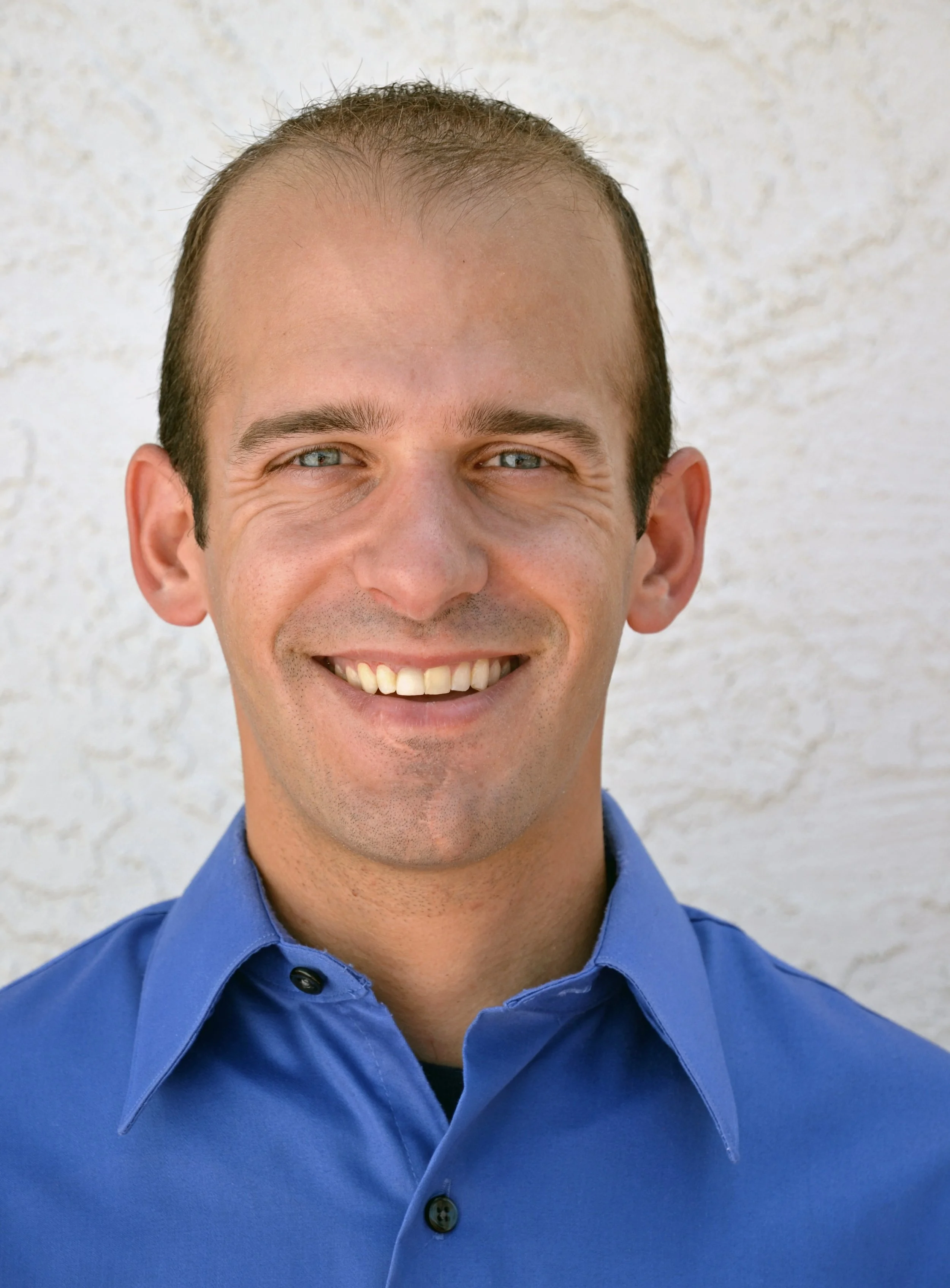
Joel Gratz is Founding Meteorologist and CEO of OpenSnow, a weather platform used by hundreds of thousands of skiers, snowboarders, and outdoor enthusiasts to track snow conditions and forecast powder days. What started as a text thread among friends has grown into a profitable, bootstrapped business combining expert forecasting, data science, and increasingly AI-driven weather models.
In this episode of Inevitable, Gratz breaks down one of the worst Western snowpack seasons on record and why he believes it’s not as simple as blaming climate change.
The conversation explores the role of atmospheric variability versus long-term warming trends, why temperature matters more than precipitation for snowpack, and how mountain weather forecasting differs from traditional forecasts.
Finally, Gratz explains why emotional connection, not just accuracy, is what makes niche weather businesses work.
Episode recorded April 9, 2026 (published April 28, 2026)
In this episode, we cover:
(1:45) Weather conditions aren’t just a climate change story
(4:46) How warming temperatures impact snowpack quality
(7:20) What OpenSnow is and how it started
(12:46) OpenSnow’s business model and growth
(16:26) Why mountain weather is harder to forecast
(21:16) How OpenSnow builds better forecasts from shared data
(25:01) Powder quality vs snowfall: what actually matters
(30:01) Snowpack as a water “battery” for the West
(32:45) How ski resorts are adapting to climate variability
(37:46) The reality of cloud seeding and weather modification
(42:23) How emotional connection has helped OpenSnow succeed
-
[Cody Simms] (0:00 - 1:18)
Today on Inevitable, our guest is Joel Gratz, founding meteorologist and CEO of OpenSnow.
If you skied this winter, or tried to, you probably felt this season in your bones. It was one of the worst Western snowpack years on record in the US. Joel is the person more skiers and snowboarders turn to than anyone else for snow forecasting, and he has a more nuanced take on what actually caused this season than you might expect. We get into that, and then zoom out to what snowpack means for Western water supply, what climate change is and isn't doing to mountain snow, and what a well-adapted ski industry might actually look like. Good one to close out the season with.
From MCJ, I'm Cody Simms, and this is Inevitable.
Climate change is inevitable. It's already here. But so are the solutions shaping our future. Join us every week to learn from experts and entrepreneurs about the transition of energy and industry.
Joel, welcome to the show.
[Joel Gratz] (1:18 - 1:19)
Thanks for having me. It's good to be here.
[Cody Simms] (1:20 - 1:44)
We were just jamming a little bit on this right before we hit the old record button. It seems like we came out of, from what I've understood, I didn't get to go skiing this year, unfortunately, but it sounds like we came out of one of the worst Western snowpack seasons on record. And I found some interviews and quotes where you basically said, hey, this isn't a climate change story. And so what is it?
Maybe I'd love to hear a little nuance there about how you think about that.
[Joel Gratz] (1:45 - 4:22)
Yeah, for sure. So first thing, the records go back various amounts of time, 40 years, 70 years, sometimes 100 years. So this was very bad for snowfall, less so for precipitation. At least and we'll get to that.
But for snowfall, for sure, this was very bad for the past many decades. If you look back over hundreds or even a thousand years, you will likely find in long-term records, kind of buried in sediments or tree rings that the West is prone to busts and booms.
So I doubt that this is out of the bounds of what we have seen before, but it was bad. Just to throw that out there from a snow perspective. From a precipitation perspective, interestingly, it wasn't as bad, meaning that there was still a decent amount of precipitation, but the challenge this year was the warmth.
So it is mostly not a climate change story, but also somewhat of a climate change story. So let me dig into that.
The mostly not a climate change story is that we just had bad luck. It was below average precipitation and very, very warm. And the atmosphere is chaotic. And sometimes you get the bad end of the chaos and it's not good.
And look at what happened on the East Coast. And we're talking about the 2025, 2026 winter season here in North America, the East Coast and New England had a wonderful winter. So oftentimes, the atmosphere balances out and then one place gets a lot of snow, another place doesn't.
So partially, this is just a bad luck story with a lot of variability in the atmosphere. The more nuanced version of that that does implicate climate change is that on average, temperatures are warming. Warming temperatures will mean generally less snow on the shoulder seasons of fall and spring when the snow is often competing with rain.
Is it cold enough to get snow versus rain? Well, one or two degrees in either direction can push that in a way that us skiers don't like.
Also at lower elevations. So at elevations that have always been close to the rain-snow line. Now I'm in Colorado. Rarely does rain happen on most of the ski areas here, but you're in California, it is a very normal thing for the skiers to be dealing with a rain-snow line and along the East Coast.
So from a climate perspective, even a slight trend toward warming temperatures will generally push the odds maybe a little bit more towards rain than snow when we have these edge cases. So to wrap up, mostly this is a season of bad luck when it comes to snowfall, but the background warming of climate change likely has some role in just the warmth. Not the major role of the warmth, but some role in the warmth.
[Cody Simms] (4:22 - 4:46)
And as I understand some of the temperature variability that many climate scientists think is happening, it's often nighttime temperatures that are higher. And so I'm assuming, you correct me, you're the meteorologist here, that if nighttime temperatures are higher on average, that also will likely affect the ability for precipitation to stay frozen and to create snowpack. Is that correct or not?
[Joel Gratz] (4:46 - 6:47)
Yeah. And so one of the challenges that we have, and I've been forecasting in Colorado for about 20 years, that's a pinprick of time in the climate community. So people often ask me, well, what's your experience with climate change? It's like, that doesn't matter. Look at the data and figure it out. I'm in Colorado for 20 years.
Just from an overall, from this season as an example standpoint, we had very warm temperatures in Colorado in the last two weeks of March. Part of the problem was it wasn't just 40s or 50s during the day, which happens in the spring, occasionally not, to the degree that we've seen in over two or three weeks, but that happens. But that overnight lows just often didn't get down to freezing.
It was just so warm. And so the problem is that the snowpack rapidly loses structure. You don't get freezes overnight, and then that makes the snowpack more susceptible to melting than getting things blocked up.
So again, just this background warming of climate change is generally not a good thing. I will say people have asked me over the last 10 years, well, what do I do about it? Forgetting about actions that we could take or governments could take and how long those might take to actually make an impact in terms of if you like snow, what do you do?
Where do you go to give yourself the best chance of snow? And my response is that snow is not going away next decade in Colorado or Utah or California or most places. But when you think about the time scales of humans, generations, what do you think about?
Higher elevation is generally better just simply because it's colder. So when you look at Summit County in Colorado, the base of Breckenridge and Copper and Keystone is 9000 feet base of a basin in Loveland is 10 to 11000 feet. So these are places, even with a lot of warming, if and when the warming continues over the next decade, they will be high enough to sustain snowpacks.
Whereas locations that are currently always on the rain-snow line will be more susceptible to rain versus snow.
[Cody Simms] (6:47 - 7:20)
Yeah, that intuitively makes sense for sure. I want to come back to that and spend some time with you thinking about how our resorts thinking about climate adaptation and some of that and what you're seeing them do. But maybe before that, let's properly introduce you and properly introduce the company that you have built over the last 15 years or so, I think.
Walk me through the origin story of OpenSnow and then we'll get into what it is you actually have built and how many skiers and snowboarders and winter sports enthusiasts you have supported and helped along the way.
[Joel Gratz] (7:20 - 9:26)
Yeah, absolutely. So hi, my name is Joel Gratz. I'm addicted to powder.
That's the intro. So I have been very interested in weather since elementary school. Most meteorologists get the weather bug at some point in elementary or middle school due to a weather event, a hurricane, a tornado, a snowstorm, whatever it might be.
So I grew up outside of Philadelphia. I love snow. I love skiing.I love weather. And so I went to Penn State. I studied meteorology.
I came to the University of Colorado Boulder for graduate school and to look into business. So I got an MBA here as well. And I say here because I'm still in Boulder, Colorado.
And I started working at a hurricane and earthquake insurance company because that was a nice mix of business and weather and had a pretty good expected value of your career type of trajectory. But along the way, I was skiing here in Colorado, discovered powder, not a thing that I understood really in Pennsylvania. And I realized that powder was amazing, super fun, addicting.
By the way, I was not good at skiing powder. My first handful of times I had skinny race skis from growing up in the East Coast, and it was a completely different technique. But once I figured it out, man, this is amazing.
It's also fleeting. It's also perishable. It also changes from mountain to mountain.
Copper and Vail and Beaver Creek are within a few miles of each other of how the crow flies, just straight line distance, but can have massively different conditions on certain storms. So I was amazed by this. And then I spent a number of years trying to figure out why.
Mostly because I'm a selfish only child and I wanted to ski the best powder. But then after doing this research for a couple of years, I decided I'll email and text some friends where I think the best powder might be. And those friends did what friends do, which is they made fun of me incessantly for being wrong.
They told me I was the biggest jinx of all time, saying that Thursday was going to be a powder day. And of course, now it would never snow. I persevered.
And also, this is right. We were off before we started recording. We were talking about your involvement with Techstars.
This is in the late aughts, I guess, and 2006-2010 timeframe. This is when Techstars got started in Boulder.
[Cody Simms] (9:27 - 9:30)
Boulder was a startup cauldron at that time.
[Joel Gratz] (9:30 - 10:29)
Yep. And this was it. And so I went through the MBA program.
I had studied entrepreneurship. I had met many of the people that just happened to be going through Techstars because they were just my age at that point. And I just knew them.
So I watched this all go. And I realized after a couple of years, hey, I've got a smallish following. I see the pathway.
So some reader listeners might be familiar with Surfline, which is a surf website and app. They got their start in the 80s. The 1-900 Surfline.
That's why it was called Surfline. But I talked to them and they coached me through how they started the business. It was like, oh, that's the analog business.
I have all these friends starting businesses in Techstars. I was in my late 20s. Lowish risk, no family, no pet, no significant other.
This was the moment. So I quit my job and started this. We did not raise money.
This was totally bootstrapped. I have nothing against raising money. This wasn't what we did.
And so it took us a number of years to ramp up with an advertising-based revenue model, also subscriptions early on.
[Cody Simms] (10:30 - 10:34)
Just to make sure I understand too, it started as a newsletter, didn't it? Like an email list?
[Joel Gratz] (10:34 - 12:35)
Yeah, it started as a text message among friends, which then started as a 37-person email list, which then I brought to Mailchimp. Just as an aside, I think back then I could email up to 100 people at a time on Gmail. So when I had an email list that was beyond that, I would copy and paste compose windows before I even understood that Mailchimp or whatever was a thing.
So the incredible part of the story, and I want to talk more about weather and less about me, but I'll summarize this by saying, literally on the same year that I started to do this, people told me, “hey, there's this guy named Bryan in Tahoe that's writing Tahoe Weather Discussion. You should chat with him. Hey, there's this guy named Evan writing Wasatch Snow Forecast in Utah.”
And literally it was just the same year, independent of one another, we were all doing this. Now you look back, timing, I think Bill Gurley had looked at, one of the famous VCs, had looked at, what are the reasons that some things work and some things don't, or some businesses work? And a lot of the variability came down to timing.
Was the timing just correct? And at the time, this was in the late 2000s, it was late enough that we didn't have to spend millions of dollars for servers to like get a blog up or get a website up. But it was early enough that I wasn't competing against a thousand influencers on Instagram.
I scrapped together a WordPress website. I'm not a good developer, but I was good enough at making this stuff work. So it was just a fleeting moment in time.
Anyway, we all, the three of us got together, wrote these blog posts together on a platform because I said, none of us were making enough money. But if we did this together and built out the whole platform, maybe it has legs. And so here we are, 15 years later, it's well beyond the writers.
We still write, I still write, Bryan still writes, Evan still writes. We have 10 contract forecasters that write every day and say, hey, here's how to think about the storm coming up where you might wanna ski, which days could be good. But it's way beyond that.
We're working on our AI-based weather models now to hopefully forecast weather better. I mean, it's effectively like weather.com or AccuWeather.com or any of your favorite weather apps, but really just for people wanting to go out and enjoy the outdoors. And it's even more than just winter because we have all sorts of summer features too.
[Cody Simms] (12:36 - 12:45)
You guys are totally bootstrapped as far as I understand. Can you give a sense of scale of users, subscribers, anything you're comfortable sharing about revenue, just giving people a sense of how big you've built this into?
[Joel Gratz] (12:46 - 14:23)
Yep, so this is a nicely profitable business and we employ 15 people full-time with 10 contractors. So you can kind of do very quick math. We pay nice tech type salaries.
So from a revenue standpoint, you can do the quick math on that. We reach between free and paid and all sorts of things. Users in the hundreds of thousands to maybe low millions, depending on how many people are checking or sharing or things like that.
We are a standard freemium model. So a very small percentage of people actually pay, but the math checks out and this all works out. Four or five years ago, my co-founder at the time, because of course, Bryan, Evan and I, none of us could really code worth a darn.
So I found a meteorologist and computer programmer here in Boulder that helped us really with the first 10 years of getting everything rolling. He eventually wanted to leave. So I brought in some outside capital, but not really as growth capital, just to help buy him out and make sure that all worked out really well.
And we're off and rolling. So yeah, we didn't really raise any growth capital per se. This has just been a long, slow SAS slog, but it's awesome.
I don't wanna say slow as in a negative. For us, this has worked out. This is very much my personality.
My personality is not really go out with a bang, but it takes weeks, months, years to understand how I fit into the scheme and the world and build up that credibility. And honestly, that's been the way I've been since high school and in college. And eventually I had held leadership roles in certain clubs or ski teams or whatever, but I never came in at the first year. I'm like, I'm on it. Like I was very shy and didn't really wanna make a splash. And then by year two or three, I was like, oh, I kind of get this and let me help out around here.
So I think the business has worked out and grown in the same way.
[Cody Simms] (14:23 - 14:37)
Well, congrats on what you've built and doing it in a way that you're in control of your own destiny and can work on the things you guys wanna work on or listen to your users and build the things they want, but not beholden to somebody pushing you in a certain direction, which has gotta be great.
[Joel Gratz] (14:37 - 15:50)
Look, again, there was a whole place for VC and private equity and the entire ecosystem that exists. This was just our path. And I am thrilled now, like you said, that we are in control for better or worse.
But I will say from that in control standpoint, the people that brought in that capital four or five years ago to help smooth that founder transition, they have also built, did before they sold it, a consumer subscription business. And one of the things I talked with my wife about, because also a lot of these decisions are very personal decisions. How do you want this to go? How do your business partner, how does your family want this to go? And one of the things she said was, “it would probably be helpful for you to have people that are helping you as CEO and as somebody running the company.” So we lean on them quite a bit.
Being here in the Techstars, not in Techstars, but in that whole ecosystem, I have a lot of people that I reach out to occasionally. But having advisors, investors in the business that can help me think through things and just gently push in certain directions or make sure we're thinking about things is great. So when I say I'm in control, it's delightful because we don't have to sell tomorrow or really ever.
But that doesn't mean I don't take advice or listen to a lot of people and bring in thoughts that, I'm not just a dictator.
[Cody Simms] (15:50 - 16:26)
Well, that's great. I think every founder needs mentors and needs support and needs an ecosystem around them. So I'm really glad to hear that you've been able to find that even in the absence of it not being a classic VC investor, which by no means does it need to be at all.
So let's shift gears and get back to talking about snow and mountains and change. I'm curious, this is a weather question more than a climate question, but talk about why mountain snowfall is harder to forecast than flatland weather. I mean, flatland weather is notoriously poorly forecasted, maybe getting better, but I think mountain forecasting is that much harder.
Help me understand that.
[Joel Gratz] (16:26 - 17:03)
Yeah, absolutely. So for reference, what I generally like to say is some parts of meteorology are very trustworthy and others are not. So a lot of people just make fun of meteorology like, yeah, you guys can't figure anything out, which is true for some parts and not true for others.
So I'll break it down. Forecasts beyond about two weeks, very little to no predictability. For us consumers, if you are a commodities trader or somebody that's just looking to shift the probability odds by one percent, wetter, drier, warmer, colder, and throw that in your modeling, yeah, actually two weeks to two months to two year forecasts have some validity for that.
[Cody Simms] (17:03 - 17:05)
The farmer's almanac has been around for a long time.
[Joel Gratz] (17:06 - 19:36)
Yeah, that's true. But for most of us consumers, like if I said there was a one percent year I shifted the odds for better snowfall in the Tahoe or Mammoth region by one percent next year, you'd be like, I'm not making any decisions based on this. So for most of us consumers, beyond two weeks means very little.
From one week to two weeks out, the trend in multiple models is usually somewhat trustworthy. Warmer, colder, drier, snowier, can't tell you exactly what day, can't tell you exactly how much, but that trend is usually there. So it's worth paying attention to.
And then within about a week, it's pretty useful. Meteorology is pretty useful. This is not just me trying to sell subscriptions or something.
I am my own customer and I chase snow. My family chases snow. We make thousands of dollars of decisions and weeks of time decisions based on forecasts one to two weeks out that are giving us an idea of what we should do.
And then within that week, where are we going? We're booking hotel rooms, we're booking travel. So within the week, storms aren't surprising us anymore.
Now, we might think that the storm is just going to miss a spot and then it moves 50 miles and then it hits that spot. That's fine. But the absence or lack of absence of a storm is usually not going to be surprising within a week.
OK, so let's get down to your question then, which is around mountains. Why are mountains so difficult? The simple answer is that mountains, because they stick up into the atmosphere, create their own flows.
And most weather models are not specific enough to understand those little micro flows of air going up and around and down a mountain. So some of the higher resolution models break the earth in these tiny little boxes, can figure it out to some extent, but some also do not.
But here's another point on this.
All meteorologists know that weather model forecasts that we get aren't exactly going to be right. But you try to adjust them the best you can. Well, where do we have a lot of historical data for adjustment? At airport, at city, at these long-term weather stations. So you can look back and say, “ah, well, this model based on the airport sensor over the last 30 years at LAX is often two degrees too warm or too cold” or whatever it might be. So you can just do that bias correction is what it's called after the fact and hone in.
But the mountains don't have that many long running weather stations. And also, as you know, if you have one weather station on a mountain on the other side of the mountain, it could be totally different. So the lack of long-term observational data makes it difficult to dial in the mountain weather models into these areas.
[Cody Simms] (19:37 - 19:49)
Why have they're not? These resorts are multi-hundred-million-dollar businesses. Why wouldn't there have been weather stations up there since the 70s or 80s when they started becoming big businesses?
[Joel Gratz] (19:49 - 21:06)
There are some weather stations. So I wanted to shout out actually to our government. Everybody listening might quibble with how our government and governments around the world spend money.
But many things they spend money on are things that other people will not spend money on. And it is the foundation of scientific progress. So one of the things that our government spent money on over the last 50 years is called the SNOTEL network.
And this is a network of about a thousand backcountry weather stations. They measure temperature to some extent, but mostly their goal is to measure snow, how much snow is in the mountains. And their goal is not to measure snow for people like you and I to go ski powder.
Their goal was to figure out how much snow is in the mountains so that you can figure out how much water would melt out of that snow and fill up reservoirs, lakes or streams so you could figure out water planning in the spring and summer and a lot of the arid places of the West. This was all funded by government. There are about a thousand of these across the West. They still exist. It is a free service. Anybody can get this data and look at it.
Many, not all, but many ski areas have a SNOTEL station close by. So we do have a 20 to 40 year record of some of this. But again, a thousand SNOTEL stations across the Western United States with all the varied topography is just not very much.
So we have some data, but it is not nearly enough, basically.
[Cody Simms] (21:07 - 21:15)
And so how do you reconcile for that at OpenSnow if you don't have the resort-level data? How do you get it? How do you make the accurate forecasts?
[Joel Gratz] (21:16 - 24:50)
A lot of hoping, a lot of praying. Now, so from a weather standpoint, every weather app that you download, the people behind those and a lot of the weather apps are getting their data from a handful of companies that are putting all these models together. But the Weather Channel, us, AccuWeather, the National Weather Service, anybody else, we all effectively have access to the same model data, whether it's freely available globally or costs a little bit of money. Effectively, it's all available.
So the differences, when you look at us versus Apple Weather or the Weather Channel or anybody else, the differences come with how we transform that model data into an actual forecast. So it's the same way when you look at companies to invest in, everybody might look at the same P&L, or they have the same interviews with founders, but you have a different lens on that data and what you're looking for.
And it's the same thing that we're looking for here. So whereas the Weather Channel might be 90% focused on trying to get the high temperature and precipitation right in Washington and Philly and New York and where the majority of people live, and rightly so, we are focused on getting the temperature and the wind and the snow right where people are recreating the mountains. So to your question, a lot of this just comes down to focus.
For instance, we blend a lot of models together. We make adjustments to those models. We have our own snow-to-liquid ratio algorithm, meaning that the models don't necessarily tell you how much snow is going to fall.
They say, you're going to have one inch of precipitation come out of the clouds. It's up to us to figure out, based on the temperature and winds and other things, how much snow does that... Is that 10 inches of snow? Is it four inches of snow? Is it 15 inches of snow? So for instance, and because we download this weather data and it's all within our pipeline, we can make all of these adjustments effectively on the fly.
Like we don't necessarily have to go through a committee or anything else, or we're not downloading this from the National Weather Service or AccuWeather and saying, “oh, hey, could you go change your model?” So for instance, this year I was looking at Japan. Japan, for those listening that don't know, Japan gets a lot of snow.
Certain areas of Japan, not Tokyo or some of the bigger cities, but the Western mountains, and they get a lot of snow. And it's amazing. A lot of that snow falls in a short three-month window from December 1 through roughly the end of February.
It is an amazing place to go ski if you like snow and powder and all that culture. But it snows so much that many of the models don't actually predict the right amount of snow. It's hard to get that right.
And I was noticing both in the data and as somebody who has traveled to Japan, and this is a work trip, of course. I'm joking, but it truly is because there is no better way to figure out if the prediction matches reality than to be there and be super pissed off that you're in a place that where the forecast didn't go right. So anyway, I looked at this.
I said, hey, this one weather model or these couple weather models do a way better job in Japan than these other models, but that's not true in all other places of the world. But in Japan, I want to prioritize these certain weather models and blend them in at a higher weighting and then make a few other adjustments too to get that forecast right. We're doing this both objectively.
We are running our metrics internally. But from an objective standpoint, the SNOTEL sites, while great, they measure the amount of liquid that's in the snow. So that's awesome.
But when the snow comes in and it's super fluffy and blower powder, the SNOTEL sites actually don't measure that. There's some errors there because that snow is so fluffy. So even sometimes looking at the objective data doesn't tell the whole story.
So we're trying to dial this in both objectively, but especially subjectively, like how can we blend these models in a way that makes the most sense?
[Cody Simms] (24:51 - 25:00)
And you're collecting data from the resort itself too about what runs are impacted or what sides of the mountains are performing the best and snow quality.
[Joel Gratz] (25:01 - 27:53)
Yeah, they don't really have this data. Resorts will tell you how many runs are open, how many lifts are open, and how much snow they measured. People think, as an aside, people think there's a massive conspiracy and the mountains are lying.
I mean, at this point with social media, many have snow state cams. On OpenSnow, we have weather stations. We show the SNOTEL data as well.
So if a mountain reports a bunch of snow and you're skeptical, like you can often look at the snow state cam and just see it's literally a camera pointing at a ruler. Or if that doesn't exist, you can just look at nearby weather stations and be like, oh, how much of that weather station, how much snow do they measure? So resorts, if there's any quote unquote "lying," it's generally because somebody fat fingered something or just made a mistake because I'm serious.
There's humans in the loop and it's four or five in the morning. And often the people that are keying this information in for the resorts are moving on after a year. They started the snow reporter, then they leave and they're the assistant marketing person.
And so somebody else does it. So there's just usually not a long history of people that are looking at this. So mostly it's just mistakes.
But the resorts are not telling you like, oh, this side of the mountain's better or this side of the mountain's better. We can do this algorithmically based on winds and types of snow.
And in fact, this year we released a powder quality index. So rather than just looking at how much snow is coming, we are taking in a ton of factors based on our experience over the last 20 years and outputting a powder quality because if that snow is thick or if it's fluffy snow on top of a really firm base. And so you're just going to go right through to the ice or something else. The powder quality might not actually be that good, even if the resort gets two feet of snow.
So we're taking that into account. I get a little bit flummoxed because algorithmically we can probably do more of, oh, this run will be really good or this side of the mountain will be really good. And I just know that this is where it's going over time because people will demand this level of precision.
But there is also some level of get out there and figure it out for yourself. Because part of skiing is the exploration. You might like tight trees. I might like open bowls. Somebody else might like steep groomers. So I hesitate to ever say this is the run that you should go on because then you also have the Google Maps problem, which is they send everybody along this shortcut and then that shortcut becomes no more of a shortcut.
But that said, like Google Maps is incredible and amazing, but there are some unanticipated problems.
So I'm not saying that we won't do this or others won't be doing this at some point. But I think real hard about that hard earned knowledge that you get in bars and chatting with people and honestly, just going out there, making a prediction of like, I should speed this run and then it's crap.
OK, why was it the wind direction? Did you get too much sun yesterday? What happened?
And I think that's just part of the exploration experience. And if you shortcut that and literally just tell everybody to go to this one spot, you're losing some of the excitement of going out there.
[Cody Simms] (27:53 - 28:05)
It's happening to us in travel, no matter what part of travel you enjoy, whether it's mountain travel or urban travel or whatever. Hey, go to this one place and that one place doesn't really feel all that magical anymore because everyone's there.
[Joel Gratz] (28:06 - 29:24)
Yes, true. I just want to hit on that one more time is that I am trying to toe the line when I write for Colorado to not all say like everybody should go to this mountain on this day. Like it's plainly obvious on our forecasts and on the maps I post and all that.
And sometimes I can't help myself. Like, look how much snow is coming or whatever. But what is really cool and what I encourage people to do is that yes, the brand name mountains are crowded and they're crowded on the weekends or the days that big powder comes.
But just like everything else in life, if you look at the data just a little bit more, if you explore just a little bit more, and if you put in the effort just a little bit more, you can usually find the gems. And sometimes if it's a big powder day on a crowded weekend, I'll just go backcountry skiing, not because I'm trying to go on the scariest terrain. Like I am on the lowest angle, least avalanche prone terrain ever.
I don't ever want to be caught in a slide, but I'll just enjoy the quiet of being out there. Even if I get six turns, I put in two hours of effort to go uphill. That's just a quiet moment for me.
And maybe that's what I wanted that day versus fighting crowds. Other days, I will fight the crowds. Because hey, you know what?
15 inches of blower powder on a soft base, that is worth getting to the mountain way early, fighting the crowds and trying to get those first three glory runs. So it really just depends on the day.
[Cody Simms] (29:25 - 30:01)
I love it, Joel. I'm going to shift gears a little bit and bring us back to some of the climate angles to everything that is going on. I think an important topic is thinking about snowpack as our water infrastructure.
And in particular, where I live in California, we had this huge storm in the fall this year. I think it was in November. And there was all this story about how every county in California is out of drought for the first time in 15 years or something like that.
And then the conversation about, yeah, but it didn't end up being a good ski season. But maybe break down a little bit about how you think about snowpack as a water battery.
[Joel Gratz] (30:01 - 32:31)
Yeah, there's no question that snowpack is a water battery in the West. And it's incredibly important. That said, the West has all, in California in particular, but the West in general is a boom and bust location.
There was an amazing paper. I just posted this in the Colorado Daily Snow, which is what I write every day, my kind of final post of the season this year. And I give presentations about this.
But you can look at long-term variability across the West. And okay, you can look at your state. Fine, that's just your state. Okay, you can look at a river basin. Fine, that's just a river basin. You can look at the whole West.
And then people can quibble with, well, you're just looking at 30 years or you should look at 50 years or 100 years. But when you look at stream flows for the upper Colorado River Basin, which impacts a lot of the population in the Western United States. And you look back, I think they went back to 1700 AD.
So that's over 1200 years ago. You see massive swing in those stream flows. And that's both due to precipitation, temperature, snowpack.
It's all together. But what that tells me is that regardless of climate change, we are living in an arid place across the West that is prone to booms and busts for the last 1200 plus years, having nothing to do with humans. And so we just need to be designing systems that will deal with the variability that we know will come.
Now, will climate change put more pressure on that? Likely, but not from what we know at this point because of less precipitation. There is really no trend, no long-term trend in precipitation.
The pressure probably will come from temperatures, which if temperature is warm and the precipitation doesn't change, then you have less snowpack as a battery. You also have more evaporation because warmer temperatures create more evaporation. So the soil just has less moisture in it. So even with the same amount of precipitation, warmer temperatures will have impacts.
The other thing is there's a lot more people that need water and food and just have impact. So there's a lot of stressors in the West that have nothing to do with climate change or really just temperatures are what matter and precipitation, even if there's no change, doesn't really matter because climate's going to impact from a temperature scale.
But like, I think the main takeaway here is that any place that has been, or that is susceptible to weather variability, which is most of the places, but especially here out West, we just need to be planning for those things and not crossing our fingers that, “oh, the Colorado River for the last 50 years has been in these error bars because the reality is that the error bars are massive.”
[Cody Simms] (32:32 - 32:44)
Well, talk me through some of the adaptation mechanisms you're seeing ski resorts take, and also any examples where you feel like resorts are ostriches with their head in the ground and are just ignoring the trends.
[Joel Gratz] (32:45 - 35:05)
So what resorts are doing from a mitigation standpoint is snowmaking systems. That is the number one thing. The snowmaking systems, and this is not my expertise, but they are far more efficient than they were 20, 30, 40 years ago.
So for a given amount of power and water, you can make a lot more snow. And because many of the newest ones are automated with weather stations on the snow guns, they can be insanely efficient. They can just pop on for an hour if the temperature goes to that level.
So they are making a lot more snow with as much or less ingredients of being power and water than they were before. So that's good. The other thing that many resorts in the West are doing is moving a lot of their snowmaking focus to the upper mountains where it's colder.
For example, Vail did this, and Keystone did this, and Steamboat has done this, where in a warming climate, or even not in a warming climate, the variability is at the base for many of these areas. Whereas you know that it's just colder longer at the summit. So why push so hard to open the base when, hey, if you've got a gondola or a chairlift that gets you up to the upper half of the mountain, focus the snowmaking at those areas because those will be ready sooner and they will last longer.
So many ski areas are doing that, and that just makes logical sense. Heads in the sand, I think everybody kind of understands even if the impacts of climate change are relatively small, warming temperatures, and they could be much bigger. But even if you just say like best case scenario, relatively small warming temperatures aren't great.
Many mountains are trying to invest in year-round revenue streams, which makes sense. I mean, heck, we're even doing that. Not really because of climate change, but we have all this data.
Why aren't we relevant 12 months of the year versus six months of the year? So many resorts are doing that. I think others recognize that aside from some sustainability efforts and some education efforts and carpooling and things like that, their biggest powers are if they want to see a change, they work on legislative changes or regulatory changes because it's that level that will impact the energy mix over decades.
And I think that they understand that there's a local place for them to play in that world, but many are also seeing that, hey, there's not much we can do aside from look at our energy mixer. I know there's a mountain in Massachusetts that put a massive wind turbine. That's not going to change much on the global scale of climate change.
[Cody Simms] (35:05 - 35:33)
Yeah, it does seem like there's a bit more impact action focus going on in the outdoors community, whether it's Protect Our Winters or Progression 2026 just happened, which I think is supported by the US Ski and Snowboard Association. And it's all about gathering people together with who love outdoor mountain sports to figure out ways that they can try to drive systemic change around clean energy use or climate adaptation, I believe.
[Joel Gratz] (35:33 - 37:28)
Yeah, and whatever happens, this is not going to be a short-term deal. It truly is a multi-generational effort. And the other thing I just want to point out is from my stance at looking at weather data, what happened this year is generally not a climate change story.
Now, you can say, hey, it's getting warmer. So this is a little peek into a future that is becoming more likely where things are a little bit warmer and the ski season will shorten on either side fully. That is supported by the data.
But saying that, “hey, we got 30 or 40 or 50 or even 60% less snow this year than we have historically,” that is not necessarily a harbinger of the next decade or two. And you just look at the last five years, the last 10 years, the last 15 years, there is no trend in those snowfall traces over the years. So I don't say that because thinking about climate change is a waste of time.
I just say that it is really important, I think, from a credibility standpoint for science, just like I did at the beginning of our chat with what we're good at and what we're not good at, say what we know and what we don't know. And what we know, we think we know, is that temperatures are warming and they likely will continue to warm. And that has all sorts of impact.
But from a storm track scenario, from a snowfall, just how much falls from the sky scenario, aside from temperatures, there is no trend there. So I love that Jeremy Jones at Protect Our Winters is out there and trying to educate people. And I love that others are out there and concerned about it.
I just want to make sure that we're sticking to the facts that we know, because it lends itself to a lack of credibility. If you make a leap like, hey, if you put this wind turbine up, we'll have, I don't know, more snow falling from the sky. And that's not necessarily a one-to-one relationship.
But I also think that people, policymakers, individuals are smart enough over time to understand the nuance. And while we do live in a world of soundbites, overall, nuance does win and it matters. And so I try to stick to that.
[Cody Simms] (37:28 - 37:46)
Have you followed some of the trends in weather modification that are starting to happen? I had the Rainmaker CEO on the pod recently, Augustus, and they're actually more focused, even though their name is Rainmaker, it sounds like on snow making in terms of cloud seeding in Utah and other places than they are on rain. Curious to your thoughts on that.
[Joel Gratz] (37:46 - 41:41)
So weather modification has been around for 50 plus years. This is not a new thing. When we say weather modification, we're like, what can humans do to change the weather?
There are some things that are supported by the science. There are some things that are not. The things that our government tried 50 years ago to look into, can we curtail hurricanes?
And the answer is probably not. Basically, no, not at this point, at this scale. There's just too much energy.
We can't cool the oceans or whatever it is to change the track of hurricanes. It's just not happening at this point.
Things that are not weather modification. I will get to your question about producing snow. Things that are not weather modification, to the best of my knowledge, unless there is some conspiracy that I can't fully comprehend. What comes out of the back of a jet airplane is combustion, the remnants of combustion, which is the same thing that comes out of internal combustion engine, which is water vapor and CO2.
CO2 is invisible. Water vapor is not. Water vapor freezes into ice crystals, which then create clouds, which are contrails in the sky.
So those are not... I'll probably get a bunch of email after this. Those are not the weather modification that we're talking about.
But trying to create or trying to make clouds that are close to making rain or snow, but don't quite have the right setup to do so and trying to coax them into producing rain and snow has been something that people have been working on for 50 years. And the science is legit. There was a study a couple of years ago, I believe in the mountains of Wyoming, where they flew planes dropping silver iodide.
So you're basically dropping almost little helpers. They're called ice or cloud condensation nuclei into the clouds to just coax them. Like, “hey, cloud, you already have a lot of water drops or water vapor. Can we just make it a little bit easier for you to convert that into a snowflake or a water drop?”
And while theory said, hey, this works, it really wasn't until a couple of years ago where they actually had enough instrumentation where you could follow a plane dropping these little silver iodide crystals into the cloud. And then the radar that they had posted there literally showed right after that rain or snow falling from the cloud.
So like from a theory and observational standpoint, this works. How much does it work? Super debatable and super dependent on the conditions.
I've seen anything from a few percent up to 20 percent. But just remember, this is not making rain or snow out of blue skies. This is taking a cloud at about the right amount of moisture at about the right temperature with about the right wind speed and just coaxing it to get just over the hump to produce some more rain and snow.
So for a place in Colorado that gets 300 inches of snow, if you could change that by five percent, because this doesn't work on all storms. Not all storms have the right temperature, the right winds or the right thickness of moisture. But if you can change that by five percent and make 315 inches and you change that much snow over the course of a river basin, that's a reasonable amount of added water in the spring and summer.
So in theory, this works. And a lot of the funding for this isn't from ski areas. This comes from water boards and water districts that want to put money in there.
From an ethical standpoint, does this change the weather downstream? Like if you're, quote unquote, taking a little bit more moisture from that cloud at the mountain, is there less downstream? Debatable. Because a lot of people would say, well, when that air then flows past that mountain and descends and warms up and dries out, maybe it's a tiny bit drier, but like it probably wasn't going to produce anything on the other side of the mountain.
Anyway, if you do this at large enough scales, could it actually impact global weather bands? Maybe. But we're talking massive scales here, probably not one plane or one farmer shooting up silver iodide into the cloud.
So to wrap up on weather modification and cloud seeding, it is real science. It really does work. At this point, I don't think there's a massive ethical question at the scale that it's being done at.
But if it tried to go on a much bigger scale, maybe there would be much more of an ethical question.
[Cody Simms] (41:42 - 42:23)
Awesome. Super helpful. Thanks.
Yeah. And I had a blast chatting with Augustus and hearing all about what they're doing at Rainmaker. That was just like a month ago.
So good episode for folks who are intrigued by what Joel just had to say. Go dig that one up. I think that really kind of wrapping us up here.
I'm curious. You built this business because you missed a powder day one time and were like, hey, there's got to be a better way here. And you couldn't find a good snow forecast.
What do you think are other problems in weather or climate right now that are similarly unsolved that you think have a large enough audience to build a meaningful business that anyone listening could pick up and say, “hey, I'm going to go do this and email me at email, Joel, if you want a mentor to help you figure out how to get it going.”
[Joel Gratz] (42:23 - 46:00)
Yeah, yeah. Well, and just to say, I mentor probably informally lots of meteorology students, anybody, really anybody that reaches out. I'll pretty much have a call because that's what people did for me. And it made a world of difference.
I mean, really, not any one conversation really leads you to the path for success. But just having somebody that's been there and done that is willing to give you a half an hour is just so cool to hear that.
So I did that with a ton of VCs here in Boulder, and none of them directly led to where I am, but all of them helped in some small way to that. So it's amazing. Our secret to success, I am not a brilliant business person.
I did not sit down and write the business plan and find the hole in the market. But I will tell you why we are successful and why we, I think, are doing pretty well for a relatively, at least at internet scale, small audience, is that we have focused on something that is an emotional draw for people. I'm not putting any dark patterns here. Like that's not the way that I think about emotion and trying to trick people into subscribing.
The emotion is that powder day, I can recite off the top of my head my top five powder days in my life, who I was with, where I skied, what they wore. Like it is just the thing.
So some people might have a sporting event that they have to go to their local teams when they make the Super Bowl or whatever, and that's it for them. For a lot of us, it is that powder day or hiking that mountain successfully because we do stuff in the summer or that one super hard climb that you've been training for for three years. Can we do this?
And if we can enable that success, I feel really good about it. People are really excited about it. And then with that success, they tell other people like, oh, hey, you should check this out.
So from a weather standpoint, there is a lot of competition in the can I get the forecast right? Because we're all downloading the same models. And if we're one degree different on better accuracy from your local weather station, does anybody really care that it's 67 versus 66?
I did just say six, seven, probably because I've heard it way too many times with an eight year old. But what we have been doing and I will be the first to say, you know, our forecasts aren't perfect. Nobody's are.
But just that nuance that people can wake up and read that Joel is for three hours spent this morning trying to figure out where the best powder will be on Thursday. And I'm speaking their language and I'm using the basis of science and our technology. We're developing these AI-based models to try to make this better.
But just the fact that I'm speaking people's language and feeding that emotional connection and I'm doing it with a scientific basis. That's what has led to us punching above our weight class in terms of having a really good business with a relatively few number of people, like compared to how many people download the AccuWeather app or the Weather Channel app. We're tiny, but Surfline has done the same thing.
So Surfline is probably a bigger business than us. But like that emotional connection and what they've done is wonderful. And I know we want to wrap up.
I'll end with this. What an amazing world we're living in. I don't have to be the Weather Channel. I don't have to be AccuWeather. They can be successful. I can be successful.
So my competitors, also forecasting still, can be successful. And so that we can all, because the cost of this dissemination of the technology, the open data, weather data that governments, because of our tax dollars, have put around the world, literally our probably number one future competition that we talk about internally is some 16-year-old kid using AI modeling. They don't even really know much about meteorology, but they understand enough. They're using some AI tooling and using open data sets to do a better job of that. More power to them. That's freaking awesome that our tax dollars have made this data available and allowed our companies and future companies to innovate on it.
So I mean, obviously I don't want to go out of business and we're trying to stay on the forefront, but it's just so exciting that we and others have access to this data and can make businesses out of it.
[Cody Simms] (46:00 - 46:27)
Well, Joel, thank you for taking the time to share what you've built and share a little bit about what you've observed and your thoughts that are so well informed about what's going on in the mountains and appreciate you for building it.
I know we're on the tail end of ski season for anyone listening, but for anyone who's planning that last minute spring ski trip, make sure you download OpenSnow and get ready for next season. The Ikon and Epic Passes are like going on sale already now for next year. So maybe you're already planning where you're going to go next winter.
[Joel Gratz] (46:27 - 46:39)
Well, and look, this is going to be recorded and it is recorded, but I'll just say statistically there's a high chance that next season across the West has a lot more snow than this season, at least statistically. We'll cross our fingers.
[Cody Simms] (46:40 - 46:45)
All right. There's the forecast. We heard it right there from Joel.
Joel, thanks so much. Really appreciate you.
[Joel Gratz] (46:45 - 46:46)
Yeah, thanks for having me on.
[Cody Simms] (46:47 - 47:13)
Inevitable is an MCJ podcast. At MCJ, we back founders driving the transition of energy and industry and solving the inevitable impacts of climate change.
If you'd like to learn more about MCJ, visit us at mcj.vc and subscribe to our weekly newsletter at newsletter.mcj.vc.
Thanks and see you next episode.