Episode 165: Graeme Pitkethly, Unilever
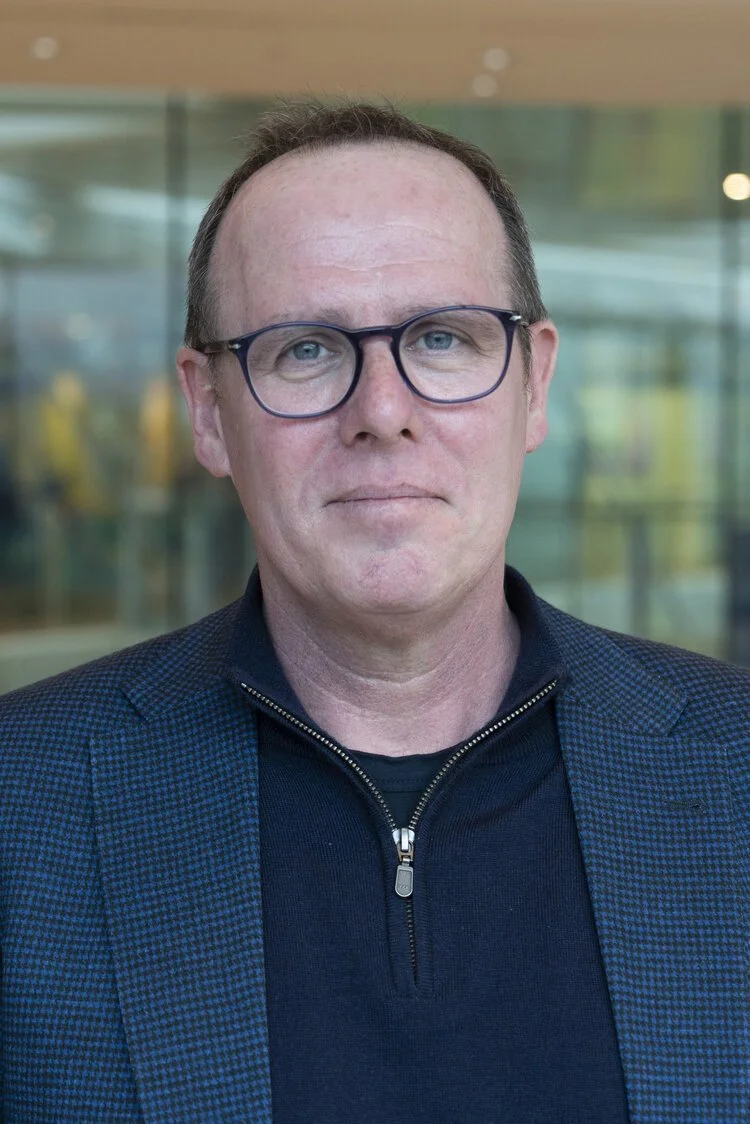
Today's guest is Graeme Pitkethly, CFO of Unilever.
Unilever is a multinational consumer goods company with 400 brands focusing on foods and refreshments, home care, and beauty and personal care. In 2010, Unilever announced its Sustainable Living Plan with climate-focused benchmarks and goals.
Graeme joined Unilever in 2002 and has served as Executive Vice President and General Manager of the Unilever UK and Ireland business. Before taking the CFO role, he held several senior financial and commercial positions within Unilever, including Senior Vice President of Finance for Global Markets, Global Head of Mergers & Acquisitions, and Chief Financial Officer of Unilever Indonesia. Graeme brings considerable experience to the role, having spent the earlier part of his career in senior corporate finance roles in the telecommunications industry and at PricewaterhouseCoopers. He also serves as Vice-Chair of the Task Force on Climate-Related Financial Disclosures.
I was excited to record this episode as Graeme has been on our guest wishlist for quite some time. Graeme walks me through Unilever's sustainability goals over the last decade, an overview of the company's carbon footprint, and how he ended up focusing on climate. We dive into Graeme's perspective on carbon offsets, carbon pricing, and the areas that are hardest to decarbonize for Unilever. He also touches on why sustainability is vital to the future of the global economy and what initiatives would most accelerate tackling climate change.
Enjoy the show!
You can find me on twitter @jjacobs22 or @mcjpod and email at info@mcjcollective.com, where I encourage you to share your feedback on episodes and suggestions for future topics or guests.
Episode recorded June 17th, 2021
In Today's episode we cover:
Graeme's climate journey
An overview of Unilever, the company's footprint, and what motivated the team to focus on sustainability
Why Unilever wants to be transparent about its sustainability
How Unilever measures its carbon footprint and, more broadly, how the global economy fulfills net-zero commitments
How to accurately assess climate commitments based on self-reported numbers and Unilevers scope 1, 2, and 3 emissions
The most challenging areas to decarbonize, Unilever's perspective on carbon offsets, and the importance of offsets while we work to decarbonize those sectors
Why voluntary markets fail at scale, how to incentivize other companies to take an active role in climate, and where government and policy fit into the conversation
Graeme's thoughts on a carbon price, why it's an important policy, and Unilever's internal carbon pricing on their brands
Advice Graeme has for companies looking to take sustainability seriously and how small climatetech and sustainability startups can get noticed by a corporation like Unilever
Climate tradeoffs when balancing cost-efficiency and sustainability as a large company
Two things that would most accelerate the sustainability initiatives at Unilever
Links to topics discussed in this episode:
Unilever: https://www.unilever.com/
Task Force on Climate-Related Financial Disclosures: https://www.fsb-tcfd.org/
Unilever Climate & Nature Fund and climate commitments for the future: https://www.unilever.com/climate-and-nature.html
Unilever's Dove Launches Forest Restoration Project in Fight Against Climate Change
-
Jason Jacobs: Hey everyone, Jason here. I am the My Climate Journey show host. Before we get going, I wanted to take a minute and tell you about the My Climate Journey or MCJ as we call it, membership option. Membership came to be because there were a bunch of people that were listening to the show that weren't just looking for education, but they were longing for a peer group as well. So we set up a Slack community for those people that's now mushroomed into more than 1300 members.
There is an application to become a member. It's not an exclusive thing, there's four criteria we screen for: determination to tackle the problem of climate change, ambition to work on the most impactful solution areas, optimism that we can make a dent and we're not wasting our time for trying and a collaborative spirit. Beyond that, the more diversity, the better.
There's a bunch of great things that have come out of that community, a number of founding teams that have met in there, a number of nonprofits that have been established, a bunch of hiring that's been done, a bunch of companies that have raised capital in there, a bunch of funds that have gotten limited partners or investors for their funds in there, as well as a bunch of events and programming by members and for members and some open source projects that are getting actively worked on that hatched in there as well.
At any rate, if you want to learn more, you can go to myclimatejourney.co, the website and click the become a member tab at the top. Enjoy the show. Hello everyone. This is Jason Jacobs, and welcome to My Climate Journey. This show follows my journey to interview a wide range of guests to better understand and make sense of the formidable problem of climate change and try to figure out how people like you and I can help.
Today's guest is Graeme Pitkethly, chief financial officer at Unilever. Graeme joined Unilever in 2002 and was previously executive vice president and general manager of the Unilever UK and Ireland business. Prior to that, he held a number of senior financial and commercial roles within Unilever, including senior vice president of finance for global markets, global head of M&A, head of treasury, pensions and tax and chief financial officer of Unilever Indonesia.
Graeme brings considerable internal and external experience to the role having spent the earlier part of his career in senior corporate finance roles in the telecommunications industry and at PwC. Now I was very excited for this one because Unilever has emerged as a real leader in terms of doing well by doing good and also in terms of pushing forward the climate and sustainability agenda. It just so happens that Unilever has a bit of scale to them as well in that every day two and a half billion people use Unilever products.
We have a great discussion in this episode about Unilever's climate journey, how and when and why they became so deeply intertwined in their culture with doing well by doing good. We also talk about some of the commitments that they've made around climate, circular economy and sustainability. We talk about where they are in their journey, some of their blind spots, what they've done in-house, what they've looked outside for, what things they wish someone else would go and do that would help facilitate them moving faster. We also just talk about some of the common source of debate in the climate journey and transition and what Graeme thinks about them such as offsets and negative emissions and quality, transparency, additionality.
We talk about different materials and different solution types and the debates that occur and how Unilever goes about making those decisions and what criteria they use, the role of top-down decision-making versus bottom up as well as the role of global roll-outs versus autonomy in different regions and product lines and we also talk about how to get other brands on board and the role of voluntary commitments versus government and policy and mandates and regulation. At any rate, this is a long, wonderful, highly informative discussion, and I'm really excited for you to listen to it. Graeme, welcome to the show.
Graeme Pitkethl...: Hi Jason, how are you doing? Nice to meet you.
Jason Jacobs: Nice to meet you too. I can't tell you what a big honor this is. And I guess my first question is just what the heck is the CFO of a gigantic company like Unilever coming on this little dinky climate show?
Graeme Pitkethl...: Well, you know, ques, good question, okay. [Laughs].
Jason Jacobs: [Laughs].
Graeme Pitkethl...: At the end of the day, we, as you know, you've heard, you know, are deeply engaged in the subject, you know? The goal of the company is to be one of the world's leading sustainable businesses. And by setting that sustainable business platform, it means that our brands can communicate their purpose to our consumers. And at the end of the day, we're a company of brands and people, and really the people who-who use our brands are consumers are super precious to us.
That integrated strategy we've got around having this business that's sustainable and doing business the right way and doing it through a multi-stakeholder lens, it's really important to us. We are out there a lot talking about it. We've been doing that, and frankly ever since the company was founded, but we've really accelerated over the last 10 or 12 years. And we believe that just engage and-and the power of collaboration and discussion and-and then, you know, these are complicated subjects and, you know, lots of opinion around the subject.
We believe that putting it out there and engaging in as many ways as we can, it's really helpful for, actually for system change because it's all about, you know, getting the subject out there and everybody engaging with it. There's no single company or person or you know, podcast or government or NGO or anything can-can tackle this problem alone. So yeah, that's why we, if we get the chance, we're-we're happy to talk for sure.
Jason Jacobs: Well, I'm thrilled about it, especially 'cause you know, the head of sustainability is a very important perspective and it's one that-that we absolutely want to get. But at the end of the day, a lot of this is math, it's accounting, and it's kind of hard decisions and trade-offs to-to take the long view, but not-not sacrifice [laughs] the short term so that the company can keep putting one foot in front of the other and get to where it needs to go.
And so the CFO is actually such an important perspective. So the fact that you're taking the time as the CFO of Unilever to come on a climate show, I think is really telling is... So there's so many things I want to talk about, but I just wanted to start by saying that, yeah, thank you for-for making the time to do this.
Graeme Pitkethl...: So listen, my-my pleasure. Absolutely a pleasure.
Jason Jacobs: Yeah. So maybe for starters, just, I mean, obviously I'm sure listeners know Unilever, but talk a little bit about-about the company, the reach, the footprint, but also where-where this kind of cultural element to, you know, to do good while doing well or to do well by doing good. Like where did that come from in the company?
Graeme Pitkethl...: Yeah. You know, so let me just pick up on-on what you said at the end there. Our whole strategy is very much the latter. We want to have a more sustainable business and think about our business in a certain way, Jason, because we believe we'll have a more successful business that way. So, you know, for me as the CFO, I mean, one of the questions I'm asked all the time is, you know, isn't there a conflict between, you know, thinking about carbon and thinking about plastic and thinking about social justice and equity and livelihoods and all that stuff?
And, you know, and doesn't not just cost more money within your business and you know, therefore you are less valuable company? It's actually the opposite. We-we believe really passionately and I do as the CFO that this is a winning business model. Now it particularly applies for us as a company that's got brands, we've got 400 brands around the world, give or take, you can sell our products in 190 countries and we've a pretty massive global footprint.
I mean, on any given day, two and a half billion people will use a Unilever product. That sounds like a lot, but I'm wondering what the hell the other four and a half billion are doing, you know? You aren't using a Unilever product. But it is fundamental to our company. I mean the whole idea, and I don't think it was ever called multi-stakeholder or anything like that in those days, but if you go back to the formula literally-
Jason Jacobs: Like double bottom line or triple bottom line? [Laughs].
Graeme Pitkethl...: Exactly. Before you get into the kind of alphabet soup of well-intended initiatives, all of which you've got a four letter acronym, the finders of our company a hundred dog years ago, that this is how they thought, you know? They were, they were, you know, sort of people who thought about their workforce and thought about their extended supply chain and thought about bringing, you know, hygiene and joy and giving back time to ordinary people's lives. And we're kind of like that we are a company that kind of makes everyday products for everyday people and that's a really powerful position.
So what happened is, you know, that sort of got galvanized about 10 years ago now into what we call the Unilever sustainable living time and then we got pretty explicit. But you know, Jason, what that was was it was a separate set of goals to the financial and value goals of the company. And over the course of the 10 years we've integrated them and now we've created a completely integrated document.
So our strategy is called the Unilever compass and it is a totally integrated strategy of what we want to do in how we operate our business in areas like plastic, in areas like carbon, in areas like water, et cetera, et cetera. But it's totally integrated to the-the value creation goals we got from the company. Quite simply, we, our vision, and this is just uh, you know something we crafted, but it's quite galvanizing for the whole business, is you know, we're going to create one of the world's leading sustainable businesses and by doing that, we're going to demonstrate that we can deliver financial performances in the top third of our peer set.
So it's, that's a much harder goal by the way than just doing good. Proving that by doing good, you create more value and become a more successful business, that's a much more stretching goal and that's what's really motivating for all of us. And the reason we believe that, as I said earlier is that Unilever's a big company, I mean, it's one of the biggest companies in the world, but at the end of the day in the context of the global economy it's peanuts. And so you've got to show that this is a way of thinking about business that more businesses should do, and then you get systemic change and then you actually have the impact of scale that you're trying to trigger, you know?
Jason Jacobs: So to-to play a little Word Bingo for a moment. So there's decarbonization, there's sustainability, there's circular economy, there's s-social justice, equality, right? There's all these different things. Like are these separate and distinct things, are they all one? Like how do you, how does Unilever think about these things and-and how much they're interrelated versus distinct?
Graeme Pitkethl...: They're all interconnected and I'll try and explain how they're interconnected in the context of how we think about our business. But I do want to say that you do have to make choices because there are multiple, multiple areas that you can, you can play and now you... and it can get more and more granular and you can end up with a hundred different targets in a hundred different places around a hundred different causes all of which are valid and meaningful and deserve support. But, you know, as a business, you've got to make some choices.
In fact, if I look back on our sustainable living plan from 10 years ago, I look at the compass today, one of the things we've done, Jason, is we've been able to massively simplify and reduce the number of areas that we're working on. The broad themes are still the same, but the number of initiatives and targets and goals that we've set for ourselves are much sharper. It's a little bit like the mark Twain thing, isn't it?
I mean, actually doing the sharp one is much harder than doing the-the broader one. And it's ta, it's taken us a lot of 12 years of experience and learning and failure, you know, some successes, some failures in order to get to that position. So it is, it is a long journey. But well, let me just explain how they come together. So remember we are a consumer company so we rely on two and a half billion people using our products every day across our 400 brands. It's really, really important that we appreciate it. And we know a lot about the way that consumers think.
And our hypothesis, which is not just against, it's based on lots and lots of high quality data and research that we do. And we understand consumers, that's why we're one of the world's biggest CPG companies. We know that the majority of consumers today who are gen Z and millennial, and of course the... not just the majority, but an ever growing number of tomorrow's consumers who are more and more gen Z, they think clearly about the product they're using and the company that makes that product and how that product is made and what that company stands for.
So our sus, our compass strategy, so our whole philosophy of sustainability, which you're right, does cover things like, you know, water, carbon, plastics, livelihoods, et cetera, you know, there's five or six pillars to that, but the way to think of them is that they're a foundational construct of Unilever as a sustainable business, as a multi-stakeholder driven sustainable business. And you need that foundation because then our brands, each of our individual brands chooses one particular purpose that it believes strongly on and it communicates that to its consumer.
Now, if you're... and a lot of companies talk about purpose today, and it's, you know, it's kind of, it's a combination of misunderstood and a little bit used and abused sometimes. It's very hard to do purpose well and it's very hard to do it with integrity so that consumers who are very, very smart and very curious in this area and very demanding in this area, that you can do it in a way that is not disingenuous.
So you have to walk the talk and therefore finding the right purpose for a brand, communicating that purpose, actually doing what you say you're going to do has to be on the foundation of a complete business, which has a sustainable philosophy that's direct and that actually is prepared to show up and see what it's going to do, see what it's done successfully, see what's not done successfully in all of those things. So that think of the sustainability strategy as foundational, and from that, we can communicate purpose through our brands. And we know that brands with purpose are preferred by an ever growing group of our consumers and therefore it makes us very future proof and more attractive going forward, and that's the essence of our business strategy.
Jason Jacobs: And it seems that in order to improve one's footprint, the first step is measurement. And can you talk a little bit about the state of the state either within Unilever or just in general out there in the global economy as it relates to measurement of carbon footprints and the things to fulfill these net zero commitments and where it's solid and maybe where some of the gaps are today?
Graeme Pitkethl...: Yeah, for sure. It might be worth sharing, you know, I-I-I was thinking back to when did I personally get interested in the idea of carbon and specifically, but actually extending out to kind of sustainable business. And you know, for me, I'm a markets person. My background is corporate finance. I love to do deals. I love the capital asset pricing model. I love the efficiency of markets. You'd expect that for somebody who's spent a career as-as a CFO.
And actually my access point when I think back to it was actually around how markets operate, how efficient markets operate. I remember back in, I think it was in 2011, maybe it was 2012, I wasn't a CFO then, but our then CFO gathered a group of the finance function in Unilever to an event in, I think it was in London. It was maybe 70 people there or something like that. There was a group that came and spoke to us, I think they were called Carbon Tracker.
And they essentially sort of sell side analysts from the oil and gas industry who had become interested in global warming and they took data and mathematics and started modeling. And what they basically came up with was this concept of unburnable carbon. You know, they looked at the world's oil and gas companies and they based it on coal companies as well, you know? Extractive companies. And the-they recognized that those companies were being valued based on available reserves and that if you have bigger reserves, you're a more valuable company because you had more carbon to burn.
But they married that data up with... And I can't... I'm going to get the numbers wrong here but I think they've calculated that the global carbon budget available to keep the planet in-in shape was something like 550 gigatons if I remember at least, something like that comes to mind. And that was basically, this is how much carbon you can put out, this is how much has been put out there already, the difference is the budget that you've got left.
And they then went down and they just simply went to the published reports, market communication of the world's oil and gas companies and that came to something and I'll get the number wrong, but let's say it was 750 gigatons. And they therefore said, "Hang on a second, the-there's a mispricing in the financial system here. Something's not right. Ma-markets are supposed to be the way in which you establish the valuation of something. And if you've got buyers and sellers, then that's how you know, that's how market works."
And I've always been fascinated by that, Jason, but I was fascinated by this idea that the markets were getting it wrong. And they were probably getting it wrong because the timeframes we were talking about were, you know, short term in the market size. But if you went longer term, then these companies couldn't be worth what the market was pricing them at because you simply couldn't burn all the reserves that were there, otherwise, you know, the world would you know, be a vastly different place.
So that-that was the moment for me that got me interested in it because, you know, I've always been interested as I said, in you know, valuation, how-how does valuation get established, how you create value in businesses, how you communicate that value. And one of my big part of my job is talking to our investors, our shareholders, our market commentator sell-side analysts. And I was a big believer in market communication. You start out in life as an accountant, you-you like financial reporting.
You know, you-you get interested in how you-you disclose truly and fairly to what the prospects of your business are. And here was this disjoint in the world around-around that. That was the moment where I thought, "Right. Okay. This is really interesting. As a financial person and somebody who likes communication and markets, there's some things gone... that's dislocated here." If you roll forward now, so that was... What was that? That was 12, 13 years ago. If you roll forward now, you know, there's an industry of tracking, measuring, reporting, lots and lots of requirements, and honestly, that's where the alphabet soup starts.
You know, that's where you get all the various well-intended frameworks in place and really new ability to unify that and make it accessible for companies. So my reaction to that was when I became CFO of Unilever, I was asked if I wanted to become a-a member of the TCFD, you know, very snazzily called taskforce on a climate-related financial disclosure, but it was really attractive because you had Mark Carney was very involved in it, Michael Bloomberg was chairing it, you know, Mark Manning was behind it and they were, they were a really, really interesting group of people getting together to try and do some work on that.
And we saw that you could start to unify, you could start to make this whole difficult area more accessible for companies and therefore more accessible by the people who invest in companies and the people who insure companies and the people who finance companies and the people who rate companies, et cetera. Sorry for the long answer, but everything comes back again to having the data and having the consistent, reliable, measurable data about the materiality of what's going on with your business so that markets can operate efficiently because it takes the market in order to drive change here. So TCFD was a good example and, you know, I very much hope that the work that's going on with the IFRS trustees and trying to develop some unified sustainability standards, now it can happen very quickly because I really think we need, you know, we need some form of accessible standardization there.
Jason Jacobs: And where are we now, if you look at, you know, scope one, two, and three and blind spots? And one-one of the knocks I hear on these commitments is that a lot of these numbers are-are self-reported, not with Unilever, but just with everybody. So how dialed in do you feel when you, when you look at the, you know, the footprint across the organization and through the, you know, the vendor network and the transportation and things like that?
Graeme Pitkethl...: Awesome, Jason. I feel we're in a very comfortable place as Unilever, but it's taken us 10 years of hard work to get there and a lot of investment. I mean, to be honest with you, we're a very well resourced company, we've got lots and lots of really smart people and we've got plenty of money. So, you know, at the end of the day, you know, let's not use the benchmark as Unilever because, you know, this is something that all companies are going to have to engage with and most companies have not got the resources of the Fortune 500, you know, or the 1500 or-or whatever-whatever benchmarks. So we're acutely aware of that, and what we show is what's possible.
So I know for example, take scope one, two and three, you know, the set of CDP disclosures, which are probably the most advanced set of disclosures most consistently reported. I know a lot of companies don't report scope three uh, I'm sure they will. You know, if the TCFD disclosures go mandatory, which I think they will in more markets, then we'll require scope three to be disclosed. But all of it is modeled, to mean you need to make estimations around all of this.
And as you pointed out, you need to think about your-your supply chain and you need to think about, you know, upstream and downstream impacts, et cetera. We've got some quite sophisticated and strongly tested, and we work with PwC every year to come in and-and give us comfort and attestation around what we're reporting on all aspects of our, of our sustainable business plan, including carbon, for example. So I feel quite good about the data that's there, but I don't know whether we've got everything we need in order to deliver what's set out in our climate transition action plan right now.
So for me, we-we published the climate transition action plan about three months ago. It was a really seminal moment because it was a real coming together into an accessible document or for Unilever's planners for climate transition. And actually funnily enough, we put it to a shareholder vote and got a 99.59% acceptance of it. And we'll do that every year, we'll update it. There's a... we'll treat it like director's remuneration gets treated in terms of voting within the UK governance, which is a kind of a annual advisory vote and a three year proper vote. And it would be the same, the US... I guess the US version of that would be the proxy statement. That would be a similar sort of thing.
So if you take a look at that climate transition action plan, you're probably looking at a document that's been prepared by a company that you would put in the top decile of companies who've been engaged in this space for a long time and well-resourced. What you'll find there is that there are things we know where we're quite specific and there are things that we have set a specific goal for but we're very transparent about the bits we know about how to get there and the bits that we don't know, and then the assumptions we're making that might change in the future.
And that's quite different from normal reporting, you know, a normal data. You have to be prepared to set out what assumptions you're making, how you think the world will play out and then how you will adjust that as it inevitably plays out differently. And I think it's an interesting space because, you know, you can't come at this with false precision. We're talking about very long-term effects, much longer than normal financial reporting. And so, you know, having good data, being prepared for that data to be interrogated, people will make sure it's relevant data, it's consistent data, making sure that you've got the right things.
And importantly, if-if you've got a gap and you don't know how to get there, disclosing that is a really important feature going forwards. But I feel good about it, but I recognize that we're in quite an advanced position and quite privileged with a much more concerned about how do you make it accessible and raise the floor for all companies in this space rather than sort of raising the ceiling for companies like Unilever and the many other companies who are very interested in the space.
Jason Jacobs: So if you look at your extended footprint, I have two separate but related questions. One is what are the hardest aspects of it to decarbonize? What's keeping you up with the most at night? And then secondly, and related on the offset side, I read in that document that you know, that you believe that it's not either, or, and that we should be offsetting for the, for the stuff that's hard to decarbonize while we're working to get there.
And I guess my question there, and these are two separate questions, but for whatever reason I ask things in-in twos is that there are different approaches. If you're just focused on like saying you're NetZero, you might choose one set of offsets. But if you're Stripe, for example, they said, "Well, but a lot of those offsets are crap so we're actually going to pay more so we can ensure that it's higher quality and focus on negative emissions." So one question is what are the hardest areas to decarbonize? And then the other is, as it relates to those areas and offsetting the difference, how do you think about that quality and consistency and philosophically what's Unilever's stance there when it makes its purchases?
Graeme Pitkethl...: It's a bit like, you know, green certificates, et cetera. If you're doing something that isn't actually reducing the amount of carbon that's out there, then, and you're just pushing the problem around. Or if you're removing future carbon that might have been burned but wasn't burned, that is not the same impact as a fundamental reduction. So we think the real tangible action is much more important than offsets. But as you've picked up from reading our CTAP, again, as we map it out, we predict that in order to make the medium term targets that we've got there, we probably have to use some offsets to plug a gap.
And we'll be very careful to make sure that those offsets are-are quality offsets and not just, you know, claims that are, that are being made, et cetera. So I think we're in that camp of, you know, there's a role for offsets to play because they do make systemic change, but you've got to go all out with your own plan and make real reduction. And when you've done all of that, then you can get your target via offset as a temporary way of getting to where you, where you need to get to. So you, that-that's how we would think about it philosophically.
I mean, the areas just to breakdown our-our three main action areas on carbon or GHGs I guess more widely, the first one is we need to be really, really clear on the raw materials and ingredients that go into our products and we need to be able to map across the world's, the carbon content of that so that we can look at every single product we sell and build roadmaps of reduction at the level of the products that we're innovating, releasing to the market and manufacturing. So that's a really important piece of work.
There's a secondary piece of work around that, which is super interesting but back to the point I was talking about earlier around consumer preference and how important it is to-to be able to demonstrate this to the consumer so that they prefer your products, we would love to be able to find a way of communicating that in the form of on shelf or on screen, you know, wherever you're shopping for your grocery product, so that the carbon content of it is available to people.
Now, that's obviously very ambitious, but we are doing some work on that right now and it could be very cool to-to see that to fruition. We'll have to work with a number of partners and-and peer companies in order to achieve that. But I think consumers are going to want it in a little bit too but it was very hard to do it by the way and, you know, calorie content and fat content and salt content in the, in food products.
So, you know, we're not underestimating how difficult this is, but it does start with that. So that's the first one anyway, what, you know how much carbon's in your products, what's your roadmap? The second one that's going to be big for us is reducing emissions from logistics and distribution. You know, most of our products contain water and quite heavy. You know, the distribution footprint of getting a new manufacturer [crosstalk 00:28:02].
Jason Jacobs: Graeme, I'm sorry to interrupt, but are we talking about where the fruit is the ripest in terms of the areas you think you can have impact the quickest, or are we talking about the things that are going to be hardest to decarbonize?
Graeme Pitkethl...: I'm going to get to the hardest, this-this is-
Jason Jacobs: Okay, well keep going. I just wanted to make sure I have the right context.
Graeme Pitkethl...: We want a structure on, you know, what are-what are the main levers we've got? So you've got the distribution part, it's kind of obvious. And the third one for us 'cause we're-we're the world's biggest ice cream business, but we've got 3 million ice cream cabinets like freezers in our network and they typically run at I think it's -18 degrees as the cold chain for ice cream. So if we can make those cabinets green, that has a big impact for Unilever. So they are-they are the main three levers amongst many others, but they're the three ones that I-I think about.
The one that's hardest there as it gets down to your question about scope one, two, and three that we were talking about earlier, I mean, Unilever's scope one and scope two carbon footprint is only two or 3% of our total footprint. Scope three for Unilever is about 97%. And the lion's share of that is consumer use because most of our products, Jason, require you to heat water in order to wash your clothes, heat water to wash your face, run a tap to brush your teeth, heat water to have a shower using our shampoo, or our you know, Dove Body Wash or whatever great product you're using and heat water in order to make a cup of tea, boil kettle, it's the consumer use part where most of the carbon sits for us.
And we thought about this a lot. The original sustainable living plan had a very bold ambition, which was to half the full value chain, like full from, you know, from farm, you know, from field, all the way to the end consumer use, we wanted to try and half the GHG emissions there on a per consumer use bases. And we find that extremely difficult to do, extremely difficult to do because we, you know, human beings, we like having showers and we like the shower to be warm and we like washing our clothes, et cetera, et cetera.
Now we've retained that target, I'll come back to you in a second, but that's the hardest one for us, is that end of-of scope three for Unilever. Our main targets fall into two camps. You've got medium term target, which is to reduce our own emissions, so our scope and scope two, and just reduce it by a hundred percent by 2030. I don't think that's difficult, I don't think that's difficult for us. The long-term target is a net zero value chain target, which is scope one, two and three, but it's scope three only up until the point where the product is on the shelf and the consumer takes it.
So we are going to go all the way back, Jason, into our agricultural suppliers, our packaging suppliers. We're going all the way from making the product. So we pick up all the scope three there, we pick up all the scope one and scope two obviously, but the point where the consumer has bought the product, that's not in our net zero value chain target. But as I said, we did retain that medium term target, which is to-to half that per consumer use, that's the one that's going to be hardest for us because it's most started with our control. What it requires is greening the grid because the electricity that's used or the energy that's used to-to heat that water has to come with a zero carbon footprint in order for us to achieve that.
Jason Jacobs: And I mean, a lot of what you've done and are planning to do is coming from a place of you believe that you can do better financially by doing good, which is great, but it's voluntary. And there's many people that are quite skeptical that voluntary can ever play a meaningful role at scale, that there just aren't that many Unilevers out there. So again, I'll ask things in twos. One question is how do we get more companies to think like you and another followup question is what do we do about the ones that don't and what role does the government have?
Graeme Pitkethl...: Well, there's a lot in there. I mean, critically, we're going to have to require the capital markets to be the lever of change here. You know, ultimately companies that think about the world this way should have more successful business models. That means the cost of capital should be lower, which means their valuation should be higher. Consequently, you know, if you, if you go through the reverse of all that, companies that don't think that, they will lose value and you require the market in order to do that.
And obviously we've seen this incredible uptick in ESG in the investment community, that has to be harnessed positively and that can drive a lot of change although I caveat that by saying that, and I said it earlier that I'm a real markets guy, like I really believe in the power of markets, so... But it is happening and I'm-I'm hugely encouraged by everything that's happening on the, in the investment community around this. On the question of voluntary mandatory, it's... I mean, I'll go back to my TCFD experience.
We had this debate in the very first TCFD meeting we had, there was a debate, you know what I mean? And I'm gonna generalize here and probably upset some people, but you know, the US philosophy to things is a lot more rule-based than the European philosophy, which is a lot more kind of principles based. There's a kind of form versus substance thing. And we had a kind of transatlantic divide which said, "Look, we should just make these mandatory."
And there were a few of us who were really advocating very strongly for it to be voluntary because we believe that if you allowed the-the sort of laws of the jungle to play in, then you would get more change. And let me, le-let me explain what I mean by that. By making them voluntary, we knew that there will be a few leading companies within every sector that would adopt and start disclosing TCFD.
And as the financial market and the investment community started to think more about it, they would start asking guys like me, CFOs of companies, CEOs of companies and boards of companies, "Well, hang on this company is telling me that they're in a better position than you because they're thinking about the carbon footprint, the plastic footprint, you know, et cetera, et cetera, they're disclosing more." Or if you're an energy company, they've got a better transition plan that you've got, you seem to be further on for, could be an energy strategy, they're thinking about, you know, coal and oil and nuclear and copper in a, in a different way, maybe that's a more valuable company.
When those discussions take place within sectors, the law of the jungle kicks in and those companies start to be valued better because their governance is better, they think about risk and opportunity with the longer term timeframe. And those companies that don't engage to the last part of your question about those that don't, those that don't get marginalized and ostracized, so that can only happen if you are low voluntary to build a scale behind it.
TCFD is interesting though because having started voluntary, I've changed my opinion. I now I believe the time is right for mandatory with TCFD, but we have to be careful with mandatory. You can't do mandatory at the level of all companies to the point where the disclosures are so generic that they're boilerplate. There's a certain amount of generic disclosure that's really valuable.
So scope 1, 2, 3 would be a really good example and you know, things like, how do you think about it in your strategy, what metrics and targets do you set for it? What's your governance with the board? And is it in management's remuneration? I mean, those are generic questions that everybody could answer. But as soon as you get down to detail, sectors are so different that I believe in sector specificity. And so, yeah, start voluntary, go mandatory at some point, but make sure that you're sector specific and then you really get this law of the jungle thing working in your favor.
Jason Jacobs: Now, you put an internal price of carbon in place so I have two questions about that. One is what did you think about whether the government should put a price of carbon in place before you put that in place? And then how has your thinking evolved if at all now that you have that experience and what are some of the key learnings that you've had so far?
Graeme Pitkethl...: Yeah, we always believed in carbon pricing, we believed in carbon trade and all the, all the really interesting efforts that were made in order to try and make systemic change here. We're really happy we did that by the way. And we always believed in it, but we're really happy that we did it because... and we're really happy now that we have a climate transition action plan.
I mean, sometimes I'm asked doesn't this add a lot of cost to the company? And I say, no, actually it avoids a lot of costs because this is coming and this is going to be priced in and the best way to reduce the cost and make yourself cheaper is to take the carbon out of your, of your system and have done the work in advance. So in that sense, again, back to strategy a-and valuation and value creation, I believe it's, it would be terrible not to do these things because you're facing an enormous unknown scale of cost going forward if you haven't done anything.
But it was intra, we had an interesting run with carbon pricing. So from memory, I think we started at either 40 bucks or-or 50 bucks a few years ago. And we came up with a system Jason, where basically we-we run ourselves as three divisions. Yeah, we've got beauty and personal care division, that's about €20 billion. We've got uh, home care division's €10 billion and we have a food and refreshment division about €20 billion, so 50 billion. We can calculate the carbon footprint of all three of those divisions.
And we then applied our carbon price to each of the-the divisions and they were taxed on it. And that gave us the ability to create a-around about €50 million a year of funding that we charged our businesses internally, and that created an internal fund that was used in our supply chain in order to take carbon out of our own operations. And that was the CapEx budget that was used in order to work on how power and water gets supplied in our factories, et cetera, and new forms of distribution and green ice cream cabinets, so all of that was funded by them.
So it was a, it was an internal taxation that allowed it to be easier for us to shift the resources and then change our business. I think if you go out on a sort of global level, that's all the carbon taxes, but we do believe it's really important that any form of tax, whether it's a plastics tax or a water tax or a carbon tax, it's very important that the revenue that's generated from it is used to actually take the carbon out and invest back in. What it can be is just something that's done in order to plug a budgetary gap and spend the money on something else because it's about, you know, this is all about making real substantive physical change here.
Jason Jacobs: So switching gears for a minute, one question I've got is so nuclear versus renewables or recycling versus composting, or this type of alternative protein versus that type of alternative pro, you know, lab grown versus plant-based or things like that there, the right answer isn't always clear and it might depend on what criteria you're using to assess.
So how does Unilever go about weighing those trade-offs and making those decisions as you look across the different lines of businesses? Is it delegated and empowered at the business unit level or in the geography level, or is it, you know, decided at the top and standardized across, especially given that the geopolitical landscape and the, you know, the different hot buttons and allergies and such might differ from country to country and region and region and you guys are truly global?
Graeme Pitkethl...: That's a great question. It's evolved over time. Le-let me just share with you how this sort of dominant access of Unilever's reorganization, you know, like we're in 190 countries, we've got three divisions, around about 14 product categories underneath those divisions, you know, spanning from really high end luxury beauty, all the way to world's biggest ice cream company. So it's pretty diverse group of product categories.
The sort of dominant access in Unilever is the local marketplace. It always has been, you know, we, it's the history of the company with a very strong business in India, very strong business in Brazil, very strong business in Argentina, Indonesia, the US. You know, they-they are strong local businesses, but they're very consistent businesses. And we're a company that shares a very tight culture and philosophy across all of the, all of the companies so that we can feel as Unilever is pretty consistent even though there's massive diversity in it, you can tell you're in a Unilever business.
And I don't know how we created that, to be honest, Jason, that happened through us more so over 90 years, but... And it may be a little bit the way we think about as a sustainable business means that we attract like-minded talent. And I know we attract the best talent for that because we're the number one employer of choice in like 56 markets where we can measure it. So we've got access to great talent. And they come in because of how we are with our purpose and how we think about sustainable business.
And you also want to commend [Aviance 00:40:44] because they want to have a really successful business and make a lot of money. I mean, that will be well remunerated, put it that way. That's all part and parcel of it. But the way it happens in terms of fundamental strategy, our strategies are set in our divisions and in our categories and through our brands. So each of our brands finds a purpose and then links off that.
I'll give you the best example. Well, let me finish off for a sec, then there is a sort of functional layer where myself and my colleagues on the executive, you know, we have a lot of talent there that is interested in the subject and expert in the subject. So take our chief supply chain officer, Marc Engel, for example. I mean, he knows a hell of a lot about carbon health.
Take Richard Slater who runs our, he runs R&D for us, he knows all about plastics, you know, and hydrocarbon surfactants and laundry detergents. So there's that layer of expertise that's-that's quite strong there. But ultimately it get... the choices are made through the brands about what it is they're going to support, but then we have to make sure we've got the platforms in place to allow the brands to anchor off that. So I'll give you a good example.
So we made a decision about 18 months ago as a team that we wanted to set up a climate and nature fund and we wanted to put, you know... We've a broad goal, it's a billion dollars over 10 years. And it's not a hundred million a year, average it's a hundred million a year, but you know, a billion over 10 years. And what we're going to do is we're going to reprioritize brand and marketing investment from our brands and take that across and put it in a separate fund. And we will then invest the fund in a number of impact projects around the world, which can be very long-term and might involve match funding and all sorts of other-other good stuff. We've just had the first one done.
Jason Jacobs: Uh, phil-philanthropic or-or financial investment?
Graeme Pitkethl...: A combination of both, I think. I think, I think those two worlds will collate to some extent. I mean, we-we spoke earlier when we were getting to know each other by-by the work that you've been doing as an angel investor. You know, when you think about, we've got investors in Unilever like Generation Investment Management, which was set up by, you know, David Blood and Al Gore and-and Stewart Investors based up in Edinburgh.
And they don't see those two things as different, you know, they see that world colliding, that there's some great value creation of investment which has to be had by understanding the space and being a principal ESG investor. So I think it will be some combination of that going forward. But there's a billion coming from-from Unilever over 10 years. Now that's brand and marketing investment in one form and it will become brand and marketing investment in another form.
So let me explain what I mean by that. We've just announced our first investment, which is through the Dove brand and we're investing in a half million to reforest 20,000 hectors of North Sumatra. Now that's an area that's twice the size of Paris. And we know that when we do that, we should be able to positively impact, I think it's about 16,000 people who work on that particular, you know, in that particular area. So there's a societal impact and there's a climate impact and there's a nature impact around it.
But that's-that's an investment made by the Dove brand that they will then communicate to the consumers of Dove in the context of the purpose of Dove. It's a very purposeful brand. I mean, alongside Ben & Jerry's and Seventh Generation, you know, Dove is up there as one of the most purposeful brands and Unilever Lifebuoy is another example. But you can see that the access and driver to answer your question at the, at the start is through the brand, it's through the brand and the category teams.
On the ground we still do a lot of local stuff. I mean, if you look at our plastics commitments, you know where we say, for example, we're going to, I think it's quite short-term, by 2025, we're going to help to collect and process more plastic packaging than we sell, that can only happen if systems are put in place on the ground in the countries where we use a lot of plastics.
So in India, in Brazil, in-in Indonesia, in the Philippines, in Vietnam, et cetera, and there we, there it's much more activities that are led by our local businesses on the ground to put those things together. A great example of that is what we do around water and sustaining the water table in India where our business in India does tons of that. So it's a combination of both, but the main strategic lens is through the lens of the brands and the brand's purpose.
Jason Jacobs: Uh-huh [affirmative]. I know we're running out of time here. Gosh, I feel like I could, I got two more hours worth of questions at least. But-but one-one question I've got is just at the business unit level, is there a sustainability team that's dedicated that's then kind of trying to infuse that across the business, or is it really done more by-by infusing that directly in the business unit owners and-and their teams? Is it separate and distinct or how does that work? And-and I guess what advice would you have for other companies that are trying to figure out how to infuse similar that might not be as fortunate as you or as far along culturally?
Graeme Pitkethl...: Well, I think you got it, it depends on the, on the sort of cultural and organization of your business, you know, whether you have a global team or whether you fragment out. But at the highest level, we believe this is such an integrated part of our strategy and it's completely integrated with our business strategy. The-the responsibility for it, you know, sits with the chief executive and his executive team. So there's a group of, you know, 11 of us and-and we run the company and-and it sits with us.
Now, we do have a sustainability function. We have a chief sustainability officer in the business, Rebecca, and we have various subject matter experts. Like we have a chap that I do a lot of work with and I have huge regard for, I've learned-learned so much from this guy, Thomas Lingard, who really was the author of the climate transition action plan. But you know, if you want to try and understand carbon and you know how complex carbon is and how complex carbon remodeling is and scenario analysis and pathways, et cetera, you can and I mean, we're lucky we can have resources like that, but got, have very few, very deep experts in the business.
And that's important because they're able to think about strategy and they're able to help the brands, the categories, and the geographies, and they're able to do advocacy as well and they're able to help how the executive team, Al and myself think about advocacy and what's good advocacy and bad advocacy, et cetera. So that-that's an important resource for us. But thereafter there's a couple of things that we did that were very important. Our sustainability team and our communications team are one and the same.
So functionally, we brought sustainability and communications together because they're so integral to the business that any communication from Unilever should be seen through the lens of our strategy and sustainability. Another change we've just made is I've just taken one of my team. I mean, Lisanne, she was the financial controller of Unilever for many years, I mean, absolutely brilliant finance professional.
Jason Jacobs: Oh, another question I have Graeme just selfishly is that as-as you know, from our chitchat before we got to recording, you know, we work with a number of early stage startups that are innovating in-in different areas. So how much is Unilever building in-house versus working with outside partners? And-and that could be anything from carbon accounting to carbon marketplaces for offsets, to you know, decarbonizing different aspects of the supply chain, to synthetic palm oil, to et cetera, et cetera, et cetera. How much do you work with these smaller companies that are innovating in these niche but important areas? And-and as one of those companies, what's the best way to get on Unilever's radar?
Graeme Pitkethl...: The shift has been a lot to working with the external partners of all sizes. Size doesn't really matter in this space because it's-it's so innovative that, you know, it's about ideas, philosophy and ideas, et cetera. It's kind of interesting. You know, we were one of the first corporate venture, or not one of the first corporate ventures, but we were pretty early into it. I think we got into corporate venturing back in, I remember really was probably like 2004, something like that.
So, you know, we've been at it for nearly 20 years and, you know, we fit quite a lot of success with that. Not financially, you know, I mean, we've-we've made a return on it, but it's, you know, it's covered its cost of capital and a little bit more. But what it's done is provide tremendous insight on what's happening in the world. And, you know, there's many lessons that we learned from venture and, you know, working with more innovative, faster, smaller companies to do that.
We do a lot of incubation around our brands. We've got a incubator and an excubator in China, you know. In many ways our business is moved from, do it all yourself end to end and not just in the space of carbon or sustainability, our whole business has shifted to much more third-party partnership models. And I think about R&D you know, we used to do lots and lots of empirical science, we now have partnerships with leading learning institutions and biotech companies and biotech startups, et cetera, so...
And it's quite difficult culturally actually for a business like Unilever because, you know, similar to a Nestle or a Proctor, we-we're so big we have our own gravity, you know, and our, and our own culture is so strong. We kind of have this philosophy of, you know, we can do it all ourselves and we've sort of weaned ourselves off that over the last 10 years or so to-to become better at partnering. And I don't think we're often an easy partner by the way, because I think, you know, we can be a bit know-it-all and maybe a little bit arrogant and whatnot.
So I beg forgiveness from anybody that's had a tough time partnering or accessing Unilever. We're-we're trying to change, you know, but it's really, really important. The partnerships we have with our suppliers for example, are so important, whether it's a responsible sourcing policy or responsible agricultural policy. We talked earlier about what we're going to do with scope three in our supply chain. So obviously that partnership has to be really deep because, you know, we need to influence people to make the changes that are going to impact our-our scope three. So, um, tons and tons of it going on. Best way to get to us is just to come to us when we are at the end of the day a-a very open company and always listening. So nobody's going to, no one's going to say, "What the hell, you know, we're too busy," or anything.
Jason Jacobs: How could that be? I mean, you're the global CFO and you're on this little climate podcast, so you can't be too busy.
Graeme Pitkethl...: Yeah, yeah.
Jason Jacobs: [Laughs].
Graeme Pitkethl...: We-we may [crosstalk 00:50:36].
Jason Jacobs: I'm just, I'm just kidding.
Graeme Pitkethl...: [crosstalk 00:50:39]. [Laughs].
Jason Jacobs: [Laughs]. So a more tactical question, but... So I get doing better by doing good has a long view, but tactically, there's going to be situations that come up all the time where you, where you have to make a choice because the most cost-effective thing today might not be the thing that is doing good the best. So when those trade-offs come up, how do you think about those and-and where do you come out? And one reason I ask is that there's a lot of companies out there without the same conscience that you're describing here on the show and again, and again, and again, they're just going to go with the cheapest every single time.
Graeme Pitkethl...: Yeah. You know, it's interesting but those trade offs are pretty normal trade-offs whether you're in the space of sustainability or whether you're just in the space of business strategy and budget management and capital allocation and all that, all the fun stuff of running a company. It's not different, it's just sometimes the, sometimes the data set's a little bit more vague and sometimes the timelines are a little bit longer and there's a bit more uncertainty. But it's exactly the same.
It's a bit like, you know, how you talk about climate risk and climate opportunity. Climate risk is just the business risk, and that's the best way to think about it. It's just a little bit longer term and you need to run scenarios because what might happen in your business is not what you're normally used to thinking about. But it's just a risk like-like any other risk. I don't want to tell you it's seamless though, it's not seamless.
All I, all I can say is it's the same everywhere. I mean, one of the things I did this week, there's a CFO group being formed by the UN Global Compact and we've got that up now to over 60 CFOs of some of the world's biggest companies, a very diverse group of companies, but it's super international. And it's a great network. I mean, CFOs love connecting with other CFOs because we all do the same difficult job and be like complaining to each other and we actually tap each other up for advice.
So it was a bit like goalkeepers in football, there's this sort of CFOs union, you know? And we all talk to each other. But we're all committed to this. I mean, there is unanimity of thought and principle, and not everybody agrees on every subject, but directionally we're all there. So I think we've crossed that rubicon now. I don't think... I mean, it's an, it would be an extreme view to say I'm not interested in any of that, I just want to make as much short-term money as possible in a short timeframe as possible.
If you're thinking that way, you're not going to create maximum value creation over the long term. And value creation is a long-term thing. I'm in a business where it's a compounding model. We own brands that are irreplaceable, they're stores of value and inflation protection. We can generate a lot of incremental free cash flow every single year, we can fuel it back in our business. It's a self sustaining model and that's where value creation comes from.
That is a model that investors want in my experience because, you know, unless they're on the extremely flashy side of investment and very short term and very edgy and very, you know, sort of... and you know, there are lots of people like that because money can move around very, very quickly. But the type of investment that most of the market represents, which is money from in diamonds, pensioners, you know, local authorities, it's our money, it's everyone's money, right? That wall of money is looking for long-term return and long-term performance. And so just matching up that body of long-term capital with companies that are thinking about the long-term but also delivering consistently, that's the perfect match that you're looking for.
Jason Jacobs: Now, you talked before about what a big role the consumers play in that overall extended footprint of the company. So in my mind, there's a chicken and egg question, right? Because on the one hand, you need to adapt to the changing consumer sentiment, but on the other hand, you're Unilever. Like you swing a big bat, you can potentially help drive consumer sentiment. So how do you think about consumer behavior changes? Is that something that you would adapt to as it evolves, or do you help steer that in any way? And is that part of your job?
Graeme Pitkethl...: We do help steer it. I mean, th-the way we think about it, I mean, we're a business that relies on innovation, right? I mean, we own these incredible brands. When I say own them, it's funny. I mean, the way you think about them when-when you work in a company like this is you're actually the temporary custodian for a period of time and you're trying to leave the brand a little be-better than it was when you found it. You know what I mean? These brands are gonna outlive all of us and you're trying to, you're just trying to improve them marginally.
The people and I've always thought it's a bit of a... and maybe this isn't right, I'm not a marketeer, but you know I try to be. The people who really own the brands are the consumers of the brand. And the job of a brand manager is to take what that consumer wants and reflect it in the brand and be able to synthesize what that body of consumers is growing, how they're thinking. So, you know, they're thinking about authenticity of businesses, they're thinking about the role of business in society, they're thinking, "Is this a good company that I trust or is it a company I don't trust?"
I mean, that's becoming a much more fundamental question in the eyes of consumers and the ability to interpret that and reflect and communicate through the brand is really, really important. When it comes to innovation, there's a combination of two, but also a lot of cushion in some of the work that we do on concentration, for example, within a household cleaning business. You know, we've got, you know, products like Cif ec-eco refill where rather than dilute the product and have all the carbon footprint on all the packaging of shipping a product to a store or on Amazon or on tesco.com, walmart.com, you name it, why don't we just send the concentrated product in a really cool pack, in a little short pack in a way that can go through your letter box with three of them in a, but a sustainable packaging and it can be delivered direct to you?
We'll also allow you to buy a really, really cool bottle that you can use umpteen times so you-you're not throwing the plastic away. And it's a really engaging experience where you basically fill a water in a tap at a certain level, squeeze, click, the thing dilutes and boom, you've made part of it yourself. That's a win-win-win because it's lower plastic, lower packaging, lower carbon footprint from not having to ship all the heavy water. The consumer loves it because it's very engaging and it's a great quality product and they know that it's a, it's a more eco-friendly product and it's also cheaper.
And so, you know, we give some of the benefit of the cheapness to the consumer, make it a, a price competitive product. And we maybe make a little bit more margin. So you can, you can find these sort of sweet spots of sort of triple wins here. You can also get it wrong. I mean, we've done lots and lots of stuff that hasn't worked out so well. I mean, one of the ones we're doing at the moment that might be successful might not be successful, but with our big deodorants business in the US which is mostly some of it's aerosol, but a lot of it is stick with Degree then with Dove.
We're using a really high end beautiful, re-usable deostick provider. So we all supply with the refill for it, but you've got this really cool looking product. Will that appeal to all consumers? Probably not. Will it appeal to some and will it be able to be a valuable business? We shall see. But tha-that's the sort of thing where we-we are innovating with sustainability as a critical driver of the innovation because we know it's attractive to consumers.
Jason Jacobs: I'm going to sneak in two quick final questions here. I know we're-we're way over, so thank you for that. One is that you mentioned that Unilever is trying to take a much more external and collaborative approach. I mean, I can't ask you about all of Unilever since the footprint's too big. But what are the biggest things that you're hoping that somebody outside is working on that would solve pain points that you Graeme face within Unilever? Anything jump to mind that's just like a nagging thing that you wish someone were addressing?
Graeme Pitkethl...: Yeah. So what jumps into my head is some sort of biodegradable, recyclable, multilaminate for-for sachets for shampoo. So lots of what's going on in that space and that would be absolutely fantastic. And the second thing is how to add scale, get value into circular recovery systems for plastic packaging. Because plastic is not a bad thing, per se, it's extremely useful. I mean, geez, we've just been through 15 months of a pandemic where plastic has been a big part of saving people's lives, you know? But there's a huge, lesser problem with plastic. So we've got enough plastic, we just need to find out how to make it go around the system hundreds and hundreds of times, and-and have less virgin plastics. So there are two areas that [inaudible 00:58:57] you've got have to give your own team, own team, others. But there, there are a couple of big silver bullet solutions for us.
Jason Jacobs: Uh-huh [affirmative]. And if you could wave your magic wand and change one thing outside of the scope of your control that would most accelerate both Unilever's transition, but also just the transition in general, what would you change and how would you change it?
Graeme Pitkethl...: I think something along the lines of carbon pricing or responsible carbon taxation, I think that's the thing that's needed in order to put a cost on everything and really highlight the differences that exist today and the real risks and real opportunities that exist in certain companies but then use that within the global system to achieve really systematic change. I mean, in many ways my magic wand happened because the US rejoined the commitments of Paris, you know, that was a-
Jason Jacobs: And it's for the next few years, right?
Graeme Pitkethl...: Yeah. [crosstalk 00:59:50].
Jason Jacobs: [Laughs]. We'll see what happens in 2024.
Graeme Pitkethl...: I know, I know. That, this is the thing, I guess when I think about it, we got to get the world working together again on this because if we don't, you know, we-we're really going to be held accountable for it as a generation. And I'm-I'm an optimist. And I do, I believe in the power of technology and science and I believe in the power of youth and I believe that our kids will solve this problem. I just don't want to be sitting there in a, in a deck chair sort of embarrassed because we weren't able to do it, you know, and they have to solve it. That's the thing. I mean, you know, I think they will be the ones who have to ultimately solve it anyway, but I just don't want us to be sitting there going, "It was too difficult," you know?
Jason Jacobs: Well, this was such a wide ranging discussion. Is there anything that I didn't ask you that I should have, or any parting words for listeners?
Graeme Pitkethl...: No, you've, I mean, you've covered it. I mean, I'm really amazed with your interest in the kind of the sort of detail of how Unilever is as our personality and what we find difficult and what's easier for us. I guess I'm always get surprised when people don't ask, you know, what happens if you fail?
Jason Jacobs: Well, I had a lot of questions I didn't get to ask Graeme, but I'm, we're already 20 minutes over, so [laughs].
Graeme Pitkethl...: The experience we've had and maybe I'll leave this as a parting shot because it's-it's encouraging and it's a lot of other-other companies. Honestly, when I first got started on this, I was fearful with the commitments we've made because it was obvious that we weren't going to meet all of them. And, you know, as a financial person, if you don't meet your targets, the market punishes you. But I've been amazed the extent to which setting stretching goals, meeting some of them, half meeting others and failing in others, people are very accepting of that provided you're transparent and-and in communicating it, and the belief that you continue to challenge yourself to do the right thing. And that's quite different to the norm in running companies when you don't tend to want to publish failure or bad news. And-and I think there's a big change there.
Jason Jacobs: Huh. Well, I can't tell you how inspiring it is to hear about all the efforts that Unilever's doing and I also just can't thank you enough for taking the time out of your busy schedule to come on my little show, so-
Graeme Pitkethl...: Pleasure.
Jason Jacobs: Uh, thanks again, Graeme, and best of luck to you and the whole Unilever team and hopefully this is the beginning of an ongoing dialogue as well.
Graeme Pitkethl...: Thanks a lot, Jason, I'll-I'll leave you to get off and have some Ben & Jerry's.
Jason Jacobs: Hey everyone, Jason here. Thanks again for joining me on My Climate Journey. If you'd like to learn more about the journey, you can visit us at myclimatejourney.co. Note that is .co not .com. Someday we'll get the .com, but right now .co. You can also find me on Twitter at Jayjacobs22 where I would encourage you to share your feedback on the episode or suggestions for future guests you'd like to hear. And before I let you go, if you enjoyed the show, please share an episode with a friend or consider leaving a review on iTunes. The lawyers may be say that. Thank you.