AI-Powered Infrastructure Development with Unlimited Industries
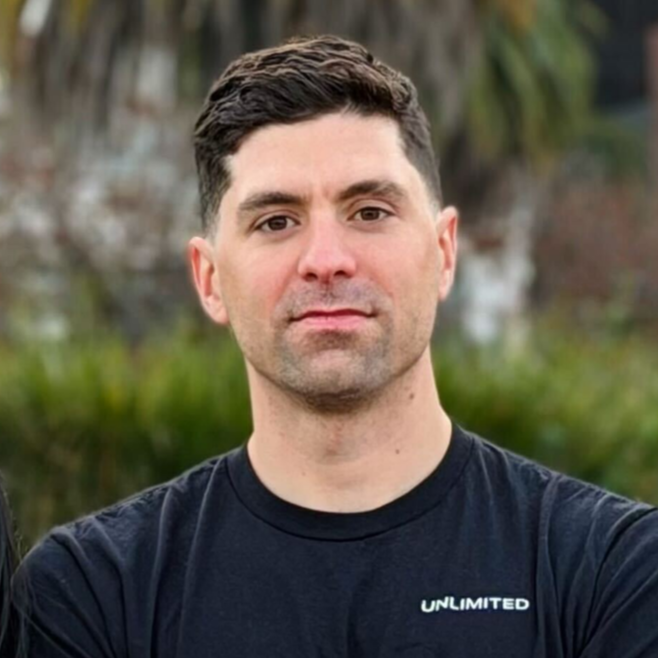
Alex Modon is CEO and Co-founder of Unlimited Industries, a company transforming infrastructure development through AI-driven automation. Unlimited tackles one of the biggest bottlenecks in climate and industrial innovation: the outdated, risk-averse world of engineering, procurement, and construction (EPC). Traditional EPCs are often misaligned with the needs of first-of-a-kind projects. Unlimited flips the script by using AI to generate thousands of design permutations, drastically cutting feedback loops, iteration time, and overall cost. Alex shares how his background in software, combined with childhood exposure to industrial environments, inspired him to take on this hard problem—and why he believes the only way to build faster is to rebuild the entire system from the ground up.
Episode recorded on July 29 (Published on Dec 3)
In this episode, we cover:
[03:15] An overview of EPCs
[05:05] How EPCs make money
[07:06] Why FOAK projects face EPC challenges
[10:02] Reducing the marginal cost of engineering design with AI
[12:35] Alex’s pivot from software to infrastructure
[15:39] Why EPCs resist adopting AI tools
[19:14] Unlimited’s capital projects platform explained
[23:41] How Unlimited manages physical construction
[26:36] The company's vision of fully autonomous construction in the future
[28:08] Why physical abundance drives Alex
-
Cody Simms (00:00):
Today on Inevitable, our guest is Alex Modon, CEO and co-founder of Unlimited Industries. Unlimited is transforming infrastructure development from the ground up, using AI to automate engineering design and construction workflows that have been stuck in the past for decades. Here's the problem they're solving. The energy transition requires an unprecedented build-out of physical infrastructure, but traditional engineering, procurement and construction firms or EPCs are fundamentally misaligned with what climate tech companies need. EPCs are risk-averse requiring complete project scope up front and bill by the hour. That's the opposite of what you want when you're building first-of-the-kind technologies that need continuous iteration. Unlimited Industries recently raised a $12 million seed round led by Andreessen Horowitz and Civ and MCJ is proud to have participated.
(01:00):
I met Alex last year through an introduction by former podcast guest Titiaan Palazzi. Thanks, Titiaan. Alex and I dive into how big infrastructure projects actually get built today, why traditional EPCs evaluate only three to five design options before locking in a plan and how AI can change that by modeling thousands of permutations simultaneously. We explore what led Alex to tackle this massive industry and how Unlimited is taking a fundamentally different approach to infrastructure development. This conversation is especially relevant for anyone working in climate tech or industrial innovation or getting from pilot to commercial deployment often means building facilities that have never been built before. From MCJ, I'm Cody Simms, and this is Inevitable.
(01:51):
Climate change is inevitable. It's already here, but so are the solutions shaping our future. Join us every week to learn from experts and entrepreneurs about the transition of energy and industry. Alex, welcome to the show.
Alex Modon (02:12):
Hey. Thanks for having me.
Cody Simms (02:13):
You and I first met I think at Climate Week New York last year. At the time it felt like you had some napkin drawings of what it is you were thinking about doing, and here we are less than a year later and you've got a company formed, you've got a team.
Alex Modon (02:27):
That's a really kind way to do. I feel like when I met you in New York, it was just you were catching just a person who was a combination of overwhelmed, met with a weird batch of that ambition and excitement. So there was a whole bunch of things I think were happening the first time we ultimately met. Maybe hats off for you for seeing a normal human under the bubbly excitement.
Cody Simms (02:45):
Well, I love it, and here we are less than a year later and you've got a team, a company, you've raised some money, you're working on some early deployments, so exciting to see all that you've done. Obviously we're honored to also be investors now in the business. Let's start by taking a step back and explaining what the world of EPC is, means, how it works, what the world is used to seeing here and what triggered you to want to do something in this space.
Alex Modon (03:15):
If you think about any larger capital project ... So this is everything from how power plants get built to critical minerals and data centers and mines and all this big stuff that powers how the world works you typically start with an owner or a developer. Maybe they have access to capital from a bank or a purchase from a customer or some unique technology that they have and they want to bring to market. And then what they'll typically do after they find a site and specify some really high level requirements for the project is they'll go find a thing called an EPC, and this is basically just like third party contractor who does all the engineering. They manage the relationships with the vendors for the procurement side of things and they actually go and build the project and manage the construction of it all.
Cody Simms (03:57):
EPC is engineering, procurement and construction is what the acronym means.
Alex Modon (04:02):
Yeah. And the corollary to that in more commercial development work is like a design and build. Normally because these projects are really complex you do it all in one vertically, integrated partners, so the E, the P, and the C. if you're going to design a building or something, you'll do a design bid build or a design and build. So that's your architects.
Cody Simms (04:20):
For listeners who are used to more typical hardware startups, not building giant infrastructure projects, but building a widget is this like you fly over to China and find a contract manufacturer and work through the spec with them and then they become really your manufacturing partner? It's a similar kind of thing but at a much different scope and scale.
Alex Modon (04:38):
Yeah. I think that there's maybe a lot of parallels to manufacturing broadly. These two maybe categories between what does construction projects look like versus manufacturing look like do have a ton of overlap. But for some reason I feel like construction there's no difference in how we build things between the last 50 years as we have gotten quite advanced in terms of manufacturing. So even the process of going and working with a contract manufacturer is light years better than what it typically looks like to go work with a third party EPC.
Cody Simms (05:05):
How does the EPC make money? Are they billing hourly? Are they setting a project scope, getting a big upfront payment and then charging for change requests as they go or are they participating in the equity of the project? What does that typically look like?
Alex Modon (05:19):
I break down how the majority of these contracts get costed in probably two different buckets. The vast majority of them are on this cost plus basis where you effectively pay a set hourly rate that has some built-in margin to these contracts. That's where you run into some incentive alignment problems because typically your owner and developer wants to build the thing better, faster, cheaper, and then the only way that the EPC in that world makes sense is increasing the number of billables that they have or increasing the scope and the project number. You see this misaligned incentive in defense and a whole bunch of other principal agent problems that you get in third party contractor scenarios. A smaller percentage of these contracts are done in a thing called the turnkey contract, which just basically means that the price is fixed. Where this often becomes really complicated is if you're building a first of a kind project or if you're not building the thousandth of the thing that you're doing, someone's got to hold that risk and it makes it really hard to do these fixed price type contracts. So most of them end up defaulting to this misaligned cost plus model.
Cody Simms (06:14):
And it feels like the cost plus model works generally fine if you're building on a technology that we have already been building that kind of thing for the last 50 years. Natural gas power plants or a steel manufacturing facility or a big data center. These are things that generally the world knows how to do. But all of a sudden if you're introducing totally new technology like an electrochemical steel plant or a data center that's being redesigned to use the highest power Nvidia chips and needs cutting edge liquid cooling running through the system and scope is unknown or hasn't been done before. Like you said, this first of a kind problem we run into challenges. Is the world building more first of a kind big infrastructure right now than it was 10 years ago?
Alex Modon (07:06):
There's definitely way more new stuff that needs to get built now than it needs to. I think that a cost plus model works if you are okay accepting coin operated execution. I tell you to do this, you do explicitly this, nothing else. And that's all you get out of that type of model. If you want any sort of innovation at all, even if it's a process we've done a lot and we just want to continue to improve it or make it better, there's no incentive structure. It's actually an anti-incentive structure to improve on any material vector. So yes, the world needs to do so much more first of a kind, but I also argue that for a lot of the things we do today, you get stuck in these local optimums that only really exist because there's not a very hard pressing incentive to continue forward progress and momentum on.
Cody Simms (07:49):
So I'm hearing you describe a difference in waterfall product development versus agile product development. To some extent though, you can't build large infrastructure and pure agile, make changes all the time kind of thing because ultimately you have to pour cement and put steel in the ground.
Alex Modon (08:06):
Totally. There's typically this stage gated process that most of these projects follow and there's a whole bunch of different acronyms we can throw out there, but effectively you're just moving through a series of different milestones of work that let you get more comfortable investing more capital into the next stage of work. This is an FEL process or a whole bunch of different ways you stage gate that work. That helps remove risk as you go piece by piece, but once you eventually get to we need to buy stuff and that money now leaves the bank, you do need to stop doing iteration land as much as possible obviously as you start doing site work and building things in physical space.
(08:44):
That said though, I think where the opportunity really lies in terms of how to optimize the actual design of these projects is to live in this front end engineering perspective with way more iteration loops. And normally if you want to do any basic engineering scope right now, a developer or owner passes that over to the EPC. The EPC will turn some set predefined amount of work around in many months. And the owner maybe gets a little bit of insight into how those projects progress, but it's actually very, very minuscule. And so the feedback loops are just terribly slow and it's even compounded by this misaligned set of incentives. A lot of the problem that we're actually trying to solve is accelerating those feedback loops and iteration cycles.
Cody Simms (09:24):
And I've heard you describe before, there's also now with AI's ability to make a lot of extrapolations, you can look at infinitely more potential designs than might have been the case previously. And so with a traditional construction project, you might only model out two or three essentially happy paths and it's plan A, plan B, plan C. and you might build an engineering scope for each of those depending on what you uncover down the road, but you're not building out a thousand of them. Am I understanding that part correctly of what I've heard you describe before in your process?
Alex Modon (10:02):
I broadly think about it as we're trying to as aggressively as possible reduce the marginal cost of engineering. As you reduce that cost, you then get to consider a much wider search base of what the ultimate design ends up being. The reason why this is important isn't just to save costs on engineering. If anything, the engineering costs of a project are actually quite small. On a first of a kind, you might pay 15% of the total project cost into engineering on an nth of a kind, you're paying 5%. Maybe less. The real leverage happens when you take even that same fixed budget that you'd spend on engineering instead of doing two or three different cycles for improvement, you a thousand or you do 10,000 and that certainly only works in a world where your marginal cost for engineering effort is really, really low and that's obviously this massive weight that we get with AI agents knowing how to use these tools and be able to do this engineering work.
Cody Simms (10:52):
You mentioned that traditionally the actual company that's hiring the EPC or the construction firm doesn't necessarily have a lot of insight into how the project's going. Maybe you're getting a progress report sort of thing, but you're not able to play with daily changes and updates from an engineering perspective. Do you see a path for pushing more of the engineering work back into the company, the principal project company as opposed to the EPC owning it as an isolated party?
Alex Modon (11:23):
I think we'd have to break down first why do they own it. And yes, you are getting way more leverage on your own. Most of these developers and owners don't have the internal resources to be able to do all the work that's required. But the reason that you end up having this firewall between the EPC and the developer, the owner that slows this information sharing down is because the EPC is managing how many different changes and inputs they're actually taking from the owner and there's this adversarial relationship between these two parties that caused them to have this stress relationship where ... You even mentioned this earlier. Every little thing that deviates from scope is slapped with this heavy change order. Most EPCs will even bid on projects where they might not even have a margin in the project and they just assume that the owner will make some sort of mistake that causes them to issue a change order and that's really where they make all of their money. If you really reduce the friction it takes to go through iterations, you actually then do want to facilitate as much communication back and forth with the developer and with the owner themselves so that they can have a massive amount of impact on the project without it totally blowing up your internal EPC resources.
Cody Simms (12:27):
Helpful primer on the problem space. Let's take a step back. How did you decide this is the thing you wanted to go build?
Alex Modon (12:35):
In my professional career, I've spent a decade doing software companies. We're building an AI first engineering and construction company, so as much as we build this capital projects platform that has a bunch of sweet AI in it that accelerates all this work, at the end of the day we're responsible for delivering very large expensive infrastructure in the real world. This is quite a deviation from my previous path in the software world. I think it might be context of I grew up in Akron, Ohio where things are quite a bit more industrial than they are out here in the Bay Area. My parents actually met at a steel mill, my dad doing this mechanical engineering inside this mill and my mom on their sales side and then I grew up around a lot of small construction [inaudible 00:13:10].
Cody Simms (13:10):
How romantic.
Alex Modon (13:14):
Yeah. I came out to San Francisco and what people do in San Francisco is they do software. So I did software for a while and then I've had a couple of startup experiences, some have gone better than others and what I've noticed the through line is between both of the previous software companies I had started is that independent of the outcome I'm going to redline. I'm going to work as many hours a day as I possibly can because that's who I am as a human and that's why I'm happy. If I'm going to do that, I might as well really care about the thing that I'm building. So I launched in ... This is probably two years ago or something, and I launched into a world where I just let curiosity drive me and it pulled me down a whole bunch of fun rabbit holes. It started as a academic exploration into climate, but I really got pulled into the hard debate sector, which is all this heavy industry stuff. I think at the end of the day I'm just like a five-year-old boy who likes playing with Tonka trucks and Legos and I'm just like, isn't the coolest world to just spend my life trying to build big things.
(14:09):
One of the projects that I was helping get off the ground at a really early stage led me to the world of ... Now we had a lab or pilot scale technology we wanted to scale up and I was really excited to go work with one of these APCs. They have all the promise of this third party that has institutional knowledge and all these different disciplines under one roof. I probably think it's similar to I'm running a startup for the first time, I've got a legal problem that I've run into and I'm like, "I'm going to go get to work with this amazing law firm that's got all these great clients. This is going to be an amazing experience." And then anyways, we got into initial scope of work and I was like, "Oh, it's got to be better than this." It turns out that the normal experience. It's probably like a perfect HBS case study for industries with low MPS. It was only being hands-on and actually trying to work with one of these EPCs. It just coincide with the software background and realizing that is there maybe a future where you could not just build a product that EPCs could use, but could you systemically fix this very broken industry? It really does come back to these incentives.
Cody Simms (15:09):
It's funny where my head went when you described that origin story was to think, huh, the typical path there would be to say, "Oh, these EPCs, I tried to work with one, it was really inefficient. I have an idea for an area where they were running into a pain point and I could build a software platform for them to help their world be more efficient." But you came at it from a different way, which is, "Boy, I see where this whole industry is ready to be turned on its head completely," which is a different way of viewing a problem that you see.
Alex Modon (15:39):
Yeah. This is always where it's the revisionist history. When I was in it though, I was like, "Oh, well we're going to make a software product and sell it to EPCs." It was thinking that, all right, hey, we're going to build this blockbuster great technology and they're going to be so excited. We've been getting worse at building any large construction project in the US but most of developed nations for the past 50 years. We're going to start to build a technology that solves for it. But once you get closer to these EPCs and you understand what they're incentivized by and how they operate, I don't know, we've had an incredible amount of technology over the last 30 years that you would imagine should show up in some productivity metrics. I think fundamentally the reason that you get this latent potential is because the incentives aren't aligned and you have no reason for an EPC to actually push on progress and innovation.
(16:23):
And that became a really apparent when we started talking to the EPCs about what are their problems? Is there ways that we can provide technology to help streamline some of these workflows and to accelerate delivery of projects. There's very much interest at the board level. We should be using AI because that's the thing that we're supposed to be doing right now. But it's very impractical to ever believe that institutions that are motivated by making the number of hours they bill for higher are going to be really excited about adopting AI.
Cody Simms (16:51):
It reminds me of the same problem I hear in the legal industry. Yes, AI can probably review a lot of documents much more quickly and can help you understand how a contract works, but at the same time as a person navigating a contract negotiation, you need the coverage that yes, my actual attorney reviewed this and if so, you're going to pay them by the hour like you always have. On their end they may be just using AI to help do the same thing, but you've pushed the risk and you pushed the liability to some extent to the fact that your law firm actually reviewed things. It's helping you feel like you're taking on less risk in doing so. I'm hearing a similar dynamic on your end. I don't know if I totally butchered that metaphor or if that makes sense to you.
Alex Modon (17:34):
It totally tracks. It's really funny, actually interviewing law firms for our work and telling them about the framing that we have. Is almost like a funny exercise in itself. And actually multiple times we've had those lawyers talk to us about how, oh yeah, this totally makes sense. We play with the AI tools to appease our clients, but it really doesn't make sense for us to try and use these tools to cut down our hours. This is how we make money obviously. So tying this back to why we're working on what we're working on is because it felt like that was the only real way for impact to show up. It doesn't matter the impact that AI actually brings us from a potential perspective. I really don't think that it'll be recognized in the world unless you fundamentally change the model. You're not in control of doing that unless you just go rebuild a system from ground up.
Cody Simms (18:19):
So from a product perspective then does that mean you are building an AI design tool set that the clients you take on or the people who hire you as an EPC will actually work together with your team to iterate on designs of the facility that they're building?
Alex Modon (18:38):
We've built this capital projects platform that has tools to help accelerate the engineering design as one piece of it. It would be a tool that if you were a process engineer, an electrical engineer, a civil engineer, you would look at it and you would very quickly get ramped up and you'd say, "Oh wow, this looks like my other tools, except it looks like it was built in this decade." Most of the software tools that this industry uses are wildly neglected and very, very old. It looks like a modern version of that, but the only big difference is that it has AI in it as a core primitive. So it lets us build and automate all of these workflows that span different engineering disciplines.
(19:14):
Right now our team uses that because we're able to get both the maximum amount of leverage out of these tools as we're building them, but also because the owner doesn't really know how to buy that. They know how to buy what they get out of an EPC, and so I think it is important for us to meet them where they're at and then over time we will give them more and more tooling to accelerate a lot of the context rich work that they only really should do in-house. And then more of the where you're looking for some other party to not only do work but then take risk. That's actually where I think the end state of Unlimited is.
(19:51):
In the future the idea of building a technology versus offering a service, they really converge. There's going to be no difference. It will be entirely automated if we're really willing to zoom out, I think in a decade from now, all construction will be fully autonomous. Everything from the engineering, the vendor management, the fabrication all the way through the onsite construction, which is a bunch of autonomous earth movers, humanoids, drones. As you switch it into this, now you've got an owner that not only is looking for execution out of an EPC, but they're also looking for someone to hold risk. That's a really interesting opportunity because if you have a very low marginal cost of engineering or any labor, you get the ability to remove risk in an arbitraged way, in a much, much more affordable way to remove risk. I think that's the end state that we play as we help get the world to a place where we can actually accelerate and really automate all construction projects.
Yin (20:43):
Hey everyone, I'm Yin, a partner at MCJ, here to take a quick minute to tell you about the MCJ Collective membership. Globally startups are rewriting industries to be cleaner, more profitable and more secure. And at MCJ, we recognize that a rapidly changing business landscape requires a workforce that can adapt. MCJ Collective is a vetted member network for tech and industry leaders who are building, working for or advising on solutions that can address the transition of energy and industry. MCJ Collective connects members with one another with MCJ's portfolio and our broader network. We do this through a powerful member hub, timely introductions, curated events, and a unique talent matchmaking system and opportunities to learn from peers and podcast guests. We started in 2019 and have grown to thousands of members globally. If you want to learn more, head over to mcj.vc and click the membership tab at the top. Thanks and enjoy the rest of the show.
Cody Simms (21:45):
I definitely want to spend a little time with you on the future vision of what automated construction looks like. But even circling all the way back to some of your first comments there, you are one of many startups I've spoken with that position themselves as AI startups or modern software companies that have a client services portion of what they do that's quite significant, who's actually the customer of the AI tooling that they're building is themselves. You're building these tools for your own team to use first and foremost, which just makes you more efficient at engaging with your customers. So it's an internal tooling that you're building that you can eventually expose to your clients, but you don't even need to from the start. You're not relying on them working in a way they're not used to working. I assume that means you'll be handholding them and you'll have account managers and all the interfaces that they're used to having at least at the beginning while on your side of things you're able to just move more efficiently with better margin is what I'm hearing you say
Alex Modon (22:43):
From the start it does feel a lot like, well, this is what working with a modern EPC should feel like that is much more aligned to my incentives. But even really quickly we help expose some of the tools. You have a tool that you can log into our platform as a customer and you can just use an AI to search any meeting that we've had, even if it was just an internal design review that wasn't even exposed to you and you're just catching up on. Or you're someone who's working on a part of the system but doesn't understand or is familiar with another and they can just ramp up on that project context because all that lives in one place and again, it's traversable through an AI. The service-led motion is really helpful to dog food the product and make sure you're building a truly world-class product experience and not have to get that perfect before you actually start developing and building.
Cody Simms (23:26):
And then in the interim world between now and humanoid robots, building everything around us, are you managing the construction of these projects yourselves? Are you bringing in cement trucks and having foremen on site and building stuff?
Alex Modon (23:41):
Yeah. All the way through.
Cody Simms (23:42):
Unlimited Industries ultimately will be a construction company that manages a software client interface is what I'm hearing.
Alex Modon (23:50):
Totally .and I think honestly most companies look like this in the future. They of course are AI enabled and tech first and software first, and then ultimately at the end of the day they deliver the service that their customer really needs, which is in our case to go build a thing.
Cody Simms (24:03):
You mentioned your background is a software background. How do you ramp up on the construction side of the skill set that your company is going to need to have?
Alex Modon (24:11):
That's definitely a team thing. Thankfully we've been able to bring on some really exceptional engineers and builders to the core team and we'll continue to do so. I've had a little bit of time to ramp up on these different domains and I think that's probably one of the things I do really well, but these are deep, deep domains that as much as you can find high-slope people is helpful, but having real hardcore earned experiences is essential. So the majority of our team are multidisciplinary engineers, and so what I mean by that is people that have worked on oil rigs and operated them that have built tons of launch pads and launch infrastructure and a bunch of mining kit. Very physical real-world folks.
Cody Simms (24:50):
Let's go to that future state where the world of construction is largely automated. Are you building these autonomous robots or you're just good at acquiring them and leveraging them into the company? How big is the vision of this thing?
Alex Modon (25:03):
Depends which day you ask me. What we know and where we know that there is an incredible amount of leverage that we get out today out of the automation is all of the engineering and procurement management work, and so that's something that we see line of sight. Even if you stopped the progress of the models today, we would get to a point where I think that this is 95% automated. That actually has a massive impact to project costs, not just because reducing that smaller part of the management of engineering of the project costs, but because you're able to make these projects truly factors better. And so you'll take a project that was supposed to be a hundred million dollars and then you will through iteration of design, you will get it to cost 25. There is a massive amount of leverage alone from increasing your cycle time. We're going to get on these projects. But we'll eventually move into this world where we're not going to be manufacturing our own humanoid robots to be clear, but we believe that the actual thing, that's the rate limiter for progress on robotics and autonomous earth movers and anything that's moving on the job site is actually going to be a software problem.
(26:03):
Yes, of course there's a lot of different hardware systems and robotic systems that will need to be built, but we're approaching an era where we've never really had before. This idea of the cost of intelligence falling to zero and all the amazing things that you can do with that. It's an incredible amount of progress in this world and I think we're still a few years off before we see a humanoid stumbling around on a construction site. It is inevitably almost fact that that is the future that we're moving to. And in that role, the same way that you assemble and manage a construction team you will do for humanoids and the swarm of autonomous robots that are on a project.
Cody Simms (26:36):
You mentioned that you started this journey going down a rabbit hole of climates and at deep tech projects and heavy infrastructure that needed to solve the hard to abate problems. How do you view the vision of the business now and how does that align with where you started? Do you see this as a lever on decarbonization in some way?
Alex Modon (26:58):
I don't think about us as a decarbonization company. I just want to build stuff. And I think that the answer to a lot of our problems can be solved with abundance. The real driving motivator for why we're working on this company is truly because we're getting worse at building stuff. As almost trite as it sounds, I do believe in that you're either growing or you're dying. This is one of those things where we want to ensure a future of physical abundance and the best way we can do that is by radically reducing the cost and time that it takes to actually build physical things. I feel like we used to be really excited ... Universal we or global We as a people. About the idea of building these big ambitious projects. The Empire State Building was like in national papers as it was getting built and people were so fired up about this big ambitious thing that we tried to go build and we don't really have those anymore. They're just the backdrop of stuff that needs to happen. And only because it's been ultra degraded in some other area. I and team are just really motivated by this idea that we want to codify how to build as best as possible and scale that to a ridiculous rate. And I think we get that in this price elastic market of bringing down the cost and time it takes to build things.
(28:08):
I learned about all the things that make it hard to build, which at its core really comes down to you have a ton of these decarb technologies that are typically run by PhDs, have taken an incredible feat miracles to get the pilot demo even bench scale system working. And then they're thrown into these waters of capital projects world and they're expected to just go figure out how to build one of these giant capital projects. And a lot of our initial customers are folks that are working on some sort of decarb mission and priority and it feels exceptionally rewarding to be the material or substrate for them to be able to jump into a proper capital projects company. That's where I think the vast majority of our focus will be just in this ambition and effort to go build a heck of a lot more.
Cody Simms (28:54):
The way I see it too is most of these large decarbonization projects are more expensive upfront than the traditional systems they're trying to replace and then over time typically are cheaper to operate because they operate using renewable power or whatnot and the residual cost to operate goes down substantially. The challenge is how do you wring as much of the cost as possible out of the upfront build if you can bring efficiency and more nimbleness and agileness to the upfront build. Which a lot of it is expensive again because it hasn't been done before and so you're running into iteration after iteration that's racking up these hourly rates from an EPC perspective and ultimately putting a lot of these companies out of business unable to get V-one built and prove that in year 10 they are cheaper to operate. If you guys can solve that problem, I think it helps make an incredible amount of progress for decarbonization. It may not be what's motivated you to start the business, but I certainly see a through line there, which is one of the reasons we here at MCJ got excited about what you're doing.
Alex Modon (30:04):
It's super rewarding to go work with these very ambitious hungry founders who want to go build large capital projects across every industry. We've talked to people that are decarb steel and cement, a lot of CO2 conversion stuff, different types of thermal electrical storage projects, critical mineral stuff, less emission profiles. There's just a range of these technologies where if you can will it into a bench scale system that works, the next place that you are likely to die is this whole. We weren't able to get off of venture fast enough into this new capital stack called project finance. And we couldn't make that jump because when we started working with one of these third party EPCs, the culture mismatch is exceptionally high. They're just not designed to be able to do first of a kind or any early stage projects. They're very much more cued towards nth of a kind. We're doing the thousandth refinery. It felt like a really good place for us to play. It's easy getting these types of companies trusting you with the most important thing of their business because frankly they don't have a lot of other options that are aligned with their business and it's just incredibly rewarding to help push their missions forward.
Cody Simms (31:09):
Shifting gears a little bit, you recently raised a round of funding and MCJ obviously as I mentioned, was excited to be part of that. You want to share a little bit about the round you put together?
Alex Modon (31:18):
We raised a 12 million seed round co-led by Andreessen Horowitz and Civ. We're super fired up with the people around the table including y'all and having you be a part of this. It feels like a really good blend of typical Silicon Valley investors who really understand how AI meets the physical world and then a whole bunch of more industrial led funds that whether it's their LPs or their other portfolio companies that are trying to develop projects, they get the bitter reality of how hard it is to build some of these capital projects. I think and then hope that the investors that joined us know that we're on an incredibly hard mode. This is definitely not the easy route for what we're trying to do and I think that in the scenario that we are able to manifest the vision that we're setting out, I think this is going to be a really important company. I feel really fired up and excited to have a group of folks who I feel like see that vision with us.
Cody Simms (32:11):
What near-term milestones are you guys working on? You maybe can't yet share the companies you're supporting with the software platform that you're building out, but can you talk a little bit about what you're trying to accomplish in short order?
Alex Modon (32:23):
So for our current customers, we are helping them go through ... This is typically called a feed stage of design, so it's a front-end engineering and design phase. That helps you get a fairly accurate cost estimate so that you can go to a lender or even just another financing round to understand how much of this project cost us. So we're into this design part of the motion and then starting to now lay out what does the actual build motion look like. So there's a bunch more detailed engineering that comes with that, and then the actual construction that goes along as well. So at some point in the future we will announce a number of customers that we're working with at the stage that we're at now we'll probably keep it a little bit more quiet until then.
Cody Simms (33:00):
Alex, I really have enjoyed chatting and learning about what you're building and really learning a lot about the EPC world through you and how you've described the challenges that you've observed. And it's funny. After hearing you articulate a lot of these challenges, I've thought back to our own portfolio companies and companies I've had here on the pod as they go through their initial pilot plant or first of a kind plant build, and boy, I hear them sharing a lot of the same issues that you are pointing out in terms of how the industry works and how getting these initial plants up and running works.
(33:35):
Assuming we have quite a few startups or venture investors with companies at the series, A, series, B, series C stage, who are going through this listening today, who do you want to hear from? What's useful? How much are you in yeah, I want to blow up my pipeline and hear from all sorts of companies right now and service a bunch of folks, or is it like I'm heads down on proving through my platform with a handful of pilots right now and I'm looking to come up for air in a year or two and take on a lot more clients?
Alex Modon (34:06):
The benefit of the software that we're building is that we can do a heck of a lot more with a very small team. We're actually bringing on a number of additional folks now and I think the caveat that I'd have is we really do, especially at this early this stage, really look at this as like a two-way partnership and we take a whole bunch of risks in the way that we contract these projects too. So what that ends up meaning is that we're really excited to start conversations and partner with additional folks looking to go build, be it a first-of-a-kind facility or maybe a brownfield project off balance sheet, but it's important that this is a little bit of a two-way marriage and even when we talk to folks, they just expect like, "All right, let's just set the kickoff and start working." I was like, "No, no, no. You have to pitch our team. Our people have to be fired up about this broader mission that we're working against and we're not a coin operated team."
(34:49):
If you're working on something that is an interesting and important project that you think needs to exist in the world and are maybe struggling with or unhappy with a current EPC relationship or you've heard enough from other founders or other developers that it's typically a little bit of a contentious relationship and you're hopeful that there's a better way, yeah, I would love to hear from you. Even if it's not something that we can immediately help from a specifically scoped piece of work, maybe it's something that we have somebody else in our world or our network who is working on something similar or can just offer advice for how to tackle some of this stuff.
Cody Simms (35:18):
Is there a size or scale that is appropriate for you right now in terms of dollar size of a project or geographic scope or any of that that is most down the fairway for you?
Alex Modon (35:30):
Not really beyond a certain size. They're all pretty similar with just more complexity. We have everything from low hundreds of millions into the low billions of work that we're on now. Like size of project. If you really brought this down to a capital project that's like a $25 million project, it looks really similar. Once you get down into demo phase and you're like, "Hey, we want to build a $1 million demo unit," then you're getting to a spot where it's like, you should really do that in-house just because you're going to have so much more context. You're not designing this to be a continuous system. You're not really trying to build this to last 20 years and you should just be turning every wrench. So anyone who fits across that spectrum, whether it's a process technology or just even another type of capital project.
Cody Simms (36:12):
So I'm hearing it's probably first or nth commercial facility that you're going to build. You probably have line of sight into who's buying what's coming off of the thing you're building, so there's an off take or something already there because it's going to be hard for the project to be bankable and raise capital needed unless you're just funding it off your own balance sheet to go build this thing in the first place. You're beyond bench scale, you're beyond pilot scale, you're turning the corner on commercialization. Anything earlier than that is probably not the right fit, but above and beyond that, it sounds like you guys are all ears to hear about projects.
Alex Modon (36:45):
Spot on. Anybody who's got an existing demo system or pilot system that's up and running and is giving you at least the confidence to start your off take conversations and agreements so that you can start to scope what does this look like at an actual commercial scale project that lasts 20 years.
Cody Simms (36:59):
And to be clear, you guys aren't going out and helping them raise the money for this thing. You are helping them get the engineering and construction done as fast and cheaply as possible.
Alex Modon (37:08):
This is where it breaks down to what are we actually building. And it's not just automating the engineering service. It's truly a capital projects platform, and this is why we take the time to make sure that we mutually find a really good partnership with folks is we're doing a lot of things that are way beyond the scope of a contract. When it comes to helping with fundraising and helping connect to lenders and things of that nature we really do see that as we're in this project together and we're doing whatever it takes to go build the project.
Cody Simms (37:32):
Anything we didn't cover today that I should make sure we at least talk about?
Alex Modon (37:36):
It's only even been maybe a month or so since we've been officially working together. You guys have already been amazing. You guys have been awesome and super helpful beyond ways that I expected.
Cody Simms (37:44):
Well, thanks Alex. And in the future I'll come out to one of your work sites and have an autonomous humanoid robot carry my laptop for me or something.
Alex Modon (37:54):
That sounds awesome. We'd love to have you.
Cody Simms (37:56):
Appreciate you. Thanks for what you're building. Thanks for joining us on the show and can't wait to see the world unfold as Unlimited Industries continues to grow within it.
Alex Modon (38:06):
Amazing. Thank you.
Cody Simms (38:08):
Inevitable is an MCJ podcast. At MCJ, we back founders driving the transition of energy and industry and solving the inevitable impacts of climate change. If you'd like to learn more about MCJ, visit us at mcj.vc and subscribe to our weekly newsletter at newsletter.mcj.vc. Thanks and see you next episode.