
Faster, Safer, Cheaper: How TerraFirma Is Rebuilding Construction
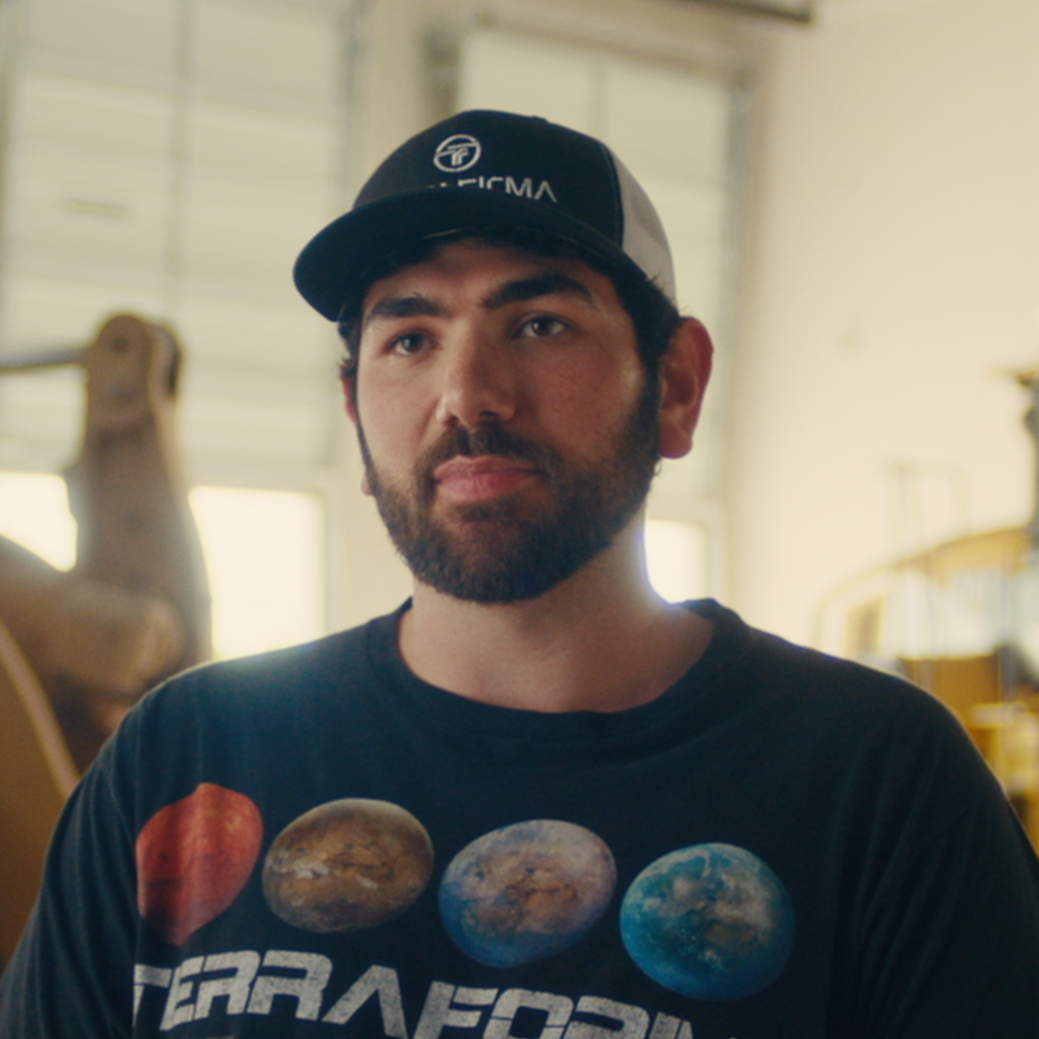
Noah Schochet is the co-founder and CEO of TerraFirma, a construction technology company rethinking how infrastructure gets built. Founded by two former SpaceX engineers, TerraFirma combines robotics, remote operations, and software into a construction business that performs projects directly rather than selling technology. By vertically integrating its tools with field operations, the company aims to make construction dramatically faster, safer, and more affordable while addressing labor shortages and enabling the next generation of infrastructure.
In this episode, Noah shares how his experience building Starship at SpaceX inspired TerraFirma, why he believes construction—not autonomy—is the real bottleneck to civilization-scale progress, and why robotics companies should focus more on delivering outcomes instead of products. He also explains TerraFirma's remote-operated construction model, its approach to rapid iteration, and why the future of construction still depends on people empowered by better technology.
Episode recorded on June 25, 2026 (Published on July 28, 2026).
In this episode, we cover:
(0:00) An overview of TerraFirma
(1:04) How SpaceX inspired the creation of TerraFirma
(4:47) Why construction has fallen behind other industries
(9:33) The structural reasons construction is slow to modernize
(12:33) Why the goal isn't autonomy—it's better construction
(14:25) TerraFirma's construction-first business model
(17:11) Why customers buy outcomes, not robots
(20:54) How TerraFirma's retrofit robotics and software platform works
(25:53) Operating multiple construction machines from a mission control center
(29:01) How robotics could reshape construction jobs instead of replacing them
(32:02) Early customer adoption across data centers, housing, and hazardous environments
(34:20) Winning projects by building faster, cheaper, and safer
(36:13) The biggest challenge to transforming construction
(38:32) Hiring builders with extreme ownership and mission alignment
(42:55) TerraFirma's $100 million Series A and plans to scale
-
[Cody Simms] (0:00 - 0:29)
From MCJ, I'm Cody Simms, and this is Inevitable. Climate change is inevitable. It's already here.
But so are the solutions shaping our future. Join us every week to learn from experts and entrepreneurs about the transition of energy and industry. Noah, welcome to the show.
[Noah Schochet] (0:30 - 0:31)
Nice to see you again. How's it going?
[Cody Simms] (0:31 - 0:43)
It's going great, and I admire the fact that you are wearing a safety vest on this call or on this recording.
You know, this is an audio podcast, but I got you front and center in your neon yellow safety vest. So this is fantastic.
[Noah Schochet] (0:44 - 0:51)
I came straight from a job site, and basically everyone in the company is always wearing a safety vest, hard hat, and steel-toed boots.
[Cody Simms] (0:51 - 1:00)
You and I were chatting about this right before we hit record, but when I first met you, it was on Halloween and you were in an astronaut suit. So I'm enjoying our calls, Noah.
[Noah Schochet] (1:01 - 1:03)
I'll make sure I come up with something new for the next time we chat.
[Cody Simms] (1:04 - 1:34)
All right. So to kind of get us started, I guess we're taking the astronaut metaphor a little bit further. You and your co-founder, also Noah, came to this company from SpaceX, and at least when I first met you guys, your website had a very substantial like, hey, we're building this so that we can eventually do this on Mars component to it.
And I am curious to hear how that impacted the vision of the company you're building.
[Noah Schochet] (1:34 - 3:01)
I can give you kind of the two, three minute story of the origin story about how the company came to be and also why it is the way it is. So my co-founder, his name is also Noah. So we go by the two Noahs, big Noah, small Noah.
Every combination of joke is still funny to me. It never gets old. But we met in the first day of engineering classes at Princeton studying robotics.
They said, grab a lab partner. And I said, hi, I'm Noah. We're going to be lab partners.
And he said, you're not going to believe this. I'm also Noah. And we thought that was so funny that like, might as well work together for the rest of our lives.
I think we've worked together for over a decade now. We both graduated and went to SpaceX. He was on Starshield, which is the government version of Starlink.
And if I asked him about what he did there, he said if he told me he'd have to kill me. And while he was doing that, I was one of the main engineers on the Starlink Wi-Fi router. So designing, building, testing, and then also setting up the automated assembly line to in-source manufacture everything from stamped sheet metal to injection molded plastics to final assembly to circuit boards.
So I stood up with a team of awesome engineers, probably 30, 40 robot cells. I automated myself out of a job there, and then I went and joined Starship. On Starship, I was with a small team in charge of the payload volume, which is like the cargo bay of the rocket.
And it was when I was down working at Starbase where I really came up with the idea for TerraFirma. So there was kind of two halves of my world that collided. And while all these things that I'm about to tell you were happening, I was reading every sci-fi book I could because I had these super long commutes.
So I was just reading all these sci-fi books about robots in space.
[Cody Simms] (3:01 - 3:11)
By the way, you know, got to go back into our archives and one of my favorite episodes we've ever done is with Kim Stanley Robinson, which was fantastic. I assume that's been an inspiration for a lot of people at SpaceX.
[Noah Schochet] (3:12 - 4:46)
Yeah, I was reading Red Mars. We are Legion. We are Bob.
Seveneves by Neal Stephenson. All these books about terraforming and the culture series. And all of these were swirling around and being like, what is humanity capable of?
That was really like swirling in my mind while I'm building this company. So the first piece of the puzzle is we were building these rockets. And when I was down there, it was like a third world military camp.
We were building in a rented circus tent that was like open to the elements where we had wild javelina hogs running through the production floor and these little blue crabs like crawling around stealing our tools. I was living in an RV. We were, you know, using porta potties without running water.
My office was a shipping container full of mold and wasps. And Elon was, you know, yelling at everyone. He's like, why are we not building these rockets faster?
We need like a faster production rate. And we're all like, dude, look around like we have no infrastructure. So the team at Starbase set out on a mission to build the entire, you know, rocket colony or spaceport.
And we designed houses and roads and bathrooms and restaurants and offices and this ginormous rocket factory and multiple launch pads and refueling farms and power transmission and solar fields. And it was like a perfect rocket colony. And we go to all the general contractors and we're like, this is what we want.
Go, go, go. And they're like, well, you're not going to like this. It's going to be very expensive.
It doesn't matter. It's Elon's money. Like we got the money.
We want this built fast. They're like, cool. It's going to take three or four years.
And we're like, absolutely not. There's no way, you know, Elon will kill us if we come to him and says it's going to take three to four years. Why does it take so long?
And they give you all sorts of answers, but the more and more you dig, you realize there is no first principle reason why construction is so slow.
[Cody Simms] (4:47 - 4:56)
I assume it's permitting, it's workforce shortages. I mean, I feel like every time I go by a construction site, there's not actually any construction actually happening. There's a bunch of machines just sitting there.
[Noah Schochet] (4:57 - 6:59)
So there are a large variety of reasons which we can get into in a little bit, but those are all partially true. But at the end of the day, at a company like SpaceX, we run the Boca Chica area. It's our jurisdiction, basically.
The permits weren't the issue. And even if that was true, once you get the permits, the construction should happen fast. From start to finish, it should be really quick.
So we're sitting there running two, three shift rocket factories, building skyscraper sized rockets in a month or two. And we're watching them spend six months to add a parking lot or a road. And I'm like, this doesn't make sense.
Then I started talking to the construction companies, like, here's some better ideas that we have. And they're like, oh, can you fax those over? I'm like, my dude, I have never sent a fax in my entire life.
They're like, oh, how do you have a fax machine? So he said, like, OK, I'll email to you. He's like, I don't have a computer.
I'm like, what? How are you doing this? And he's like, fine, I'll take a picture.
And he pulls out a flip phone from like 1995. I'm like, oh my gosh, you guys are years behind the technology curve. So all that was happening and building in my mind.
So part one is construction was broken. We're unable to build rockets because we're unable to build the physical infrastructure. Part two of the story is I'm one of the three to five engineers working on the payload volume of the rocket.
And people are coming up being like, well, what are we going to put in the rocket when we go to Mars? I'm like, huh, I feel like if anyone should know that, it should be me. So right after the first launch, there's this big party at this place called the Tiki Bar that Elon, you know, lets all the engineers come and celebrate and drink.
And he's handing out tequila shots to everyone with Bill Reilly, the director of engineering or VP of engineering. And I walk up and I'm like, hey, Elon, he's like one sec. And he like makes us all like 20 of us all take a shot and celebrate the successful launch.
And then I'm like, OK, I'm in charge of the payload volume. And we're all wondering, what are we going to put in the rocket when we bring it to Mars? And without missing a beat, he's like, oh, construction robots.
Whoa. That was a really fast answer. Like, what do you mean?
I mean, we're building two trillion dollars worth of infrastructure, building roads and houses and power plants and mines and underground factories. Like what do you think we're going to do, like put a bunch of people in spacesuits and hand them shovels? And I'm like, no, I mean, makes perfect sense.
And I'm like, OK, cool. I want to be in charge of that program.
[Cody Simms] (6:59 - 6:59)
I love it.
[Noah Schochet] (6:59 - 7:02)
He's like, absolutely not. We're focusing on making Starship launch first.
[Cody Simms] (7:02 - 7:46)
Oh, man. So it reminds me of from here in the L.A. startup community. I know Sam Teller, who was went on to be Elon's chief of staff.
Sam was used to run one of the local startup accelerators here in L.A. and after he left that to go join Elon, I remember him saying, I think it was literally his first or second day of work there. They were in a board meeting and they were seriously discussing the clothes that people needed to be able to wear once they got to Mars. And it's just this idea of having a vision of all of the details we're going to need to make it a reality that this is going to happen.
So I'm surprised to hear that he said, no, I don't want you working on that, because everything I would have heard about Elon would have said, yeah, we've got to have the plans in place for what those machines are going to do once they disembark.
[Noah Schochet] (7:46 - 8:49)
One of the great things about Elon is he's able to he has so many different companies that he's running. And the way he's able to not spread too thin is each company is focusing on the critical path. So the critical path is Starlink needs like Starship needs to launch so that they can launch Starlink so they can expand the constellation so they can get the funding so they can then do moon missions and then do Mars missions.
So worrying about like, what are we going to do in five to 10 years when we land on Mars? It's like, let's get the rockets up. We need every resource at Starbase focused on that.
And then once that's happening, we'll worry about the next thing when it becomes a problem, which is fair. It makes sense. But from my perspective, it's like, well, it seems like one of the bottlenecks in building the rockets is that we don't have factories to do it.
And we don't have roads to drive on. We can't even get all the employees to live near site or to park anywhere. And we have to shuttle people 50 minutes away.
If construction is bottlenecking us here on Earth, and it's the long term goal, like we should work on fixing that here and now. So that's where I really got the inspiration for this idea. Like if you want to build giant civilizations on other planets, like you should start by solving the infrastructures here on Earth, infrastructure challenges on Earth.
[Cody Simms] (8:49 - 9:32)
So you were describing the backwardness you felt as you were engaging the construction industry. And I guess the question I have is, why has construction resisted modernization? It feels like every other industry on Earth has gone through a software based transformation at the least.
And at the most, some degree of autonomy starting to work its way in and robotics starting to work its way in. If you look at how cars are made or whatnot today, in construction, you've had a few wins like Procore, great startup success story in the space, but I can't name very many. And I'm sure you've studied this industry at this point pretty substantially.
Like what are the reasons that it hasn't modernized?
[Noah Schochet] (9:33 - 12:32)
So there's a couple of different reasons. But I think one of the first fallacies is that it's like technophobic. There's two reasons why, among 20 or 30 different reasons.
Reason number one is an incentive structure. So construction, you know, we used to build the Hoover Dam in four years, the Empire State Building in 13 months, the Panama Canal in 10 years. Construction used to be capable of moving really, really fast.
Granted, you could argue there's safety, there's different permits, blah, blah, blah, blah. But from first principles, we were capable of moving faster than we are now. Over time, you went from one company building 95% of a project to realizing that they could shed financial risk, shed legal risk by having subcontractors.
So you would sub out more and more. The subs would have to front the cost of the work and then you pay the subs whenever you get paid. So they basically give you like working capital to build the project.
They hire all the people, they have all the specialization, they do all the trades. And a GC became more and more manager of a project than actually doing it. Every time, at least from my perspective of SpaceX, every time you add an interface, like now we have another vendor, now that vendor has a sub vendor, now that vendor is a sub sub vendor.
They add time margin to their schedule, they add like complications with communications, and they add like profit margin buffer. So everything just kind of bloats. The reason why Boeing and Lockheed Martin, which originally had the highest advantage in aerospace, got beat out by SpaceX is SpaceX simplified.
They stripped it down. They said, we're going to vertically integrate, we're just going to do as much as possible in-house. So that's one thing.
The second thing is, it's not true that construction is technophobic. The construction industry is willing to adopt tools when they're presented with tools that are unequivocally better than what they do. Good example of this is drones.
Outside of the military, the construction industry is the biggest adopter of drones. Like almost every construction company is using reality capture, they're using drone serving, you have more drone pilots on random construction sites where the owner doesn't have a laptop than you do in any other company that I know of. The reason why they don't adopt technology is because the technology that's been provided to them is not good enough for the real world.
And they have so much riding on it. When you have very slim profit margins, you can't invest into tech that takes years and years and years. You have a bunch of people from Silicon Valley saying, I've solved all of your problems with this widget or this doodad, and it doesn't perfectly work.
And when you're on a job site that has to do with hundreds of different pieces of like equipment and steps and tools, and all these different edge cases and vendors and safety issues, an unreliable piece of technology just can't be adopted. So in manufacturing, we've adopted tons of robots. The number one robot in the world, if you don't count self-driving cars as robots, is factory arms.
There's hundreds of thousands of them. And it's because they were in a controlled environment. The hardest part about using a factory arm to automate a factory is you have to make the piece parts arrive in the exact same fashion with high precision every single time.
And then the robot just plays back an action. Works perfectly. There's labor shortage.
You can automate. The tool’s good enough, like ABB, KUKA. Those tools don't exist in construction yet. And people are offering them like, oh, what if we give you this self-driving car or this, you know, little dog robot that will walk around?
And the robots aren't reliable enough. They don't do everything they say they're going to do. You have to train new types of people to come into the industry and learn how to operate them.
You have to disrupt your workflow, integrate them, and then they don't provide enough value because they're not quite there yet.
[Cody Simms] (12:33 - 13:05)
So I think that's a perfect segue then into a big, I would call it almost argument in the category of automation around construction, which is, should we be aiming for full autonomy or is teleoperation and remote control a potential solution? It feels like the space is kind of bifurcating into almost like two camps in that regard. You guys have kind of, at least for now, made your play on one half of that argument.
And I'm curious to hear how you think about it.
[Noah Schochet] (13:05 - 14:17)
I think people who frame that as the argument going on are looking at the problem the wrong way. It's not a question of, do you do it teleop? Do you do it full autonomy?
I mean, a lot of VCs are saying like, what's your autonomy goal? The goal is not to automate construction. That's not the right way to frame it.
The goal is to make construction an order of magnitude faster, an order of magnitude cheaper, an order of magnitude safer, to unlock new capabilities that we didn't have before. And you can use AI, autonomy, teleop, automation, software agents, all sorts of things. You can use those as tools to achieve that outcome.
But the goal should never be to automate. If I told you that I found a magical way to 10x the speed of construction right now and I didn't need any AI or autonomy, that would be groundbreaking, that'd be amazing. If I told you I found a way to make it 100% autonomous, but it was a little bit slower and a little bit more expensive, it wouldn't be groundbreaking, like no one would care.
Same way that SpaceX said, we're trying to make it one-tenth the price to launch a payload to orbit. We're not trying to make a methalox engine or a composite rocket or a stainless steel rocket. That was never their goal.
Their goal was to make life interplanetary. And then to do that, they had to drop launch costs. So their goal was, how do we make the most launches possible, the launch cadence, and the cost per launch as low as possible?
[Cody Simms] (14:17 - 14:25)
So can you describe TerraFirma, like describe the product, describe the solution that you guys are actually bringing to market?
[Noah Schochet] (14:25 - 15:29)
So to put it briefly, we are building the construction company of the future. And what I mean by that is we are building a construction company that goes out and performs construction projects, starting in Earthworks, but we're building all the technology internally in order to continuously learn from projects and become faster and cheaper and safer. So we have a robotics stack that allows us to retrofit heavy machinery, turn them into semi-autonomous remote supervised robots. We have a bunch of different software tools that are all connected in a kind of mission control stack that's very similar to a video game where you can command and control multiple machines on a job site.
And then we're actually performing the operations ourselves. We are a construction company, we have construction operators on our payroll, we have construction machines in our fleet. And we go and we bid on projects just like any other construction company.
And we win them because we're faster, cheaper and safer. And we're not trying to make construction three or five percent better. We are trying to make it an order of magnitude better, literally 10 times faster, cheaper, safer.
And to do that, you have to rethink construction. You have to question the underlying assumptions and requirements and build something new that has never existed before.
[Cody Simms] (15:30 - 15:43)
Essentially, I'm hearing you say you guys are a construction company. By being a construction company, then you build software and technology to solve your own problems as opposed to trying to take a customer service, customer centric approach. You are the customer.
[Noah Schochet] (15:44 - 16:44)
Yes. And there's two really important reasons for doing this. The first is you have to meet the industry where they're at.
The industry does not have the budget to purchase robots. It doesn't have R&D departments. It doesn't have that many sophisticated people who have like who are computer scientists on every random construction site.
It doesn't have the tolerance for dealing with bugs or learning how to debug your robot or go and send you bug reports and give you feedback. They have a process where they say, I'm trying to build this. I need subcontractors.
Here's the scope. And they hand out packets of the different plans. And you bid on those plans and you submit a bid.
Now, if you want to change the construction industry, you have to make the interface for the construction industry easy. So we bid on a project like any other construction company, except we're building tools that allow us to bid faster, bid cheaper. Our tools actually unlock efficiency gains that make our bids the most competitive.
And that allows us to scale really quickly and do a better job than anyone else. So our interface to the construction company is the same. And behind the curtain, we get to do things however we want, as long as we ensure that we're doing a good job.
[Cody Simms] (16:45 - 17:11)
Again, I'm repeating the obvious here, but just for listeners and for everyone who's been thinking about, oh, I think I understand what, you know, autonomous construction or semi-autonomous construction might look like. You guys are not selling robots. You're not selling software.
You're not selling autonomy. You are going to market as a general contractor or a subcontractor competing with other construction firms to win jobs and then using your tools yourselves to go do those jobs.
[Noah Schochet] (17:11 - 17:53)
Exactly. And I think this is part of a broader point where, and this might get me into, it might be a little controversial to say this, a robotics company is a bad business. Most robotics companies fail. They fail to make money.
They fail to truly solve the problem that they're after. There's been very, very few wins in the robotics space for this reason. And like there's been waves and waves of investors that have gotten burned.
The reason is no one wants to buy a robot. They want to buy an outcome. If I'm a general contractor, if I'm Amazon, trying to build data centers, I don't want to buy a robot that's an input into the system that I have to learn how to use and it's finicky, blah, blah, blah.
I just want my data center built. I just want a foundation laid. I just want a road, right?
I want to buy infrastructure. So we sell outcomes. And the way we do that is building our own technology that allows us to achieve those better.
[Cody Simms] (17:54 - 18:33)
So there's a thesis going around that Sequoia penned, and it's not focused on necessarily hardware or robotics. It's actually focused more on AI and they're calling it their AI services thesis, which is basically to say the next mega companies in the AI space won't necessarily be companies that sell software. They'll be companies that sell jobs or sell outcomes, and they may need to hire people to do it.
They may be services companies, but because they're leveraging AI so heavily as a firm, they can be a services company with a better margin than has ever existed before and thus can build very large businesses. I don't know if you've read that thesis, but would you put TerraFirma in that category?
[Noah Schochet] (18:34 - 19:19)
Sure, I guess. But in my mind, this is another Silicon Valley thought bubble. It's not like this novel thing like, oh, we're going to be tech-enabled service providers.
That's the default way humanity has operated throughout all of time. And software as a service was the detour from the normal, like being like, oh, we're a company that sells robots to construction companies. Oh, you guys are robotics as a service.
Like, no, we're a construction company. Just like every other construction company for the last 7,000 years that have made money and have built the infrastructure around us. We just happen to have better tools, better processes, better software, better people.
That's like saying back in the day, oh, it's not about the company selling the cordless drills, it's about the company using the cordless drill that's going to capture all the value. It's like, well, yeah, I mean, that's kind of obvious. These are tools that we're building.
It's the next progression in the tool set.
[Cody Simms] (19:20 - 19:26)
I think it probably just breaks many venture investors' brains to think about a construction company could be a venture-backable startup.
[Noah Schochet] (19:26 - 19:41)
If you think about who is going to make trillions of dollars of value when the space economy opens up or when the data center boom happens or when any major economic shift to re-onshore manufacturing, it's the people actually building the physical infrastructure.
[Cody Simms] (19:42 - 19:53)
Building the stuff. It's just been hard to accumulate value in one or a handful of entities in that regard because construction has been such a local business, right?
[Noah Schochet] (19:53 - 20:54)
Yes and no. It's the biggest sector in the economy or one of them. It's trillions and trillions of dollars.
And it is local for the subcontractors because you're limited by the driving radius of your crew. If you're like, I put in roofs. My crew lives in DFW.
We service DFW. But the general contractors are typically not geographically locked. They might have areas where they specialize in, but if you look at Bechtel, they're doing power plants in one state, they're doing roads and massive highways in another.
They're running gas plants in Poland or whatever they are. They're worldwide and that's because they are mainly designing and managing these projects and then they hire people locally to do them. The prospect of robotic technology and construction can break that mold where you're geographically locked as a person building something.
Like there's already a fleet of robots all around the world. They're called excavators, they're called equipment rental companies, cat dealerships. If you can just send the technology and operate it remotely or command and control it remotely and it has its own intelligence on board, then you're not geographically locked anymore.
You need very few people to show up on site.
[Cody Simms] (20:54 - 21:10)
So we started to paint the picture of how TerraFirma works, but we got into the business model. Can you actually talk about the technology, what it is you've built in terms of the retrofit kits that go onto the earth moving machines and what the sort of command centers look like and the software that folks are using to operate them?
[Noah Schochet] (21:11 - 21:27)
This is where I think our approach differs. Well, I'll start where I think the industry is wrong and I'll start by going down where we're changing things. So the retrofit kit, it's hard to get right, but I think a lot of people can do it. There's already several other startups doing it.
I think if you put a talented enough team of engineers, they'll figure it out eventually.
[Cody Simms] (21:28 - 21:38)
It's like this is a component, a package of equipment that you put onto an existing legacy, you know, excavator or bulldozer or whatever that enables it to be remote operated.
[Noah Schochet] (21:38 - 22:30)
Exactly. Yeah. I like to think of it like the facehugger aliens from the Alien and Predator series, like they clamp on and then they can control it.
And like there's good design decisions that we've made. We've made really, really smart design choices on ours compared to other ones, but it's something that is fundamentally other people can figure out how to do. The second piece is the autonomy.
So there's startups going just pure balls to the wall. It's got to be AI, full end to end autonomy. And I think that no one is capable of doing it today.
And I think in a few years, everyone will be capable of doing it. And my analogy to this is if I wanted to start an LLM, I can have the best LLM in the world six months ago today for free. It's open source.
I could just download it. But if I want to be at the frontier of designing LLMs, I would have had to put billions upon billions of billions of dollars. And they're only six months ahead of the open source equivalent right now.
So I don't think pursuing autonomy with everything that you've got is the right move.
[Cody Simms] (22:30 - 22:38)
By the way, you just unlocked the major bear case of the whole AI data center build out arms race. But maybe that's a different topic for a different day.
[Noah Schochet] (22:38 - 25:52)
Yeah, I have a lot of thoughts on that. But we're pursuing autonomy, but it's not the main thing that we're spending all of our time on. Because I think as the tools get better, you'll be able to progress faster, faster and cheaper and cheaper.
And the people who spend billions of dollars making the frontier models will only be a couple months ahead at most compared to the people who are perfecting the actual application layer, you should focus on building a massive application layer where you're on as many job sites as possible, where you have all the machines, you have all the connections, you have all the relationships, all the reputation as a really, really good construction company. That's basically table stakes for rolling out autonomy in a big way.
So what we're focusing on is actually not a specific product or tool, we're focusing on the process that results in winning. So most of our team is coming from Elon companies. I think more than 60% of our engineering team is from SpaceX and Boring Co. and Tesla and Neuralink and even adjacent to Elon companies like Anduril and things like that.
What we've learned is that no one has the right answer. So if you don't have the right answer, you need to rapidly iterate. And when you're rapidly iterating, it can't be based on customer feedback.
I think one of the dumbest things that we've taught entrepreneurs is like, oh, you got to go listen to the customer. No, the customer doesn't know what they want. Henry Ford was like, what do you guys want?
They're like a faster horse because their job is not to imagine what the future should look like. Their job is to understand their pain points today. So yes, listen to what their pain points are, listen to where complaints are.
But what you want to do is listen to how the customer spends their money. That should be the vote that you built the right thing, not going and literally asking a customer, what do I build? The second thing is if you're partnering with these construction companies, like we partner with them, like we work with them.
But if you're expecting their operators to tell their supervisor, tell their foreman to tell their PM to tell their boss, tell their CEO, and then I ask their CEO on a phone call every week, like what is your feedback on our product? And then I tell, you know, my engineering manager tells the engineer, we have such a broken loop, and it's gonna be a game of telephone. What you want is you want your engineers to be as close to the problem as possible.
Like the platonic ideal is your engineers should be the people building construction projects. And then they'll build the tools that they need to make their jobs easier, faster. So every single engineer in our company is expected to be capable of operating every machine the old fashioned way, capable of showing up onto a job site with steel-toed boots with a hard hat with a safety vest.
And in fact, our operators who come from traditional construction backgrounds and our engineers sit side by side and co-train each other. So whenever there's a problem, the engineers sometimes are even monitoring that problem live, working on a solution. And when they break for lunch, they've implemented a solution to solve that problem.
And it's not one specific problem we're solving. Construction is dozens and dozens of bottlenecks. I think there's a big fallacy where someone says, if I just made an AI excavator and plop that into a construction site, I could go 20 times faster.
Wow, we could run around the clock. An excavator doesn't exist in a vacuum. Our whole team is not coming from a self-driving perspective, but from a manufacturing perspective.
And on a manufacturing line, you have 20 different steps of the process. Or however many there are, that happen in a series along the critical path. And if I take step five out of 20, and I make it 10 times faster, my production line does not have 10 times better output because it's bottlenecked upstream or downstream by the rate of a different station.
So what we're doing is we're going through those 20 stations, we're saying, okay, what's the slowest one? That's where we're wasting the most time and money. We're going to build the minimum amount of technology to unblock that.
Once we've unblocked that, we'll do another project and we'll see where the bottleneck is now because it's shifted to somewhere else in the line.
[Cody Simms] (25:53 - 25:57)
Describe what it feels like to operate these machines as you've done that.
[Noah Schochet] (25:57 - 26:49)
If anyone listening has played StarCraft or Command and Conquer or Age of Empire or any real time strategy game, it will be a lot like that.
You're sitting at a mission control center, it looks like NASA or SpaceX mission control. And each person has like a battle station with a couple of screens. And they'll be assigned anywhere between three and six machines, three and five machines depending on the complexity of the project.
And they're actually providing them tasks. They're more like a CAM programmer from CNC than they are a traditional operator. So they'll say excavator, they click on it, they upload the 3D model, you're going to be digging here and you're gonna be dumping here, bulldozer, you're gonna be flattening this area and building a berm over here, roller, you're going to follow behind the bulldozer at a six foot standoff distance and compact with three passes overlapping by 1.5 times the pass every time. They're making these easy to build macros and then they're kind of orchestrating everything. So I have a sports analogy or a music analogy depending on which one you like better.
[Cody Simms] (26:50 - 26:52)
I'm a fan of both, but let's go sports for today.
[Noah Schochet] (26:52 - 27:47)
For a sports analogy, let's use football for the American audience. Right now, a lot of the people on a construction site, they're the linemen in a football game. And you know, someone's saying hut, and then they're expected to just like do a very simple task, which is like bash your head into the other guy and block.
I was a center on football, so I understand how painful and relatively boring that is. But these operators are very, very smart. They're very, very competent.
It's a highly skilled position. They're capable of doing a lot more. So what we're doing is we're creating the software that will basically be the linemen.
Like you give it a simple task, like block this guy and it will carry that out. We're also creating the software that will act as the coach. It will be drawing up the plays, it will be calling like, okay, we should do this strategy versus this strategy.
And now we allow the operator to be the quarterback. They're watching their little team of several machines, and they're reacting to problems. They're making game time decisions.
They're reacting to novel situations and coming up with a strategy of how we should adjust and fine tune. And I think that's a way better way of doing it. And it also helps you solve a very critical labor shortage.
[Cody Simms] (27:48 - 28:12)
So you have a remote command center of people that are drawing out sort of software based loops for the machines, wherever they may be, to go and execute. And I assume this allows your machines, depending on permits and local regulations, to also operate with a greater amount of around the clock availability than if you're using humans to sit in the control booths of these machines?
[Noah Schochet] (28:12 - 28:56)
Exactly. And personally, I don't think that there is going to be a lights out factory moment in construction anytime soon. I think for probably the rest of your and my life, it's going to be human in the loop. The question is like how many humans to how many robots, sure, but you're always going to need skilled people in the construction industry managing these projects.
There's just too much things that change, too many differences, too many modifications, too many chaotic environmental conditions. So what we're saying is that a small team of people operating a larger fleet of robots can get more done. And because you're hiring labor in a central location like Dallas or Austin, you could hire enough people to operate around the clock.
So 100 people operating 100 machines turns into 33 people orchestrating 100 machines. And then you do three shifts of that.
[Cody Simms] (28:57 - 29:00)
So one person can operate multiple machines at the same time.
[Noah Schochet] (29:00 - 29:01)
Exactly. Yeah.
[Cody Simms] (29:01 - 29:42)
One of the anxieties about autonomy and robotics in general in the workforce, but for sure in construction, is does it drive job displacements? I think of Uber, right, which is Travis Kalanick, the CEO of Uber spent so much time and effort recruiting drivers. And there was this incredible competition with Lyft to get drivers to join one of those two platforms.
But ultimately, you know, it was clear his vision and ultimately he didn't end up continuing to drive the company. But his vision was what has ultimately become Waymo. Like he ultimately was trying to build fully autonomous cars.
Is there an end around here with TerraFirma in that regard, too?
[Noah Schochet] (29:42 - 31:06)
So I think there's a fundamental difference between self-driving and things like construction where you're doing the act of creation. So in self-driving, yeah, if you got rid of all taxis and operated trains that only needed one driver per train carrying hundreds of people, you'd have less taxi drivers. In construction, you can look at a couple other industries for kind of a reference of how this will go.
So with 3D printing, you have these 3D printers that you can click go and they'll print. That doesn't change the amount of craftsmen that you need, it actually increases it. Now you have more people building more things and they can go and set up a printer and run it.
They can set up a printer and run it. You still need a person to set up and supervise those machines. You need people in order to come up with the designs.
With CNC machines, you put metal in and you get like precision metal parts out. We have more machinists now than we did decades ago because you still need all these CNC machines. You need programmers.
You need people to run them. You need people to maintain them. I think construction will look the same way where the type of the job has transitioned from moving the levers on the machine to being a more strategic thinker and orchestrating a job site and commanding a fleet of robots.
But I think we're just going to use that to build more. We're going to build more infrastructure, more roads, more schools, better hospitals. We're going to build nuclear power plants and solar farms.
And you're going to use roughly the same amount of people as exist in the construction industry today, but they're going to be building five times as much infrastructure and getting paid 20, 30, 40% more in a much safer, much more comfortable job.
[Cody Simms] (31:07 - 31:28)
And I suppose there's also the benefit of, you know, if they're joining a technology startup, like they're participating in the growth and future wins that your company has. Much like SpaceX brought an incredible number of mechanical engineers and aerospace engineers and people along for the ride as it grew and turned into an incredibly valuable company.
[Noah Schochet] (31:28 - 31:35)
Exactly. Every single person in our company has stock. They are fractional owners of the company.
And when the company wins, they also personally win.
[Cody Simms] (31:35 - 32:01)
You talked about, you know, the silver tsunami and these younger workforce, not wanting to work in jobs that have safety issues and whatnot. Is that driving some of your early go to market and early customer wins, which is like jobs that are in extremely hazardous environments or anything like that? Or maybe taking a step back?
That's probably a loaded question. So maybe just taking a step back, what is driving some of the early adoption for you? Where are you winning jobs?
[Noah Schochet] (32:02 - 33:53)
We are scaling at an incredible rate. I think we probably have the most revenue of any player in the construction robotic space. I think we have probably some of the most used technology in the field, like some of the largest robotic fleets.
And the reason we're doing this is because we are solving kind of three acute needs or desires in the construction industry. And it comes down to faster, safer, cheaper. So on the faster side, there are people where all they care about is how fast they can bring a factory or a data center online.
SpaceX is one of those. We are willing to pay people twice as much to go twice as fast. You have all these hyperscalers, AWS, Fluidstack, CoreWeave, Crusoe, that just need data centers built as fast as possible because GPUs sitting there wasting money is burning money in their pocket.
Those people are willing to pay extra for us to run around the clock. And they have labor shortages because you build data centers in the middle of nowhere often where you don't have a large labor pool. The second is people who care about infrastructure being done cheaper.
So this is people like the largest home builders in America that are trying to build, make affordable housing. They've already squeezed all the juice that they can out of just like better supply chain management, getting lumber deals, things like that. And now they need to actually make the construction cheaper.
And they're willing to be early adopters of this technology in order to lower the prices of housing and other critical infrastructure. Public infrastructure projects are also good ones like those go to the lowest qualified bidder. And then the last one is people who care a lot about safety or places in really remote regions.
So we're working on a number of large government contracts, both domestically and internationally, where they're simply too dangerous to send people, whether that's cleaning up after a wildfire and you need to put people in Tyvek suits with respirators so they don't breathe in ash or radioactive site cleanup leftover from the 40s and 50s, where there's all this nuclear waste, post earthquake or flood where buildings could be collapsing, machines could get swept away.
These are really early adopters because there isn't really a viable alternative.
[Cody Simms] (33:54 - 34:14)
So given all of that, and back to your business model, you're going in and working to bid on these jobs as a general contractor. You have this whole story of the way this works as a scale businesses. We can do this at basically better margins and faster than a traditional GC can.
How are those claims holding up so far?
[Noah Schochet] (34:15 - 34:19)
So just slight correction is subcontractor. We work with GCs. GCs are typically our customers.
[Cody Simms] (34:19 - 34:20)
Got it.
[Noah Schochet] (34:20 - 35:40)
So so far, we've been able to beat the timeline and beat the cost of every project that we've been a part of. So when we win projects because we're bidding lower or we're bidding with better schedules, and our customers have been extremely happy with our progress so far, of course, you're constantly developing like we are rapidly iterating on every piece of the puzzle.
So wherever we are today, a year from now, we'll be much faster, much cheaper. But the trick is, when you operate a construction company, you start at the level of the industry, you start already how people are capable of doing construction. And then every piece of technology that we build or every process improvement just makes us better and better over time.
So traditional construction companies, they're amazing. Everything in America gets built. We live in a country where I can go into the hundredth floor of a building and I can trust that it’s not going to collapse on me or I could drive on these roads or turn on the faucet and have hot water because we have crazy water lines and crazy gas lines everywhere.
But they're relatively stagnant. They're not really in the name of the game of taking risks and innovating. You know, you can rely on them to do it, but it's going to be at roughly the same speed and roughly the same costs as they've always done, maybe a little slower year to year as the talent kind of leaves the industry.
We're able to operate on a crazy velocity curve where we're iterating on the technology at kind of a SpaceX or Tesla pace, but in an industry that's just not used to moving at that speed. So every project we're doing, we're seeing massive gains from one project to the next in cost and speed and safety.
[Cody Simms] (35:41 - 35:47)
So you're able to underbid against other subcontractors and do it at better margins than they're able to achieve.
[Noah Schochet] (35:48 - 36:12)
Yeah. And a lot of times it's collaborative as well. Like there are so many trades on a job site.
We partner with the people who are tech forward and are forward looking, and they do the pieces that they're good at. We do the pieces that we're good at, and we're willing to share our technology. Like we have this whole way to orchestrate logistics and people and machines and plans.
And whenever we're working with other people, like we want to build the future faster, better, cheaper. And that involves working with everyone else in the industry.
[Cody Simms] (36:13 - 36:17)
What have been the biggest surprising challenges so far?
[Noah Schochet] (36:17 - 36:49)
I guess one of the most surprising things to me is that in the short term, we're in a local minimization of the function where everyone is kind of happy where things are at. The owner tells the GC, like, I need you to build this. The GC says, it's going to cost this much and take this long.
They go to the subcontractors. The subcontractors say, it's going to cost this much to take that long. And now if you say, I can make it dramatically faster and dramatically cheaper, they're like, well, why?
We already agreed to this timeline, this budget, as long as it falls within there, we're happy. So it's going to take time for the industry to realize like, wait, it can be three times faster. I would like it three times faster if that's an option.
[Cody Simms] (36:50 - 37:37)
Taking a step back. I mean, many of us listening to the show or working in this space live in these big tech hubs and experience a lot of people in their daily lives who have maybe generated wealth through technology. But I grew up in Kansas and I look back on where I grew up and the families I knew who had done very well for themselves.
And some were doctors, some were lawyers, but a big chunk of them were people who worked in construction, owned the local housing developments in their town, owned the local construction firms in their town. And it's amazing how much of that is just a fabric of American life. It's going to be fascinating to see, you know, if TerraFirma works, what that industry looks like in 20 years, how that changes that local dynamic, if at all.
[Noah Schochet] (37:38 - 38:32)
It actually matches a couple of trends. So you have the amount of people interested in going into construction is shrinking, but the people going into it, they're smart, they're hardworking, they're like honest Americans trying to build a brighter future for themselves, for their family, for their nation. You also have a demand for construction skyrocketing.
So what you're able to do is you're able to take a smaller and smaller number of people as it naturally is a shrinking industry and give them the tools to do more and more and more. If you look at today, like what a small law firm can do with like five people on payroll and some AI, they're able to do what used to be a 200 person law firm. And I think what we're going to see is you're going to have like mom and pop businesses who specialize in something locally or were able to focus on this piece of the puzzle.
But the people who are really hardworking, who are really hungry, who are really savvy are going to be able to scale quite big businesses without needing the historical advantages of having been a 200 year old construction company.
[Cody Simms] (38:32 - 38:33)
Where do you guys need help?
[Noah Schochet] (38:33 - 39:41)
The constant name of the game is finding the best talent in the world. We've literally 10x'd our headcount in the last six to nine months. And this is an industry where it's very hard.
The challenges that we're facing, they're not easy. They're novel. No one has done this before.
You can't be coming from, you know, I worked on the thumbs up button on YouTube for 10 years and then go and hope to transform a dirty, physical, hands on blue collar industry. We need people who are coming from areas who have extreme ownership that say, I want to work super hard to change the world. I want to get my hands dirty.
I want to climb on machinery. I want to go out into the middle of nowhere in Texas and build schools and power plants and wastewater treatment. And then you also need people from the construction industry that are brilliant.
I really dislike whenever people trying to automate construction look down on the blue collar men and women that have built America. They are the backbone of society. And the difference is there's varying ranges of skillset and work ethic.
I want to find the best and brightest and hardest working who are the most hungry to see change happen in industry. And I want to give them the opportunity to do that on a really crazy, quick time scale.
[Cody Simms] (39:42 - 40:01)
You obviously, as you've described the company, you clearly subscribe to sort of the Elon algorithm method of building. And maybe you can unpack that for those of us who are not familiar with that term. What have you found makes someone good at building product that leverages those principles?
[Noah Schochet] (40:02 - 42:22)
So this is something that I'm constantly evolving as I run and grow a business. But it's easier to say the things that don't matter. So like names on your resume, the school you went to, those don't necessarily mean anything by themselves.
Being able to say, like, I have this many years of experience, it's good. But that doesn't mean anything by itself. The most valuable skillset, I would say, or maybe two traits that we look for the most.
The first is extreme ownership. You don't say like, well, I did my piece of the puzzle. It's not my fault that the whole puzzle came out wrong.
It's like, no, you are responsible for an outcome. And you do whatever it takes to make that outcome happen. So we're generally a team of a lot of generalists who have a lot of broad skillsets.
Like you'll have a mechanical engineer who's learning how to do software programming. Some of our bulldozer operators are writing their own programs with Claude and things like that in order to build apps that accelerate their job sites. So extreme ownership means it doesn't matter what skills you have.
With current technology, you can learn anything. It's about the agency to say, like, I'm going to get this done and I'll do whatever it takes to unblock myself. The second thing is a track record of excellence.
Mark Juncosa, one of the leaders at SpaceX, had the saying, he said, people that have always won in the past will continue to win. And people who have always lost in the past, they're not going to suddenly show up at SpaceX and start winning for the first time ever. So it doesn't matter what school you went to.
It doesn't matter what jobs you had before. It matters what you did and that you've shown, like, everything that I've done, I've won. I'm a winner.
I'm someone who refuses to lose. And then I will continue to do that at TerraFirma. And then the last piece of the puzzle is mission-oriented people.
Like, don't join a company because they pay you a slightly higher salary than another person. Although I get it, like finances matter. People are trying to support family.
But join a company because it's somewhere where you think you can spend your talent, making the world a better place. And there's a lot of companies that you can't do that. They're fine companies, but they're not going to change the world.
They're just going to, you know, sell more ads or make more money. Fine. There's nothing wrong with that.
But it's not where the most talented people are drawn to. The most talented people are drawn to places where they say, if I dedicate tons and tons of my effort, I will be able to leave a lasting impact on the world. And I will also be financially taken care of.
You know, we have people at SpaceX who are welders or lunch ladies that are now multi-millionaires because they said, I can contribute towards a mission, whatever skills I have, I can put them towards something that matters. And I will be taken care of if that mission succeeds.
[Cody Simms] (42:23 - 42:32)
Well said. And you guys are certainly taking a big swing. And I can't wait till the day when TerraFirma enabled machines are on a starship on their way to Mars.
[Noah Schochet] (42:33 - 42:38)
I would love nothing more than to design the payload volume for a rocket and then to design the payload for that rocket.
[Cody Simms] (42:39 - 42:55)
You know, when you and I met last year, the company was basically bootstrapped. I was super excited about what you're building.
And it seems like you are on the precipice of announcing a pretty substantial funding milestone. Can you share more about where TerraFirma is in that regard?
[Noah Schochet] (42:55 - 43:34)
We started the company very lean and scrappy. Just my co-founder and I living in the office that was also an old 1900s ranch house that was falling apart and our rent was $600 a month. And we wanted to keep it as lean as possible until we knew we were solving the right problem. As soon as we started making revenue performing construction projects, we stepped on the gas and we scaled up.
Now we have multiple teams across multiple countries. We have multiple fleets. We have partnerships with massive construction companies.
And to continue putting our foot on the gas pedal, we need more and more resources. So we've recently just raised $100 million in our series A round. And this is going to allow us to take the model that we have that's working and scale it to truly epic proportions.
[Cody Simms] (43:34 - 43:38)
Amazing. Congratulations. Noah, thanks so much for joining.
This has been a lot of fun.
[Noah Schochet] (43:38 - 43:39)
Thank you so much for having me.
[Cody Simms] (43:40 - 44:06)
Inevitable is an MCJ podcast.
At MCJ, we back founders driving the transition of energy and industry and solving the inevitable impacts of climate change. If you'd like to learn more about MCJ, visit us at mcj.vc and subscribe to our weekly newsletter at newsletter.mcj.vc. Thanks and see you next episode.