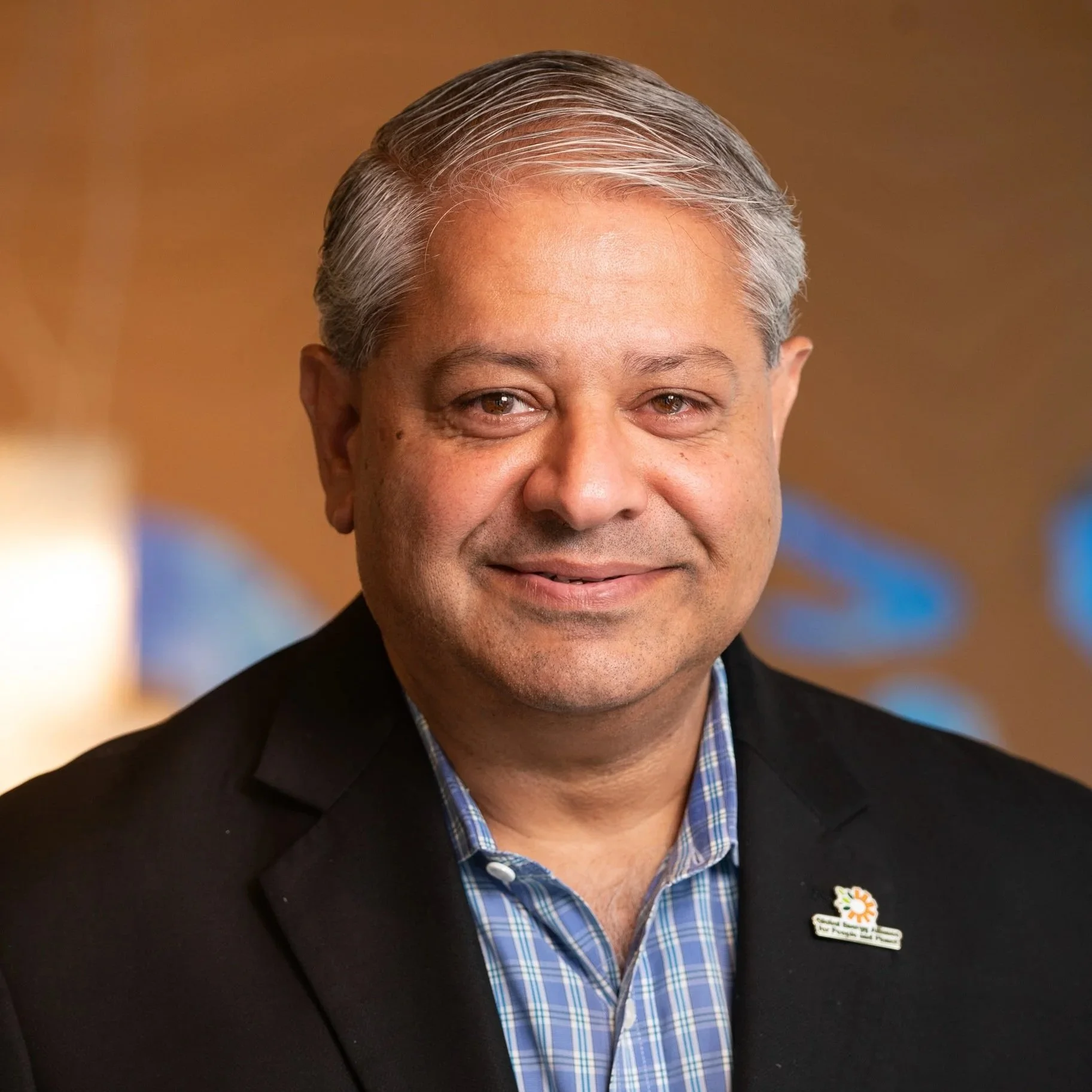
Ashvin Dayal is Senior Vice President for Power and Climate at the Rockefeller Foundation, where he oversees the Global Energy Alliance (GEA), a multi-billion-dollar initiative backed by the Rockefeller Foundation, the IKEA Foundation, and the Bezos Earth Fund to expand access to clean, reliable electricity worldwide.
In this episode of Inevitable, Dayal explains why energy access remains one of the defining development challenges of the century, with roughly three billion people still lacking enough electricity to meaningfully power economic activity. The conversation explores how philanthropic capital can unlock private investment in markets that commercial investors often avoid, the rise of distributed solar and mini-grids in places like India and across Africa, and how programs like Mission 300 aim to electrify hundreds of millions of people in the coming decade.
Dayal also shares lessons from a decade of deploying distributed energy systems, the growing role of digital tools and AI in managing complex power systems, and why the Rockefeller Foundation is now exploring nuclear and small modular reactors as part of the future global energy mix.
Episode recorded on March 4, 2026 (Published on March 17, 2026)
In this episode, we cover:
(0:00) An overview of the Rockefeller Foundation
(2:31) Ashvin’s background in disaster response and climate resilience
(8:16) What energy access really means for economic opportunity
(10:15) The “modern energy minimum” and the 3 billion people below it
(14:11) The Rockefeller Foundation and the creation of GEA
(19:06) How philanthropic first-loss capital unlocks clean energy investment
(24:19) Why distributed solar and mini-grids work for emerging markets
(27:57) Lessons from Smart Power India and scaling rural electrification
(36:39) Mission 300 and the effort to electrify Africa
(42:05) Why Rockefeller is exploring nuclear and SMRs
(47:09) Rockefeller’s legacy: from Standard Oil to global clean energy
-
[Cody Simms] (0:00 - 1:58)
Today on Inevitable, our guest is Ashvin Dayal, Senior Vice President for Power and Climate at the Rockefeller Foundation, where he oversees Global Energy Alliance (GEA), a multi-billion dollar effort backed by Rockefeller, the IKEA Foundation, and the Bezos Earth Fund to bring clean, reliable electricity to those who still lack it. We've spent a lot of time on this show recently exploring the US grid as it prepares for an AI-driven demand surge, but that conversation tends to leave out the three billion people on this planet who don't yet have enough electricity to run a small business, keep food cold, or power a water pump. Ashvin has spent over 30 years working on some of the world's hardest development challenges, from leading Oxfam's response to the 2004 Asian tsunami to building the platforms now electrifying rural India and sub-Saharan Africa at scale.
We get into what energy access actually means at a level that changes lives, how philanthropic capital unlocks private investment in markets commercial investors won't touch alone, what's really happening on the ground in India and across Africa, and the surprising nuclear report that Rockefeller just released. From MCJ, I'm Cody Simms, and this is Inevitable.
Climate change is inevitable. It's already here, but so are the solutions shaping our future. Join us every week to learn from experts and entrepreneurs about the transition of energy and industry.
Ashvin, welcome to the show.
[Ashvin Dayal] (1:58 - 1:59)
Thank you, great to be here.
[Cody Simms] (2:00 - 2:31)
I’m excited for this conversation to really dive into what's going on in emerging markets right now from the perspective of the energy transition. But I think before we do, I was reading up on your background, and before we dive into everything you've been building at Rockefeller, I wanna start in 2004. You were running Oxfam's response to the Asian tsunami, which was obviously one of the largest humanitarian disasters in the world. It was one of the biggest disasters of our lifetimes. I think it was the largest relief operation in their history. Just talk through what that was like on the ground.
[Ashvin Dayal] (2:31 - 4:43)
Wow, that's like now 22 years ago, almost. I was leading Oxfam in Asia, and unfortunately, when that tragedy hit in December of that year, it was on the 26th of December, I think it was. You know, I think what was really kind of both shocking and what resonated around the world was just how catastrophic a massive tsunami like that can be.
Everyone initially thought it was more about the earthquake, and then they realized the tsunami was hitting not just the coast of Aceh, but parts of Thailand, and then all the way across the Indian Ocean to Sri Lanka and parts of South India. So in a flash, in Aceh, in a matter of a few minutes, 150, 160,000 people were killed. And that kind of sudden, massive, on a coastline, in a province that was already in the middle of a civil war, which people tend to forget now back then in that part of Indonesia, I think something about that just captured the imagination of the world in terms of just how devastating that event was.
And Oxfam, as a humanitarian response agency, we were ready to go, and we started to raise a lot of money. People wanted to make sure that people on the ground were being looked after with water and sanitation services and helping to rebuild their lives. And so, yeah, I was on the ground a few days later, as soon as we could get to the site, actually on a US military C-17 plane with a team.
And over weeks and months, we sort of built up a response there. Obviously, you know, these kinds of emergencies have very sort of explicit stages. The first few days are really about trying to just provide relief.
And then you sort of get into this slightly messier recovery phase where you're dealing with issues about how do people rebuild their lives, what happens to the land that their homes were originally on? There was still, in the background, this civil conflict going on. So how’s that going to weigh into everything?
It was very emotional, it was very overwhelming, but it was also, for me, a very sort of formative time in my professional life, because it gave me exposure to just having to make decisions and be in a position of accountability and responsibility in a way that I had never experienced before. And, you know, I didn't really know what to expect.
[Cody Simms] (4:44 - 5:27)
I can't even imagine the scope of the devastation that you must have witnessed having been there shortly after the events. To me, it's a good reminder of why all the work that, you know, those of us who work in the climate space do, matters. This obviously was not a climate disaster, it was an earthquake that caused it.
But we all know that climate disasters are increasing in scale and severity on an annualized basis. And just being able to be ready to help those in need and see the kinds of devastation that natural disasters can bring. I don't know if that impacted the work you're doing now in energy and in bringing clean energy systems to emerging markets, but I can see the obvious parallels there and the obvious thread.
[Ashvin Dayal] (5:28 - 7:26)
Absolutely. And I think you're right, the tsunami itself was as a result of an earthquake, but the impacts of flooding and devastation you see all over, particularly Asia, where I'm from in Southeast Asia, you have some of the most vulnerable coastlines. So you have the sort of triple whammy of sea level rise, and then you have more frequent intense storms, groundwater intrusion, all of these things coming together to create a lot of risk and vulnerability.
And I, apart from working on the tsunami in those early years, I was doing a lot of work on flood response, flood preparedness. That then took me into almost a decade of work, actually working on what we were then calling urban climate change resilience, which was how do you help all these fast-growing cities actually prepare for and cope with the sort of multiple threats and vulnerabilities that climate change is bringing to those communities. And from there, working on energy for me has been probably the most unusual pivot because you're right, clean energy is fundamental to mitigating the climate crisis and trying to limit the growth in emissions.
But it is also, what's so wonderful about it, it’s also such a powerful unlock for economic opportunity, for development, for inclusive growth. So we don't have to get into this debate about is it development first and climate second, or is it climate first or development second? That's what sort of brought me into the world of energy, Cody, it was not, I'm not trained as an energy engineer. I'm not, I didn't work on energy for the first 15, 20 years of my career. And now as someone who's been interested in sort of development and economic opportunity in the context of climate change, I find myself working on an issue that's actually at the heart of all of this. And that makes it sort of really, really exciting, especially given how dynamic that whole sector is with the technological changes and the geopolitics of it all, it's fascinating to be working on these issues.
[Cody Simms] (7:26 - 8:16)
Let's jump right into that. I'm really interested to hear your perspective on energy access and what does energy access really mean, particularly in emerging markets at a level that can drive substantial change for people's lives? You know, I think there are different international bodies that have created sort of different levels of energy access.
And it feels like a lot of the conversation is about, you know, do you have access to lights and can you charge a cell phone? But that's very different than, can you process clean water at scale for your community? Can you run a small business? Can you create vaccines locally to your community?
How do you think about where we are today and where we need to be in the world with respect to access to clean power?
[Ashvin Dayal] (8:16 - 10:14)
That's a great question because that is, you know, at the heart of what we are every day at the Rockefeller Foundation trying to sort of work on and think about how do we think about this sort of spectrum? You're right, basic energy access is kind of this binary thing. And if you think about it in terms of power systems or electrification, which is what we do a lot of our work on, is somebody connected to a grid or an off-grid solution or not?
And the answer to that question, if it's yes, that is for some people at a very basic level still extremely transformational. I'm certainly not one of those people who sort of diminishes the value of lighting or being able to charge your mobile phone in your house because it has massive benefits, even just that, from a safety perspective, from kids being able to study later into the evening and improve their grades. And there's evidence to show that.
And there's still something like 750 million people who just don't even have that, don't even have that space to access. It's almost, that's 10% of the planet in 21st century when we can do so many amazing things – that to me is the building block of energy access. We have to, we can't talk about economic development, growth or energy abundance, all these wonderful things if we're not actually gonna achieve universal energy access, energy for everyone, everywhere. But you're right. Then you get into the question, well, how much energy?
When you talk about energy access, how much is enough to not just have the lights on in the house, but to power a small business, to kind of move up that productivity chain where if you're a carpenter, you can move from handheld manual tools to mechanized tools and double, triple your productivity. If you're a farmer, you can start to do some onsite processing of your wheat crop or your rice crop. You can do the rice husking. You can have some cool storage and refrigeration so you can protect the value of your crops. That stuff is more than just that basic energy access. So there we talk about something called the modern energy minimum.
And this is a little bit wonky in terms of the numbers, but basically-
[Cody Simms] (10:14 - 10:15)
Bring it on, let's get into the wonk. I love it.
[Ashvin Dayal] (10:15 - 11:11)
So the average American consumes per capita about somewhere between 12 and 14,000 kilowatt hours or units as you would get on your bill from Con Edison or wherever you're living. There's about 12 to 14,000 units of electricity per year. That's a lot. It's not the highest. There's some countries that are higher than that, but that's a lot of electricity per capita.
That is definitely energy abundance, right? You have an abundant consumption of an abundant amount of electricity. When we talk about the modern energy minimum, we're just talking about 1,000 kilowatt hours, but there's still about 3 billion people on the planet who aren’t even at that 1,000 level yet. And the 1,000 is what we think is that the first step towards being able to have electricity that not just improves your life, but improves your livelihood. The things that I mentioned earlier, the power tools, the refrigeration, the sort of local economic benefits that can come from having this kind of electricity in your house.
[Cody Simms] (11:12 - 11:18)
It goes from basic health and services to I can actually use this to generate more income for my family.
[Ashvin Dayal] (11:18 - 12:48)
A hundred percent. I mean, I was actually in India just two weeks ago visiting some projects in Uttar Pradesh, which is the largest state in North India. It's got 250 million people just in that one state alone.
And the government has been very successful at actually extending electricity in India to the bulk of the population, but there's still massive issues about reliability. So there you're seeing rooftop solar that we in partnership with something called the Global Energy Alliance have been supporting so that women in this case are able to set up small businesses enterprises with machines and motors and they're quadrupling or five X-ing their incomes. They're doing in this case in milling flour and then selling it to the local schools actually for the school feeding programs.
So that kind of power takes more than just that minimum basic access. That's that modern energy minimum. So when I think about energy access, we have to get to at least that level of consumption universally around the world so that people are able to see that opportunity for upward mobility in their lives and their livelihoods.
Now we need to go beyond that. When we talk about abundance and industrialization and larger scale economic growth, then I think you're getting into the, at least the sort of 4,000 per year per capita. That's still a third of what the average American consumes.
So we're not talking about a world in which everyone needs to consume at 12, 14,000 kilowatt hours of electricity a year, but we've certainly got a long way to go to get to that notion of energy abundance.
[Cody Simms] (12:48 - 12:54)
And what was the number again of roughly people under 1,000 kilowatt hours and above?
[Ashvin Dayal] (12:54 - 13:43)
Somewhere around 3 billion under 1,000. What are we at about seven and a half billion on the planet now, close to 8 billion. So that's a significant portion of the population.
And what's fascinating Cody is like, my background has been in sort of economic development and poverty work in some of the poorest parts of the world from Afghanistan to India to parts of Myanmar back in the early tens. When you map non-electrification and low energy consumption with other indicators of development, poverty or economic development, it's almost the Venn diagram is almost a perfect overlap. So it has become the sort of single most powerful predictor of extreme poverty, of underdevelopment.
That 1,000 kilowatt hours with 3 billion people, to me, that's the world that we have to change.
[Cody Simms] (13:43 - 14:11)
I wanna spend the bulk of the rest of this conversation talking about how, maybe to do that, describe the work you've been doing inside the Rockefeller Foundation. You created a new organization with, I think one of the largest, if not the largest gifts that Rockefeller has made, focused on the capital stack problem in energy. Maybe first give people just the overview of the Rockefeller Foundation and then describe GEAPP that you've created and what that's all about.
[Ashvin Dayal] (14:11 - 18:40)
The Rockefeller Foundation has been in existence since 1913. So it's 110, 112 years old. So it's a very storied philanthropy set up by John D. Rockefeller and has, over the course of that century plus, worked on big systemic challenges around the world and in the United States.
If you think about our work in three big chapters over that 100 plus years, the first chapter was very much around building the field of public health, investing in schools of nursing and schools of medicine, fighting diseases at the time, things like hookworm in the South of the U.S., as well as elsewhere in the world, and yellow fever and all of these diseases that were sort of communicable diseases largely.
The second chapter sort of came after World War II when the world was sort of gripped by the fear of hunger and being unable to produce enough food to feed a very fast growing planet. You'd have the baby boom, the population was growing and you had all these sort of Malthusian nightmare scenarios that, you know, we were gonna run out of food. And so the foundation invested over decades in addressing that food system question about productivity and seeds and capacities in countries from India to Mexico to Philippines and everywhere in between.
It was incredibly successful and sort of coined that phrase, the "Green Revolution," which is famous for that era in the 60s, 70s, 80s, when we really did overcome the sort of global food shortage crisis. That doesn't mean we overcame hunger, but in terms of physical availability of food on the planet, you know, we really did make remarkable progress. This is kind of that third chapter, the recognition that energy in the 21st century is at the heart of unlocking economic and development opportunities.
So the work started about 12 to 15 years ago, actually. And it started on the back of a recognition that technologies were now making things possible in a way that just wasn't the case 20 years ago. The price of solar had dropped, battery technologies were improving, new business models were emerging, and you started to see this first wave of companies showing up, interestingly, in India first, who were trying to do what was called off-grid or mini-grid electrification.
Okay, the grid's stuck, it's never gonna come to us, they're state-owned, they're inefficient, sometimes corrupt, but what are we gonna do? People aren't gonna wait another 20 years to get the kind of energy they need to participate in the modern economy. So these really dynamic new companies, OMC, MicroGrid Corporation in India, Husk Power that's now working all over Africa as well, we started a dialogue with them saying, look, what is it gonna take?
Because as exciting as the space was, and to your point about the capital stack, there was still incredible amounts of risk in trying to set up these businesses in rural areas. There was operational risk, there was offtake risk, there were all these things that made running these kinds of businesses tough and probably not commercially viable without some concessionality. And that's where we started to come in and build relationships with some of these companies.
What would it take in terms of more concessional, longer tenor debt, or even some grant finance to get the first wave of project development done and kind of help defray some of those costs? Essentially put a little bit of a cushion in there for these companies to be able to take off, but getting the balancing act right so that you're not then creating a sort of a market distortion that means that they're never actually gonna be able to succeed. And it was a heavy lift, but we grew this over time in India, and then we started to do stuff in Southeast Asia.
Eventually we, in about 2018, said, well, actually the big gap is in sub-Saharan Africa, so we've got to start working there. Very different market, very different context. And that's around when we, as a foundation under the leadership of our president, Dr. Raj Shah, said, actually, this is gonna be one of the biggest things we really can do for the planet over the next 15, 20 years. And you're right, that is when we made our largest single investment in our history, when we chose to, our board approved a $500 million commitment, and we created the Global Energy Alliance for People and Planet, or GEAPP as you called it. Because what we felt was needed was not just money going into projects, but also an institutional formation that could build an alliance. Because there's so much capital all over the place, how do you get it, bring it together – from public capital, to the private capital, to government systems, all kinds of doing things in a very fragmented way, and that's really why we built the alliance.
[Cody Simms] (18:41 - 19:05)
So the idea is that GEAPP comes in with really first-loss capital on these primarily clean energy projects around microgrids or the like, that can come in and basically help reduce the risk capital for, I assume, first, DFIs and other philanthropic organizations, and eventually commercial capital to grow an energy ecosystem in these markets. Is that the right way to think about it?
[Ashvin Dayal] (19:06 - 19:46)
Exactly the right way to think about it. And I would say, sometimes it's first loss that doesn't even sit in the capital stack formally, right? There's enabling environment work, there's policy support, there's technical assistance, and then sometimes it's formally inside the capital stack.
You know, whether it's with an individual project, like a company, like an OMC or a Husk that we invested in, or it's in a fund that is trying to invest in portfolios of companies in this space. So the cross-boundary energy access in East Africa is a good example of that, where our capital can come in as the junior most in that stack and try to unlock these other layers of capital. And you're right, the next layer up is usually the DFIs.
[Cody Simms] (19:47 - 19:54)
Describe what first loss means, maybe for our listeners in benefit, to understand what that means that you're taking on the bulk of the risk there.
[Ashvin Dayal] (19:55 - 20:38)
Everyone is applying commercial capital with a certain return expectation. And to put it very crudely, if a commercial investor is expecting, let's say a 12 or 15% return, and we know that the modeling of this project is gonna be really only delivering an 8 or 10% return, then we should create a waterfall where we can say, well, we can take a zero return so that on your equity, you can get the full 14 or 16%. So that's one way of thinking about first loss.
I mean, then there is actual loss, right? Where we're willing to, in a commercial project, willing to be the investor that actually does not see that capital return and takes that First Tranche hit when another investor then doesn't have to take that risk.
[Cody Simms] (20:38 - 21:08)
I come at things from a venture capital perspective where we may have losses just because the tech itself didn't work the way people thought it might work or the market didn't develop the way people thought the market might not develop. In emerging markets, I think it's less about a technology risk at play. It's more about external factors, regulatory problems, currency issues, et cetera.
Like what are some of the biggest risks that the projects you're coming into are often trying to overcome?
[Ashvin Dayal] (21:09 - 22:18)
Well, you're right. It's very rarely is it a technology risk other than the cost of technology, which is obviously something that we all have to manage. It is all of those things.
It’s policy and regulatory risk to take the off-grid electrification. Many countries didn't have any kind of regulation about whether a company can go out into a rural part of the country and start putting up some poles and wires and smart meters and selling to people. And this is a highly regulated area, electricity grids and utilities, but only where it exists and where it doesn't exist, there's no regulation.
So just the existential risk of like, well, what happens if the grid arrives? If I'm an off-grid operator and the grid finally shows up, am I just suddenly just booted out of there? So creating, we spend a lot of time, including back in India in 2016, saying, okay, well, what would be a useful, rational policy and regulation for governments to have to stimulate the sector and give investors some level, some protection against those kinds of risks?
You definitely have currency risk and political risk. I mean, local currency financing is probably the single most frequently cited issue that is holding back investments in this space.
[Cody Simms] (22:18 - 22:24)
I think Nigeria just went through a major currency fluctuation that I'm sure had challenges with projects there.
[Ashvin Dayal] (22:25 - 23:51)
Of course, a lot of the time you're getting investors lending in dollars or investing in dollars and you've got, your revenues are all in, look at the case of Nigeria and local naira, you get a 50% devaluation. All of a sudden, all of your projections and your repayments have been thrown completely haywire. So we do work on those kinds of what I call those first loss things that don't sit in the capital stack.
So for example, we worked with commercial banks in Nigeria to say, can we put a guarantee in place with you so that you can lend in local currency and we can take some of the fluctuation risk if you're working with other investors from outside Nigeria. We did a project there that's been really interesting.
When you get to currency risk and political risk, you're getting into areas that then are no longer just about the energy sector. You're getting into the entire question of investment, the investment environment for a country as a whole, and you're getting into bigger challenges than just what our sector alone can address. And so you have to decide where you're gonna draw the line in terms of how far up the chain you're gonna try and go because we're not in the business of trying to fix countries, right? We're trying to invest in projects.
But you realize if you just stay at the project level, that's not enough. You have to figure out where in the enabling environment in that ecosystem can you try and do something that will be beneficial to multiple projects, not just the one that you're investing in.
[Cody Simms] (23:52 - 24:18)
What is it about clean energy that enables this model to be effective, or at least it seems like it's effective. You can probably share some of the proof points that show it's effective. In a way that traditional forms of energy didn't need, like I don't think oil and gas had like a heavy philanthropic arm coming in prior to building out of markets.
It's an extractive technology. So there's different sort of economic reasons for that, but I'd love to hear you articulate them.
[Ashvin Dayal] (24:19 - 25:40)
I think the biggest difference is the scale and the modularity of these new technologies. We often think of electrification and power systems in terms of the generation side. So yes, you can have a massive coal-fired power plant or a gas-fired power plant or a diesel power plant, whatever those, they have very high energy density. They do what it says on the tin, so to speak, right? They are very effective as generators of heat and conversion into electricity. That does nothing to solve the last mile distribution problem.
So that's where I think the breakthroughs in locally deployed renewables that are highly modular, you can put in a 30, 40, 50 kilowatt unit in a small village in Zambia or in Senegal or in Malawi or in India that is serving maybe 200 households and you have fully integrated generation and distribution on-site and you're completely decoupled from the grid. You could, in theory, do that with a small diesel generator, but when we think about our power systems and their success in terms of, and I would challenge the idea that they have not needed subsidy. They maybe haven't needed philanthropic subsidy as much, but they've certainly been sector-
[Cody Simms] (25:40 - 25:42)
Plenty of subsidy, you're right.
[Ashvin Dayal] (25:43 - 25:55)
Plenty of subsidies, just in a very different way. I mean, the US achieved 100% electrification with a lot of subsidies. So to me, subsidy is not a bad word. The question is, can you sustain that in a way that unlocks, does it unlock a commercially scalable and replicable model?
[Cody Simms] (25:55 - 26:11)
And I would say a lot of the oil and gas infrastructure was, subsidized isn't, I mean, it was definitely subsidized, but was also heavily funded by sovereign wealth, a different kind of, not really first loss capital, but it had an endemic interest in the success of those projects.
[Ashvin Dayal] (26:11 - 27:05)
Yeah, absolutely. And we're looking for, what are the analog to that today for these kinds of projects that we're working on and how do we get large philanthropies, even sovereigns, who are looking to diversify and invest more in clean technologies, in solar, wind, storage, which is a huge part of this conversation. So you're absolutely right.
But it's that modularity, I think, that really is the thing that has made this possible, that has allowed a whole new generation of companies to enter the space and be part of this sort of electrification revolution that's been, where you're building the grid kind of from the outside in rather than from the inside out, right? It's not just this heavily centralized grid that you slowly extend to remoter parts of the country and we'll get there when we get there. Well, it's an overused analog, but it's a little similar to the way cell phone technology just kind of blew past landline technology in many of these countries.
And you can still just about get a landline in the US, I guess, I don't know. I haven't had one for a while, but you certainly could never -
[Cody Simms] (27:05 - 27:11)
I don't even know if you can in certain markets, they won't even give it to you.
[Ashvin Dayal] (27:11 - 27:35)
Yeah, I don't know, I haven't even tried. So, but the point is, you never could in many of the places that have thriving cell phone ecosystems in Somalia, places like that. So think of it in that way, like these technologies are allowing us to kind of bypass an infrastructure model that still has a role to play, but was not going to solve quickly enough the problem for the last mile.
[Cody Simms] (27:36 - 27:56)
Let's get into a few specifics. I know you've been working on a large project in India, I believe called Smart Power India for more than a decade. Maybe share some of the specifics of that project, what's worked, what you've learned.
Is there anything that at any point almost killed the project that is a good takeaway for how these might change going forward?
[Ashvin Dayal] (27:57 - 31:21)
So Smart Power India is kind of like my, it's the thing that gets me teary-eyed in some ways because I've been associated with it from the start. And we kind of touched on it earlier when we were talking about companies like Husk and OMC.
So we started it in officially in about 2014 or 2015. So over a decade ago, it actually has subsequently folded into this larger Global Energy Alliance Project. So Smart Power India is now part of the Global Energy Alliance and it's just the Global Energy Alliance India. But what that really was doing was trying to prove the case for off-grid and distributed electrification.
And we were the first investors in a whole range of mini-grid companies in India that then evolved into working with rooftop solar suppliers. And now more recently, actually doing large-scale agricultural solarization where you're working with a farmer who's got say 10 hectares of land and you're going to them and saying, well, if you converted one hectare into a solar farm, a one-megawatt solar farm, you can sell into the grid because the grid now exists there but you can also ensure local supply to like 400 surrounding farms. And then you're providing reliable daytime power that feeds into irrigation, cold storage, everything.
So this thing that we set up in India has been phenomenal. I mean, tens of millions of people have been now seen sort of new or improved access as a result of these kinds of projects.
Again, a few months ago, I was in Rajasthan, which is this kind of desert state in Western India. So solar is extremely effective there where something like two gigawatts of off-grids, agri-based solar has now been deployed with the help of our project, which is the Global Energy Alliance, which was formerly known as Smart Power India. But to your question about the nightmares, so it all sounds great, right? But obviously it's been a heavily up and down journey.
It gets back to something I mentioned earlier, which was like India then made this massive push in 2014 or 15 to spread the grid. They were like, ah, the government was like, I'm not so sure if this distributed stuff is gonna be that effective. We're gonna push the grid out everywhere.
And they frankly subsidized a massive scale-up of the grid. And so we were dealing with exactly that question, like, okay, all these companies have started to set up these small mini-grids. Are my businesses now gonna collapse?
And so that was a moment of real kind of risk for us and for the work. I mean, if the grid had been effective and reliable, then okay, great, at least people are getting what they need and we can manage the risk to the companies. But actually what turned out was they were extending poles and wires, but they weren't providing reliable 24-7 power.
So these companies started to adapt and pivot their model and saying, well, we coexist with the grid. We're not the first switch that you put on, but we're the uninterrupted power supply. We are the reliability plate.
Because if I'm running a workshop from eight in the morning to eight in the evening, I can't afford to have like eight hours where I don't have power. So I'm now taking power from a mini-grid company, maybe not for my nighttime needs at 10 o'clock at night when I'm back in my home, but just to make sure that I'm able to run my workshop all day rather than having to buy a diesel generator, which would be more expensive. So you're displacing diesel and you're ensuring reliability.
So it becomes a kind of a business continuity play. And so these companies have just been really nimble in adapting their model and it's just continued to grow and grow and grow. And it's really remarkable.
It is transforming the landscape.
[Cody Simms] (31:22 - 31:35)
Do you see a future where these mini-grid providers stay as this, you know, as the grid expands, stay essentially as backup power to the grid or do you see them being independent power producers for the grid or all of the above? I don't know.
[Ashvin Dayal] (31:35 - 32:28)
I think it's going to be a bit of both, but the trend is definitely towards what we call interconnected mini-grids. So governments and utilities are getting smart to the idea that, okay, there are all these assets out there. Distributed energy resources are a way of the future anyway, even in modern electric grids in the US and in Europe.
How do we leverage this and actually strengthen the grid overall? So if I've got 30, 40, 50 gigawatts of highly modular solar resources sitting around the country that were originally designed as completely, you know, isolated assets, if we have the right regulations, if we have feed-in tariffs available to these providers, can we actually start to create that sort of mesh integrated grid of the future? And that's the direction I think all of this is going in, and not just in the West and in wealthy countries, but in places like India, Nigeria, we're seeing it happen everywhere.
[Cody Simms] (32:29 - 32:54)
How in the world do you manage a system like that? I'm thinking from a grid operator lens of, ‘oh, I've got all these independent producers. I need to manage consistent frequency across the grid I need to manage overproduction so that I don't ruin everyone's economics overnight or vice versa under production’. And we have brownouts everywhere. That seems like an incredible coordination challenge.
[Ashvin Dayal] (32:54 - 34:57)
A fabulous question. That’s exactly the problem we’re now backing into because you're right. You've got frequency modulation, you've got voltage fluctuation, you've got brownouts, you've got peak demand, you've got all these other things.
A lot of the utilities around the world, Cody, particularly in the developing world, they are pretty low on capacity. They're not very innovative, and they're struggling. They have pushed electrons one way. That's what they've been built and designed to do for a century, right? Over a century. So what we're now working on is the whole area of creating digital twins.
How do you digitize, completely digitize utilities and all of the distributed assets? We've just completed, the Global Energy Alliance has just completed the first full digital twin of something called the Jaipur Discom, the distribution company, which has about 18 million consumers, not connections, but users. So that's about 5 million connections.
And it’s giving this utility for the first time a full visualization of the grid in 15 second intervals. And also you can actually isolate green and brown electrons, which are the electrons coming from green resources like solar, which are the ones coming from the national grid where they're drawing in coal fired power? In this case, it's largely coal. In the case of India, it could be something, it could be hydro, it could be gas in other markets.
And it's just, we have to basically do this in hundreds of utilities around the world. And that's actually the other big pillar of what the Global Energy Alliance is working on. That's the only way we're gonna be able to bring all of this together in a way that's manageable by utility.
And this first use case in Jaipur is really exciting. There are now 10 utilities in India that have signed up to go through the same process. And some of them are much larger.
And the thing is, it saves them money as well. So it's helping them reduce technical losses. It's helping them sort of reduce the amount of renewable curtailment they have to do because they can just manage all their resources much better.
So they're gonna pay for this.
[Cody Simms] (34:57 - 35:24)
I mean, I can't tell you how many startups I talk to in the US that are trying to use AI to do orchestration of grid resources so that you can manage data center load depending on when there's peak power need or not. But my goodness, what you've just described in India, for example, sounds like a potentially even crazier challenge to try to go after in terms of just the number of disparate resources you're trying to track and manage at once.
[Ashvin Dayal] (35:24 - 36:17)
And it's a combination of low-tech and high-tech in terms of how you even digitize the grid. I mean, we, in the case of Rajasthan, we worked with this phenomenal startup that called EDGE Electra, a great young group of young, highly talented engineers, data scientists, AI experts came together and they're using everything from very sophisticated drones, but they've also got guys on e-scooters with little apps, like literally taking photographs and then uploading it all into this one server that then creates a visualization for the utility, then training the utility on how to use it and then creating the license so that the utility will pay for it every year. And that's the point about it's saving the utility money already. It's just phenomenal.
This is gonna be a game changer. Within five years, if you can have hundreds of utilities with this capability, we will be at the next level of trying to get to that ultimate goal of universal energy abundance.
[Cody Simms] (36:17 - 36:39)
We talked about India, where we have this phenomenon of micro-grids and then the grid expanding into them. Let's talk about Africa, which is a, Africa is a very large place, but you have your own goal in Africa, I think called Mission 300 and different situations going on across the African continent that maybe you can share a little bit about and the approach in some of these countries.
[Ashvin Dayal] (36:39 - 39:58)
And of course, Africa is 50+ countries and each one of them is very different. I think there are a few things that are different from India that are quite common across Africa. One is much, much lower rural density.
When you go into rural India, you see a lot of people and it's like, okay, I can put a mini-grid here and there's gonna be customers and within a two kilometer radius, I can run a mini-grid and it'll probably work. That's not the case in many parts of Africa. There, what you're seeing is much more reliance on even smaller systems.
So sort of five, 10 kilowatts at a solar home system, standalone productive use appliances, solarized irrigation pumps, things like that, because a mini-grid could even be an over-engineered solution in some cases in Africa. That's just one general comment I'd make.
Mission 300 is an effort that was actually launched by the World Bank and the African Development Bank that we as the Rockefeller Foundation, along with the Global Energy Alliance and another group called Sustainable Energy for All, we came together and said to our colleagues at the World Bank, you know, the president, Ajay Banga, and at the time, Akin Adesina, the African Development Bank, and said, look, this is not just about electrifying 300 million people. This is about actually creating an economic development opportunity for the continent that could be the most consequential thing that's happening there for the next 15-20 years. Let's work together on it.
Yes, connections are part of it, but so too is how do we, you know, wrapping around that additional economic development activity. So what we're doing with them is they've got the big public finance, right? They've committed close to $40 billion to invest in this over the next five years to reach 300 million people.
By the way, that's still only half the unelectrified population of Africa at 600 million. So it sounds like a big number, but the job will not be done. To their credit, they sort of opened up the doors and said, okay, let's work with philanthropies. Let's work with technical partners. Let's figure out how we do this in a way that isn't just about kind of traditional infrastructure, but actually turns these into opportunities for innovation, get the kind of startups that I just described in India, and there are companies like that in Africa as well. You know, we work with Delta40, for example, that's working with an incredible range of companies in Africa that can be a big part of this story.
So we're helping with providing some of the technical assistance for that. We're setting up in 15 countries. We've already set up 15 compact, or what we call delivery and monitoring units for Mission 300 so that the government has the capacity to actually absorb this money, run these projects, build out these connections, and attract the additional financing that's needed for these projects.
You know, we helped convene at the start of 2025, 27 heads of state came together in Dar es Salaam to pledge this as part of their development and economic future, not just about electrons, but really about livelihood. So it's a huge effort. It's gonna take an alliance of partners, and that's what the Global Energy Alliance and us are sort of really trying to move fast.
Last thing I'll say about it is it's already more than doubled the rate of electrification on the ground in Africa just since it was launched about two years ago. So we now have 43 million people who've been electrified under Mission 300. Long way to go, but that's an incredible start.
[Cody Simms] (39:59 - 40:20)
Do you see a clear path from getting rooftop solar for your home? For again, the basics that we talked about, power in your home, charging your phone. Do you see a clear path from those projects to a more livelihood-based mini-grid system that can help a community with persistent small industrial power?
[Ashvin Dayal] (40:20 - 41:36)
Absolutely, and I think we're getting much smarter knowing when and how the conditions exist to be able to actually move to that level. Look, people can't eat electrons, right? So you have to be able to think about the synergy between the arrival of power and the creation of economic opportunity.
And it's kind of an iterative, mutually reinforcing thing. You have to do both things together. So what we're doing a lot of in the case of some of the countries in Africa, Zambia is an example where, again, I visited fairly recently, is say, okay, if electricity comes here, what are the associated investments that would need to be made so that users of electricity can quickly ramp up their demand and start to generate a consumption pattern for electrons that feeds into producing goods and services that create the sort of flywheel for economic development? So getting those two things kind of converged is the big sort of secret sauce here.
And what's great is with all of the data that we have today compared to 10 or 15 years ago and our ability to use AI to generate models, where will this work? Where will it not work? We can actually be far more precise in trying to do exactly what you're saying.
And that's exciting. And that, again, since I started this work has been a massive change in capabilities to be able to do this.
[Cody Simms] (41:36 - 42:04)
I'm gonna ask a slightly off-topic question, but related, which is you all at Rockefeller recently released a report about nuclear and small modular reactors, which felt like a curve ball. Like you guys have been such a champion of solar and storage and microgrids. It seems like you're jumping on the nuclear train too, to some extent.
Maybe describe what has you excited there and how far off you think that is from being able to be an on-the-ground reality.
[Ashvin Dayal] (42:05 - 44:16)
Yeah, and you're right. It's not something that we've been actively working on over the last few years. And I think the answer really comes down to the state of the technology and the related issues around safety and dependability, reliability, et cetera.
Especially with SMR technology, which is generally considered anything under 400 megawatts. If we want to accelerate the decarbonization of our energy systems globally, one of the big things we have to think about is how are we gonna accelerate the reduction of coal and coal-fired power, which is still a huge, huge source of emissions. This is where I think the SMR technology could be a game changer, because it's actually a very good alternative in terms of providing firm baseload power.
The thing that governments are terrified of when you start talking about changing the energy mix is PV and solar and wind and all of that, they have some limitations in terms of what they can deliver on a grid. So we started looking at this question recently, as you said, and we put out a report talking about how do you bring down the total cost of an energy system and what role could nuclear as part of your pathways, nuclear with renewables, with other energy resources, what could that look like? And this is a model set of scenarios. It's sort of a way to get a conversation and a dialogue going.
Our motivation in this is to say, if SMRs are 10 years away, let's say, I'm not gonna crystal ball whether it'll be 2032 or 2034 or 2035, but they're coming and we know that. What can we do today to help countries that really should be thinking about it, to help them create the conditions so that when the technologies and the price points are getting closer to deployability, they have created the conditions to be able to then adopt and receive investments in those.
Because there's a huge amount of regulatory work. There's capacity building that has to be done. These are complex technologies.
And that's why we released the report. It's non-emitting power that has to have a role in the future if we want to see coal diminish in its dominance more quickly, because you're not gonna ask countries to stop generating power. That's just not realistic. So we have to have an alternative. So that was the motivation. I don't know if it was a curve ball.
It was a bit of a departure from what we've been focused on, but we're serious about it.
[Cody Simms] (44:16 - 44:31)
It is an energy source that is less sovereign, I guess, for the lack of a better term, than solar and wind in that you're now dependent on a fuel supply chain that you maybe aren't dependent on if you're just deploying mini-grids and microgrids.
[Ashvin Dayal] (44:32 - 44:38)
That's true. Although, even in the solar and storage technologies, there are big international supply-
[Cody Simms] (44:38 - 44:40)
Supply chain challenges.
[Ashvin Dayal] (44:40 - 45:13)
Yeah, there are supply chain challenges for sure, but you're right. I mean, when you look at global supply chains in oil and gas, for example, I mean, one of the great things about having large installed solar and wind and storage is once it's installed, it's entirely local. Your supply chain may have been global, but your operating environment is local. The whole idea of distributed and decentralized resourcing is a big benefit for countries who don't want to be disrupted.
It's a huge opportunity, and you're right. With nuclear, there's gonna be other issues related to that, but it's an all of the above approach from our perspective. We're not just about solar.
[Cody Simms] (45:14 - 45:30)
We're recording this the first week of March where there's obviously incredible disruption happening in Iran and the Middle East right now, and it's a reminder that fossil fuel-based power systems are very subject to supply chain disruptions, right?
[Ashvin Dayal] (45:30 - 46:04)
Absolutely, and we have to take a sort of long view on the absolute irreversible, unstoppable trend that we're seeing with some of these newer technologies, whether it's solar and storage, whether it's the next generation of battery chemistries, whether it's SMRs, and there will always be short-term disruptions. One of the beauties of philanthropy is we can, and it's a luxury that we have of being able to say, okay, well, how do we think about what's gonna be needed five, 10, 15 years from now? And that's really the only thing that keeps us grounded in these tough times.
[Cody Simms] (46:04 - 47:09)
We're coming up on time for our interview. There's something almost poetic I want to maybe close out with, which is, I'm actually reading right now, coincidentally, Ron Chernow's biography of John D. Rockefeller called Titan, which is an amazing book.
It's a tome. It is very long, but an amazing book. And it struck me coming into this conversation that obviously John D. Rockefeller built his fortunes via Standard Oil, which was really the first global oil and gas company. And here you are in his legacy, building a philanthropic effort to drive renewable power, clean power out into the world. I would love to hear your reflections on that.
And maybe even a second reflection, which is also, one could argue the innovation of Standard Oil wasn't the oil and gas part of the business. It was locking down control over the market in which it operated. And here you are actually going the opposite direction of trying to open up new markets to new technologies.
So anyway, I'd just love to hear your thoughts on that legacy in which you are building your efforts.
[Ashvin Dayal] (47:09 - 48:20)
Obviously, I think about that a lot and I get asked that a lot. And I think it's a wonderfully poetic reality that here's a person who over a hundred years ago created a business at a moment in time in our history that was very different from today. And the fact that those resources were put into an endowed foundation that is now working to unleash renewables in order to drive economic opportunity and help address the climate crisis, I think is such a privilege to be part of that.
And to your point about the innovation was in the name, they're actually literally standardizing a product. I draw inspiration from that part of it rather than the sort of market domination, which is that we need more modular standardized solutions that can be rolled out in the emerging markets that we care about when we're getting to rural Zambia or to rural Malawi or rural Nigeria. These are tough markets.
And these are places where the challenges can sometimes feel insurmountable. And the innovation that they brought to the product and our ability to then scale and deploy and replicate, I mean, we draw from that. I'm trying to see how do we do that in a 21st century context, given all of the tools we have at our disposal today that John D. and his colleagues didn't have back then.
[Cody Simms] (48:21 - 48:21)
Thank you so much for your time.
[Ashvin Dayal] (48:22 - 48:23)
Thank you. Thanks, Cody.
[Cody Simms] (48:24 - 48:51)
Inevitable is an MCJ podcast. At MCJ, we back founders driving the transition of energy and industry and solving the inevitable impacts of climate change. If you'd like to learn more about MCJ, visit us at mcj.vc and subscribe to our weekly newsletter at newsletter.mcj.vc. Thanks and see you next episode.