
Turning Data Centers Into Grid Assets with ON.energy
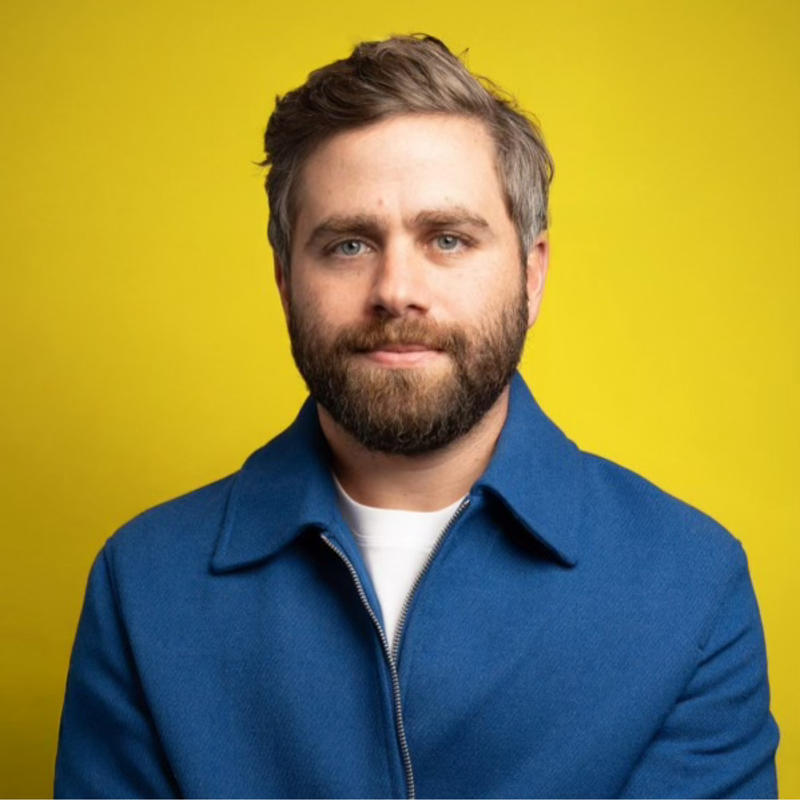
Alan Cooper is co-founder and CEO of ON.energy, a Miami-based company building battery-backed power systems for AI data centers. Its flagship product, AI UPS, sits between the grid and a data center, creating a buffer that isolates the grid from the massive volatility of AI workloads while providing uninterrupted power to the entire campus.
In this episode of Inevitable, Cooper explains how a career spanning oil and gas, geothermal, battery storage, and grid services ultimately led to ON.energy's focus on AI infrastructure. He breaks down why gigawatt-scale AI data centers create a fundamentally different challenge for the grid, and how ON.energy's series-connected battery architecture can act as an electrical "firewall" between the grid, onsite generation, and the data center.
The conversation explores ON.energy's evolution from a battery storage project developer into a technology company, its proprietary hardware and software stack, and the role of power controls in making massive data center projects more resilient and easier to interconnect. Cooper also discusses the company's path to market, extensive technical validation, business model, and largely bootstrapped approach to growth.
Finally, Cooper argues that data centers don't have to be a liability for the grid. With the right infrastructure and regulatory framework, he believes they can become active grid participants—and potentially make the energy system more robust.
Episode recorded on August 26, 2026 (Published on September 8, 2026).
In this episode, we cover:
(0:00) An overview of ON.energy
(2:24) Alan's background in oil and gas, geothermal, and battery storage
(5:57) Alan's perspective on Venezuela and enhanced oil recovery
(10:35) How the 2014 oil crash led to ON.energy
(12:25) ON.energy's evolution from battery storage developer to technology company
(15:32) Traditional BESS vs. AI UPS
(16:15) How AI UPS creates a buffer between the grid and data centers
(17:20) Why AI data centers create unique challenges for the grid
(20:16) Using AI UPS with onsite generation and off-grid power
(21:41) How ON.energy can simplify data center interconnection
(23:14) ON.command and the importance of software controls
(24:15) ON.energy's proprietary hardware architecture
(25:35) Building supply-chain certainty at massive scale
(27:25) ON.energy's path from resiliency projects to AI infrastructure
(29:03) Battery storage as the "Swiss army knife" of the electric sector
(30:01) Technical validation at the Department of Energy's Flatirons Campus
(31:56) ON.energy's business model
(34:31) Why AI's large-load problem is here to stay
(35:52) AI training vs. inference and the future of data center infrastructure
(38:12) Why AI infrastructure can create American jobs
(39:27) Building ON.energy through bootstrapping and disciplined capital allocation
(41:48) Turning data centers into grid assets
-
[Cody Simms] (0:00 - 1:57)
Hey, it's Cody. Before we get into today's episode, I want to tell you about something happening during Climate Week NYC. Jeff Lawson founded Twilio and turned it into a $4 billion public company.Now he's running Inertia, building laser fusion, and he just closed a $450 million Series A. We're taping a live episode with him on September 22nd in New York at the JPMorgan Chase Tower. The link to join us will be in the show notes or just go to inevitable.fm/NYC2026. Hope to see you there. Today on Inevitable, our guest is Alan Cooper, co-founder and CEO of ON.energy. ON.energy is a Miami-based company that builds a battery-backed power system for AI data centers called AI UPS.
Their product sits in between the grid and a data center, acting as a buffer layer between the two. The company just signed a 5 gigawatt deal with Crusoe to deploy AI UPS across multiple hyperscale campuses, on top of more than 3 gigawatts already operating or under construction. ON.energy's bet is that data centers can become an asset to grid stability instead of a threat to it.
From MCJ, I'm Cody Simms, and this is Inevitable. Climate change is inevitable. It's already here, but so are the solutions shaping our future.
Join us every week to learn from experts and entrepreneurs about the transition of energy and industry. Alan, welcome to the show.
[Alan Cooper] (1:58 - 1:59)
Thanks, Cody.Thanks for having me.
[Cody Simms] (2:00 - 2:23)
You've been working on or studying or paying attention to energy for pretty much your whole adult life, as far as I could glean from your background. You and I haven't met before this conversation, but you started, I think, on the drilling side.And then eventually now have gotten into batteries and power electronics. Maybe walk me through your early background and how you got to where you are now.
[Alan Cooper] (2:24 - 5:06)
Yeah, I started off my career in oil and gas. I like to say that I've never had a real job. I've always been working in an entrepreneurial setting as a co-founder operator of different businesses almost the entirety of my career, alongside my dad, who's been my partner now for almost 20 years.My dad and I set up several drilling and completions supply and service companies across a couple of different markets. I'm originally from Caracas, Venezuela. So I was born and raised in Venezuela and emigrated to Canada, where my dad's from, for school and eventually landed in the U.S., running sort of U.S.-headquartered Latin America operations for completion tools. Completion tools are basically mechanical and hydraulic equipment that you're putting downhole once you identify that they're hydrocarbons. They're very complex mechanical tools and require a great deal of design and in some cases, automation and bidirectional control. And sort of as I've tracked my career, which always like looking backward, all the dots connect.
That's sort of like the constant is commercializing new technology that integrates complex hardware with some level of bidirectional control or automation and software. And I think that's what I did for about the first 10 years of my career. We built up a market-leading completions business in Mexico, continues to operate today.
And I had studied environmental economics at the University of Toronto. I worked on battery storage projects in 2006 and 2007 as like an intern and eventually a brief stint in a more formal like research role and sort of was bit by the battery bug pretty early. This was like around the first deployments of fully electric vehicles and certainly the first deployments of battery storage anywhere.
So just stayed really curious with that stuff. And throughout my career in the completions world in oil and gas, we were specialists in enhanced oil recovery. So how do we inject steam into extra heavy oil wells, essentially melt the oil so it could flow to surface in a way that would be better.
And then we actually commercialize that same technology to produce in geothermal wells in Mexico, which believe it or not is about 8% of the energy grid comes from geothermal. It's a market with very high degree of geothermal penetration into the retail energy mix. It was consistently attracted to how clean tech, you know, wave one and then wave two and then eventually wave three was going to revolutionize the power sector and the energy sector in general and have been toiling away for 20 years and building companies trying to create value for others in that very space.
[Cody Simms] (5:07 - 5:57)
Alan, there are so many directions that we could go on this conversation just based on that introduction. I mean, obviously taking it from the top, everything that's happened in Venezuela in the last two years, I'm sure you have opinions on. Enhanced oil recovery is a topic I've been wanting and meaning to dive into more.There are a lot of claims made about it. And in particular, it's potential for carbon sequestration, et cetera, that I would love to understand more. But I also really want to make sure that we dive mostly into the work you're doing now with ON.energy, because from what I have been able to understand, you all are pioneering some pretty interesting ways to use batteries in the large load space.
If you have any thoughts on those first two before we jump in, even as an aside, we'd love to hear some of them.
[Alan Cooper] (5:57 - 7:33)
Yeah, both are complex and loaded questions, Cody, but I'll do my very best to be succinct. Venezuela is a place that's very near and dear to my heart. And I emigrated from Venezuela in 2004.And while I was in college, Venezuela kind of fell off a cliff from an economic and political standpoint. It was already in pretty rough shape. And so it became kind of obvious to me that going home was not viable.
And so I've kind of made my career with a very high degree of gratitude here in the US as a core focus. Venezuela is a place with tremendous natural resources and potential, particularly human potential. My co-founder, Ricardo, also born and raised in Venezuela, he and I have been best friends since we were in the third grade.
And we both have a great deal of family there and deep roots and connections to the country. Unfortunately, it's just a place where it seems like it's kind of two steps forward, two steps backward. It's a place that I've had zero professional experience in, candidly.
And so I built up my career across other markets in Latin America and Canada and the US, but never actually done anything in Venezuela for perhaps obvious reasons, right? And it's been kind of like a dwindling economy, some newfound potential now in this next phase of geopolitics and change and glimmers of hope, but no real transition. Now raising three kids and one more on the way here in the US.
I've been here for 20 years and proud to be here and build here and have my kids be Americans and heading in that direction. So.
[Cody Simms] (7:33 - 7:35)
Thanks for that aside on Venezuela, for sure.[Alan Cooper] (7:35 - 9:52)
Yeah, I wish I could give you more, but not the best candidate for that subject. On enhanced oil recovery, it's a sector that's gotten a lot of attention at different periods over time. And I think that lots of interesting technology being applied in particular now, sort of in the boom of geothermal, certainly across the venture community and now more projects in the US and clean firm being a core desire within the energy matrix.And I think drilling and completions and enhanced oil recovery techniques can absolutely be applied into geothermal. And it's where I spent quite a bit of time earlier in my career, all sorts of interesting stuff with surfactants. And I even went to go visit at one point a project where they were literally going to like reservoir combustion.
So essentially they wanted to like, rather than inject heat through steam into oil wells, which was like a very traditional methodology that they use in the Athabasca oil sands, that they use in the Orinoco Basin in Venezuela. So like for traditional extra heavy oil, they were actually trying to like, how do we combust like light a fire in the reservoir and have that drive de-viscosified oil towards producer wells. So like all sorts of crazy stuff that I've seen over time.
And ultimately I think what I've seen as the key trends have been a move towards really energy abundance and like a massive explosion of production here in the US to now like almost 12 million barrels a day, or I think it might've crossed that. I might be out of date with those numbers, but largely by using downhole technologies like hydraulic fracturing and other core technologies to unlock massive reserves of gas and liquids that have really empowered the US to be dominant in the energy sector altogether. The US truly has taken an "all of the above" approach.
It's a global leader in hydrocarbon production and obviously energy consumption as well as in renewable energy too. So it's like, it's been awesome to sort of see distant past, more recent past, then now into like data center onsite generation and onsite gas and primary power as like a central part of the energy matrix. Interesting to see this whole transition, which maybe ties it back to like what we're doing today.
[Cody Simms] (9:52 - 10:35)
For sure. Yeah. I was going to say your background is somewhat the perfect encapsulation of that sentiment.And interestingly, as I understand it with ON.energy, even though there is this explosion of behind the meter gas and hydrocarbons powering data centers, you have, even with that backdrop, have moved into a product that is battery focused and focused on the electricity side of solving the large load problem. I'd love to hear how you originally made the move from working in hydrocarbons and geothermal, as you were talking about into batteries and sort of what led you to start ON in the first place.
[Alan Cooper] (10:35 - 12:24)
As usual, like the things that motivate you to move from where you are is like discomfort. I had been working in oil and gas for about 10 years. In 2014, there was a massive price war.So like a commodity crash in oil and gas, the business that we had spent so much time building up to almost like 200 people, and it was a significant multi-geography, multi-product line, multi-service company with like different orientations, had a severe drop in demand. And so we had like almost 90% decline in our revenue in one single quarter. And then that lasted for at least a couple of years.
And I think necessity breeds invention. So I had already had this interest in battery storage, and thankfully we had basically bootstrapped that business into what it had become. And so we had gained some liquidity from that endeavor, and we decided to diversify into a new business opportunity as sort of like first an intrapreneurship, and then later fully spun out into our own independent company, which today is ON.
At that time, Ricardo, who was a close friend and somebody who I deeply respected professionally, had a master's in electrical engineering, master's in computer science, data nerd. So he's been like programming neural networks for a long time and did his academic background in microgrid control systems. So again, now like when you're connecting the dots backwards, it all kind of makes sense.
But at that time, maybe less evident. And I approached Ricardo basically in like a research role and said, I think battery storage is going to be huge. And it's one of these things that seems obviously necessary for the grid, but that the economics aren't exactly there yet, and the scale isn't fully there yet, and bankability isn't fully there yet.
And where others saw problems, like we saw an opportunity, and that's how we got started.
[Cody Simms] (12:25 - 13:00)
And let me know if my understanding here is incorrect. But as I understand it, the company's origins were, for lack of a better term, as a traditional battery electric storage system project developer, building out BESS systems, starting mostly in Latin America. Today, you are a technology company.You've innovated on the stack itself. You are building new tech into this sort of AI infrastructure space. Walk us through what that transition looked like, assuming I'm following the through line correctly.
[Alan Cooper] (13:01 - 13:37)
That's right with an important asterisk, Cody, right? Because it was traditional battery storage in terms of the architecture and how systems are put together. But the applications and the strategy was pretty radically different to what they were doing here with utility battery storage and trying to make hyper-replicable solutions that you could market across 46 different markets and try to standardize solutions so that they could just be hyper-replicable.And I think our approach to it was, we're dealing largely with large loads behind the meter that are having resiliency and power problems.
[Cody Simms] (13:37 - 13:39)
This was the original product that you were bringing to market?[Alan Cooper] (13:39 - 13:52)
The original proposal. That was the original value proposition was, we're going to go to large enterprise sized customers. We're going to try to really focus on what problem they're having, build a bespoke solution for that problem, and then replicate across.[Cody Simms] (13:53 - 14:11)
And this was 2016, 2017 timeframe, right? So we're talking about in Latin America, large AI data centers where no one was even thinking about them. So these are like large industrial customers and the like who can't get access to the grid or the grid doesn't exist where they are.And so you're helping them solve these behind the meter problems.
[Alan Cooper] (14:11 - 15:31)
That's right. And like reminisce to like what we're facing now on the US grid, right? Where customers in Latin America having very poor power quality, so like volatility and voltage and frequency, they're at the tail end of their distribution network.There's really no expectation or hope that your local utility is going to come in and fix your problems. And so largely it's like, I can't have five blackouts a week. So I need somebody to come in and help fix my problem.
It sparked the creativity to build these bespoke systems first as like traditional, let's call it parallel BESS in like a traditional methodology. And then later, actually as the origin story of this flagship solution that later has now been applied to AI data centers, which is essentially the entire focus of the organization today to really solve a decoupling of the grid from the load. And that's an important concept to try to understand is like a key differentiator of what our technology does versus others and traditional BESS is that our system is fully electrically disconnecting the grid from the load.
And it's not reacting, it's not switching in and out. And so we're not talking about transition times. We're actually like creating a firewalling or like an airlock between one and the other.
[Cody Simms] (15:32 - 15:53)
You've been going hard on LinkedIn about the difference between traditional BESS and I think what you're calling an AI UPS. Maybe describe that, maybe define UPS for our listeners who aren't familiar with that. And architecturally, if you could kind of describe the difference between the two that might help contextualize it for me and everyone listening.[Alan Cooper] (15:53 - 16:14)
For sure. So UPS stands for uninterruptible power supply. We all interact with uninterruptible power supplies pretty regularly.They're typically, if you go and buy an expensive flat screen TV, they'll sell you like a little electrical box that goes on the other end of it. And it's trying to isolate your expensive piece of equipment that you have in your home from volatility on the grid.
[Cody Simms] (16:14 - 16:15)
Surge protector, if you will.[Alan Cooper] (16:15 - 16:52)
Yeah, surge protector. And so these surge protectors are operating in low voltage to expensive equipment. AI UPS is that at the largest scale possible.So it's made specifically for data center loads, particularly for AI training. What it does is it essentially puts a battery system in between the load and the grid. It operates in series, which is an important differentiator.
So a UPS operates in series. So it becomes the power path. All of the energy is flowing from the grid into the battery and from the battery into the load.
[Cody Simms] (16:52 - 17:20)
So you act as a buffer layer, essentially, between the load and the data center, as opposed to a traditional battery solution, which is going to store some residual power and use it to help with backup in the event of an outage before the generators kick in. That is not the solution you're solving. The data center is actually constantly pulling its power load from your system because you're from a web architecture perspective, like you're the Akamai in the middle there, like serving as a buffer.[Alan Cooper] (17:20 - 18:57)
That's exactly right. And it does two things, right? From the data center's perspective, instead of having a UPS that typically is just backing up their most expensive asset, which is the compute, we're backing up the entire campus.And so the entire campus is getting full, uninterruptible power supply, which is really useful for high performance computing with increased cooling needs, backing up mechanical load, safety systems. All of these things that are critical at gigawatt scale campuses. And maybe more importantly still, it provides a very predictable, certain load to the grid.
And it's isolating the grid from all of the volatility that the data center can provide. And maybe to talk through that a little bit further, these campuses are being built as giant supercomputers. And so we can think about them as a gigawatt.
And I think our good friend, Chase from Crusoe, constantly refers to this being about the size of Denver, which is where their headquarters are. So you can think of a Denver's worth of electric capacity being focused as a huge set of supercomputers, all focused on training one single model at a time. And that creates a pretty unique challenge to the grid, because as the system is basically training and going through a caching system of like saving its progress, you have these massive drops in demand.
These can be between 70 and 90% of the total load, which is, from the grid's perspective, like Denver strobe lighting on the grid.
[Cody Simms] (18:57 - 18:58)
That's a great way to think about it.[Alan Cooper] (18:58 - 19:59)
That's a real challenge that the grid is facing and was not built for, and it's trying to regulate around. At the same time, data centers now have become so large in terms of their load capacity, there have never been loads this large. And so it creates also a unique problem in the sense that all electrical systems are built so that there's volatility on the grid, they disconnect to protect themselves, right?Like your house has a breaker system, where if there's volatility in the grid, shut down the breaker. And once the instability is gone on the grid, we'll come back in and turn the breaker back on. And all industrial facilities are that way still.
And what happens when loads are one, two, three, five gigawatts large, is that the volatility on the grid can actually be exacerbated and impacted by the load itself. So as the load disconnects to protect, how do you keep the grid from basically going into chaos, right?
[Cody Simms] (19:59 - 20:15)
Now, what is your role in this interface between the grid and also the fact that most of these data centers today are pulling the bulk of their power on their own behind the meter generation? Are you sitting in between that as well?[Alan Cooper] (20:16 - 21:17)
It's a great question. And our solution applies to both is the simple answer. We can serve as the single interface to the grid.So what the grid will see basically is a battery that's always charging. The data center essentially becomes invisible to the grid when it's grid tied. Maybe more importantly still, when you have onsite generation, typically that's single cycle gas.
So essentially, you have a turbine spinning onsite. And turbines don't like to ramp up and down every 10 seconds, and maybe less than the grid. They have less inertia naturally than the grid itself.
Our system sits between onsite generation and the load similarly to isolate them from each other. So basically, the turbine can output a set amount of power that's going into the battery, and the battery is outputting perfect clean power into the data center. It's a really interesting application.
About 40% of the projects that we're building are primary power off-grid generation, either permanently or as a bridge to eventual grid power.
[Cody Simms] (21:18 - 21:27)
Do you believe your solution will help these off-grid power projects eventually get to grid interconnection?[Alan Cooper] (21:27 - 21:29)
I think so. Absolutely.[Cody Simms] (21:29 - 21:41)
I guess in other words, put another way, like, do you think that having ON.energy in the stack at a data center should speed up interconnection queue conversations? I guess would be the right way to frame that question.[Alan Cooper] (21:41 - 22:48)
There's no question that our solution makes interconnection simpler, fully compliant, and will speed up interconnection. I think we've proven that across a number of different projects that we're using. A big part of that is just because you're replacing a very complex set of documentation downstream.When grid operators are in the interconnection process, they're not trying to be cumbersome. They're just trying to make sure that they can protect the citizens on the grid. In order to do that today, they have to analyze every piece of equipment that touches the grid.
That today is like chillers, and UPS systems, and a low voltage UPS. You need to put all of your mechanical loads, lighting systems, security systems, everything needs to be modeled to the grid. The grid operator is saying, bring me that documentation so I can review it and make sure it's going to keep online.
I think when you put our system, essentially just permit one standardized solution, and everything that happens downstream from us is essentially invisible to the grid, and they don't even need to see. It really simplifies their interconnection process.
[Cody Simms] (22:49 - 23:13)
Alan, it strikes me, so much of what you must be innovating on is not just the hardware stack that you've built, and maybe we should do an aside and actually help you define out what that hardware stack looks like. But also the software control layers here have to be incredibly intelligent and challenging, and you all are presumably in the operating flow of all of these projects as a business.[Alan Cooper] (23:14 - 24:09)
For sure. Software and controls is a core competency at ON, of the 80 or so projects across six countries that we've deployed across now going on our 11th year of operation. Our energy management system that we call ON.command is the controller on all of those projects. It's a core competency from when we were building relatively small industrial resiliency projects all the way to now sort of the biggest projects in the world.Controls is a underappreciated space, Cody, and I'm glad that you call it out specifically because I think it's a core part of the value proposition to the customer, which is it's not just what equipment is on site, but how is it all communicating with each other, with the grid, and with the load. And that is a very unique skill set that I think we have been working on mastering for the 10 years of our company's history, and I think we're really like global leaders in that space for this application.
[Cody Simms] (24:11 - 24:14)
Describe a bit about the hardware stack. I want to make sure we don't leave that thread hanging.[Alan Cooper] (24:15 - 24:29)
The hardware stack is a proprietary architecture which utilizes silicon carbide inverters, so latest generation power conversion equipment, which today is manufactured in the U.S., an important feature.[Cody Simms] (24:30 - 24:37)
Yeah, there's been a bunch of export controls slapped on Chinese inverters lately, I believe. Import controls, I guess I should say, not export controls. That's right.[Alan Cooper] (24:38 - 25:01)
We utilize DC combiners, transformers, medium voltage switchgear, and lithium battery storage as a medium. We put these things together. There's about 112 individual unique pieces of intellectual property across a bunch of different patent families, and so we've spent quite a bit of time on innovating around the space, and this is an endeavor which is years old.[Cody Simms] (25:01 - 25:05)
Are you a hardware integrator, or are you building some of these hardware components from the ground up?[Alan Cooper] (25:06 - 25:23)
Both, actually. We act both as a full-system integrator as well as have build-to-print and intellectual property around individual components, mainly around everything that brings these systems together. So entirely proprietary control systems and the integration layer is completely proprietary.[Cody Simms] (25:23 - 25:35)
And you're not involved in the transformer side of the stack then, it sounds like. You would work with a traditional transformer to manage voltage conversions.[Alan Cooper] (25:35 - 26:47)
Yeah, that's right. Part of our secret sauce has been like, if it ain't broke, don't fix it. And at the scale at which data centers want to operate, they need to operate with a high degree of certainty in their supply chain.That's ultimately the business that we're in, is offering certainty to our customers. Certainty of delivery, certainly of quality, certainty of bankability, and all of these things are critical to them being able to standardize around your solution. And that's why we use top-tier, highly bankable core component manufacturers when available, and innovate in the places that really require innovation.
And I think leveraging those supply chains is what has allowed Crusoe and others to commit broadly to our solution, knowing that we'll be able to show up with the equipment on time when they've committed to their delivery dates on their projects. And I think that manufacturing scale-up is a world where a lot of people have struggled. And really for us, in 10 years of dealing with supply chains globally, it's been one of the key lessons learned.
There are top-tier manufacturers with the best balance sheets in the world in their space, and you want to really try to leverage those where you can and innovate in the places where you can really add value.
[Cody Simms] (26:48 - 27:25)
An area that I'd love to understand a bit more, you're obviously, I mean, if you are the central interface of the grid into these data centers, at least that's where you aspire to sit architecturally, how did you get to the point where you believe this solution could be the trusted gateway? What was the path from off-grid best projects in LATAM to building this potentially critical piece of AI data center infrastructure? We kind of skipped over that.The first call you got from a hyperscaler or the work you've done in labs proving the technology.
[Alan Cooper] (27:25 - 28:50)
I've been overusing this phrase, but ON is a 10-year overnight success, right? We've been toiling away at these resiliency problems for some of the most complicated resiliency challenges in the world. And we were deploying stuff in international airports that we have a large portfolio of, which are still currently operating.We did high-tech manufacturing that needed impeccable power quality, graduating to larger and larger systems with more and more sophistication around the power quality requirements and kept finding that that was a great place to keep clicking on. Our path to the US started probably five-ish years ago. We actually developed and built out our own portfolio of projects that we own and operate.
We deployed about $400 million into the Texas grid, working with distribution utilities like AEP and CenterPoint and a lot of these people who are in the ecosystem in the permitting. We understood permitting of projects and the interconnection process really, really well. We understood how to finance these projects as well from an energy perspective.
That was also solving resiliency, just solving it instead of doing it from behind the meter, you're solving it from the distribution utilities perspective. You're essentially trading power when there's volatility on the grid and creating value and being paid for mitigating that volatility. It's two sides of the same coin.
[Cody Simms] (28:51 - 29:03)
Interesting. It's bringing a grid services approach, ancillary grid services as a product, as opposed to just using an existing distributed BESS network to do it, is what I'm hearing you say.[Alan Cooper] (29:03 - 31:21)
That's right. Battery storage is the blasé way to describe it. It's the Swiss army knife of the electric sector because it can do so much.I've always said, it's not about what batteries can do because it can do so much. It's about what batteries are actually paid to do or remunerated to do. They will follow those incentives and those look differently in a bunch of different markets where you can create value behind the meter and directly for users either on their utility bill or through resiliency savings, we do that.
On the Texas grid, that value was basically in a price signal on a real-time price indicator that we basically trade on. We're physically trading power on the grid. We have a full-time trading team that is analyzing Texas power markets and buying and selling power on a daily basis.
Everything came together with the data center space where we had this deep resiliency know-how with a deep knowledge of how interconnection in ERCOT specifically needed to take place and putting that both behind the meter resiliency and how is the load serving entity going to look at it. Putting those two together, what eventually became so attractive to our customers because a solution not only solved everything they needed behind the meter, it also solved the grid codes that they were trying to meet, which are increasingly more stringent. It did so in a elegant architecture that we proved because of our track record that we could deliver on.
There's been an extensive validation gauntlet that we've gone through. We've probably invested just in the past two years, maybe $30 or $40 million in technical validation of the solution. Full physical twin build-outs at a Department of Energy lab that operates today in Colorado, Flatirons Campus at NLR, where we have a large team today operating and doing that as a showpiece.
It's a unique application because it's the only energy lab in the world that has a full grid simulator and it has a GPU simulator. You can actually test all of the live workloads for different silicon manufacturers, for different hyperscalers and their specific load profiles and fully validate before they commit to our solution that the solution's going to function, meet the grid interconnection. It's a perfect showcase for both ISOs, customers, and eventual chip manufacturers whose chips we're ultimately trying to protect as well.
[Cody Simms] (31:22 - 31:56)
You've talked through a few different businesses that the company has built. Originally a BESS developer business, talked about now this ancillary services business on the ERCOT grid and a power trading arm. As you think about the future of the company and the work you're doing in the data center space, how do you structure that business?What's the business model? Are you selling the hardware? Probably not because you're also operating the batteries as we talked about.
Maybe describe what your actual business looks like.
[Alan Cooper] (31:56 - 33:59)
First of all, I believe in having a deep focus on anything that you're doing. That's a core principle at the company. We are best in the world today at building these power conditioning solutions and our entire focus of every single person in the organization is dedicated to that.We've solved a really important issue on the grid and that's really what our mission is, is to try to solve these very difficult power problems. This is probably definitively, not probably, the most important thing we can be working on right now. From a revenue perspective, 95% of it comes from our data center opportunities.
All of these different disciplines, again, have been the path to get here and the competencies that we still use on a day-to-day basis and that are required to be successful in this space. So again, your supply chain requirements, your ability to interconnect power, your ability to understand power trading and power markets, obviously resiliency challenges, understanding how customers think about their power needs is core. We manufacture and sell equipment to our customers.
We work very closely on designing those into mega projects. We typically are, let's call it, somewhere in the 10%-ish range of a powered shell construction. So it's an important scope, but it's still a relatively small piece of a very ambitious build-out that these guys are doing.
Our intention is to make our customers successful in their build-out and help them meet their timelines. I think we look at ourselves with some degree of humility in terms of what we're trying to do, but also that we're trying to solve this very ambitious problem and do it better than absolutely anybody else in the world. We offer a long-term service component to our business.
So there's an ongoing recurring revenue model also, and there is an important project in the works to be able to help own and operate this CapEx when a customer either wants us to own it for technical reasons or would like to shift some of their CapEx into OpEx. We're doing that in partnership with a number of different financial firms that can help us deploy assets as a service into the space.
[Cody Simms] (34:00 - 34:30)
So project development and some degree of ongoing services and a sliding scale between them, depending on how the project is coming together, it sounds like. Do you think that the current AI large load surge is structural and long-term, or is it a speed bump? And as distributed edge inference becomes a bigger part of the build-out, does the problem shift?[Alan Cooper] (34:31 - 35:27)
I'll take on the first one and we'll come back to the second. So I think that the volatility of AI workloads and the size of AI data centers is a reality that's here to stay. We view this more as a problem that needs to be solved.And it's a technical and engineering challenge, which is the kinds of problems that we love to have. And we think that we've already solved it, which is great. So it's kind of like a problem that hopefully will be in the distant past once our technology is deployed across a number of different hyperscalers and campuses.
And it's one that fundamentally is there to protect both sides equally. It's there to protect communities and as a mechanism to protect the grid from these massive new loads, which actually reframes everything and said, why do data centers have to be a liability to the grid? They can actually be an important asset to the grid via flexibility.
And that's really what we're going for.
[Cody Simms] (35:28 - 35:51)
Taking a step back with a totally wacky, weird observation, I guess you could argue one human brain, which is big and centralized, is smarter than a hundred small bird brains if you could tap them all together. And so in terms of a training system, that's why you need these large centralized campuses to actually train AI.[Alan Cooper] (35:52 - 37:48)
That's a good analogy. And I think that especially because of community pushback and a lack of information of what data centers actually do, distributed compute is going to be harder and harder to come by. It's actually going to be more concentrated would be my guess for training in particular, but I think in general, and I don't think that the average population fully grasps the nuance between inference loads and AI training loads and how those might impact.It's like, how is this going to impact my community? And if the perception is that that's negatively, then I don't want you to build here. Part of the application of our technology is how do we reframe that?
A data center, not only is more tax into your county and it should actually lower your power rates, increase your reliability and flip the whole thing on its head. And I think that's the tool that we've created and put in the hands of the large developers who are already adopting this. That's an interesting part of the opportunity.
With regards to inference, which I think was the second part of your question, inference is less concerning than AI training because you don't have everything aimed at one single problem. And so the volatility of the workloads is different, but inference I think is still large and concentrated. And so this whole disconnect to protect and the concept of voltage ride through is a really important feature that continues to be important from a grid regulator and from a consumer protection side.
And I think that our solution, again, is critical for that piece as well. I believe that the data speaks for itself, which is that inference is going to become increasingly a more important part of the, as a percentage of total compute, it's going to be increasingly inference as we'll need storage and more processing and less and less training on a percentage basis. The reality today is that the build out of like AI training and trying to win this AI race is unlocking some really large projects that are next to the grid.
[Cody Simms] (37:48 - 38:11)
On a percentage basis, but it sounds like you view the pie itself will continue to grow exponentially such that training is not a speed bump. It is a persistent problem that's here to stay in terms of large centralized campuses. If you extrapolate that, I would say you must be in the camp that believes things like space-based data centers and whatnot are somewhat the inevitable future.[Alan Cooper] (38:12 - 39:04)
I would not put myself in that camp. I would put myself in the camp that says that there are tremendous opportunities to continue building and for this to create jobs right here in America. It doesn't need to be built extraterrestrially or by robots.This is an opportunity for American job creation. It's happening right here in our backyard. I've been out to site a number of times now.
The amount of employment that these facilities are creating is staggering. And I think that's a great opportunity that the U.S. should totally capitalize on. And I think there are going to be communities as we resolve some of these important speed bumps in whether or not data centers are good for our communities, which I believe that they absolutely are.
We're going to unlock a huge amount of opportunities to build out. And a lot of these bottlenecks will be resolved. This is my honest prediction.
[Cody Simms] (39:05 - 39:26)
Alan, how have you funded the business so far? You painted this picture of an overnight success 10 plus years in the making. And I don't think you've taken the traditional venture capital round by round approach to building the business.It sounds like you guys have gone heads down and built it project by project. But maybe walk us through that history.
[Alan Cooper] (39:27 - 40:42)
We've taken one round of institutional capital in the entire history of the company. We've fundamentally bootstrapped the business for the entire first phase and continued into it. We're a robust company, both from a balance sheet and a profitability perspective, which is a good place to be.And I think maybe we're more old-fashioned in that way, where we believe that ultimately a business is measured by the satisfaction of its customers and the market and cash flow. That's been a core thesis. Things have accelerated really quickly, but that thesis has not changed with this acceleration.
If anything, we've doubled down on it. It's been a very long road, and I think a healthy one as well. We've been very thoughtful about being stewards of capital, and we've been very thoughtful about how to deploy capital into research and development, technology, great people, building a top-tier culture, and now really being singularly focused on making our customers successful, which we are a relatively small, super important part of mega projects and some of the most important infrastructure projects in human history. And we look at that with a degree of respect and humility that I think is really important.
[Cody Simms] (40:43 - 41:07)
Well, congratulations, not just on what you've built, but how you've built it. We are certainly at a moment in time where there are incredible amounts of money being thrown at projects in the world you are developing in, and it's fascinating to hear how you have built the business following where the commercial opportunities are and innovating on the technology along the way.[Alan Cooper] (41:08 - 41:26)
Thanks, Cody. A lot of great people and great stories and the institutional partner that we ultimately chose at one phase, which was Ultra Capital, has been a fantastic partner to us. And so grateful we're having good partners in my co-founder and everyone who works on our leadership team, and it's what's enabled us to be able to do all this.[Cody Simms] (41:26 - 41:47)
Now, you've said a few times, it's easy to look backward and connect the dots. Maybe if you looked five years back, you may not have even seen where the company is today in terms of the product sets that you're building to market. You just laid out a vision of where you think at least the AI infrastructure world is headed.Do you have a sense of what the dots in front of you look like?
[Alan Cooper] (41:48 - 43:02)
Does anyone? No. My latest obsession, I think, is how to flip this entire narrative of data centers being bad on its head.And I think it's at our disposal. This is the largest deployment of capital at the highest velocity in human history. We're building an enormous amount of power infrastructure, largely behind the meter, but even for these assets.
And I don't see a way where this doesn't end up positive for the grid. It just seems like the world's most obvious strategy is to have data centers be active grid participants, to set rules that enable them to grow and build and be successful as individual businesses, and to contribute their part onto the safety of the grid and to the average citizen. And honestly, it doesn't even seem that far away.
It seems like we're already there. And there's a lot of really smart people already working on this. So I think it's ever closer.
That's what's driving me at this point, is like, how do we turn these into grid assets? And how do we support regulators in telling a story of like, we're going to let this thing build and it's going to make our energy grid much more robust than it ever has been or ever had the opportunity to be? So I think that maybe is the direction of travel that I see.
[Cody Simms] (43:03 - 43:08)
Well, Alan, that's a great place for us to wrap up on, unless there's anything else that we haven't covered.[Alan Cooper] (43:09 - 43:11)
No, that was great. Really appreciate the time and the invite.[Cody Simms] (43:12 - 43:15)
Thank you so much. Look forward to seeing what you guys do next.[Alan Cooper] (43:15 - 43:16)
Thanks, man.[Cody Simms] (43:17 - 43:43)
Inevitable is an MCJ podcast. At MCJ, we back founders driving the transition of energy and industry and solving the inevitable impacts of climate change. If you'd like to learn more about MCJ, visit us at mcj.vc and subscribe to our weekly newsletter at newsletter.mcj.vc. Thanks and see you next episode.